Glaser goes POP

glaser1.jpg

The purchase of big art and design books requires careful consideration round here, what with shelf space being stressed in multiple ways. (One of the shelves bearing the heavier volumes sags alarmingly.) But this one was recommended to me by a couple of people, and I’d also had a book token hanging around unused for over a year so here we are.
glaser2.jpg

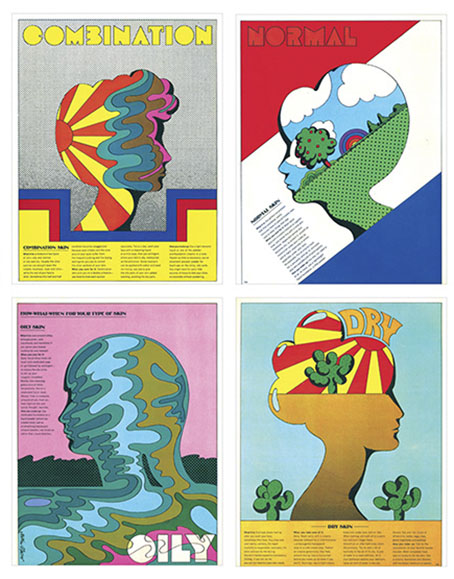
Skin types for Seventeen magazine, 1967.

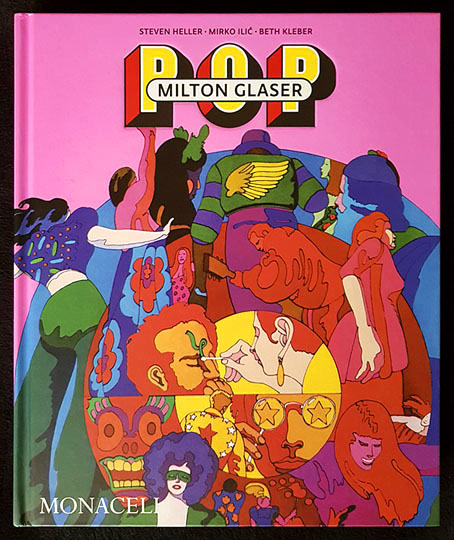
Milton Glaser: POP is a copiously-illustrated 288-page study of the work produced by Milton Glaser and his colleagues at Push Pin Studio, with an emphasis, as the title and cover art suggests, on the company’s prime decade of the 1960s. The book was compiled and edited by the redoubtable Steven Heller, together with Mirko Ilic and Beth Kleber, and presents an overview of Glaser’s remarkable career as designer and illustrator. Glaser was an exceptionally versatile artist, something which has often made appraisal of his career a difficult business. You could easily choose ten of his book or album covers from the many examples assembled by Heller and co., and all would look like the work of different people.
glaser3.jpg

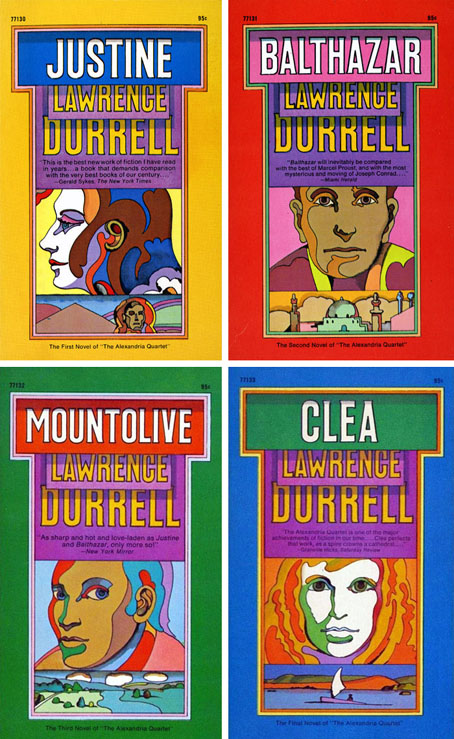
The Alexandria Quartet by Lawrence Durrell; Pocket Books, 1969. I’d much rather have this set than my Faber collection which packages the four books into an unwieldy brick.

Matters are further complicated by the often collaborative nature of the work at Push Pin, and the fact that designers and illustrators aren’t always given credit for their commissions. In the past I’ve gone looking for Glaser’s work then given up when I seemed to be encountering designs that weren’t by him at all. In addition to demonstrating Glaser’s range, Heller, Ilic and Kleber have done everyone a service by showing unused illustrations and crediting work that was previously debatable. Some years ago I wrote a post about the uncredited cover art for the first budget sampler album, The Rock Machine Turns You On (1968), an entry which didn’t manage to resolve the issue of whether or not the cover art was Glaser’s work. It turns out it was by him after all, collage being one of the techniques he employed from time to time.
glaser5.jpg

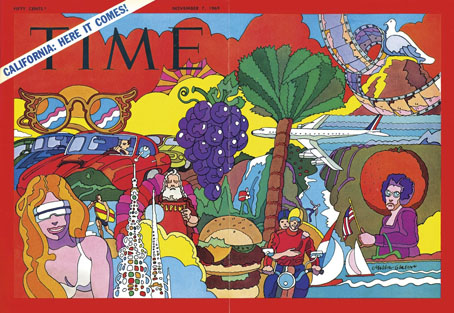
TIME magazine gets groovy. A fold-out cover from 1969.

On a more personal level, Glaser’s versatility and multi-disciplinary approach is encouraging if you find yourself being led in a similar direction. Designer-illustrators are no longer as rare as they used to be, but illustrators, like many fine artists, still tend to develop a favourable style which they then stay with year after year. Illustrators who change their style according to their mood, or the nature of the brief, or a desire to experiment, remain in the minority. Glaser’s illustration ranges more widely than any other artist I’ve seen, from realistic pen-work and watercolour sketches, through bold, stylised designs, to complete abstraction. He could also be playful and frivolous in a manner you can’t imagine from some of his more serious contemporaries, while also being adept enough at illustrating children’s stories that he might easily have spent his career doing this alone.
glaser4.jpg

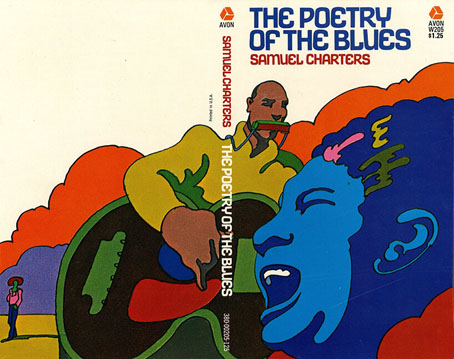
Avon Books, 1970.

But the main attraction of Milton Glaser: POP for this reader is the focus on all those bold graphics, especially the commissions that reworked the emerging psychedelic styles for the commercial sphere. The cover illustration is emblematic of many other examples. This drawing first appeared in a New York magazine supplement in 1967 to accompany an article about LSD, before being reused on the dustjacket of Tom Wolfe’s book about Ken Kesey and friends, The Electric Kool-Aid Acid Test. Glaser and his colleagues at Push Pin were prime exponents of something I’ve taken to calling “the groovy look“, a term I reserve for commercially oriented quasi-psychedelic art. This isn’t meant to be a serious label, it’s a private term that I used to attach to anything resembling the art styles seen in the Yellow Submarine feature film. Serious or not, the label persists when I continue to feel the need for a suitable descriptor for this type of art. “Psychedelic” is the most common label (and one which obviously suits Yellow Submarine) but it seems inappropriate when discussing magazine adverts for household products or illustrations in children’s books. Steven Heller prefers the term “Pop”, but this strikes me as too loose, risking confusion with the many varieties of Pop Art which seldom resemble the vivid, stylised creations of Glaser et al. Pop would also seem misapplied as a description for commercial art when Pop Art was all about the appropriation (ironic or otherwise) of commercial iconography. If you start to label a swathe of commercial art as Pop along with the gallery art that was borrowing from it then the term becomes so diffuse it loses its meaning. The “groovy style” had a long reach, and evolved beyond the decade it was born in. Plenty of examples may be found in the early 1970s by which time Pop Art (in the gallery sense) had lost its momentum.
glaser6.jpg

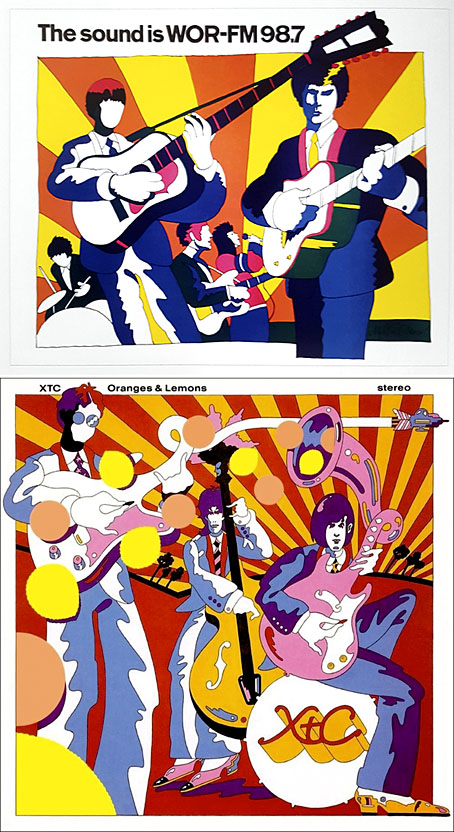
Above: Glaser ad art, 1966. Below: Dave Dragon’s cover art for XTC, 1989.

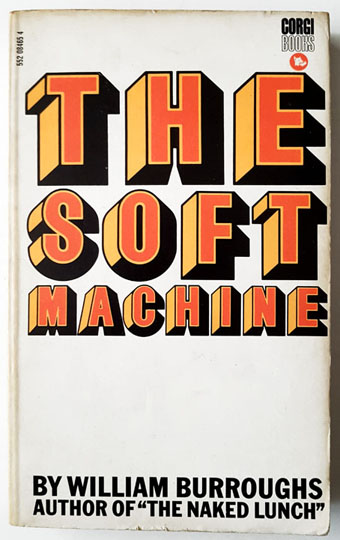
I’ll no doubt return to this question, especially when I’ve just done something in the groovy style myself. (You’ll have to wait a few months before you see the results.) In the meantime there’s a lot to enjoy in this book. I haven’t yet mentioned Glaser’s unused promotional art for the Saul Bass feature film, Phase IV, or the many typeface designs that Glaser created with his associates, and the way one of them—Baby Fat—is used on the cover of the first UK paperback of The Soft Machine. I think this was the first William Burroughs book I ever bought, and it’s been sitting on my shelves all this time without my realising it was a Glaser production. That’s how it often is with graphic designers; they shape our world almost as much as architects do yet their specific influence isn’t always recognised.
glaser7.jpg

Corgi Books, 1970.

And by coincidence, the latest post at The Daily Heller is about a Glaser exhibition tied to the publication of the book. If you’re in New York it’ll be running for the next two weeks.

Previously on { feuilleton }
The groovy look
Milton Glaser album covers

X-ray visions

x1.jpg

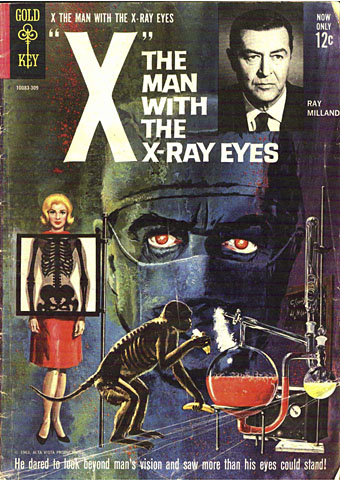
Cover art by George Wilson.

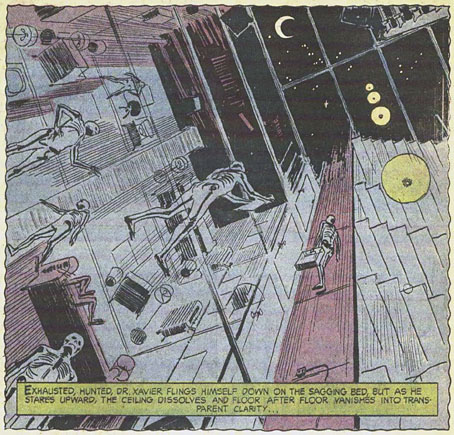
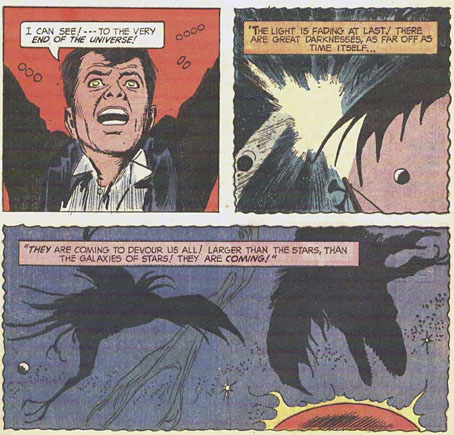
Cosmic weirdness isn’t something you expect to find in the tie-in comics published by Gold Key in the 1960s, but this adaptation of Roger Corman’s film contains a few such traces, as does the film itself. Having watched X: The Man with the X-ray Eyes again recently I was curious to know how artist Frank Thorne would manage with the scenes where Dr Xavier’s vision is showing him more of the world than he wants to see. Despite the general sketchiness of the drawing, in some of the panels these visions are more fully realised than they are in the film, it being easier to draw an unusual effect than capture it on celluloid. Roger Corman had a great idea, a talented co-writer in Ray Russell, and an authentically tormented performance from Ray Milland, but the film is hampered by the limitations of AIP’s budgets. When Xavier complains about the oppressive sight of people above him on the floors of his tenement building only the comic shows us what he sees.

x3.jpg

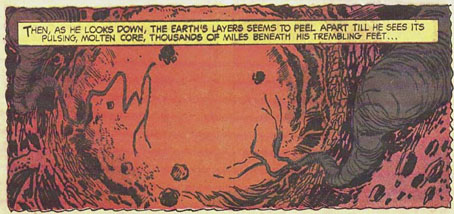
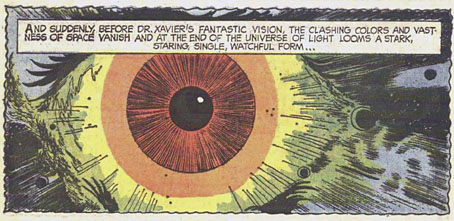
So too with the later scenes, by which time all of Corman’s point-of-view shots are the same combination of a diffracted lens (Spectarama!) and Les Baxter’s wailing theremin. Xavier’s description of a great watching eye “at the centre of the Universe” isn’t conjured so well by Corman’s visuals. The comic gives us an all-too-human eyeball floating in space, but before this there’s a panel of ragged shapes flapping through the interstellar void, as well as something never seen in the film when Xavier looks down into the Earth’s core.

x4.jpg

The comic was written by Paul Newman (not that one), and was evidently adapted from a script rather than a print of the film. None of the characters or scenes resemble their cinematic equivalents, while Xavier’s eyes in the comic hardly change appearance. But the additions to the finale make me wonder whether there was a little more in the script than ended up in the film.

x2.jpg

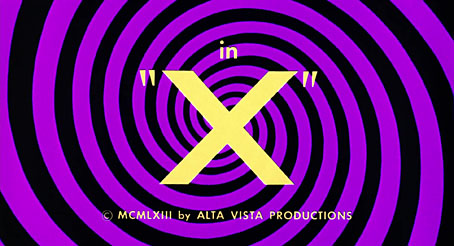
Corman made The Man with the X-ray Eyes in 1963, immediately after The Haunted Palace—the first film to adapt HP Lovecraft—and a few years before The Trip—the first feature film devoted solely to the psychedelic experience. Xavier’s journey into nightmare is a curious hybrid of Lovecraft and psychedelia: the titles are set against a swirling violet spiral, while the doctor’s Spectarama visions are precursors of the delirium experienced by Peter Fonda’s Paul in The Trip. (Corman’s initial idea for The Man with the X-ray Eyes had a jazz musician taking too many drugs.) At one stage in his LSD trip Paul looks in a mirror and announces that he can see inside his own brain, but in the earlier film we get to see inside Xavier’s brain for ourselves when he takes his eye drops for the first time, after which the camera passes through the back of the doctor’s head until we’re looking out of his eyes. This is so close to a moment in Gaspar Noé’s Enter the Void that I’ve been wondering whether Corman’s film is another of Noé’s cult titles like those you see named at the beginning of Climax.

x5.jpg

As for the Lovecraftian quality, The Man with the X-ray Eyes misses an opportunity to do more with the scope of its central concept. Stephen King famously reported a rumour that the film had a suppressed line of dialogue from the very end, when Xavier tears out his eyes then screams “I can still see!” Corman denied that this was the case but admitted it was a good idea. King mentions this in Danse Macabre, in a description of the film which also interprets the story as being far more Lovecraftian—he uses that word—than it actually is. His suggestion (or mis-remembering) is that all the Spectarama effects are Xavier’s growing perception of the Eye at the centre of the Universe, even though Xavier only mentions this presence in the last few minutes.

x6.jpg

The implications of this remain unexplored but Xavier’s final vision of cosmic horror is still truer to Lovecraft’s Mythos philosophy—a warning that the human race peers into the void at its peril—than almost anything else in cinema, and the revelation is made all the more disturbing by the appearance of Xavier’s eyes which by this point are solid black orbs. As King suggests, there’s another film altogether lurking under the surface of this one, a horror film with a cosmic reach. Hollywood still struggles to do anything substantial with Lovecraft’s fiction, but you know the way things are today we’ll be lucky to get anything weirder than more CGI monsters and lumbering kaiju. I wouldn’t want to suggest that Gaspar Noé remake The Man with the X-ray Eyes but if he ever wanted to create a psychedelic horror story then the cosmic route is the way to go.

Previously on { feuilleton }
Undead visions
Trip texts revisited
More trip texts
Enter the Void

Dennis Leigh book covers

leigh03.jpg

Secker & Warburg, 1989.

Most people will know Dennis Leigh—if they know him at all—as John Foxx, the name that Leigh adopted in the 1970s when he was the lead singer and songwriter in Ultravox! (That exclamation mark was a fixture for the group’s first two albums.) Foxx and Leigh maintained parallel careers for a while, or alternating careers in the 1990s when he was working more as an illustrator than as a musical artist.

leigh25.jpg

Routledge/Thomson Learning.

I’ve been asked a few times to consider writing about artists or designers who create covers for literary titles. This is something I often consider myself but the research is never easy. If you’re looking for genre titles you can go to isfdb.org and immediately find entries for hundreds of artists with lists of their credits; Dennis Leigh has an entry there himself. There’s no equivalent source for literary fiction, and nothing for crime novels or non-fiction either. This post is based on a list compiled by a correspondent (thanks, Marc!) to which I added a couple of discoveries of my own. It’s not complete but it ranges through Leigh’s career as a cover artist from the 1970s to the 2000s.

leigh26.jpg

Bloomsbury.

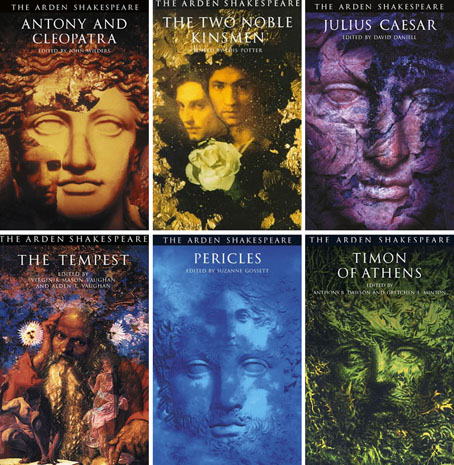
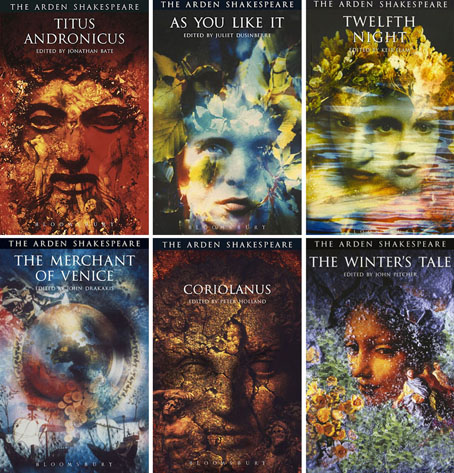
One of the useful things about Dennis Leigh having a more popular alter ego is the amount of interviews in which John Foxx discusses his work outside the music business. While researching this post I found a Smash Hits interview where Foxx mentions having attended Blackpool art college for a short time. This was the same art college that my mother attended in the 1950s, and a place I happily avoided myself. The college is so undistinguished I think Foxx/Leigh may be the only person of any note to have passed through its doors. A more recent interview for Shakespeare Magazine features some discussion of the techniques behind the book covers.

leigh01.jpg

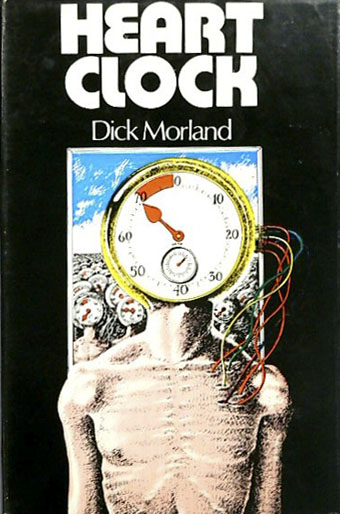
Faber, 1973. Reginald Hill wrote two science-fiction novels as “Dick Morland”, this one and Albion! Albion! (1974). The latter is also listed as having a Leigh cover but the evidence for this is unclear so I’ve not included it.

Missing from this list are covers for novels by Neil Bartlett, Michael Cunningham, Evan Eisenberg, Eva Figes, and Marina Warner, all of which are only available as very low-grade images or not available at all. Another hazard when researching these posts is that artists and designers aren’t always credited, especially on paperbacks, so there may be a few more to be found. Be aware that some covers that might look like Dennis Leigh creations may be the work of somebody else. In the late 80s/early 90s there was a trend for Photoshop montage and what I call “artschool assemblage” (collage riffs on Joseph Cornell and others). If any of the examples here are erroneous attributions let me know.

leigh02.jpg

Faber, 1973.

leigh04.jpg

Vintage, 1990.

Continue reading “Dennis Leigh book covers”

Weekend links 672

heilbronn.jpg

Le Vice Errant (1902) by Vincent Lorant-Heilbronn.

• “So however surreal those cities, the invisible ones that he builds, they have their counterpart in the real. They always have their counterpart in visible cities.” Darran Anderson on Italo Calvino’s Invisible Cities.

• At Wormwoodiana: Mark Valentine on the centenary of The Riddle and Other Stories by Walter de la Mare, with special attention paid to The Vats, a very strange story.

• New music: A Bad Attitude by African Head Charge; Lapsed Gasps by Push For Night + Jon Mueller; Forevervoiceless by Brian Eno.

The strands of medicine, consciousness expansion, intoxication, addiction, and crime were tightly entangled in fin-de-siècle Paris, where ether and chloroform circulated among bohemian demi-mondaines alongside morphine, opium, cocaine, hashish, and wormwood-infused absinthe. These solvents were often carried in small glass vials and medicine bottles by the asthmatic, tubercular, and neurasthenic, added to patent tonics and syrups, and, on occasion, to cocktails: an ether-soaked strawberry floating in champagne produced a heady rush, the fruit preventing the volatile liquid from evaporating too quickly. Literary references to ether abounded, either as a signifier of decadence or as a literary prop to shift a realistic narrative into the landscape of dreams and symbols, where its dissociative qualities became a portal to strange mental states, psychological hauntings, uncanny doublings, and slippages of space and time.

Mike Jay on Jean Lorrain and the ether dreams of fin-de-siècle Paris

• At Aquarium Drunkard: Jim Jarmusch and Carter Logan talk about the recording of Silver Haze, their first album as Sqürl.

James Balmont offers a beginner’s guide to the films of Dario Argento.

• At Unquiet Things: Rachael Bridge’s Luminous, Technicolor Shadows.

• Mix of the week: A mix for The Wire by Erika.

Ether Ships (1978) by Steve Hillage | Ether (1998) by Redshift | Ether (2000) by Coil

Weekend links 671

cassel.jpg

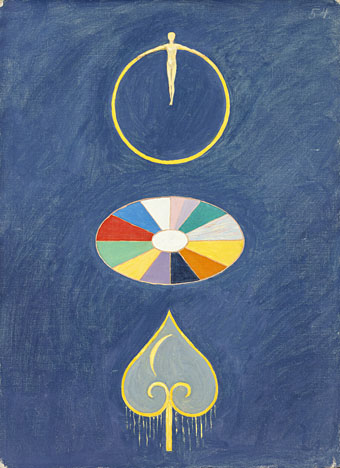
No. 54 (1915) by Anna Cassel.

• “I called it the treasure hunt: two years of tapes appearing from closets, letters dropping out of attics, persuading a film company to find the rushes of a TV show buried in a warehouse, paying a film director to digitise unused footage and a radio company to surface an old broadcast.” Nick Soulsby on pursuing the ghosts of Coil for his book about the group, Everything Keeps Dissolving.

• “It is likely that af Klint scholarship is on the brink of some radical changes regarding attribution and authorship.” Susan L. Aberth on the researches revealing collaborations between Hilma af Klint and other mystically-inclined women artists. It makes a change reading something about this group that isn’t completely dismissive about the beliefs that informed their work.

• New music: No Highs by Tim Hecker (“a beacon of unease against the deluge of false positive corporate ambient currently in vogue…”), and Seascape–polyptych by Jan Jelinek.

I think an unfortunate effect of Foucault’s work, as it was absorbed by academia, was that it made historians reluctant to call people or sexual acts in the past ‘homosexual’ or ‘gay’ since these terms ‘did not exist at the time’ or were recent creations. This gave some homophobes a spurious defence when suggestions were made as to the inclinations of their heroes, but it also—or so I thought—tended to downplay the reality of non-opportunistic homosexual desire as a constant in history, reducing it to recorded acts performed and then deeming these inadequate evidence anyhow, because they were assumed to have taken place in a fuzzy sexual universe.

If, as it seems to me, and as it seemed to Symonds and Carpenter, terms like ‘homosexual’ were invented in the effort to describe a type of person that has always existed, then they are in essence just a shorthand. Each term has its history, associations and effects, but—and perhaps this makes me an unsophisticated thinker—I think it’s the sexual feelings that fundamentally matter, and that these have existed across time. For that reason, I don’t find the Victorian sexual psyche, as far as it can be defined, alien or outlandish, or hard to speculate on. It is the product of sexual feeling filtered through observable social beliefs and conditions.

Tom Crewe talking to Amia Srinivasan about The New Life, Crewe’s debut novel which explores Victorian sex and sexuality

• “I’ve been tumbling down the rabbit-hole of toy theatre all my life, and I’m tumbling still.” Clive Hicks-Jenkins on the dark art of the toy theatre.

• At Public Domain Review: Jean Baptiste Vérany’s Chromolithographs of Cephalopods (1851).

• “Glass is perhaps the most frequently overlooked material in history,” says Katy Kelleher.

• At Cartoon Brew: Chris Robinson remembers the surreal animations of Run Wrake.

• At Unquiet Things: Of Dreams and Dark Pasts: Surrealist Painter Sofía Bassi.

• RIP Harry Belafonte.

House Of Glass (1969) by The Glass Family | Heart Of Glass (1978) by Blondie | Slow Glass (1997) by Paul Schütze