Weekend links 693

sime.jpg

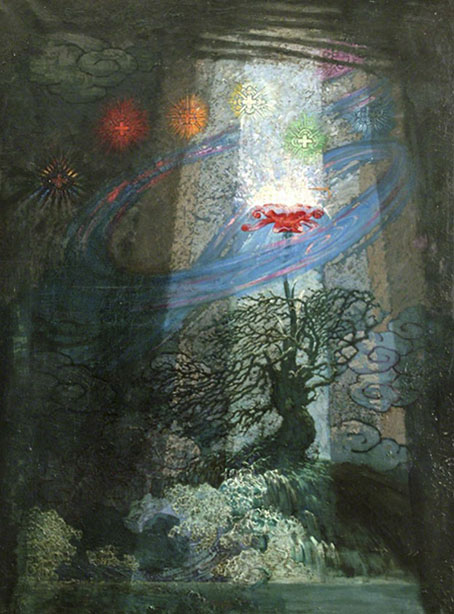
Imaginary (no date) by Sidney Sime.

• Victor Rees was in touch this week to alert me to a one-off screening of The Gourmet (previously), a cult TV drama from 1986 written by Kazuo Ishiguro and directed by Michael Whyte. The screening, which will take place at Swedenborg House, London, on 16th October, is one of a series of retrospective events based around an exhibition from 1974, Albion Island Vortex, by Brian Catling and Iain Sinclair. The film, which is connected to Sinclair’s oeuvre by its use of one of the Hawksmoor churches, will be followed by a Q&A session with Sinclair and Michael Whyte. The screening is free but places are limited so prior booking is required.

• “Alongside his thieves and vagabonds, Hotten includes religious slang, public schoolboy slang, pirate slang, equine stable slang, phrases coined by Dr. Johnson, the slang of softened oaths, workmen’s slang, stagehand slang, shopkeeper’s slang, and dozens of other argots.” Hunter Dukes on A Dictionary of Modern Slang, Cant, and Vulgar Words (1860) by John Camden Hotten.

The Night Land, William Hope Hodgson’s “Dying Earth” doorstop, is republished in an abridged version as part of MIT Press’s Radium Age series, “proto–science fiction stories from the underappreciated era between 1900 and 1935”. All the reprints come with new introductions, the one for Hodgson being by Erik Davis.

• “My partner wanted me to stop buying lava lamps. It was an expensive hobby, and we were running out of room in our apartment.” Nora Claire Miller on the lure of the lava lamp. I only own a single one but I appreciate the obsessive attraction.

• Rambalac takes his roaming camera for a walk through teamLab Planets, Tokyo, a labyrinthine exhibition featuring plenty of water (and wet feet), and a moss garden filled with large silver eggs.

• At Strange Flowers: An examination of the connections between the self-mythologising Marie Corelli and her fictional counterparts in the Mapp and Lucia novels of EF Benson.

• Coming soon from Strange Attractor: Cabarets of Death, a book about the otherworldly cabarets of Montmartre by Mel Gordon, edited by Joanna Ebenstein.

• Among the new titles at Standard Ebooks, the home of free, high-quality, public-domain texts: The Secret Glory by Arthur Machen.

10 essential Japanese reggae releases selected by Kay Suzuki.

• Mix of the week: A Fact Mix by Venus Ex Machina.

Modern Art in Mid-Century Comics.

• RIP Michael Gambon.

Planet Caravan (1970) by Black Sabbath | Planet Queen (1971) by T. Rex | Oszillator Planet Concert (1971) by Tangerine Dream
McCallum reads Lovecraft

mccallum1.jpg

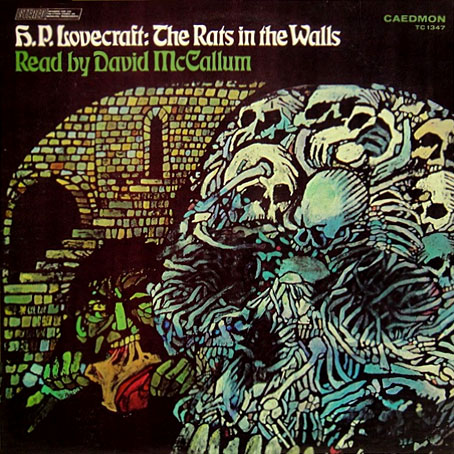
Art by Leo and Diane Dillon.

RIP David McCallum, who I prefer to remember for his role as one half of the weirdest-TV-duo-ever, Sapphire and Steel. McCallum was a minor sex symbol in the 1960s, thanks to The Man from U.N.C.L.E., a celebrity that led to his conducting a series of instrumental pop albums. I’ve never heard any of these but they have their champions. They were followed in the 1970s by a number of readings for the Caedmon label which included three albums of HP Lovecraft stories. The Dunwich Horror is one I’ve referred to in the past since I used to own a knackered copy. As a reading it’s pretty good, slightly edited but with the novelty of allowing you to hear McCallum recite the famous “As a foulness shall ye know them” passage from the Necronomicon. These commissions no doubt came about simply because McCallum was available but his Lovecraft recordings gain a deeper resonance in the light of his later exploits with Joanna Lumley in the haunted corridors of Time. Some of the malign forces that Sapphire and Steel face aren’t so distant from Lovecraft’s interdimensional “Old Ones”, unfathomable entities seeking ingress to the material universe.

mccallum2.jpg

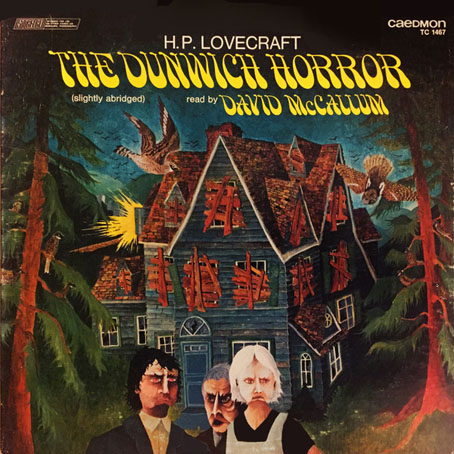
Cover art uncredited.

All of the McCallum Lovecraft albums are now on YouTube so the curious may listen to the recordings without searching for rare (and expensive) vinyl:

The Rats in the Walls (1973)
The Dunwich Horror (1976)
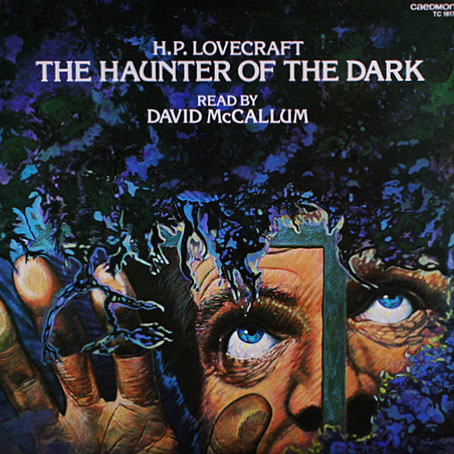
The Haunter of the Dark (1979)

The reading of The Rats in the Walls doesn’t edit Lovecraft’s xenophobia so anyone unwilling to hear a racial epithet used as a name for a pet cat should avoid that particular recording. The first album, which included a sleeve note from August Derleth, is also the only one of the three that was reissued. I wonder whether The Dunwich Horror might have fared better if it didn’t have such appallingly amateurish cover art. A shame the Dillons weren’t able to illustrate that one as well.

mccallum3.jpg

Art by Les Katz.

Elsewhere on { feuilleton }
The Lovecraft archive

Previously on { feuilleton }
Haunted Corridors: The Temporal Enigmas of Sapphire and Steel

Les Maîtres de l’Affiche

affiche09.jpg

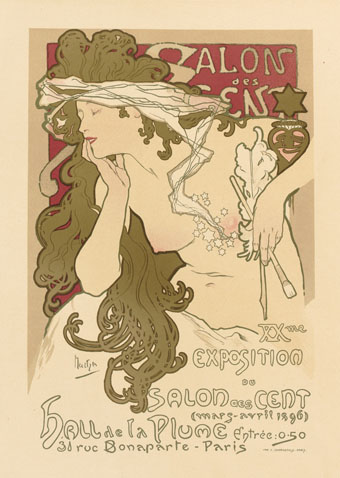
Alphonse Mucha.

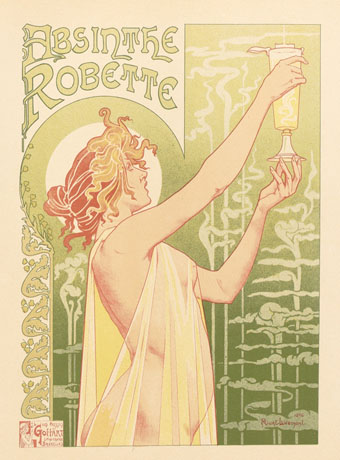
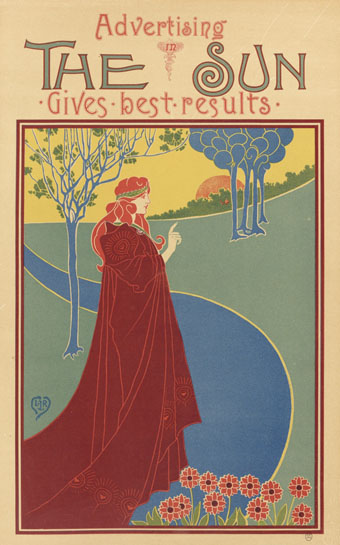
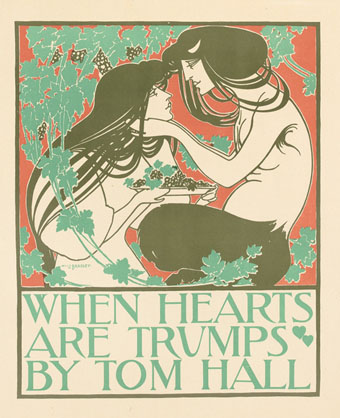
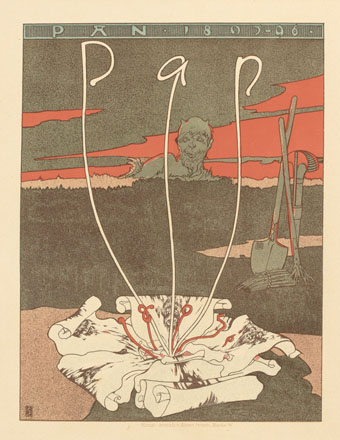
Les Maîtres de l’Affiche was a multi-volume guide to the state of poster art in the 1890s, published in five volumes from 1896 to 1900. Being a French publication, the contents are mostly by French artists but other nations are represented—Britain, Germany, Italy, the United States—although fewer contributions than you might expect given the quantity of pages to be filled. The chief attraction of these books is the attention they give to each design, all of which are printed in colour on a full page, and the time of publication which coincides with the birth of Art Nouveau. In addition to the great Alphonse Mucha there are designs by Eugène Grasset, Henri Privat-Livemont, Georges de Feure, Will Bradley, Louis Rhead and others. There’s also a lot of cabaret stuff from Montmartre which has never been to my taste (although I like the Steinlen posters) but those designs were the typical ones of the period.

affiche12.jpg

Henri Privat-Livemont.

The first four volumes in this set may be found at Gallica (Volume 1, Volume 2, Volume 3, Volume 4) but not the fifth volume—isn’t a national library supposed to be more thorough than this?—which may be seen at NYPL. For those who prefer paper reproductions, there’s a reprint in Dover Publications’ Pictorial Archive series, The Complete “Masters of the Poster: All 256 Colour Plates from “Les Maîtres de l’Affiche”.

affiche01.jpg

Louis Rhead.

affiche02.jpg

Will Bradley.

affiche04.jpg

Joseph Sattler.

Continue reading “Les Maîtres de l’Affiche”

Weekend links 692

pearse.jpg

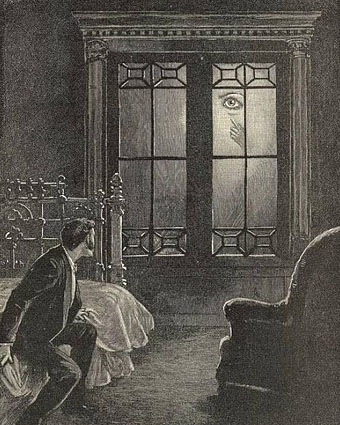
Illustration by Alfred Pearse for The Horror of Studley Grange by Clifford Halifax & LT Meade. Via.

The Haunting at 60: Guy Lodge asks “Is it still one of the scariest films ever made?” I say yes but then it’s always been a favourite. Also, Robert Wise is something of a cult figure in this house, not for his big-budget directing jobs on The Sound of Music and Star Trek: The Motion Picture, but for his RKO horror entries (The Curse of the Cat People and The Body Snatcher), his film noir (Born To Kill, The Set-Up, Odds Against Tomorrow), and two smaller science-fiction films from different decades, The Day the Earth Stood Still and The Andromeda Strain. All this and he also edited Citizen Kane.

• “This show makes an irrefutable case for her technical mastery while also affirming her as a first-rate fabulist whose disparate influences—chivalric romance, medieval architecture, tarot, psychology, astronomy, and much more—cohere into a visionary whole.” Jeremy Lybarger reviewing Science Fictions, the retrospective devoted to the art of Remedios Varo.

• New music: Improvisation On Four Sequences by Suzanne Ciani; Incorporeal by Hidden Horse; Atlas by Laurel Halo; Infinito (Version) by Moritz von Oswald.

While Ballard’s more outwardly conventional books may give us solider, more stable realities, what these realities often present…is a child (or childlike figure) frolicking against a backdrop provided by the destruction of an older order of reality that the world previously took for granted. It’s a cipher for his oeuvre as a whole: endlessly playing among the ruins, reassembling the broken or “found” pieces (styles, genres, codes, histories) with a passion rendered all the more intense and focused by the knowledge that it’s all—culture, the social order, the beliefs that underpin civilization—constructed, and can just as easily be unconstructed, reverse engineered back down to the barbaric shards from which it was cobbled together in the first place. To put it in Dorothean: In every context and at every level, Ballard’s gaze is fixed, fixated, on the man behind the curtain, not the wizard.

Tom McCarthy: JG Ballard’s Brilliant, Not “Good” Writing

• At Public Domain Review: Behold the Nebulous Smear: ‘Abd al-Rahman al-Sufi’s Illustrated Book of Fixed Stars (ca. 1430).

• At Unquiet Things: Shake, Shiver, and Shriek: The Haunted Gothic Nightmares of George Ziel.

Winners of Nature TTL Photographer of the Year 2023.

• The Strange World of…Gavin Bryars

Watch The Stars (1968) by Pentangle | Stars (1983) by Brian Eno with Daniel Lanois & Roger Eno | Kelly Watch The Stars (1997) by Air

A territory always rather nocturnal and almost subaqueous

verne.jpg

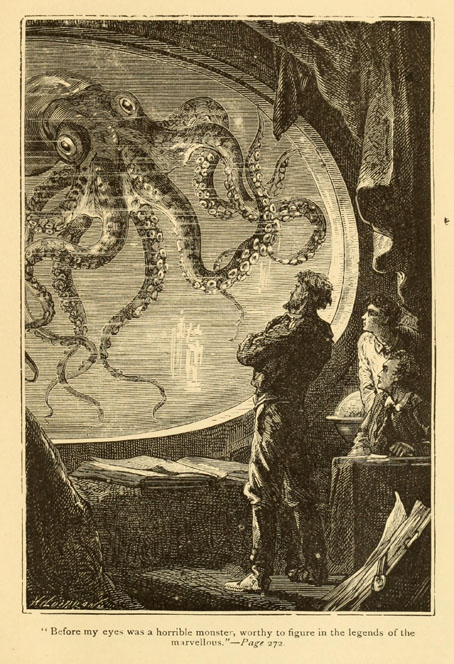
I’m still reading through Umberto Eco’s essays in between various novels, the current Eco volume being Chronicles of a Liquid Society, a book which includes an appraisal of the works of Jules Verne. Enthusiastic remarks about engraved illustrations are uncommon things so I wanted to draw attention to the following:

Verne’s engravings are far more mysterious and intriguing, and they make you want to examine them through a magnifying glass. Captain Nemo, who sees the giant octopus from the large porthole of the Nautilus; Robur’s airship bristling with high-tech masts; the balloon that crashes down on the Mysterious Island (“Are we rising again?” “No. On the contrary.” “Are we descending?” “Worse than that, captain! We are falling!”); the enormous projectile that points toward the Moon; the caves at the centre of the Earth—all are images that emerge from a dark background, outlines with thin black strokes alternating with whitish gashes, a universe without areas of uniform colour, a vision scratched and scored, reflections that dazzle for lack of any strokes, a world seen by an animal with a retina all its own, as seen perhaps by oxen or dogs or lizards, a world glimpsed at night through the thin slats of a venetian blind, a territory always rather nocturnal and almost subaqueous, even in full daylight, made with the dots and abrasions that generate light only where the engraver’s tool has dug or left the surface in relief.

The illustrators of Captain Nemo’s adventures were Alphonse de Neuville and Édouard Riou, their drawings being engraved by Henri Hildibrand. See the rest of them here.

Elsewhere on { feuilleton }
The etching and engraving archive

Previously on { feuilleton }
Eco calls on Cthulhu