The Corset and the Jellyfish

bantock.jpg

Cover design by Brian DeVoot and Elizabeth Story.

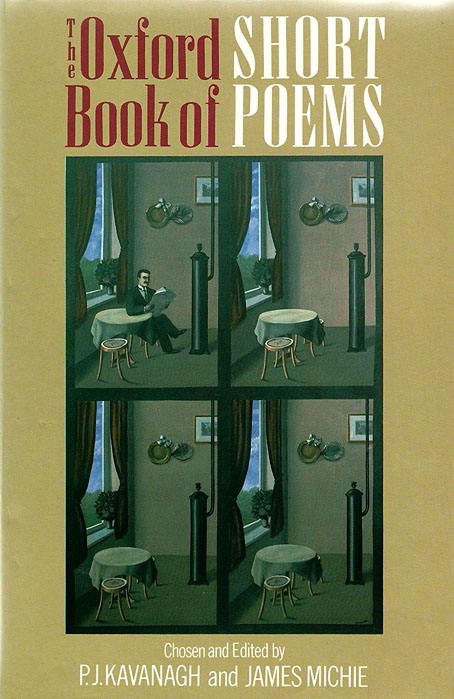
In the post this week, the latest book from Tachyon, a collection of Oulipo-inflected Surrealism from Nick Bantock:

Little is known of the fascinating manuscript that Nick Bantock has come to possess. It was discovered in an attic in North London, stuffed into a battered cardboard box, and unceremoniously delivered directly to Nick’s doorstep. Inside the package lay one hundred evocatively absurd stories, one hundred humorous drawings of strangely familiar, quirkish glyphs, plus a cryptically poetic note signed only as “HH.” (Possibly the well-known, eccentric billionaire, Hamilton Hasp?)

In these stories—each consisting of precisely 100 words—strange creatures slip through alleyways, and eerie streets swallow people whole. Taken altogether, they may constitute a puzzle that no one has been able to solve thus far. Could there even be one missing story?

I didn’t design this one but I was happy to see a preview copy which I described as “A tapestry of exquisite miniatures”. Each of Bantock’s illustrations is printed in colour, which I think is a first for the publisher. Given the time of year, The Corset and the Jellyfish is an ideal gift for any visitors to Calvino’s invisible cities.

Alastair’s Manon Lescaut

alastair01.jpg

The illustrated works of Alastair aren’t always easy to find, not when Hans Henning Voigt (as the artist was known to his German parents) chose a nom de l’art shared by a large portion of Scottish manhood, past and present. This 1928 edition of Manon Lescaut by the Abbé Prévost is a recent arrival at the Internet Archive. The publisher, John Lane, specialised in illustrated editions, and their Manon Lescaut gives an idea of what we might have seen from Aubrey Beardsley had he survived into the 20th century. John Lane had published collections of Beardsley’s drawings together with related works like Robert Ross’s memories of the artist. It was in their interest to continue the posthumous association, hence the pairing of Alastair with a novel that Beardsley himself might have illustrated. Alastair not only positioned himself as an inheritor of Beardsley’s filigreed drawing style but in photographs appears to be adopting the persona of one of Beardsley’s etiolated characters.

alastair02.jpg

This edition of the novel is an English translation by DC Moylan, with an introduction by Arthur Symons, Beardsley’s friend and collaborator when the pair were teamed as editor and art editor of the short-lived Savoy magazine. Symons was an astute critic, his essays are always worth reading; he remembers his friend here while stepping lightly around Alastair’s imitation of Beardsley’s decorations. As for Alastair himself, he did a good job with the illustrations. The figure-drawing isn’t as uncertain as in some of his earlier works, and each piece is printed in two colours (“the colour of fire and night” as Symons describes it), a process he favoured elsewhere. The leading study of Alastair’s art, Alastair: Illustrator of Decadence (1979) by Victor Arwas, reproduces five of the fourteen drawings, only one of which is shown in colour.

alastair03.jpg

alastair04.jpg

alastair05.jpg

Continue reading “Alastair’s Manon Lescaut”

Weekend links 699

gartside.jpg

November Evening (1955) by Brian Gartside.

• The next Jon Savage compilation for Caroline True Records will be Jon Savage’s Ambient 90s, a dive into the side of rave culture that I always preferred, even while disputing the use of the “A” word. Anything with beats isn’t ambient by my definition, but I’ve been complaining about the nomenclature since 1991 to no avail. It’s on pre-order anyway.

• “They produced in me an infinity of new images and feelings, that sometimes raised me to ecstasy, but more frequently sunk me into the lowest dejection.” Thus Frankenstein’s monster during his reading of three books that happen to be important texts for the Romantic imagination. Hunter Dukes looks at the syllabus of Frankenstein’s monster.

• “Figure on Led Zeppelin IV cover identified as Victorian Wiltshire thatcher”. Last year I discovered the source for the lyrics and credits lettering designs used on the same album’s inner sleeve. Not as newsworthy, obviously, but I thought it was a good piece of cultural detective work.

• At Aquarium Drunkard: An interview with Morton Subotnick, now 90 years old. “Pioneer” is an over-used label, especially in electronic music, but Subotnick really does warrant the description.

• At Wormwoodiana: Mark Valentine on Unburied Bane, an EP by The Heartwood Institute based on a story by “the enigmatic N. Dennett”.

• At Unquiet Things: Art and captions that didn’t make the print version of The Art of Fantasy by S. Elizabeth.

• “Hidden demon revealed in the shadows of a Joshua Reynolds painting.”

• New music: Polygon by Galya Bisengalieva, and Saor by Claire M. Singer.

• Steven Heller’s font of the month is Letraflex.

• At Dennis Cooper’s: Arthur Lipsett’s Day.

Martin Carthy’s favourite music.

Little Demon (1956) by Screamin’ Jay Hawkins | Ballad Of Maxwell Demon (1998) by Shudder To Think | On Demon Wings (2000) by Bohren And Der Club Of Gore

Weekend links 698

ayrton.jpg

Contained Maze (1966) by Michael Ayrton.

• At Public Domain Review: Skeletons (1692) by Ikkyu, a Japanese monk, whose book is “a mixture of poetry and prose that comes down to us in printed editions supposedly replicating a manuscript, now lost, by the monk’s own hand. The text describes a series of visions of animated skeletons that Ikkyu had when he visited an abandoned temple. The lively illustrations testify to their maker’s sardonic sense of humour: he images skeletons dancing, drumming, drinking sake, having sex.”

• At The Daily Heller: Victor Moscoso’s Psychedelic Valedictory Exhibit. The exhibition will be at the Instituto Cervantes in New York City which has an accompanying 224-page catalogue of Moscoso’s posters and other designs.

• More Moscoso: Color (1971) and Moscoso Comix (1989), free to download at the Internet Archive. Moscoso’s underground comics experimented with the form in a manner that still looks radical today.

Drone and ambient metal is often invoked in elemental terms. There is something antediluvian and beyond about it. Pierce the earth’s crust, and there is liquid fire, ever so slowly shifting the tectonic plates we inhabit. Such music is envisaged as massive and totally beyond our control. It infuses the foundations of civilization. As Attila Csihar intones on Sunn O))) track ‘Aghartha’, named for a legendary subterranean kingdom: “Into the memories of the consciousness of ancient rocks/ Nature’s answer to eternal question”.

Stripped of the trappings of modern pop and rock, ambient metal invites a search for answers to the bigger questions. Ancient musical modes are resurfaced to get us closer to a putative godhead.

Dan Franklin on Earth 2, the deceptively-titled debut album by Earth. The album’s 30th anniversary has prompted a collection of remixes, Earth 2.23, by various artists

• At Spoon & Tamago: Download over 30 butterfly designs by Meiji-era artist Yuho Tanaka.

• New music: HYbr:ID II by Alva Noto, and The View From Vega by Benge.

The winners of the Landscape Photographer of the Year 2023.

• At Dennis Cooper’s: Guy Maddin Day (restored/expanded).

• A happy 20th birthday to Swan River Press.

Industrial Landscape (1980) by Marc Barreca | Desolate Landscape (2012) by John Zorn | Primordial Landscape (2013) by Patrick Cowley

Weekend links 697

munnings.jpg

The Haunted Room, Painted at a Farmhouse on Exmoor (1952) by Alfred James Munnings.

• “In Scotland, children made terrifying jack-o’-lantern turnips and piled cabbage stalks around doors and windows, baiting fairies to bring them new siblings.” It’s that time of year again. Public Domain Review looks at The Book of Hallowe’en (1919) by Ruth Edna Kelley.

• At Wormwoodiana: Mark Valentine on the centenary of Visible and Invisible, EF Benson’s collection of horror stories.

• At Dennis Cooper’s: DC’s ostensibly favourite haunted attractions of Halloween season 2023 (international edition).

Mostly it was down to the environments of their sound. The aerial acrobatics of Fraser’s voice. The architecture of sound that came from Guthrie’s effects-treated guitars; not just the often-cited often-derided ‘cathedrals of sound’ but all manner of sunken ballrooms, tunnels, factories, attics, foundries, observatories, caverns. If any category was required, Cocteau Twins could have been placed within Symbolism, a hallucinatory death-rattle of romanticism in the industrial age, when all that had been discarded returned in dreams and decadence, orgiastic excess, disembodied spectral heads and ornate altars, lonely demons and alluring succubi, jewels and masks and apparitions, all the minutiae of things that the steam engine and the printing press had yet to fully exorcise.

Darran Anderson on the Cocteau Twins’ Head Over Heels at 40. His digs at the music press are a welcome riposte to the nostalgia that often attends discussion of the weekly snark-machine that was the NME, Sounds et al in the 1980s

• Follow the footsteps of the Beast in a guide to Aleister Crowley’s British haunts, with text by Gary Lachman and design by Michelle Merlin. Also at Herb Lester: Occult Paris: City of Night.

• At Print Magazine: Charlotte Beach talks to illustrator and author Edward Carey about his spooky drawings.

• “Silent movies are full of friendly ghosts.” Kathleen Rooney on Caspar, Colleen [Moore] and the Beyond.

• New music: Mizuniwa by Yui Onodera.

Spooksville (1963) by The Nu-Trends | Spooks (1981) by Tom-Tom Club | Spooky Rhodes (1997) by Laika