Weekend links 172

thielker.jpg

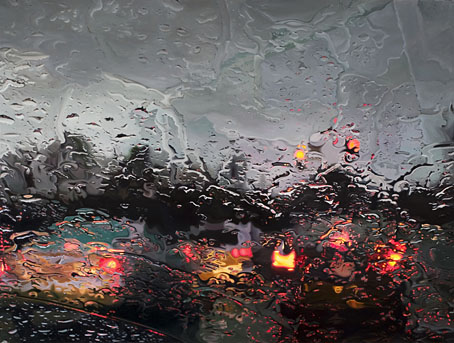
Complete Stop (2008), an oil painting by Gregory Thielker from his Under the Unminding Sky series.

• For Halloween last year I watched a very poor copy of a BBC Play For Today production, Robin Redbreast, a piece of rural horror by John Bowen which received a single screening in 1970. That poor copy—black-and-white, timecoded, multi-generation video—has been circulating for years, so it’s good to know that the BFI will be releasing Robin Redbreast on DVD in time for this year’s Halloween. This might be news enough but the following month the BFI also releases Leslie Megahey’s stunning adaptation of Schalcken the Painter in a dual DVD/Blu-ray edition. I wrote a short review of the latter film last October.

• Mixes of the week: August Sun High from The Advisory Circle, and John Wizards’ Quietus Mix “African music, R&B and chamber pop, filtered through gentle electronic arrangements that cross-pollinate with South African house, Shangaan electro and dub”.

• A trailer has surfaced for The Counselor, a film by Ridley Scott from an original screenplay by Cormac McCarthy. Trailers are too spoilerish so I’m refusing to watch it but for those interested Slate has the details.

Luckhurst makes an admirable attempt to link Lovecraft’s most frustrating writing tic to this theme of the unknown when he claims that Lovecraft’s “catachresis”—deliberate muddling of language through the use of mixed metaphors and the like—is a tool he uses to bolster the atmosphere of futility in the face of “absolute otherness.” The trauma of encountering something so far outside the realms of imagination triggers a collapse of logic in the language itself.

Cate Fricke reviews The Classic Horror Stories of HP Lovecraft, a collection from Oxford University Press edited by Roger Luckhurst.

• “Contemporary audiences found it too weird, too wonky and even borderline distasteful…” Xan Brooks goes looking for the locations from Powell & Pressburger’s 1943 film, A Canterbury Tale.

• Two songs from Julia Holter’s forthcoming album, Loud City Song: World and Maxim’s I. Also unveiled this week: Evangeline, a new track by John Foxx & Jori Hulkkonen.

• Have Ghost, Will Find: Colin Fleming on William Hope Hodgson’s Carnacki, The Ghost Finder.

• At PingMag: Urban Calligraphy: Turning the Streets into Big, Loud Canvases.

• Sex, Spirit, and Porn: Conner Habib talks to Erik Davis.

Serendip-o-matic: Let Your Sources Surprise You

The Pronunciation of European Typefaces

Twilight (2004) by Robin Guthrie & Harold Budd | Luminous (2009) by John Foxx & Robin Guthrie | Cling (2011) by Robin The Fog

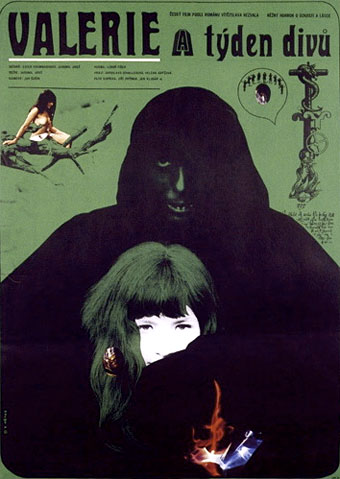
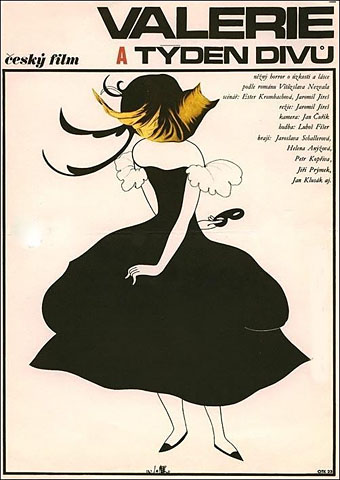
Valerie and Her Week of Wonders

valerie1.jpg

First English translation, 1970. Faux-Penguin edition by gregoreverb.

1: A Surrealist novel (1932) by Vítezslav Nezval.

valerie2.jpg

Design by Rudolf Nemec.

2: A feature film (1970) by Jaromil Jires (director), Ester Krumbachová (screenplay) and Jirí Musil (dialogue). (Region 2 DVD from Second Run.)

valerie3.jpg

Design by Josef Vylet’al. Figure originally by Aubrey Beardsley from The Comedy Ballet of Marionettes III (1894).

valerie4.jpg

3: Valerie: A song (2003) by Broadcast.

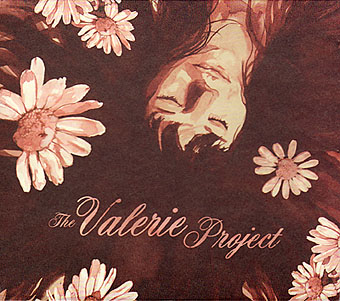
valerie5.jpg

4: The Valerie Project: A musical group and album (2007).

Previously on { feuilleton }
The Robing of The Birds

Weekend links 171

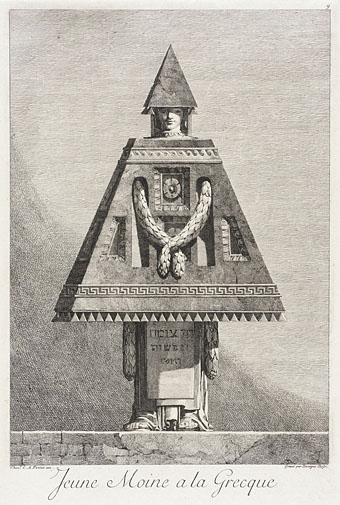
bossi.jpg

Jeune moine à la Grecque (1771) by Benigno Bossi. Via Monsieur Thombeau.

Victoriana: The Art of Revival is an exhibition which will run throughout the autumn at the Guildhall Art Gallery, London. Some of my steampunk work will be included. Related: Rick Poynor on Soft Machine’s Dysfunctional Mechanism.

• “The egg glows and hovers in the middle of a field of mesmerizing color. The spell is broken when the guard finally says, “Everybody up off the floor.'” Morgan Meis on Aten Reign by the amazing James Turrell.

• Mix of the week: a “heatwave mix” of psychedelic songs compiled by Jaime Williams. Anything that includes Vacuum Cleaner by Tintern Abbey gets my vote.

Because sex is so compartmentalized — it’s often considered separate from the rest of life and hidden away — porn performers, who have sex publicly, are in a unique position to consider and talk about integrating private and public aspects of life.

Writer and porn performer Conner Habib on the issue of nomenclature in the porn business.

• Still Hopscotching: Peter Mendelsund posts some unused cover designs for Julio Cortázar.

A Hymn For Megatron, an hour-long drone work, and a free download, by The Black Dog.

• Vagrancy and drift: Sukhdev Sandhu on the rise of the roaming essay film.

• A Flickr set of Peter “Sleazy” Christopherson’s musical instruments.

mwc.jpg

“Whether flower-pressing in the garden, hallucinating in the summerhouse, fainting inside stifling sites of historical interest, pirouetting along the promenade, or even sea-cruise thalassophobia complications, barely a moment will pass that isn’t made all the sweeter by obsessively listening to Down to the Silver Sea.”

The TM Research Archive: sate yourself on Swiss graphic design.

• A Lecture on Johnson and Boswell by Jorge Luis Borges.

• Words, sounds and robots from Sarah Angliss.

Never Built Los Angeles

Nautilus (2012) by Anna Meredith | Nature Of Light (2012) by Isnaj Dui | Popcorn (Ealing Feeder Mix) (2012) by SpacedogUK (Sarah Angliss)

One Way Street: Fragments for Walter Benjamin

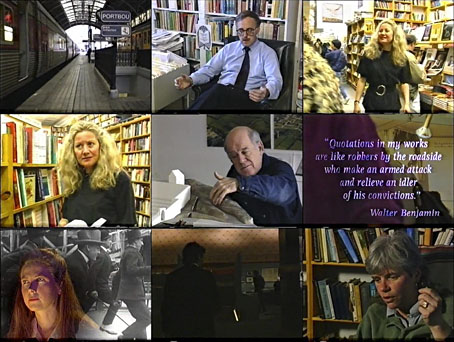
benjamin1.jpg

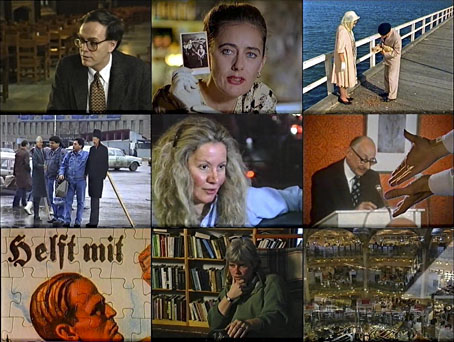
I thought I was going to intensely dislike One Way Street (1993) owing to the deployment of that bane of documentary film and television: the actor impersonating a historical figure. But these moments are sporadic, and John Hughes’ film is a reasonable introduction to Walter Benjamin’s elusive philosophies. It probably helps if you already know something of Benjamin’s life and work; there are several allusions, for example, to the famous “angel of history” thesis, and we even get to see the Paul Klee print to which the thesis refers (and which Benjamin owned); but there isn’t a reading of the thesis itself, an omission that the BBC in its documentary heyday wouldn’t have allowed. Various writers and academics do their best to convey something of Benjamin’s thought in sound-bite form, and the film as a whole can probably evade some criticism by claiming to be Benjaminesque in its disjointed and fragmented nature (although that would also be an evasion). I think if I hadn’t read any of Benjamin’s books there’d be enough to stimulate my curiosity, in which case the film would have succeeded. Watch it here. (Via Open Culture.)

benjamin2.jpg

Previously on { feuilleton }
Passage des Panoramas

Year by Angus MacLise

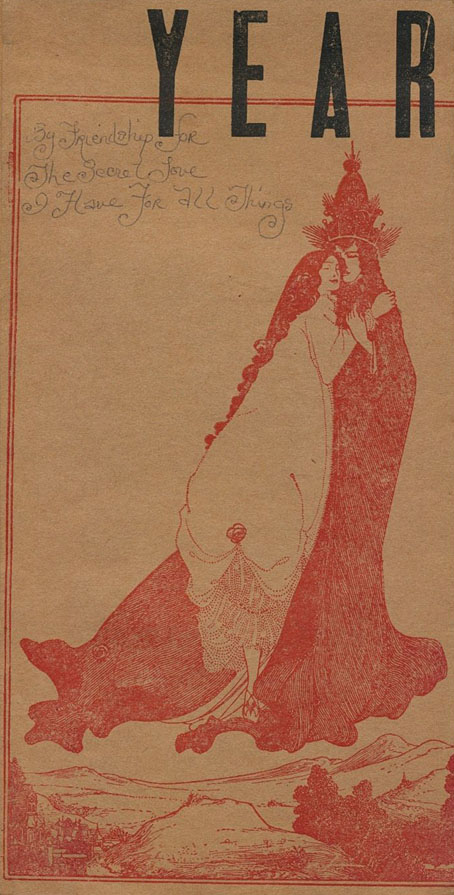
beardsley.jpg

The Ascension of St Rose of Lima (1896) by Aubrey Beardsley.

There’s something about the idea of renaming the calendar that I find very attractive even if this is only workable on a personal level. When the Gregorian calendar is a reinvention of the Roman calendar based around Christian holidays (and with the days of the week still alluding to Norse gods), it’s easy to feel at liberty to start again.

maclise1.jpg

Year (1962) by Angus MacLise.

The most famous example of calendrical reinvention is the French Republican Calendar which called upon a gathering of scientists, a mathematician and a gardener to rename the months and days of the year. In this system the 29th of July would be “Panic” (ie: the plant Switchgrass) in the month of “Thermidor” which runs from July 19th to August 17th. (For the record, this is the year 221 in French Republic time.) The French Republican Calendar may have been an inspiration for the Pataphysical Calendar invented by Jarryites (or Ubuists) which is also French, and a sight more complicated:

The pataphysical era (EP) started on 8 September 1873 [Alfred Jarry’s birthday.] The week starts on a Sunday. Every 1st, 8th, 15th and 22nd is a Sunday and every 13th day of a month falls on a Friday. Each day is assigned a specific name or saint. For example, the 27 Haha (1 November vulg.) is called French: Occultation d’Alfred Jarry or the 14 Sable (14 December vulg.) is the day of French: Don Quichote, champion du monde.

The year has a total of 13 months each with 29 days. The 29th day of each month is imaginary with two exceptions:

• the 29 Gidouille (13 July vulg.) is always non-imaginary
• the 29 Gueules (23 February vulg.) is non-imaginary during leap years

So today, July 29th, would be 16th Tatane (“Shoe” or “Being worn out”), Transfiguration de St V. van Gogh, transmutateur, in the Pataphysical Year 140.

maclise2.jpg

Month XI from Year by Angus MacLise.

After the Pataphysical Calendar, Year by percussionist/composer/poet Angus MacLise (1938–1979) comes as a relief. This is a poetic renaming of the days of the year which MacLise published in a now very rare booklet edition in 1962. I’ve known about this for years but still haven’t seen a full text so it was a surprise to discover that the cover illustration was The Ascension of St Rose of Lima by Aubrey Beardsley, one of the artist’s later pieces which tends to Catholicism despite being used to illustrate his unfinished erotic novel, Under the Hill. It’s difficult to say why this was chosen by MacLise or his publisher, but it pre-empts the renewed attention that Beardsley’s work received from 1966 on. MacLise’s names for the days are beautifully evocative, and infinitely preferable to the many days which few in this country bother about:

smoke of the shore
day of the inner lid
day of the magic child
day of bessie smith
day of anna
rose over the cities
the fire is a mirror
hrungirs heart

The full text for November and December can be found on this page. If anyone knows of an online source for the full text of MacLise’s Year then please leave a comment. For those with Android phones, there’s a page here offering a Pataphysical Calendar app. Bosse-de-Nage says “Ha ha”.