Weekend links 797

robertson.jpg

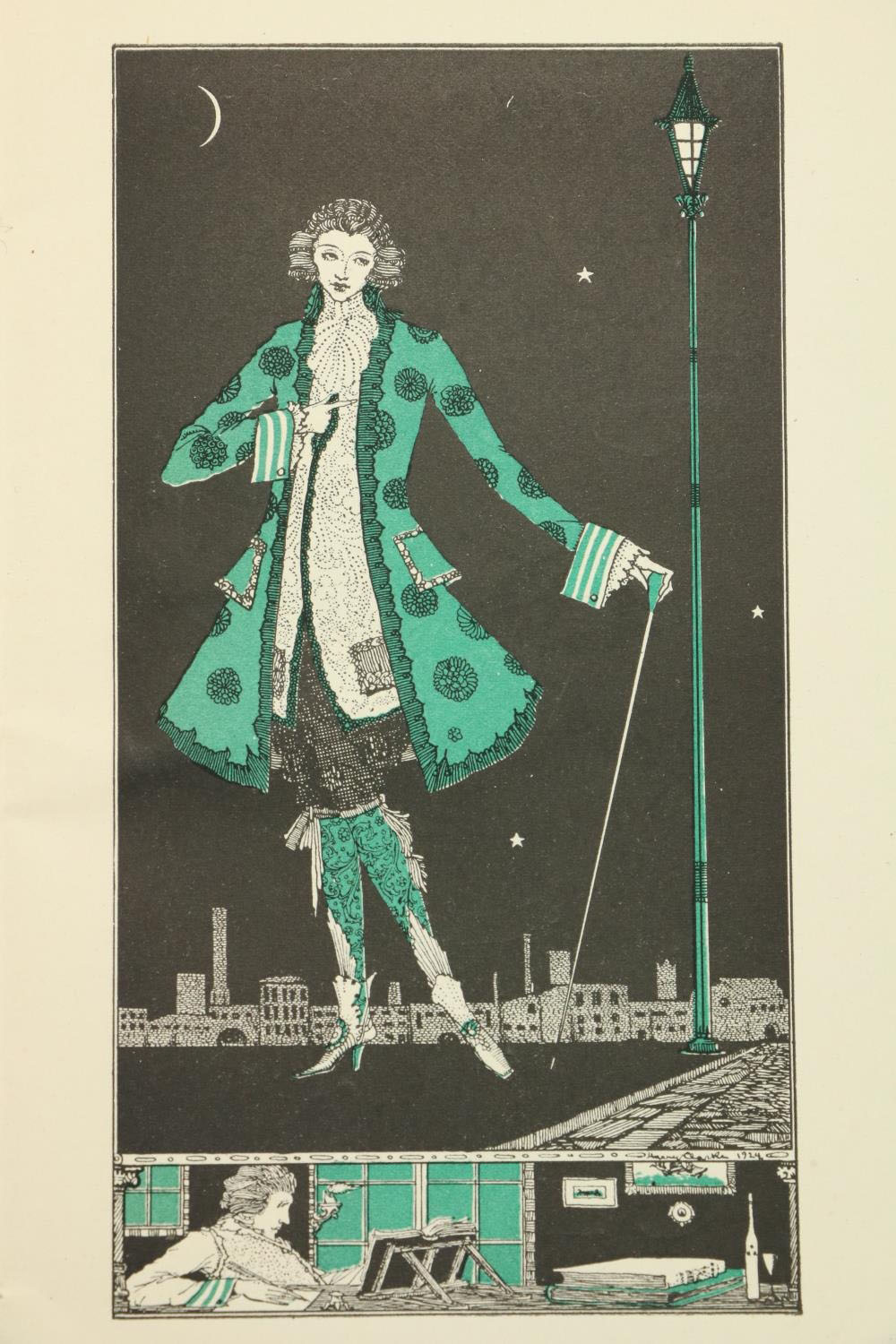
Bloomsbury Roofs (no date) by J. Elspeth Robertson.

• “Lud Heat and Suicide Bridge…are only offshoots of a huge central corpus of mad experimental writing, prose and poetry and just research notes. Pages and pages and pages of this lunacy.” Iain Sinclair describing to Robert Davidson the genesis of his influential poem/book Lud Heat. Related: Serious houses: The Lud Heat Tapes.

• At Criterion Current: Deeper into Robert Altman, a look at five lesser-known films from the director’s expansive filmography. Good to see Quintet receiving some attention, a science-fiction film that’s not without flaws but is still closer to the written SF of the 1970s than the decade’s box-office hits.

• Among the new titles at Standard Ebooks, the home of free, high-quality, public-domain texts: Short Fiction, by Charles Beaumont.

• Mix of the week: Ambient Focus 26.06.21 by Kevin Richard Martin aka The Bug.

• At the BFI: Rory Doherty chooses 10 great films set in 1970s America.

• At Colossal: Frédéric Demeuse’s photos of ancient forests.

• RIP Claudia Cardinale and Danny Thompson.

• New music: If the Sun Dies by Greg Weeks.

• The Strange World of…Rafael Toral.

Silver Forest (1969) by Organisation | A Forest (1980) by The Cure | A Forest In The Sky (2024) by Hawksmoor

The art of Jean-Michel Nicollet

nicollet12.jpg

French artist Jean-Michel Nicollet isn’t really known as a comic artist but one of his strips appeared in the Métal Hurlant Lovecraft special in September, 1978, and was reprinted in the Heavy Metal Lovecraft special a year later. Nicollet’s three-page story, H.P.L., is a slight thing which you can read below but his paintings present more of the atmosphere of Lovecraft’s fictional worlds than many of the other strips in those issues, including the equally slight contribution from Moebius. Prior to this, Métal Hurlant had been using some of Nicollet’s paintings for cover art, as a result of which one of the same illustrations appeared on the cover of the very first issue of Heavy Metal magazine in 1977. The winged Lovecraft from his comic strip turned up again on the cover of a Robert Bloch story collection for French publisher Nouvelles Éditions Oswald (NéO) in 1980.

nicollet09.jpg

Nicollet seems to have retired now from cover work but during the 1970s and 80s he was a very prolific illustrator, especially for NéO. NooSFere has a gallery of his covers which are mostly for reprints of early 20th-century horror, fantasy and adventure tales, also a few detective stories. He seems to have enjoyed illustrating classic detective fiction (photos show him posing with a large Holmesian pipe) so there may well be more covers which aren’t included in the NooSFere list.

nicollet11.jpg

The selections I’ve chosen here match my own preferences for cosmic horror and weird fiction, and represent another attempt to look further afield for this type of illustration. French cover design can be unsympathetic to cover illustration, crowding the paintings with poor type choices and purposeless graphics. The uniform layouts of NéO treat the artwork with more respect.

nicollet13.jpg

nicollet14.jpg

Continue reading “The art of Jean-Michel Nicollet”

Weekend links 796

wright

Academy by Lamplight (1770) by Joseph Wright of Derby.

• “He recounts, for example, the death of the custom of ‘Stephening’ in Drayton Beauchamp, Buckinghamshire, where ‘all the inhabitants used to go on St. Stephen’s Day to the Rectory, and eat as much bread and cheese, and drink as much ale as they chose, at the expense of the Rector’. Stephening was discontinued by the Rector, as the event ‘gave rise to so much rioting’.” Ross MacFarlane on A Collection of Old English Customs, and Curious Bequests and Charities (1842).

• “He should be known as a film music revolutionary”: Milos Hroch on revitalising the legacy of Czech composer Zdeněk Liška.

• At The Wire: Read an extract from Ian Thompson’s Synths, Sax And Situationists: The French Musical Underground 1968-1978.

Wright’s choice of subject matter was not only contemporary, but bordered on the heretical. In his candlelight paintings of the orrery, the air pump and the alchemist at work, he not only employed dramatic lighting and plunging shadows to heighten the drama, but the scenes themselves dealt in mortality and the insignificance of man in relation to the natural world, as well as suggesting that the scientist was now usurping the divine creator.

Charlotte Mullins on the chiaroscuro paintings of Joseph Wright of Derby

• New music: Daylight Daylight by Steve Gunn; Hard Ware by Patrick Cowley; WhiteOut by Lawrence English.

• At Spoon & Tamago: GAKUponi: A self-sustaining loop of fish and plants that hangs on the wall.

• Mix of the week: DreamScenes – September 2025 at Ambientblog.

• At the BFI: Anton Bitel chooses 10 great German horror films.

• At Unquiet Things: A conversation with Benz and Chang.

• RIP Robert Redford.

The Fish (Schindleria Praematurus) (1972) by Yes | Fish Culture (1980) by Marc Barreca | Filter Fish (1995) by Leftfield

Weekend links 795

ansingh.jpg

Heksenkeuken I: The Witches’ Sabbath (1916) by Lizzy Ansingh.

A trailer for The Ice Tower, a new feature film by Lucile Hadžihalilović. Good to see the Hadžihalilović brand of weirdness being supported once again, but then they do things differently in France. Charlie Kaufman was complaining this week that nobody in Hollywood will fund his films. Maybe he should look elsewhere?

• Dreaming of Shadow and Smoke: Jim Rockhill talks to John Kenny about the enduring influence of J. Sheridan Le Fanu’s stories of the supernatural. Rockhill’s latest book is A Mind Turned in Upon Itself, a collection of writings about Le Fanu published by Swan River Press. I designed the exterior of this volume which I’ll be discussing at a later date.

• “Eerie strangeness is abroad, sometimes beautiful, much more often menacing.” Derek Turner reviews Figures Crossing the Field Towards the Group, a novella by Rebecca Gransden. The book is published by Tangerine Press. I recommend it most highly.

• At Public Domain Review: Ivan Aivazovsky’s miniature seascapes (c.1887), which the artist painted into small photographs of himself at work.

• At The Wire: Against The Grain: Mattie Colquhoun on Mark Fisher’s cultural pessimism.

• At the BFI: Miriam Balanescu chooses 10 great mockumentary films.

• Winners and finalists of Astronomy Photographer of the Year 2025.

• At Dennis Cooper’s: Galerie Dennis Cooper presents…Emma Kunz.

• New music: Magnetism by Kali Malone and Drew McDowall.

• Mix of the week: Bleep Mix 308 by DJ Food.

Daveed Diggs’ favourite albums.

Magnetic Dwarf Reptile (1977) by Chrome | Magnetic North (1998) by Skyray | Feed Me Magnetic Rain (2018) by Cavern Of Anti-Matter

Wilfried Sätty and the Cosmic Bicycle

satty1.jpg

Listen, Sleep, Dream (1967), a poster by Wilfried Sätty.

Continuing the San Francisco theme, twenty years ago today I was visiting the city myself. Jay Babcock, Richard Pleuger and I had driven up there from Los Angeles to research some of the history of Wilfried Sätty (1939–1982), master collagist, psychedelic poster artist, record cover designer and book illustrator. We spent 24 hours driving around the Bay area: up to Petaluma, where we met Sätty’s friend and artistic collaborator, David Singer, a fine collage artist in his own right; then to Berkeley to talk to Walter Medeiros, custodian of the Sätty estate and one of the leading scholars of the psychedelic poster scene; finally to North Beach, where we found the house in Powell Street where Sätty was living and working in the 1960s and 70s.

satty2.jpg

Sätty and an unknown woman in the artist’s basement pad/studio at Powell Street, a place he referred to as “the North Beach U-boat”. This was from a magazine feature that I photographed at David Singer’s house. I forget the source, it may have been from a 1972 TIME article about San Francisco artists.

The trip was a dizzying experience, but fascinating for what it revealed about Sätty and his work. From David Singer we learned, among other things, that the name “Sätty” had been chosen as a pseudonym by the former Wilfried Podriech for its echo of Ancient Egypt; the pronunciation, when you pay attention to the umlaut, conjures the word “Seti”. Walter Medeiros showed us stacks of original Sätty artwork, including all the collages intended for the artist’s final book, Visions of Frisco, a visionary history of the city which was published in 2007. Medeiros later emailed me a few additional notes which I have filed somewhere, correcting my guesswork in the piece I’d written about Sätty for Strange Attractor Journal earlier in 2005. At the time the only information I had to hand was the scant biographical information in Sätty’s books, the interview that he gave to Man, Myth and Magic in 1970, and a few web pages devoted to the artist which someone had put together in the late 1990s then never updated.

satty3.jpg

The house at 2143 Powell Street as it was in 2005. Those trees have grown considerably in the past 20 years.

All of which had me looking last week to see whether Sätty had a more substantial web presence today. Happily, he does, with this dedicated site maintained by Ryan Medeiros, Walter’s son. I’m saddened to read that Walter Medeiros is no longer with us but it’s gratifying to discover his family continuing his efforts to preserve Sätty’s legacy. Sätty is often reduced to a minor figure in the history of San Francisco poster art but he was more than this: a book creator as well as an illustrator, and a collage artist who extended Max Ernst’s engraving collage into new dimensions, using printing presses to multiply and overprint his assemblages.

satty4.jpg

Sätty’s first book, The Cosmic Bicycle, was published in 1971 by Straight Arrow Books, the publishing imprint of Rolling Stone magazine. This is a collection of collages, a few of them in colour, in which the compositions have a distinctly Surrealist quality. Sätty’s subsequent work downplayed the wild juxtapositions in favour of greater compositional control. His subsequent collection, Time Zone (1973), is a wordless “novel” in the manner of Max Ernst’s collage books.

satty5.jpg

The Cosmic Bicycle is also the title of a 4-minute animated film which brings to life some of Sätty’s pictures from the book. I linked to a copy of this years ago but that link is now defunct so here it is again, an odd little film which runs the artwork through a solarisation process then moves pieces of them around to the accompaniment of an electronic score. (As usual with Vimeo today, you have to log in to see it.) The film was directed by Les Goldman, an animation producer who was mentioned here recently in relation to The Hangman (1964), a short film he made with Paul Julian. Goldman’s own film seems almost amateurish in comparison but the music is by Moog pioneers Paul Beaver and Bernie Krause, credited here as Parasound Inc. Beaver and Krause’s Gandharva album features one of Sätty’s finest cover designs, with title lettering by David Singer. The film score isn’t the duo’s finest by any means—I’d even describe it as rather annoying—but it’s good to see their Sätty connection reinforced.

Previously on { feuilleton }
The original Gandharva
The Occult Explosion
Wilfried Sätty album covers
Nature Boy: Jesper Ryom and Wilfried Sätty
Wilfried Sätty: Artist of the occult
Illustrating Poe #4: Wilfried Sätty