A tabled question

bps1.jpg

Work-related research this week had me wondering who it was that first thought of turning Battersea Power Station into a table. For the past few days I’ve been looking at a lot of the illustration work that George Hardie produced for the Hipgnosis album covers in the 70s and 80s; I’ll explain why in due course but the quest led me to seek out the songbook for Pink Floyd’s Animals album, two pages of which can be seen in the first Hipgnosis book.

Hipgnosis would often extend their album design into promotional areas, producing related posters, stickers, and so on. Pink Floyd’s popularity meant there was demand for songbooks, and the one for Animals is a treat for the use it makes of additional photos from the flying-pig sessions at Battersea Power Station. The idea of using the power station for the cover came from Roger Waters, incidentally; a shame he didn’t apply the same invention to his lyrics. But I digress…
bps2.jpg

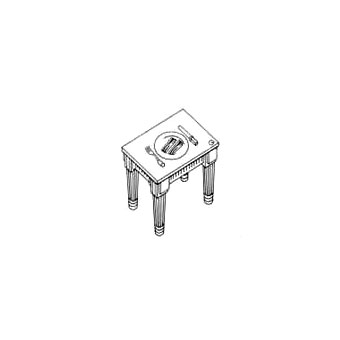
From the Animals songbook (1977). By George Hardie?

Between the photos (and, er, the songs) there are several pages of graphics by (I’m guessing) Bush Hollyhead and George Hardie; the former depicts a pig, dog and sheep in various stylised arrangements while Hardie provided a vignette of bacon rashers on a Battersea table. This was 1977 so I’m assuming it’s the earliest example of the power-station-as-table, unless, of course, somebody out there knows better.
bps5.jpg

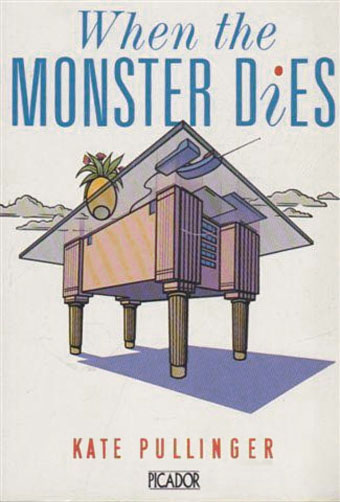
When the Monster Dies (1990) by Kate Pullinger. Illustration by Willie Ryan.

And sure enough… Thanks to herr doktor bimler for suggesting this one.
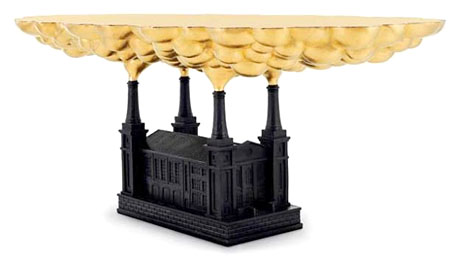
table.jpg

Robber Baron Table (2006) by Studio Job.

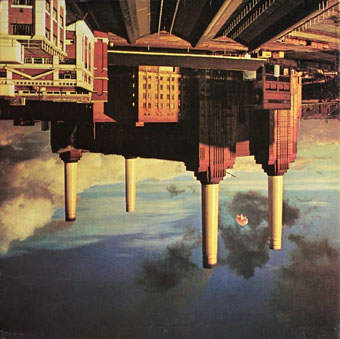
Artist David Mach took up the table idea in the 1990s to produce a series of collages showing an enormous chimney-legged chair sitting beside the power station. There’s no explanation as to why the table should be upside down but then artists often don’t think things through as well as designers. A better idea is the Battersea-like Robber Baron Table (2006) by Studio Job, part of a series of furniture concepts suitable for oligarchs and those who work in the City of London.
bps3.jpg

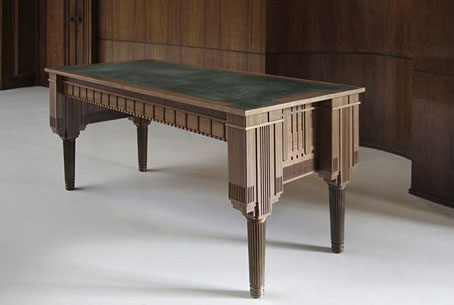
And so to the inevitable, one of a number of stylish tables currently being manufactured by the Battersea Table company.
bps4.jpg

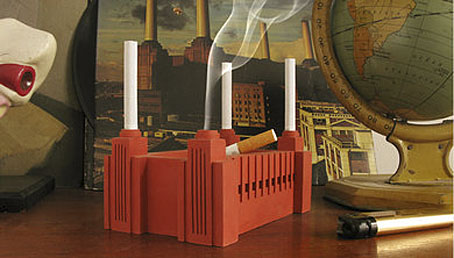
Not a table but another clever repurposing of Giles Gilbert Scott’s architecture. Atypyk makes concrete ashtrays for those who still smoke, with the chimneys formed from unsmoked cigarettes. Battersea Power Station when it was in use did much to contribute to London’s polluted air so this seems a fitting by-product. Are there any more examples out there?

Previously on { feuilleton }
Design as virus 16: Prisms
Labels
Storm Thorgerson, 1944–2013
Hipgnosis turkeys
Peter Christopherson, 1955–2010
Storm Thorgerson: Right But Wrong
Battersea Power Station

Weekend links 225

mori.jpg

Still from The Shaman-Girl’s Prayer (1997), a video piece by Mariko Mori. This page has pictures of Mori’s futuristic/cosmic performances, films & environments.

Time Out of Mind (1979) was a BBC TV series about science fiction writers, five short films concentrating on Arthur C. Clarke, John Brunner, Michael Moorcock, Anne McCaffrey and an sf convention. I was only interested in the Moorcock film at the time, not least because it featured a short clip of Hawkwind playing Silver Machine, and inserted scenes from the film of The Final Programme (1973) between the interviews. The Moorcock episode is less about his books than about New Worlds magazine and the so-called New Wave of sf in general, so you also see rare footage of M. John Harrison in a Barney Bubbles “Blockhead” T-shirt talking then ascending a limestone cliff, and bits of interviews with Brian Aldiss and Thomas Disch. Ballard isn’t interviewed but is present via a scene from the Harley Cokeliss film Crash! (1971) in which Gabrielle Drake slides in and out of a car while someone reads Elements of an Orgasm from The Atrocity Exhibition.

• “…there happened to be a book on Ritual Magick that talked about John Dee and summonings and Dr. Faust and all that kind of stuff. So then obviously at that age, too, I read HP Lovecraft and then Michael Moorcock and what they call fantasy literature. Through HP Lovecraft I discovered Arthur Machen, and I think that sort of percolated down inside…” Dylan Carlson of Earth talking to Steel for Brains. The Wire has the vinyl-only track from the new Earth album, Primitive And Deadly, and a track from Carlson’s solo album, Gold. Related: Artwork by Samantha Muljat, designer/photographer for the new Earth album.

Phantasmaphile has details of the next two issues of deluxe occult magazine Abraxas. Issue 6 includes a major feature on Leonora Carrington while Luminous Screen is a special issue devoted to occult cinema.

• More Broadcast: Video of a performance at Teatro Comunale di Carpi, March 2010 (part 2 here), and “constellators and artifacts” at A Year In The Country.

• “Petition demands return of ‘Penis Satan’ statue to Vancouver.” There’s an uncensored photo of the contentious statue here.

• Literary Alchemy and Graphic Design: Adrian Shaughnessy on James Joyce’s writings among graphic designers.

• Frank Pizzoli talks to John Rechy about “the gay sensibility”, melding truth and fiction, and his literary legacy.

• Mixes of the week: Secret Thirteen Mix 127 by Roberto Crippa, and FACT Mix 459 by Craig Leon.

Alan Moore has finished the first draft of his million-word novel, Jerusalem.

• Crazy pavings: Alex Bellos on Craig Kaplan’s parquet deformations.

Noise Not Music: “Live recordings, obscure cassettes and more…”

Pylon of the Month

Zoot Kook (1980) by Sandii | Rose Garden (1981) by Akiko Yano | Telstar (1997) by Takako Minekawa

Weekend links 221

cornell.jpg

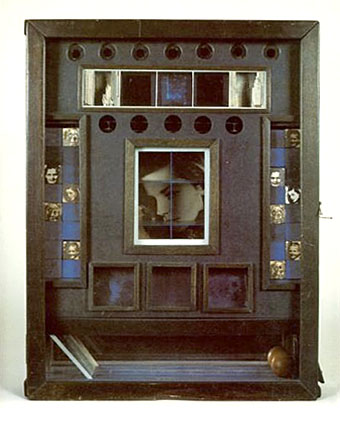
Untitled (Penny Arcade Portrait of Lauren Bacall) (1946) by Joseph Cornell.

• Having been a Bernard Szajner enthusiast for many years it’s good to see his music receiving some belated reappraisal. David McKenna talked to Szajner about his Visions Of Dune album (which is being reissued by InFiné next month), laser harps, The (Hypothetical) Prophets, and working with Howard Devoto.

• Priscilla Frank posts some big views of Marjorie Cameron’s occult paintings as a preview of the forthcoming exhibition at MOCA Pacific Design Center, Los Angeles.

• Fascinating reading in light of the recent kerfuffle over True Detective, Christopher Loring Knowles on the possible sources of HP Lovecraft’s Cthulhu Mythos.

Those who set up oppositions between the electronic technology and that of the printing press perpetuate Frollo’s fallacy. They want us to believe that the book—an instrument as perfect as the wheel or the knife, capable of holding memory and experience, an instrument that is truly interactive, allowing us to begin and end a text wherever we choose, to annotate in the margins, to give its reading a rhythm at will—should be discarded in favor of a newer tool. Such intransigent choices result in technocratic extremism. In an intelligent world, electronic devices and printed books share the space of our work desks and offer each of us different qualities and reading possibilities. Context, whether intellectual or material, matters, as most readers know.

Alberto Manguel, lucid as always, on the act and import of reading.

• “It’s time to give prog rock’s artist-in-residence Roger Dean his due,” says Amber Frost. No argument there, I did my bit in 2010.

• “Why do the covers of so many self-published books look like shit?” asks B. David Zarley.

• Mixes of the week: FACT mix 455 by Airhead, and Secret Thirteen mix 225 by Clock DVA.

• At Core77: Rain Noe chooses favourite skyscraper photos by Russian urban explorers.

• “O, Excellent Air Bag”: Mike Jay on the nitrous oxide fad of the early 19th century.

Nick Carr goes in search of Manhattan’s last remaining skybridges.

Lauren Bacall at Pinterest.

• Shaï Hulud (1979) by Zed (Bernard Szajner) | Welcome (To Death Row) (1980) by Bernard Szajner | Person To Person (1982) by The (Hypothetical) Prophets

The recurrent pose 54

flandrin1.jpg

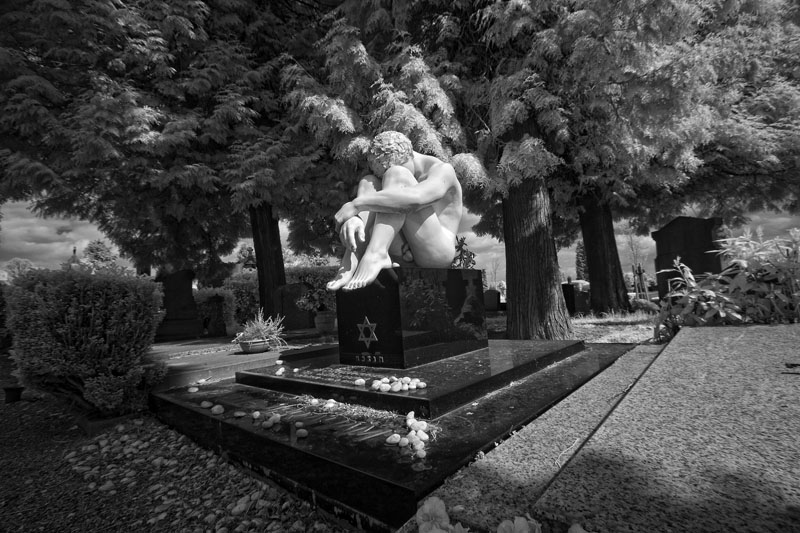
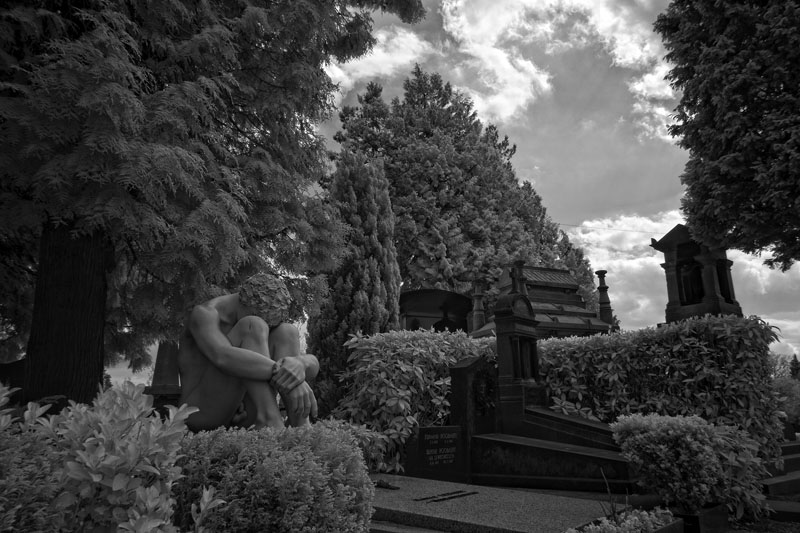
More from the pose that keeps on giving. Big thanks to Lance for sending the photos above and below which identify the Flandrinesque figure from post no. 22 not as a sculpture from Hermosa Beach but a memorial statue in the Cimetière d’Ixelles, Brussels. The eternal hazard of web photos is the erroneous or missing attribution, something I do my best to avoid.

flandrin2.jpg

flandrin3.jpg

And speaking of missing attributions, that’s what we have here. This site may be the origin although I’ve seen an earlier page with the same photo. Nice boys, anyway. Thanks to Hal for the tip!

Elsewhere on { feuilleton }
The recurrent pose archive

Genet art

fini1.jpg

Portrait of Jean Genet II (1950) by Leonor Fini.

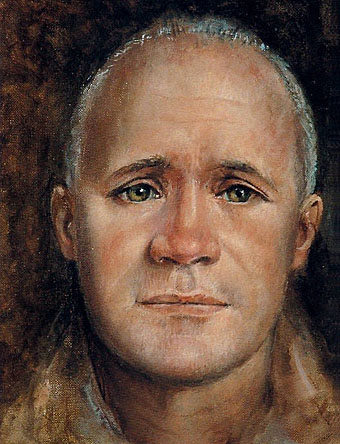
Artworks depicting Genet or based on his work are more plentiful than I thought. These are some of the better examples. It’s good to know that the great Leonor Fini was one of the earliest portraitists; in addition to painting two pictures of Genet she also produced a series of erotic engravings based on his writings.

cocteau.jpg

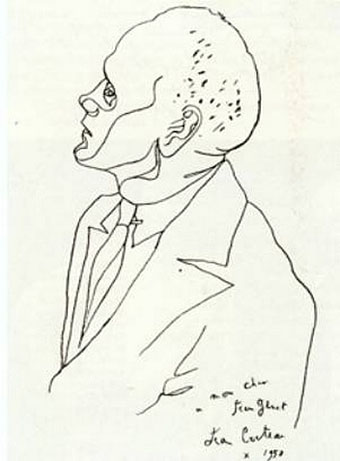
Jean Genet (1952) by Jean Cocteau.

A portrait by Cocteau I hadn’t seen before.

giacometti.jpg

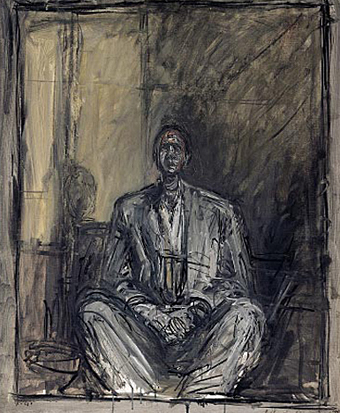
Portrait of Jean Genet (1955) by Alberto Giacometti.

One of three portraits. Genet speaks favourably of Giacometti in Antoine Bourseiller’s film.

kiefer.jpg

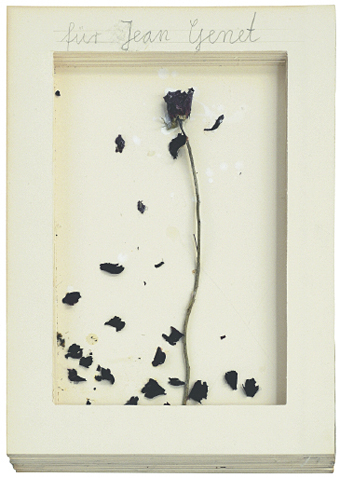
For Jean Genet (1969) by Anselm Kiefer.

Continue reading “Genet art”