Weekend links 385

picasso.jpg

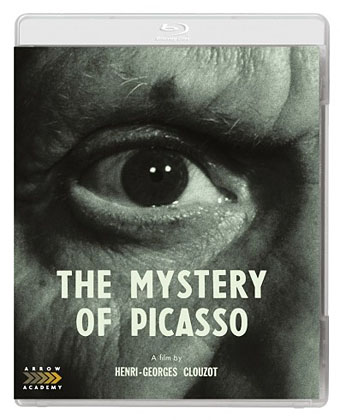
• It won’t be out until late January—and then in the UK only—but the blu-ray premiere of The Mystery of Picasso (1956) by Henri-Georges Clouzot was announced this week. The initial run of the discs (there’s also a DVD) will include a booklet containing my essay about the film, something I was very pleased and honoured to be asked to write. Clouzot’s remarkable study of Picasso drawing and painting for the camera was made immediately after his masterwork, The Wages of Fear (also newly available on UK blu-ray), and this new edition will include two short extras, one of which, A Visit to Picasso (1949) by Paul Haesaerts, is an excellent precursor/companion to the main feature. More on this subject later.

• At the Internet Archive: an almost complete run of The Twilight Zone Magazine (1981–1989). While masquerading as a TV-series spin-off, TZ under the editorship of TED Klein was an excellent periodical devoted to horror and dark fantasy. In addition to running original fiction by major authors (Stephen King was a regular), the magazine contained features about older writers such as Lovecraft and Machen along with book reviews by Thomas Disch, film reviews by Gahan Wilson, interviews and more.

• “Bram Stoker was gay,” says Tom Cardamone in a review of Something in the Blood: The Untold Story of Bram Stoker, the Man Who Wrote Dracula by David J. Skal. I’ve not read Skal’s book so can’t comment on its claims but his earlier Hollywood Gothic (about Dracula on page and screen) includes some discussion of “sexual ambiguity” in Stoker’s work.

• Mixes of the week: FACT mix 625 by Elena Colombi, Secret Thirteen Mix 235 by Rhys Fulber, and XLR8R Podcast 514 by Tommaso Cappellato.

Help, Help, The Globolinks! is a previously unreleased electronic soundtrack by Suzanne Ciani, out next week.

La Région Centrale (1971), Michael Snow’s epic of landscape gyrations in two parts, here and here.

Alexander Calder and the Optimism of Modernism: Jed Perl in Conversation with Morgan Meis.

• Illustrations by Lynd Ward for The Haunted Omnibus (1935) edited by Alexander Laing.

Daniel Dylan Wray on the gay-porn music of disco pioneer Patrick Cowley.

• It’s that man again (and his drawings): Ernst Haeckel: the art of evolution.

• At Dennis Cooper’s: Steve Erickson presents A Black Psychedelia Primer.

Bootsy Collins‘ favourite albums.

Picasso (1948) by Coleman Hawkins | Pablo Picasso (1976) by The Modern Lovers | Picasso Suite pt. 1 (1993) by David Murray Octet
Weekend links 382

yoshida.jpg

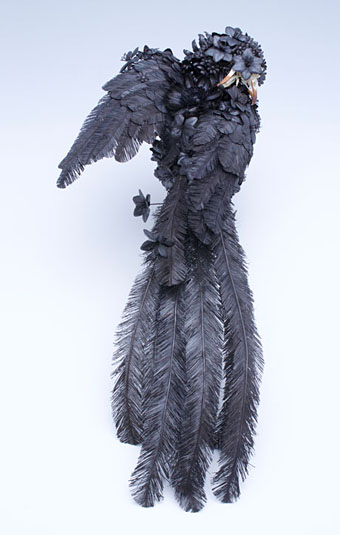
Raven (2015), a metal sculpture by Taiichiro Yoshida.

• “Lumia: Thomas Wilfred and the Art of Light [at the Smithsonian American Art Museum] restores Thomas Wilfred (1889–1968) to his rightful place in the history of modern art.”

• At Brown Noise Unit: a fascinating, lengthy interview by Philip Kaberry with Stephen O’Malley of Sunn O))) et al, with particular focus on O’Malley’s work with Japanese musicians.

• Erik Davis talks to scholar, writer, and mythographer William Rowlandson about Jorge Luis Borges, magical trees, Yankee mysticism, and the power of the weird and murky.

• The first issue of the world’s first magazine of fantastic art and literature, Der Orchideengarten (previously), has been reprinted in full with additional English translation.

• At Muddy Colors: the month in covers for September/October which includes my cover for Under the Pendulum Sun by Jeannette Ng (and which is on sale now).

• At 3:AM Magazine: Adam Scovell talks to horror author Ramsey Campbell about the ghost stories of MR James.

Paralysis: Live at Silent Night #8, a new release on (limited) cassette and digital by The House In The Woods.

• At Dangerous Minds: Jozef van Wissem buries the dead in his new video, Virium Illarum.

PKD Files — A podcast about the life and work of Philip K. Dick.

• Russell Cuzner on The Strange World of Nurse With Wound.

Clark Collis on the rise and fall of Fangoria.

• The North Star Grassman And The Ravens (1971) by Sandy Denny | Flight Of The Raven (1979) by Emerald Web | Kill The Great Raven (1979) by Snakefinger

Eugène Thivier’s Nightmare

thivier1.jpg

October is the month of nightmares so now seemed a suitable moment to air this sculpture, The Nightmare (1894) by Eugène Thivier, which I’ve had bookmarked for some time. Thivier (1845–1920) seems to be one of those artists who produces a single striking work with little else in the oeuvre to match it. The subject is a familiar one, of course, a variation on the sleeper menaced by an incubus or other creature of the night. A previous October post was devoted to Fuseli’s celebrated painted version; similar pictorial examples abound but sculptures of the theme are scarce. Thivier’s work is in the Musée des Augustins in Toulouse. Wikimedia Commons has a few more photos of the poor woman and her nocturnal tormentor.

thivier2.jpg

thivier3.jpg

Previously on { feuilleton }
Fuseli’s Nightmare

Weekend links 377

czukay.jpg

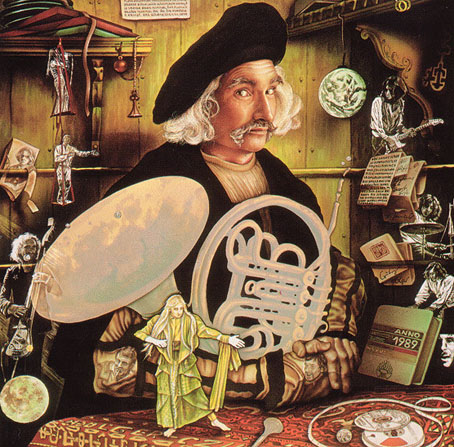
Holger Czukay by Ursula Kloss, from the cover of Czukay’s Moving Pictures (1993). (The painting is a pastiche of Holbein’s portrait of Georg Gisze.)

• RIP Holger Czukay. The obituaries have emphasised his role as the bass player for Can, of course, but he was just as important to the band as a sound engineer and producer: it was Czukay’s editing skills that shaped many of their extended jams into viable compositions. Post-Can he recorded 20 or so albums by himself or with collaborators, several of which can be counted among the best of all the Can solo works. Geeta Dayal and Jason Gross remembered their encounters with Czukay, while FACT reposted their 2009 interview. Czukay’s final interview was probably last year when he talked to Ian Harrison for Mojo magazine.

For my part, I was astonished when Czukay phoned me out of the blue one day in 1997 to thank me for sending him a video I’d made in the 1980s. This was a scratch production created with two VCRs that set 300 clips from feature films to Hollywood Symphony, the final piece on Czukay’s Movies album. Years later, MTV showed a couple of similar video collages that Czukay had made for Can so I sent a copy of my effort to Spoon Records thinking he might be amused. His public persona was often one of a wacky mad professor but the jokiness was allied to an impressive technical skill and curiosity. Most of our brief conversation was taken up with my answering his questions about my primitive video recording.

• “Every pebble can blow us sky-high”: A reconsideration by J. Hoberman of The Wages of Fear, directed by Henri-Georges Clouzot.

• Dario Argento’s masterpiece of horror cinema, Suspiria, is 40 years old. Martyn Conterio looks at five of its influences.

Mark Korven’s Apprehension Engine: an instrument designed to play the music of nightmares.

• The mystery of the Voynich Manuscript solved at last? Nicholas Gibbs thinks so.

• At Dangerous Minds: The macabre and disturbing sculptures of Emil Melmoth.

Jonathan Meades reviews A Place for All People by Richard Rogers.

• Mix of the week: Secret Thirteen Mix 229 by Erin Arthur.

• The ten creepiest objects in the Wellcome Collection.

Rob Chapman’s essential psychedelia reading list.

It’s Just A Fear (1966) by The Answers | Fear (1992) by Miranda Sex Garden | Constant Fear (2002) Bohren & Der Club Of Gore

Moonshine by Jasmine Gower

moonshine.jpg

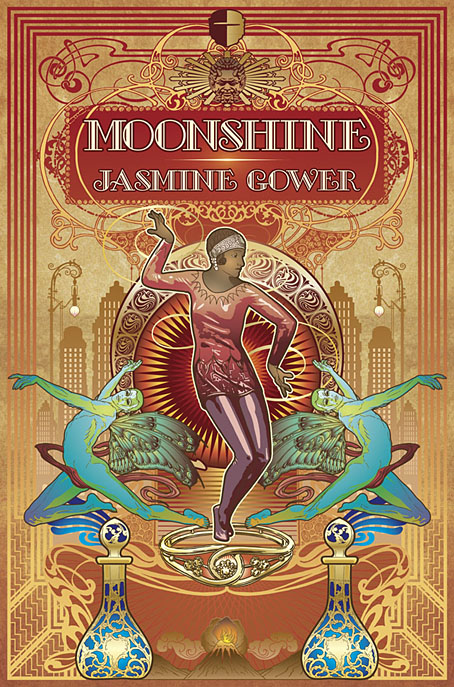
Presenting yet another cover design for the house of furious automata, Angry Robot Books. This one won’t be published until next year but the cover has been previewed on the Barnes & Noble Sci-Fi and Fantasy Blog so I can show it here. Like Under the Pendulum Sun, this is another fantasy scenario with a fresh take on fairy lore:

Daisy’s starting a new job and stylish city life, but mage-hunters out for her dark magic threaten to destroy her vogue image.

In the flourishing metropolis of Soot City (a warped version of 1920s Chicago), progressive ideals reign and the old ways of magic and liquid mana are forbidden. Daisy Dell is a Modern Girl—stylish, educated and independent—keen to establish herself in the city but reluctant to give up the taboo magic inherited from her grandmother.

Her new job takes her to unexpected places, and she gets more attention than she had hoped for. When bounty hunters start combing the city for magicians, Daisy must decide whether to stay with her new employer—even if it means revealing the grim source of her occult powers.

The brief this time was for something with an Art Nouveau/Art Deco feel. I had plans at the outset to incorporate some of the Art Nouveau stylings seen in the Netherlands circa 1910 but that idea was dropped in favour of a more overt collision between Nouveau and Deco. The latter element was essential since Jasmine’s story borrows much from the Roaring Twenties with its city setting, Prohibition theme, speakeasies and dance halls. The poses of the figures are based on the chryselephantine sculptures that were popular in the Deco period; the Daisy figure I borrowed from a statue by Ferdinand Preiss of a Charleston dancer.

Moonshine will be published in February 2018. Meanwhile there’s a lot more of my illustration work waiting in the wings. So far this year I’ve created 55 illustrations for four different books, and there’s even more to come. This is what is known as a busy time. One or more of the books will be out before the end of the year so, as always, watch this space.