Weekend links 36

high_society.jpg

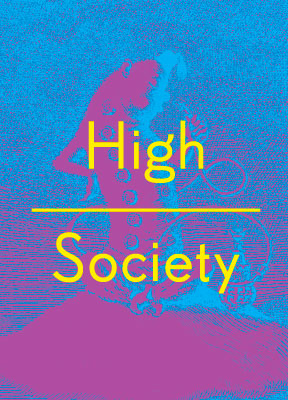
Mervyn Peake’s Caterpillar from Alice’s Adventures in Wonderland finds itself used to promote High Society, an exhibition at the Wellcome Collection devoted to the long history of human drug-taking. There’s more about the exhibition here and also an accompanying book by Mike Jay from Thames & Hudson. Related: The Most Dangerous Drug:

A group of British drug experts gathered by the Independent Scientific Committee on Drugs (ISCD) rated alcohol higher than most or all of the other drugs for health damage, mortality, impairment of mental functioning, accidental injury, economic cost, loss of relationships, and negative impact on community.

• Unless the magazine Man, Myth & Magic was advertised on TV in 1970 (and I suspect it would have been) Austin Osman Spare’s work has never been seen on British television, certainly not in any detail or with a credit to the artist. This week the BBC finally paid him some attention with a brief spot on The Culture Show as a result of the Fallen Visionary exhibition which is still running (until November 14) in London. Alan Moore, Fulgur‘s Robert Ansell and others attempt to summarise Spare’s career in seven minutes.
fujita.jpg

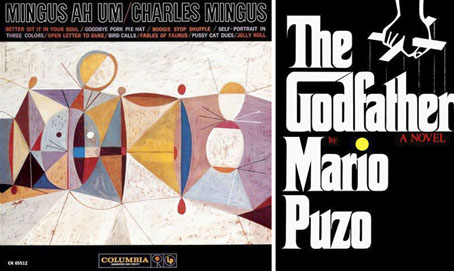
Neil Fujita designs: Mingus Ah Um (1959) and The Godfather (1969).

• RIP graphic designer Neil Fujita. Related:

“By taking the “G” and extending it to the “D,” I created a house for “God.” The way the word was designed was part of the logo and so was the type design. So when Paramount Pictures does a film version or Random House, which bought out the book from Putnam, does another Godfather book, I still get a design credit. In fact, before the first Godfather film opened in New York I saw a huge billboard going up in Times Square with my design on it. I actually got them to stop work on it until we were able to come to an agreement.” Waxing Chromatic: An Interview with S. Neil Fujita

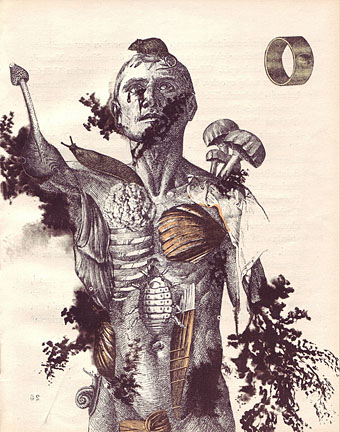
French SF illustration. Related: Where did science fiction come from? A primer on the pulps, a feature by Jess Nevins with some of the craziest covers you’ll see this month.

• Gay-bashers in 1970s San Francisco had to beware the wrath of the Lavender Panthers.

• More Marian Bantjes as she discusses her work in an audio interview.

Music from Saharan cellphones.

Origami Beauty Shots.

Krautrock.com

Better Git It In Your Soul (1959) by Charles Mingus.
Weekend links 35

cr.jpg

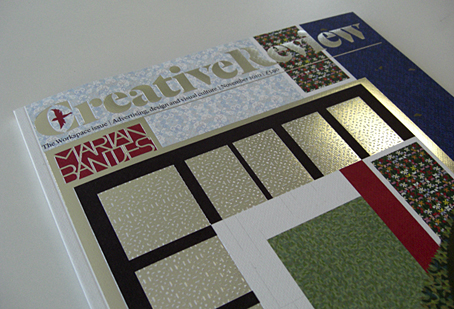
Marian Bantjes designs the cover of the latest Creative Review and there’s a feature about her work inside.

• “…the question: ‘was Shakespeare gay?’ strikes me as so daft as to be barely worth answering. Of course he was. Arguably he was bisexual, of sorts, but his heart was never on his straight side.” Don Paterson throws the cat among the pigeons in an examination of the Shakespeare’s sonnets. Related (sort of): Shakespeare and Company: The bookshop that thinks it’s a hotel. Also related: Jeanette Winterson revisits Shakespeare and Company.

100 orbs of light float in the Schuylkill River. Also in Philadelphia: Animators Amok in a Curiosity Cabinet: the Brothers Quay are making a film in the Mütter Museum. Can’t wait to see it.

• More Alan Moore: Fossil Angels, a lengthy essay about magic and the occult, was written in 2002 but hasn’t been given a public airing until now.

Alberto Manguel is always worth reading:

As Borges was well aware even then, the history of literature is the history of this paradox. On the one hand, the deeply rooted intuition writers have that the world exists, in Mallarmé’s much-abused phrase, to result in a beautiful book (or, as Borges would have it, even a mediocre book), and, on the other hand, to know that the muse governing the enterprise is, as Mallarmé called her, the Muse of Impotence (or, to use a freer translation, the Muse of Impossibility). Mallarmé added later that all who have ever written anything, even those we call geniuses, have attempted this ultimate Book, the Book with a capital B. And all have failed.

• Here Comes Everybody: Wake In Progress is a self-described “foolhardy attempt to illustrate Finnegans Wake”. Easier to illustrate than make a film of the book, I’d have thought, and Mary Ellen Bute already attempted the latter.

hoffmeister.jpg

Psychic Explosion: Adolf Hoffmeister’s illustrations for a 1967 edition of Lautréamont’s Poesies at A Journey Round My Skull.

Craig Colorusso’s Sun Boxes can be seen at Turner Falls, Massachusetts, during November.

Clive Hicks-Jenkins has a book and retrospective exhibition of his art due next year.

• A sneak peek into The Steampunk Bible to which I’m a contributor. And also here.

• “Human or other; depends who comes”: the Ballardian films of Paul Williams.

Transmission (1979) by Joy Division; Transmission (1995) by Low; Monkey (2010) by Robert Plant.

Weekend links 33

andrews1.jpg

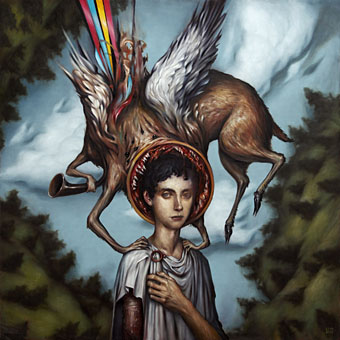
Blue Sky Noise (2010) by Esao Andrews.

Franz Xaver Messerschmidt is the first exhibition in the United States devoted exclusively to the 18th-century sculptor. Related: an earlier post about the artist’s work.

• How are the team behind War Horse planning to follow up their smash hit? With a gay love story performed by puppets. Related: Achilles (1995) by Barry JC Purves.

• More great posts at A Journey Round My Skull: Czechoslovakian Expose VI and Black Cradle of Bright Life, fifteen works by the Macedonian artist Vangel Naumovski (1924–2006).

Top 10 Anti-Gay Activists Caught Being Gay. Related: “Fuck your feelings,” in which columnist Dan Savage gets righteously impatient when a correspondent complains. As Savage says, people who use their faith as a stick to beat gay people contribute to an atmosphere of intolerance in which kids are bullied for being gay (or appearing to be), or transgender, or merely different, and kill themselves as a result. Over the past couple of weeks there’s been an upsurge of US media attention to the most recent suicides; Savage inaugurated the It Gets Better project in order to help. Also related: God Loves Poetry.

andrews2.jpg

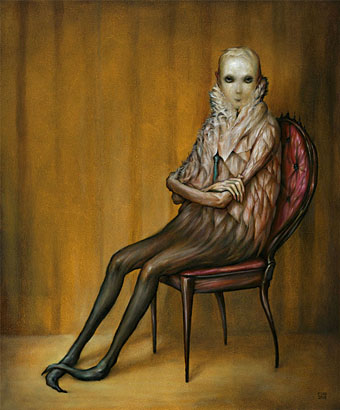
Meigh (2010) by Esao Andrews.

Antony Hegarty enthuses about Shoot Yer Load, one of the scurrilous 12″ singles released by my Savoy colleagues in the 1980s. Antony and the Johnsons have a new album out, Swanlights, on Secretly Canadian.

When the future of music was a rainbow hued parabola: book designer John Gall collects old synthesizer manuals.

Fantastic Memories (1944) by Maurice Sandoz, illustrated by Salvador Dalí.

Urban optometry: life as a London crane operator at BLDGBLOG.

• Today is 10/10/10 which means it’s Powers of Ten Day.

These New Puritans: a band like no other.

Art Nouveau: a virtual exhibition.

Diaghilev: Lord of the dance.

Flaming Telepaths (1974) by Blue Öyster Cult; Flaming Telepaths (2005) by Espers.

Carceri, thermae and candelabra

piranesi_tivoli.jpg

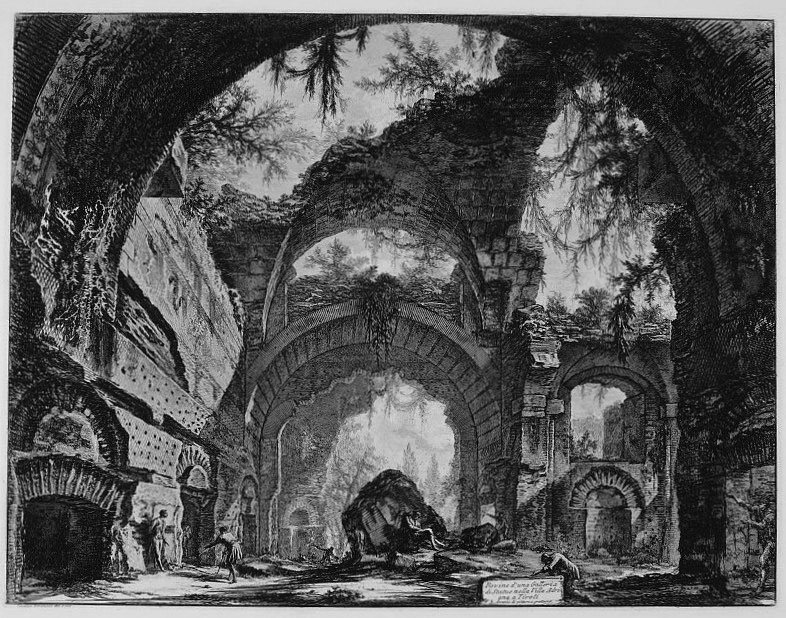
Piranesi’s etching which purports to show a statue gallery at Hadrian’s Villa was published in 1770 as part of the artist’s Vedute di Roma series, and conveniently provides a themed link for a pair of new exhibitions. The artist’s attribution of statue gallery was a mistaken one, the structure is actually the remains of Hadrian’s thermae, or baths, but archaeology was still in its infancy in the 18th century so mistakes were inevitable. If you’re fortunate enough to be in Venice during the next two months the Fondazione Cini has a major exhibition of Piranesi’s work, The Art of Piranesi: architect, engraver, antiquarian, vedutista, designer. On display are over three hundred prints which no doubt include many of the Vedute di Roma.

piranesi.jpg

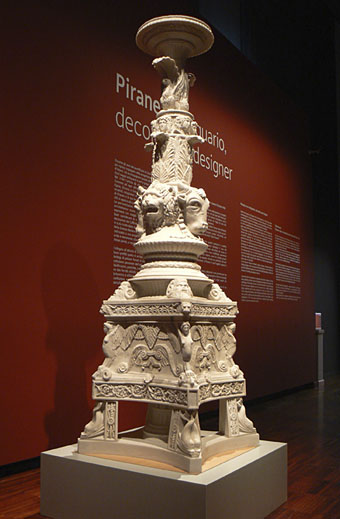
Ornamental candelabrum created by Factum Arte from a design by Piranesi.

Good as that sounds, what’s especially notable about this exhibition is a presentation of three-dimensional works specially created from Piranesi’s designs for candelabra, fireplaces, and other objects based on his studies of artefacts from the ancient world. These pieces have been produced by Factum Arte who have a great website showing the finished pieces and also a page detailing the production of the objects. Also on that page is one of the exhibition’s other features, a 10-minute video by Gregoire Dupond which cleverly joins together and animates a journey through several of Piranesi’s Carceri d’invenzione (Imaginary Prisons). The music accompaniment is Bach’s Cello Suite 2 which happens to be the piece played by Yo-Yo Ma in an earlier animation of the Carceri, so it’s a reasonable guess that the earlier film was an inspiration for this new work. The exhibition runs to November 21, 2010.

jauregui.jpg

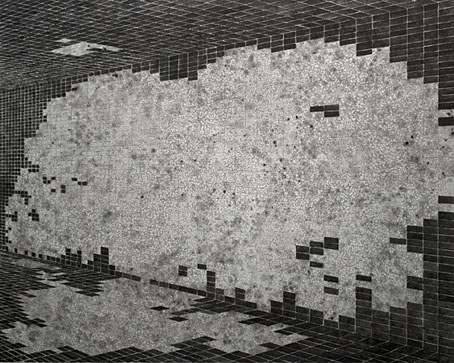
Jack’s Bath (2010) by Danny Jauregui. Gouache on canvas.

Hadrian’s obsession with his doomed lover Antinous makes the Emperor a gay icon which explains the connection between Piranesi’s view of the ruined baths and an exhibition of work by American artist Danny Jauregui. There Goes the Neighborhood is at the Leslie Tonkonow Gallery, New York, and features a selection of Jauregui’s paintings of tiles from the bathhouses which were a feature of gay life in the days before AIDS.

I make paintings of bathhouses in ruin. Moldy, disheveled and abandoned, the paintings are memorials to the absence of memorials – indexes of the traumatic erasure inflicted on the radical gay sexuality of the past. They are paintings of what I imagine those spaces to look like, had they not been disguised and hidden from sight. (More.)

The exhibition runs until October 30, 2010. By coincidence gay news blog Towleroad had a post yesterday about New York’s first anti-gay police raid on the Ariston Baths in 1903.

time-bandits.jpg

Time Bandits.

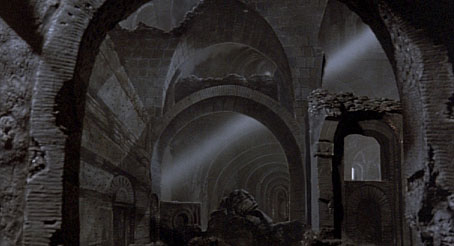
Seeing as I posted the picture of Hadrian’s baths I have to also post this shot from Terry Gilliam’s Time Bandits (1981) showing the interior of the Fortress of Ultimate Darkness. Here we see the Piranesi’s ruined baths incorporated into a vast and gloomy space which must surely be inspired by the Carceri, the views of Rome being absorbed by the artist’s darker imaginings. And for a final piece of trivia, writer Marguerite Yourcenar is not only the author of Memoirs of Hadrian (1951), a novel about the Emperor’s passion for Antinous, but also penned an essay about the Carceri. I haven’t read either of those works so I think it’s time to add them to the shopping list.

Update: For those in the UK, there’s also Piranesi’s Prisons, an exhibition at the Mead Gallery, Warwick, from now until December.

Elsewhere on { feuilleton }
The etching and engraving archive

Previously on { feuilleton }
La Tour by Schuiten & Peeters
Set in Stone
Hadrian and Greek love
Piranesi as designer
Vedute di Roma
Aldous Huxley on Piranesi’s Prisons
The Cult of Antinous

Weekend links 32

ji1.jpg

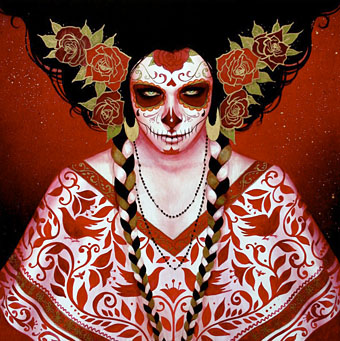
Red Quechquemitls (2010) by Sylvia Ji.

• The Blackout Mix, a pay-what-thou-wilt 49-minute mixtape, “specially designed to accompany (or simulate) a human-plant interaction”. Art by Arik Roper, music selection by Jay Babcock.

An ode to the many evolved virtues of human semen: “the penis is capable of dispensing a sort of natural Prozac” says Jesse Bering.

• The new John Foxx CD & DVD release, D.N.A., has a Jonathan Barnbrook cover, a new collaboration with Harold Budd and a disc of short films.

• “I have been copying Margaret Hamilton my whole life, and I am proud to admit it. The Wicked Witch of the West, the jolie laide heroine of every bad little boy’s and girl’s dream of notoriety and style, whose twelve minutes of screen time in The Wizard of Oz can never be topped … I’m a big butch-lesbian hag. I love the ones with chips on their shoulders and heavy attitude. They’re my real favorites.” John Waters always gives great interviews.

• Listen to a track from the forthcoming Brian Eno album while you’re reading Kristine McKenna’s interview with the man himself at Arthur mag. Includes an appreciation by Alan Moore.

ji2.jpg

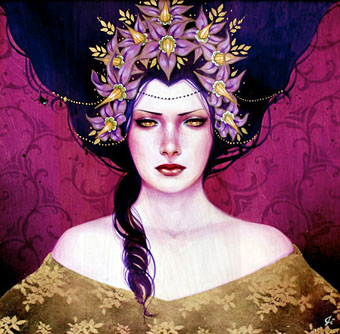
Atropa Bella Donna (2009) by Sylvia Ji.

• Steven Severin is touring the UK this month, performing a live accompaniment to screenings of Jean Cocteau’s The Blood of a Poet. He’s at the Tyneside Cinema this Tuesday. Other dates can be found on his website.

• “I know it’s a very emotive subject and you’re either for it or against it but for a jobbing self-employed musician such as me – bootlegging (CD copying) is just killing us.” Finding The Spaces Between: musician Chris Carter (Throbbing Gristle, Chris & Cosey, et al) interviewed.

Mile End Pugatorio (1991), a one-minute film-poem by Guy Sherwin and Martin Doyle. Related: four one-minute movies by The Residents.

• Gijs Van Vaerenbergh installed an Upside Dome at the St. Michiel Church in Leuven, Belgium.

• Sidney Sime illustrates Lord Dunsany at Golden Age Comic Book Stories.

Europe according to gay men. There’s more at Mapping Stereotypes.

• There’s never a dull moment in the High Desert.

• Generative art by Leonardo Solas.