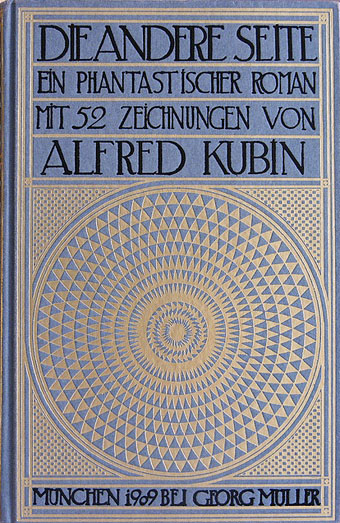
Die Andere Seite by Alfred Kubin

kubin1.jpg

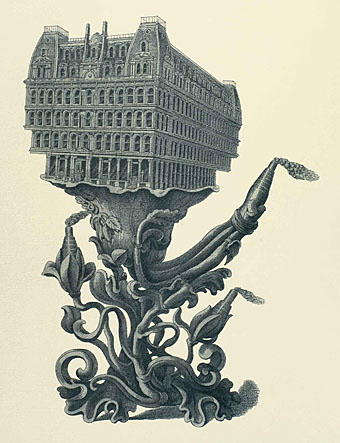
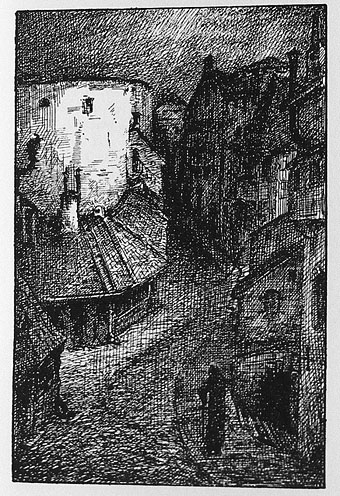
Re-reading Alfred Kubin’s strange fantasy novel Die Andere Seite (The Other Side) this week, I found myself suffering the same frustration as when I bought the book, namely that the illustrations in the Dedalus edition are very poor reproductions. When this new translation appeared in 2000 there wasn’t any convenient way to see better copies of Kubin’s drawings unless you had the earlier (and for me, elusive) Penguin edition. Thanks to Flickr we can now see reproductions from the first printing of 1909 in this set of photos. Not all the drawings are featured but the ones present are better than those in my volume. The illustrations are often rather perfunctory, and they lack the finesse and erotic weirdness of Kubin’s better known works, but a couple are as macabre as one would expect. And I love the cover design.
kubin2.jpg

As to the story, it concerns an unnamed narrator who receives a request from an old school friend, Claus Patera, to leave Munich and go with his wife to live in the city of Pearl, a newly-built metropolis in a nation known as “The Dream Realm” which Patera has founded in the Far East. Having travelled there the couple find themselves in a city filled with other displaced Europeans which is at first eccentric then increasingly nightmarish. It’s the kind of book you might expect an artist like Kubin to have written, in other words, and since the narrator is a thinly-veiled counterpart of the author we can occasionally glimpse the man behind the works. Anyone interested in Kubin the artist is advised to seek it out.

Alfred Kubin at Weimar

Elsewhere on { feuilleton }
The illustrators archive

Previously on { feuilleton }
The Hourglass Sanatorium by Wojciech Has
Kafka’s porn unveiled
Hugo Steiner-Prag’s Golem

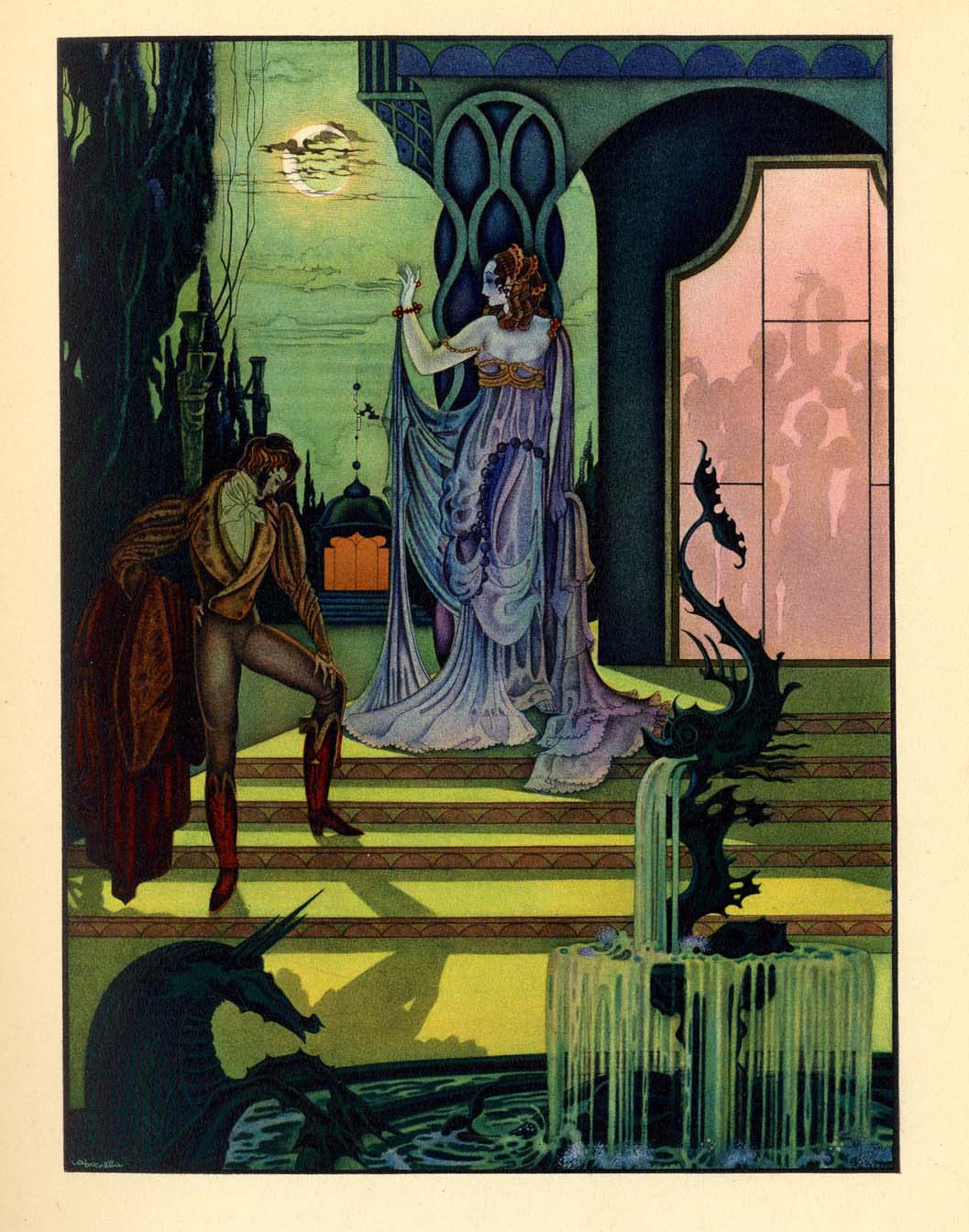
The art of Mario Laboccetta

laboccetta01.jpg

Tales of Hoffmann (1932).

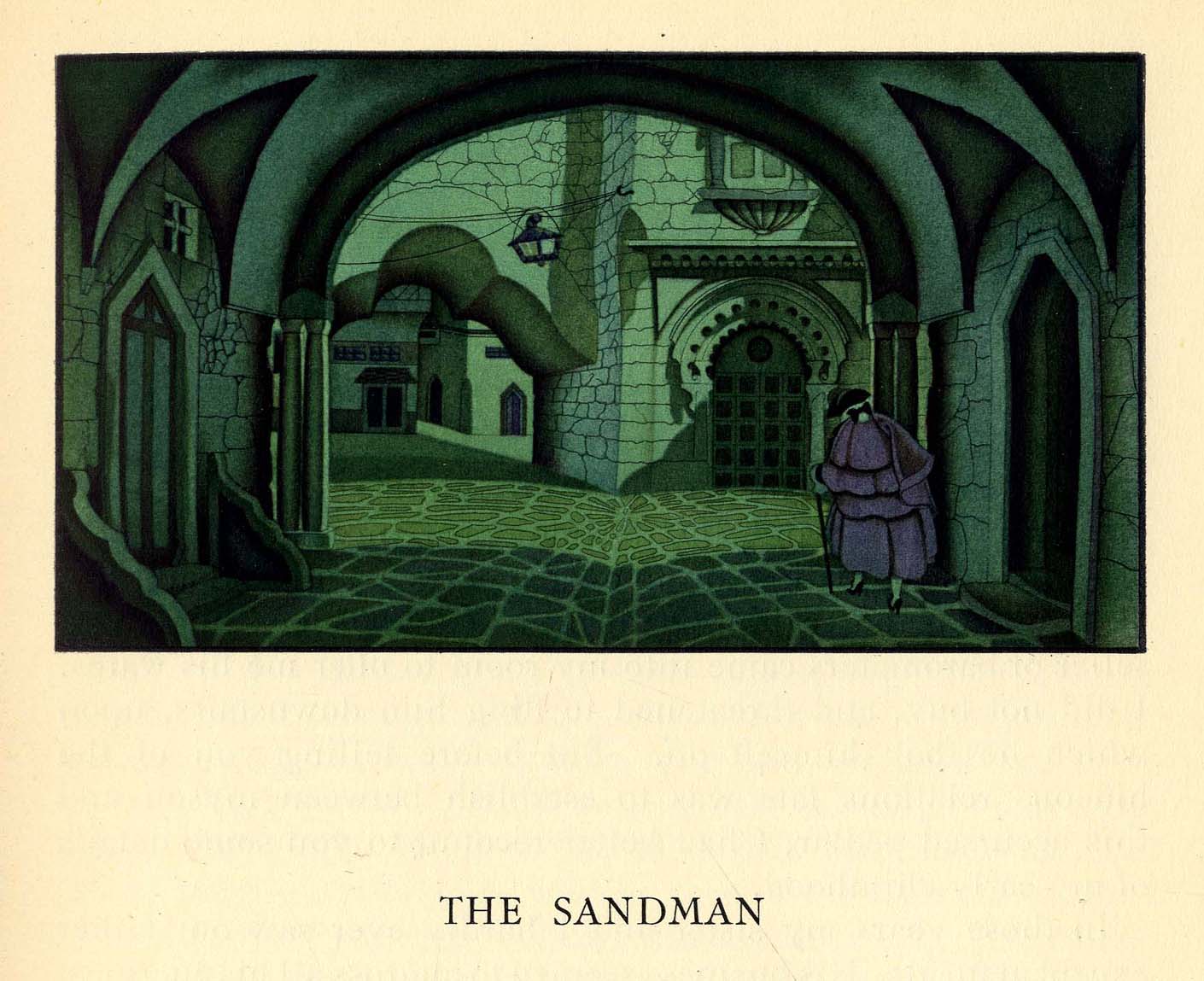
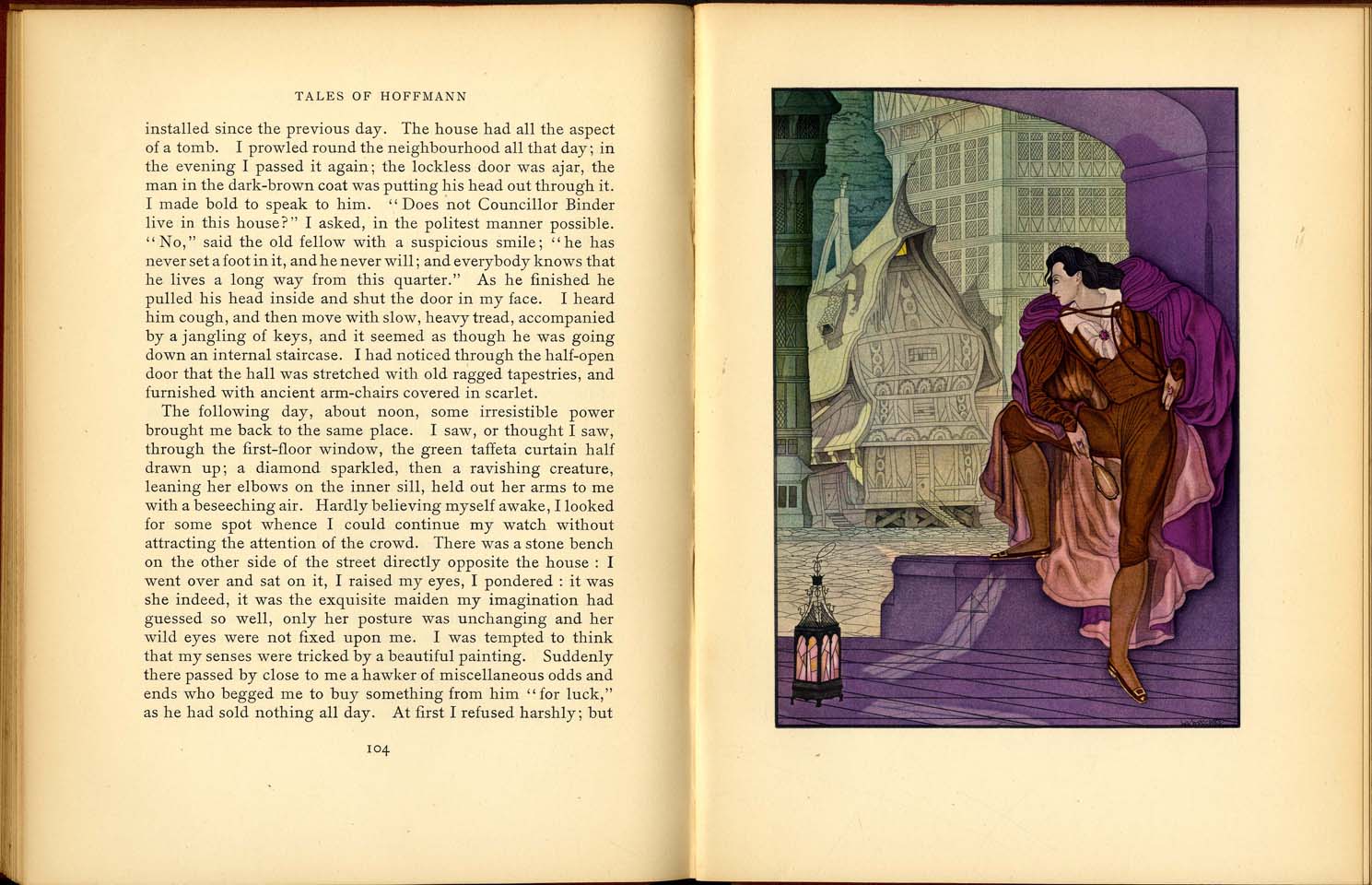
Another great illustrator about whom information is scant; I need better reference books, the web is often no use at all. Monsieur Thombeau posted the cover to Laboccetta’s edition of Les Fleurs du Mal (below) which had me looking around for other work by the artist. VTS has pages from a 1932 edition of Tales of Hoffmann while more of the Baudelaire pictures can be found on various bookdealers’ sites. As to the artist, we’re told he was an Italian living in Paris, and this French site has a small list of his illustrated editions. It’s frustrating to see that Les Paradis Artificiels is among these; what did he make of Baudelaire’s opium visions?

laboccetta02.jpg

Tales of Hoffmann (1932).

laboccetta03.jpg

Tales of Hoffmann (1932).

Continue reading “The art of Mario Laboccetta”

John Martin: Heaven & Hell

martin1.jpg

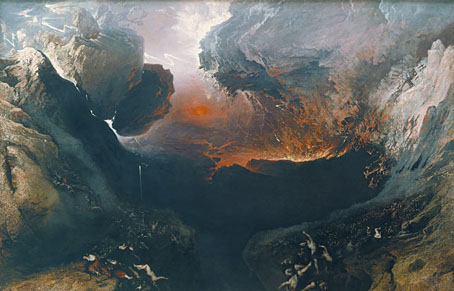
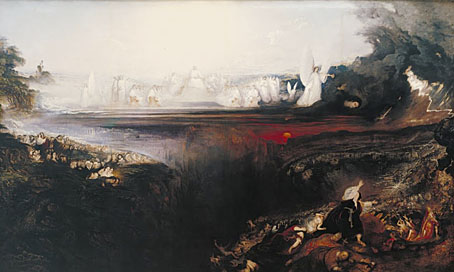
The Great Day of His Wrath (1851) by John Martin.

I’ve written on a couple of occasions about having been a precocious youth when it came to art appreciation. My first visit to the Tate Gallery (now Tate Britain) when I was 13 was of my own volition during one of our annual school visits to London. I wanted to see Modern Art (capital M and capital A), and especially my favourite Surrealist and Pop artists. Those works were present, of course, and it was a thrill to discover artists I hadn’t heard of such as Brâncusi and Moholy-Nagy, but the greatest shock came in the room reserved for the enormous canvases filled with apocalyptic scenes by Francis Danby and John Martin.

martin2.jpg

The Last Judgement (1853) by John Martin.

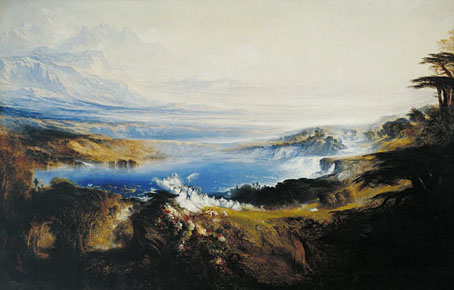
Some of these paintings have become more visible over the years, especially Martin’s startling chef-d’oeuvre, The Great Day of His Wrath, which has found a new lease of life decorating various music releases. Yet for a long time these works were never seen in art histories, being dismissed as a kind of religious kitsch, interesting perhaps for their Romantic connections (he also depicted scenes from Milton and Byron) but with Martin regarded as deeply inferior compared to his contemporary JMW Turner. If you only look at painting as being about the surface of the canvas then Martin is inferior to Turner whose nebulous works contain the seeds of Impressionism and much 20th century art. But there’s more to art than the surface. What I saw was an astonishing audacity—this artist had dared to paint the end of the world!—and three deeply strange paintings, two of which feature deliberately confused perspectives which are almost Surrealist in their effect and quite unlike any other work produced in the 19th century.

martin3.jpg

The Plains of Heaven (1851) by John Martin.

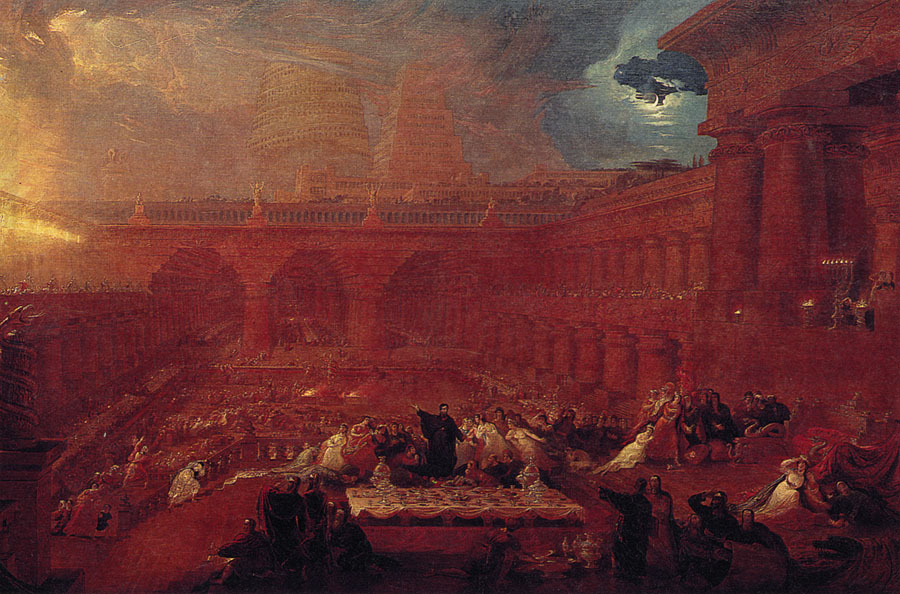
Well things change, not least critical opinion, and with the emergence in recent years of (for want of a better term) Pop Surrealism, and also the current vogue for crappy disaster movies and apocalyptic chatter, Martin’s paintings have been deemed interesting enough to warrant an exhibition at the Laing Art Gallery, Newcastle, which has been the permanent home of other Martin works for many years. The show will run there until June then travel to Sheffield (where I may pay it a visit) and Tate Britain. Of note for Martin enthusiasts will be the emergence from a private collection of the vast and lurid Belshazzar’s Feast, the painting which inspired some of the set designs in DW Griffith’s Intolerance. I once read that if the insanely huge banqueting hall in that picture had been a real construction it would have extended for at least a mile. Visitors to the new exhibition will be able to judge for themselves in close-up. And speaking of close-ups, Google’s Art Project has the three paintings above in their Tate collection; click the pictures for links.

martin4.jpg

Belshazzar’s Feast (1820) by John Martin.

Derided painter John Martin makes a dramatic comeback

Previously on { feuilleton }
Darkness visible
Death from above
The apocalyptic art of Francis Danby

Weekend links 49

ceranic1.jpg

Star City by Tomislav Ceranic.

• Noted in the blogosphere this week: A Journey Round My Skull underwent a transmutation into 50 Watts; a blog devoted to artist, designer & illustrator Jessie M King; “The arts and musicks of the supranatural” at Secret Lexicon; From the Farm, Railroads, Sewing Machines & Beyond, lengthy reminiscences from a long life in America.

Barney Bubbles in Wonderland, in which the designer and his chums indulge in some Carrollian shenanigans somewhere in the 1960s. The resulting footage is now a promo video for Balloon Race by Bear Driver.

HP Lovecraft’s favourite words, the desert island books of Jorge Luis Borges, a profile of Christopher Isherwood, and Edward Gorey again.

[Arthur] Machen explicitly talks about the strength of London, as opposed to Paris, in that London is more chaotic. Although he doesn’t put it in these words, I think what partly draws him to London is this notion that, in the absence of a kind of unifying vision, like Haussmann’s Boulevards, and in a city that’s become much more syncretic and messy over time, you have more room to insert your own aestheticizing vision.

China Miéville in a great interview at BLDGBLOG.

Matryomin is “the unique, original erectronic [sic] musical instrument invented by Masami Takeuchi in 2000”. Yes, a theremin inside a Russian doll. The Mable ensemble playing Duke Ellington’s Caravan is, well…I’m still speechless. And there’s also this.

Conductor turns the New York subway system into an interactive string instrument.

ceranic2.jpg

Discordia by Tomislav Ceranic.

Amazingly enough, prostitution was legal during the Victorian period. There were tons of brothels all over the major cities of England, and of all different kinds. There were lots of flagellation brothels; these were places where primarily men would go to be whipped by women or by men. There were also gay male brothels. You could go to a park in London at night, pick up what were called the “park whores” and give them a very small amount of money to have sex openly in the park. I also write about gay “cruising,” which was quite common. If you knew the right place to go and knew the right signals, you could pick up a man on the street and have sex in an alley.

Deborah Lutz is interviewed about her book Pleasure Bound: Victorian Sex Rebels and the New Eroticism.

Cult-ure: Ideas can be dangerous, a book by Rian Hughes.

Chernobyl: Europe’s strangest wildlife refuge.

The Eadweard Muybridge Online Archive.

Aubrey Beardsley at Tumblr.

Caravan (1959) by Martin Denny | Caravan (1961) by 80 Drums Around The World | Caravan (1962) by Sir Julian | Caravan (1965) by The Ventures | Caravan (1973) by Enoch Light & The Light Brigade | Caravan (1997) by Jimi Tenor (I could go on and on, yes I could…)

Deutsche Kunst und Dekoration #10: Turin and Vienna

dkd10-18.jpg

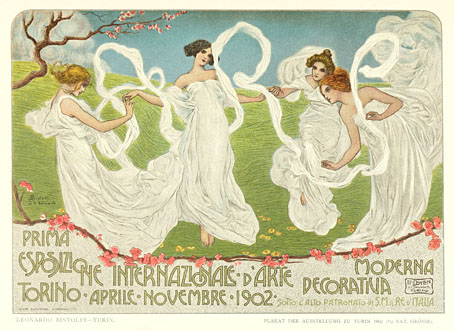
Turin exposition poster by Leonardo Bistolfi.

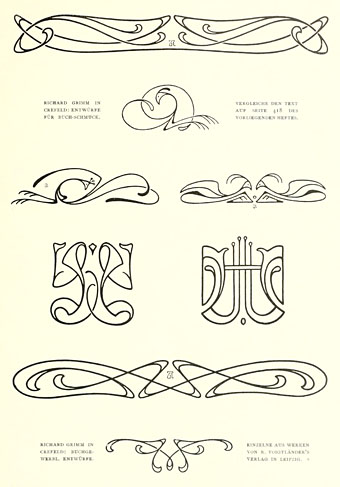
Part two of a two-part skate through the contents of volume 10 of Deutsche Kunst und Dekoration, the German periodical of art and decoration. In addition to the Heinrich Vogeler feature which was the subject of yesterday’s post, this edition includes articles on the Prima Esposizione Internazionale d’Arte Decorativa Moderna in Turin—another international showcase for the Art Nouveau style—and a feature on the Viennese Secession exhibition of the same year. This latter piece was especially fascinating when seeing such a notable event reported for the first time. There’s more about that below. This volume also includes a piece on the Glasgow Arts and Crafts movement but the photos for that piece are poor quality. As before, anyone wishing to see these samples in greater detail is advised to download the entire volume at the Internet Archive. There’ll be more DK&D next week.

dkd10-19.jpg

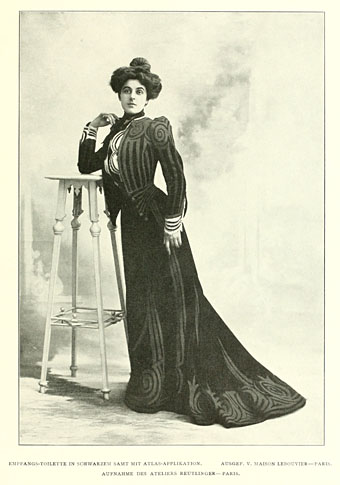
A feature on dress design shows some rare examples of Art Nouveau style being applied to clothing.

dkd10-20.jpg

Continue reading “Deutsche Kunst und Dekoration #10: Turin and Vienna”