The art of Mel Odom

odom.jpg

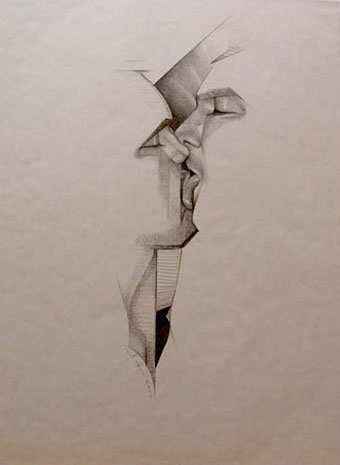
Boys Kiss 2 (2007).

The gay artists archive has for a long time been the most popular part of this site, that page proving twice as popular as the next post down. In which case I feel I ought to try and add to its contents a bit more frequently…

Mel Odom is an American artist who since the late 1970s has been highly-regarded as a book and magazine illustrator. (JVS Publishing has more about this side of his output.) For the purposes of this post there’s male nudity and some homoerotica, of course, in that Art Deco-ish Tamara de Lempicka style that was very popular in the 1980s. For the time being, this site seems to have the best selection of his paintings and drawings. If you need more then Flickr is one place to go searching.

Mathematics – A Beautiful Elsewhere

mathematiques.jpg

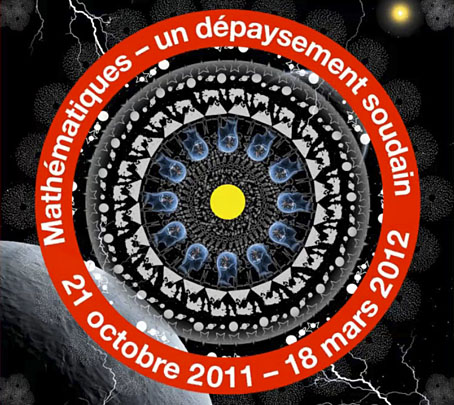
David Lynch turns up again via a post at New Scientist about Mathematics – A Beautiful Elsewhere, an exhibition currently running at the Fondation Cartier, Paris:

A large number of mathematicians and scientists contributed to the creation of this exhibition, and eight of them acted as its overseers: SIR MICHAEL ATIYAH, JEAN-PIERRE BOURGUIGNON, ALAIN CONNES, NICOLE EL KAROUI, MISHA GROMOV, GIANCARLO LUCCHINI, CÉDRIC VILLANI and DON ZAGIER. Representing a wide range of geographical backgrounds and mathematical disciplines, they work in areas such as number theory, algebraic geometry, differential geometry, topology, partial differential equations, probability, mathematics applied to biology…

They were accompanied by nine artists chosen for their exceptional ability to listen, as well as for their great sense of curiosity and wonder. All of these artists have exhibited at the Fondation Cartier in the past: JEAN-MICHEL ALBEROLA, RAYMOND DEPARDON AND CLAUDINE NOUGARET, TAKESHI KITANO, DAVID LYNCH, BEATRIZ MILHAZES, PATTI SMITH, HIROSHI SUGIMOTO and TADANORI YOKOO, as well as Pierre Buffin and his crew (BUF). They worked together to transform the abstract thinking of mathematics into a stimulating experience for the mind and the senses, an experience accessible to everyone.

The image above is credited to the surprising combination of Lynch and artist/collagist/psychedelicist Tadanori Yokoo. There’s a catalogue of works on the Fondation site but since all the pages there are Flash-based it’s impossible to link to anything. One of the pieces that caught my attention was by Beatriz Milhazes, a Brazilian artist whose work I don’t recall having seen before although she’s been exhibited in the UK. Her abstract paintings are gorgeous things. The James Cohan Gallery has a selection of her work.

Previously on { feuilleton }
David Lynch window displays
David Lynch in Paris

Edward Gorey book covers

gorey1.jpg

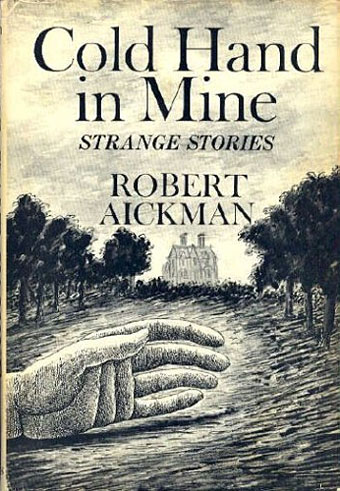
Scribner’s edition (USA, 1978).

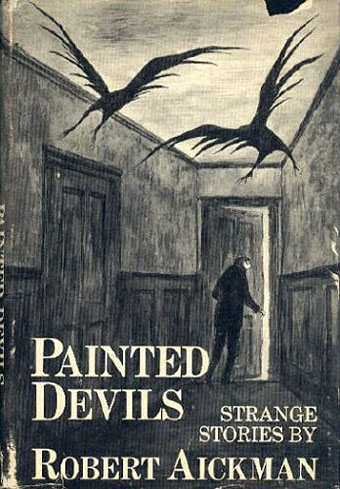
I’m still working through the Robert Aickman stories so curiosity had me looking up the covers of his first editions. Edward Gorey was a fitting choice as artist for Aickman’s fifth story collection, Cold Hand in Mine, and it’s interesting seeing his work labelled on both these books as “strange stories”; paperbacks tended to brand his fiction as horror which isn’t always accurate. We’re back with that term “weird” again: reading Aickman today is like finding the quotidian Britishness of Alan Bennett darkening into the inexplicable nightmares of David Lynch. Gorey’s gloomy renderings suit these atmospheres a lot better than later attempts to package Aickman’s books so it’s a shame he wasn’t allowed to illustrate more of them. Cold Hand in Mine has recently been republished by Faber, together with two more collections of Aickman’s stories.

gorey2.jpg

Scribner’s edition (USA, 1979).

Edward Gorey illustrated and designed many book covers, not all of them horror or ghost stories. This Flickr set has some of the more notable examples which includes Cold Hand in Mine. Also a flaming spider… There are more covers at Gorey Books where I was surprised to find he’d produced a cover for A Room in Chelsea Square, an early novel of gay life in London by Michael Nelson that was originally published anonymously to spare the author the attentions of intolerant authorities. Gorey’s drawing is like something Philippe Jullian might have done had he been a more careful draughtsman.

• See also: Edward Gorey’s Elephant House for more covers and Gorey ephemera.

Elsewhere on { feuilleton }
The book covers archive
The illustrators archive

Previously on { feuilleton }
Weird Fiction Review

Weekend links 84

enok.jpg

Regeneration (2011) by Toshiyuki Enoki. Via.

HIDE/SEEK: Difference and Desire in American Portraiture, the art exhibition that caused such a fuss last year at the Smithsonian Institution, opens at the Brooklyn Museum, NYC, on November 18th. Among the events associated with the show is a screening of James Bidgood’s lusciously erotic Pink Narcissus. David Wojnarowicz’s video piece, A Fire in My Belly, is still a part of the exhibition so the New York Daily News reached for the outrage stick to prod some reaction from people who’d never heard of the artist or his work before. Will history repeat itself? Does the Pope shit in the woods? Watch this space…

Magic is not simply a matter of the occult arts, but a whole way of thinking, of dreaming the impossible. As such it has tremendous force in opening the mind to new realms of achievement: imagination precedes the fact. It used to be associated with wisdom, understanding the powers of nature, and with technical ingenuity that could let men do things they had never dreamed of before. The supreme fiction of this magical thinking is The Arabian Nights, with its flying carpets, hidden treasure and sudden revelations…

Marina Warner, whose new book, Stranger Magic: Charmed States and the Arabian Nights, is reviewed here and here.

• Those Americans who adore big business but loathe the idea of gay marriage will be dizzy with cognitive dissonance at the news that 70 major US companies—including CBS, Google, Microsoft and Starbucks—have signed a statement saying the Defense of Marriage Act (DOMA) is bad for business. Mark Morford at SFGate says this now means that real homophobes don’t Google.

Divining with shadows and dreams, tears and blood: S. Elizabeth talks to JL Schnabel of BloodMilk about her “supernatural jewels for surrealist darlings“.

Earth: Inferno (2003), a short film by Mor Navón & Julián Moguillansky based on the book by Austin Osman Spare. Via form is void.
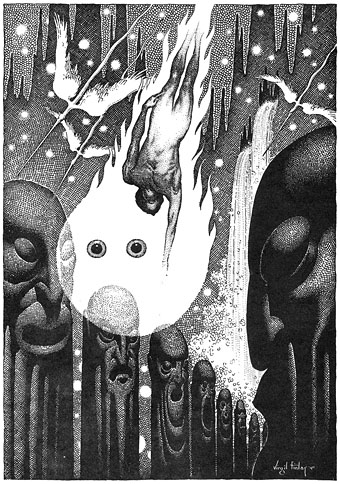
finlay.jpg

Illustration by Virgil Finlay for A. Merritt’s The Face in the Abyss. From a 1942 Finlay portfolio at Golden Age Comic Book Stories.

The Mute Synth as created by Dirty Electronics & designed by Adrian Shaughnessy.

Phil Baker reviews two new Aleister Crowley biographies at the TLS.

A Brief Rant on the Future of Interaction Design

The Most Amazing Room In Queens, NYC.

Brian Eno on composers as gardeners.

Alan Turing is Alan Garner’s hero.

• Paintings by Guy Denning.

Static (1998) by Redshift | The Owl Service (2000) by Pram | Lover’s Ghost (2010) by The Owl Service.
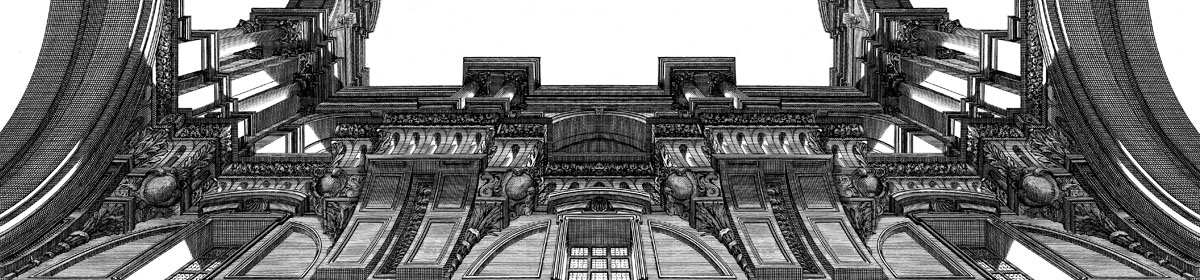
Ver Sacrum, 1901

vs-1901-01.jpg

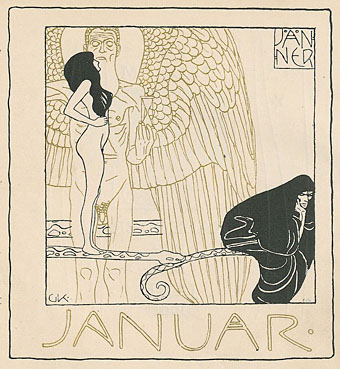
Continuing the series of posts about Ver Sacrum, the art journal of the Viennese Secession. After a somewhat lacklustre collection for 1900 the journal finds its vitality again, the painters of happy Teutonic peasants having been dropped in favour of more remarkable prints and graphics from Vienna’s finest. The contents for this year parallel some of the works being featured in Deutsche Kunst und Dekoration for the same period. Gustav Klimt is given a great deal of attention, beginning with the calendar piece below. There’s also work from the Symbolist sculptor George Minne and a feature on the Glasgow School artists Charles Rennie Mackintosh and Margaret MacDonald. Throughout the year each issue tends to concentrate on a single artist or exhibition. There’s so much good stuff in this year it’s not possible to present more than a small sample. Those interested are encouraged to browse all 432 pages or download the entire volume here.

vs-1901-02.jpg

vs-1901-03.jpg

Continue reading “Ver Sacrum, 1901”