Silent Engine

schutze1.jpg

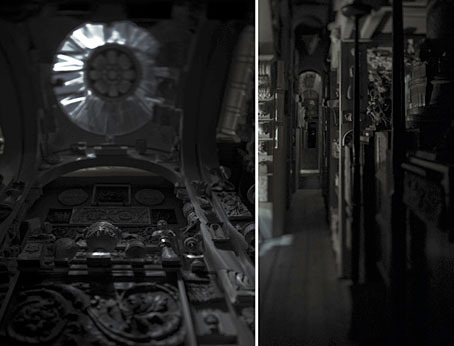
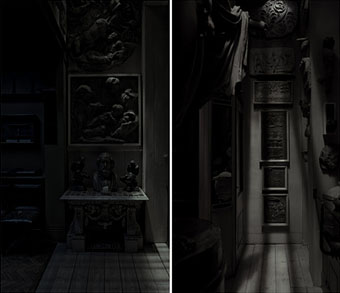
Artist/composer Paul Schütze unveiled some new photo prints this weekend, a series he calls Silent Engine. At first glance I thought the view on the left above was indeed an engine interior, with that radial construction being some kind of extractor fan. But these are actually nocturnal views of one of my favourite places in London, Sir John Soane’s Museum in Lincoln’s Inn Fields. The photos use only the available light which makes Soane’s collection of ancient sculpture and architectural fragments seem like the components of some antiquarian generator. Anyone familiar with Schütze’s 1997 album Second Site will know that this isn’t the first time he’s applied the word “engine” to architecture.

schutze2.jpg

Previously on { feuilleton }
Paul Schütze online

Weekend links 116

sherer.jpg

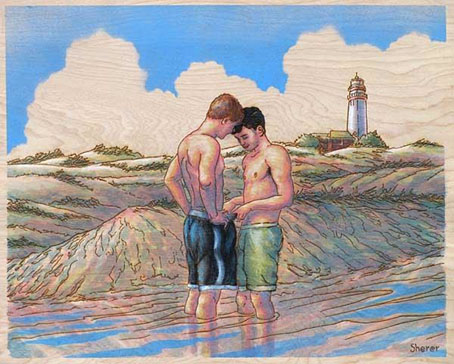
Ankle Deep, a pyrograph by Robert Sherer whose work is showcased at The Advocate.

• “Bertrand Russell wrote in 1932, during another period of economic distress, ‘that immense harm is caused by the belief that work is virtuous, and that what needs to be preached in modern industrial societies is quite different from what always has been preached.’ ” From The Devilishness Of Idleness by Alex Gallo-Brown. Related: Owen Hatherley says “It’s the 21st century – why are we working so much?”

Restoring James Joyce’s book of the night: Joyce biographer Gordon Bowker reviews the new edition of Finnegans Wake. Over at the NYRB Michael Chabon has a great piece about his own relationship with Joyce’s novel that manages to make some very un-NYRB references to Cthulhu, the Necronomicon and Michael Moorcock’s Elric. Related: Leopold’s Day, a limited edition (and expensive) map of Dublin using typography to depict the people and places of Bloomsday.

Verbally, it feels as though Burroughs, Joyce and Beckett are text messaging haikus back and forth: ‘beautiful/last/random fragments of poetry/finding syllables,/the waters fall/the waves fall/musical./pencil murmuring’.

James Kidd on A Humument by Tom Phillips.

The Expanding Universe (1980), an album of early computer music by American composer Laurie Spiegel, will be reissued with additional recordings in September.

• A previously unreleased remix by Surgeon of Teenage Lighting by Coil has been made public.

collard.jpg

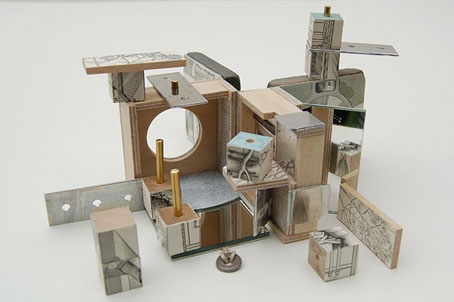
Small Museum of Nature and Industry (2010) by Susan Collard.

Queer Kids In America, a photo project by M. Sharkey.

Walter Benjamin’s Grave: A Profane Illumination.

The Visual Art and Design of Famous Writers.

Nylon Sculptures by Rosa Verloop.

Froschroom (1994) by Mouse on Mars | Bib (1995) by Mouse on Mars | Cache Coeur Naïf (1997) by Mouse on Mars.

The Occult Explosion

occult01.jpg

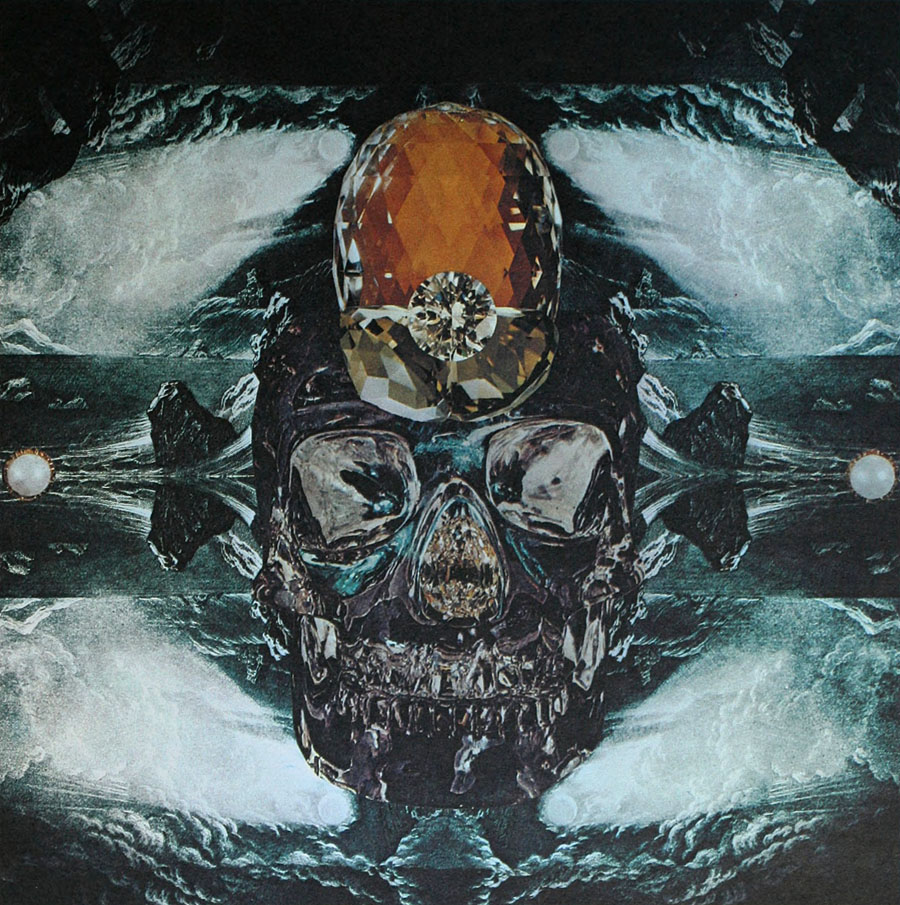
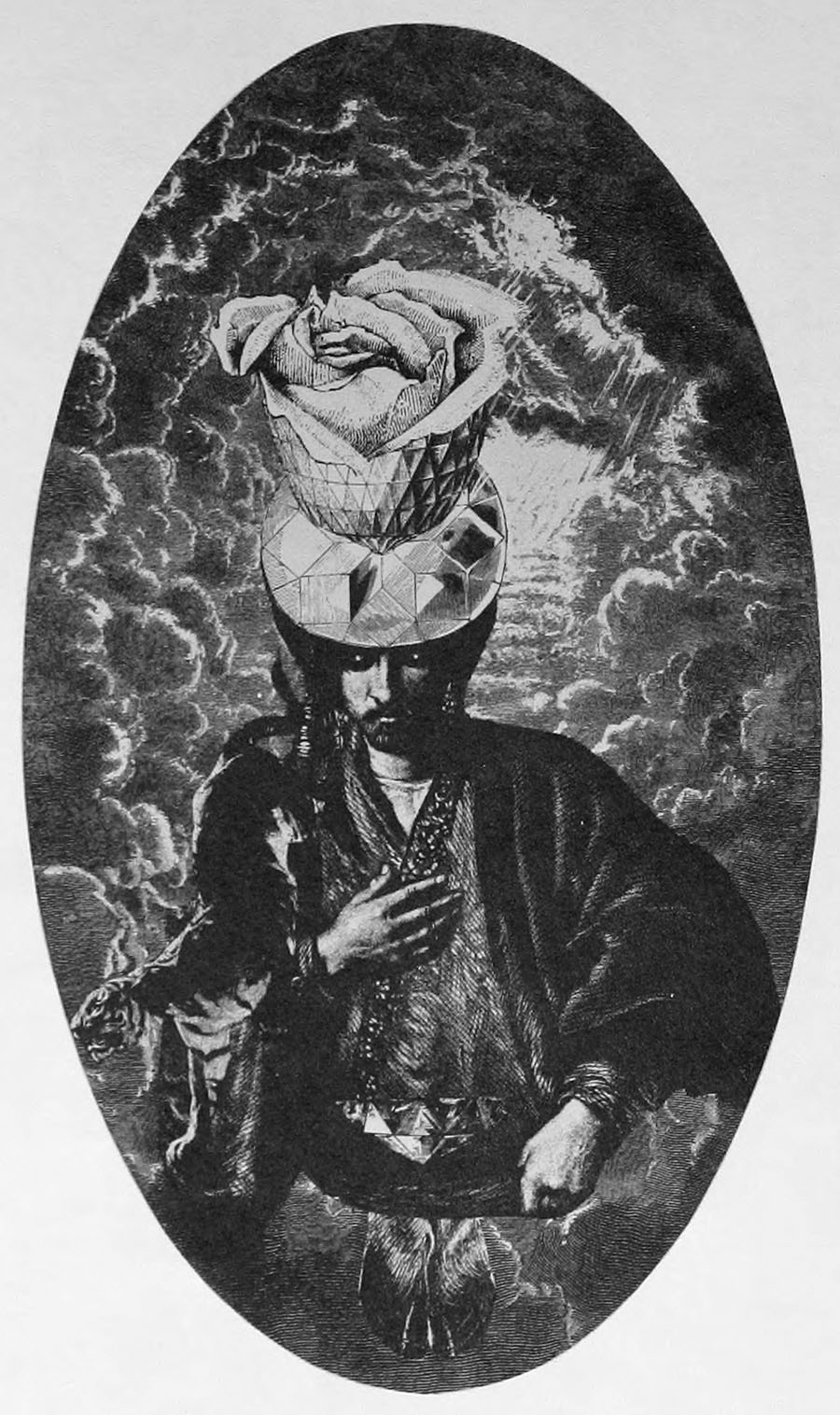
So here’s a strange thing: having spent another working week sifting through scanned books at the Internet Archive what do I find but scans of album booklet art by Wilfried Sätty only a couple of days after writing about his album covers. The album in question may be familiar to some readers but it was a new one to me. The Occult Explosion (1973) was a collection of recorded interviews with people such as Alan Watts and Anton LaVey discussing subjects pertinent to the title, although the general tone is more in the direction of catch-all mysticism than occultism as such. Anton LaVey is there to pronounce about Satanism, of course, and the album also features two songs by British rock band Black Widow, one of which, Come To The Sabbat, has since achieved a kind of novelty notoriety. (There’s a nice video-feedback recording of them playing the song live on Beat Club in 1970.)

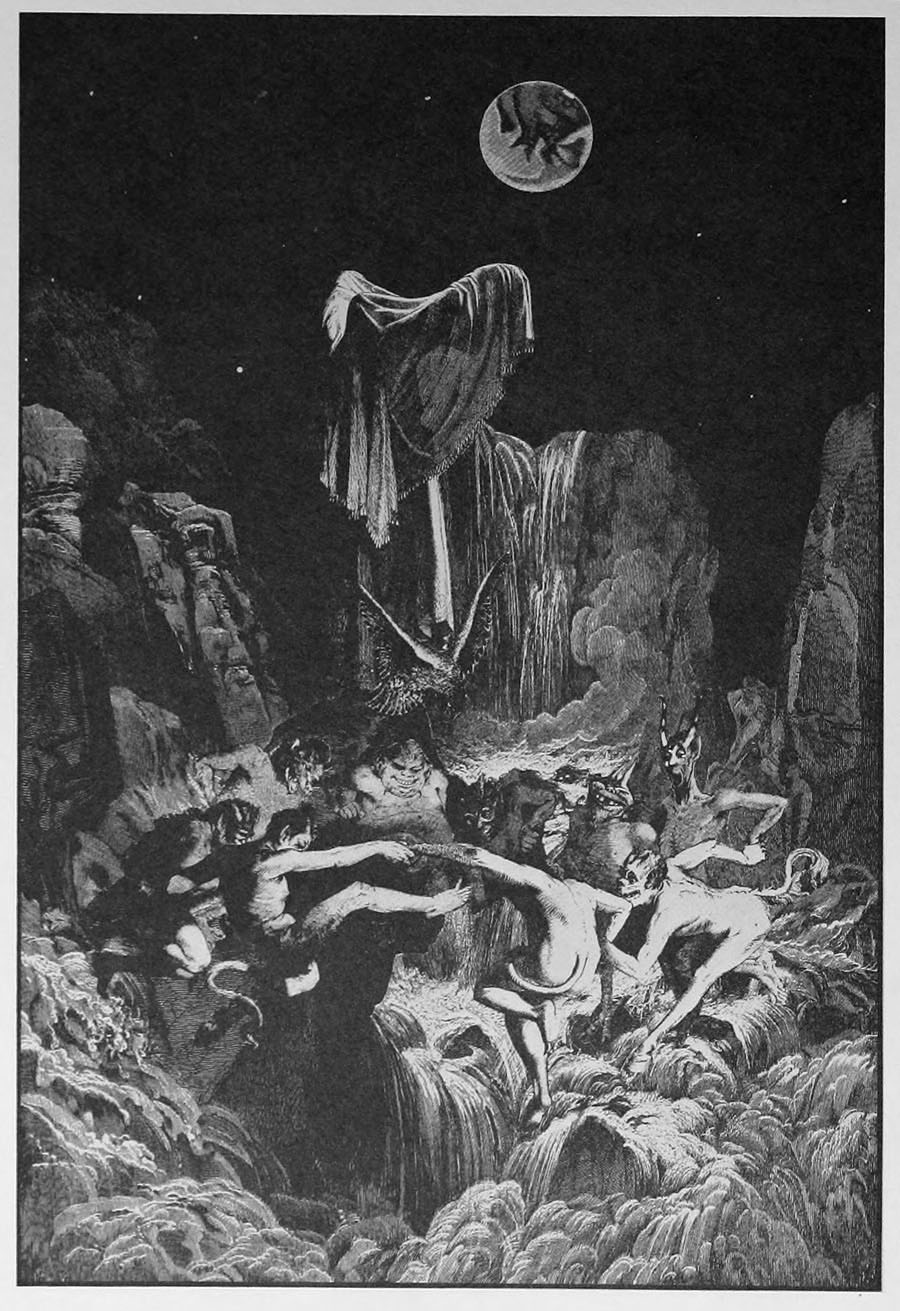
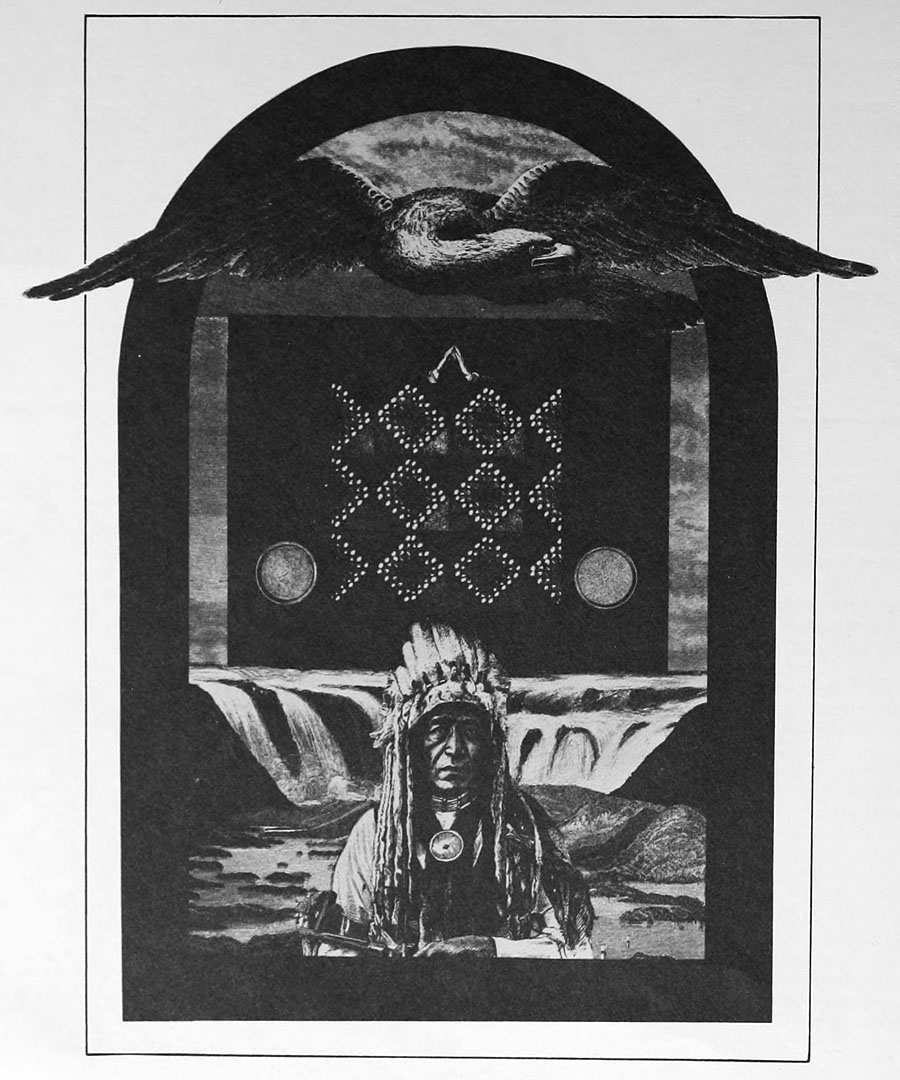
Nat Freedland was the author of a book entitled The Occult Explosion for which the album acts as an audio appendix. This is all so typically 1970s: witchcraft, Satanism, rock music, yoga, Alan Watts, UFOs, ESP, and the whole thing packaged in Sätty’s post-psychedelia collages. The entire album is available at the Internet Archive: the recordings are here while the badly-scanned insert pages are here. (There’s a better view of the cover art at Flickr.) Some of the more impressive pieces of Sätty’s art follow, work which has been buried for almost forty years. Just to add to the net of coincidences this week, the last of the pictures below borrows a demon from Gustave Doré’s Divine Comedy, the same source as yesterday’s Rick Griffin poster.

occult08.jpg

occult02.jpg

occult03.jpg

occult04.jpg

Continue reading “The Occult Explosion”

Lucifer Rising posters

lucifer1.jpg

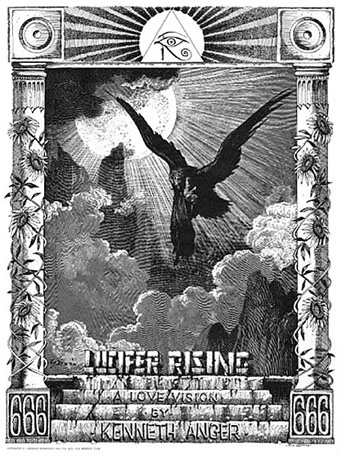
Lucifer Rising: A Love Vision by Kenneth Anger (1967) by Rick Griffin.

The status of Kenneth Anger’s Lucifer Rising as a kind of poly-cultural crossroads even extends to its poster art. The original poster by Rick Griffin dates back to the earliest drafts of the film, and with its swipe from Gustave Doré makes me think it’s the kind of thing Wilfried Sätty might have produced for Anger had he been asked. (They were both living in San Francisco at this time.)
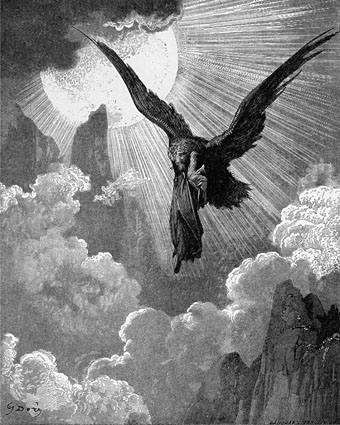
dore.jpg

The San Francisco poster artists happily plundered the past for unusual images; Doré was a popular choice since his images are frequently striking and copies of the books (or reprints) would have been easy to find. This is one of the illustrations from the Purgatorio section of his illustrated Divine Comedy (1867) showing Dante being ferried up Mount Purgatory (“like Ganymede”) by a giant eagle.
lucifer2.jpg

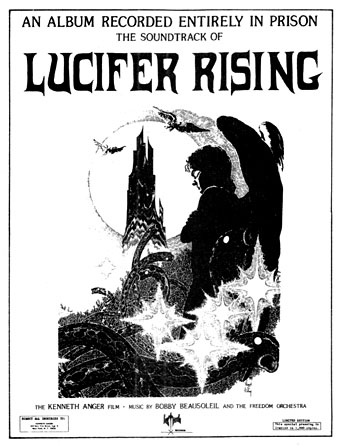
From Dante and Virgil to Virgil Finlay, one of whose illustrations was used on this promo sheet advertising a limited run of Bobby Beausoleil’s soundtrack for the film.
finlay.jpg

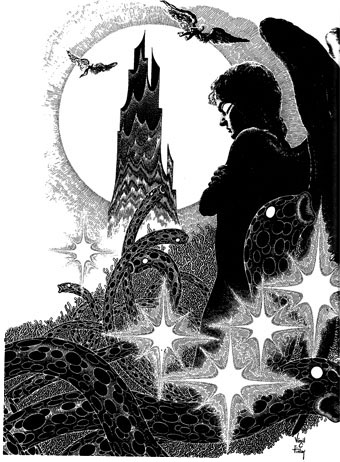
Earth’s Last Citadel (1950) by Virgil Finlay.

The illustration this time is for a reprint of Earth’s Last Citadel by CL Moore and Henry Kuttner in Fantastic Novels Magazine for July 1950. I’ve never seen any mention of William Burroughs meeting Kenneth Anger which is a shame since they had acquaintances in common and Burroughs occasionally showed an interest in some of Aleister Crowley’s ideas. The Henry Kuttner connection in this case would provide a link to some of the borrowings Burroughs himself made from Kuttner’s writing. But no, it’s too much of a reach.
lucifer3.jpg

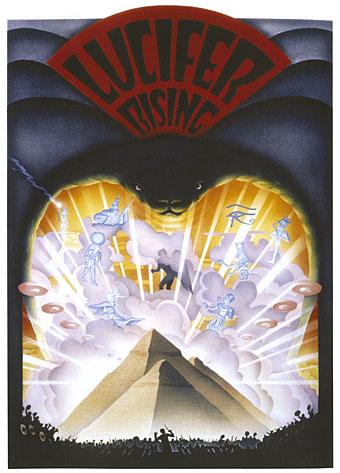
Lucifer Rising (1980) by Page Wood.

After all that the final poster is an original piece of work by Page Wood for a premier screening at the Whitney Museum, New York in 1980. The art avoids the overt occultism in favour of making a resolutely low-budget piece seem like a Hollywood epic. Given Anger’s lifelong obsession with Hollywood’s myths and tragedies I think he would have appreciated that.

Previously on { feuilleton }
Externsteine panoramas
San Francisco by Anthony Stern
The art of Alia Penner
Missoni by Kenneth Anger
Anger in London
Arabesque for Kenneth Anger by Marie Menken
Edmund Teske
Kenneth Anger on DVD again
Mouse Heaven by Kenneth Anger
The Man We Want to Hang by Kenneth Anger
Relighting the Magick Lantern
Kenneth Anger on DVD…finally
Starowieyski in Switzerland

starowieyski1.jpg

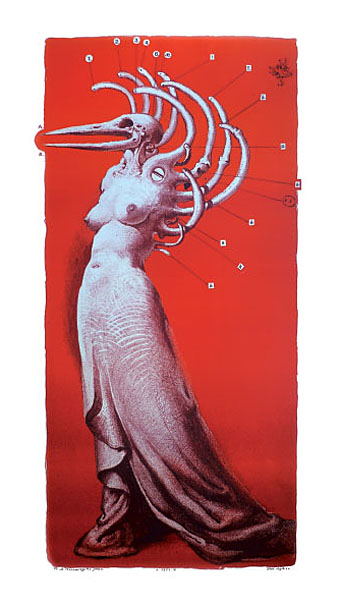
Nike (1971) by Franciszek Starowieyski.

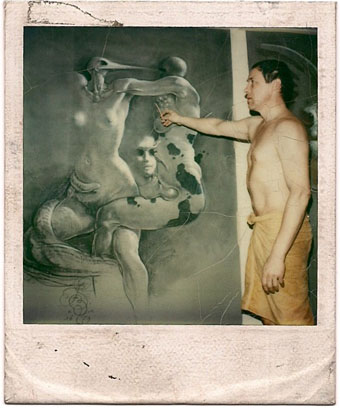
My thanks to Marco Witzig for sending some promotional materials for a new exhibition of work by the great Polish artist Franciszek Starowieyski (1930–2009). The exhibition is running at the gallery of the HR Giger Museum in Gruyères, Switzerland from now until Spring 2013. There’s a selection of photos of the works on show here. I’m always curious to know what size artists work at so it’s interesting to get an idea of this from views of the originals. I’ve linked to Starowieyski’s incredible poster art on several occasions but it’s always worth another look: go here and here and here.

starowieyski2.jpg

Elsewhere on { feuilleton }
The fantastic art archive

Previously on { feuilleton }
Surrealism, graphic design and Barney Bubbles
Polish posters: Freedom on the Fence
Franciszek Starowieyski, 1930–2009
The Hourglass Sanatorium by Wojciech Has