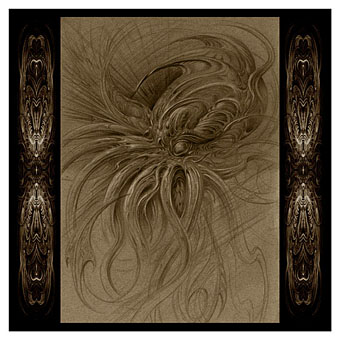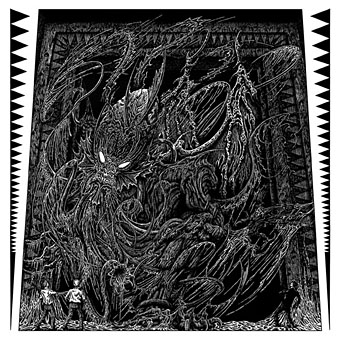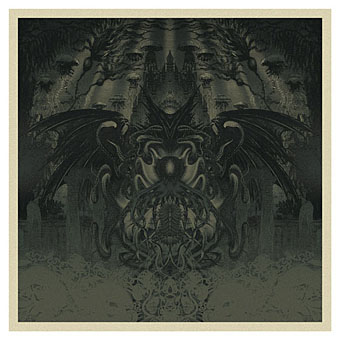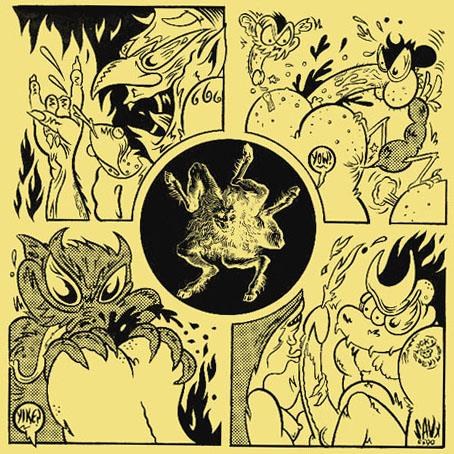
Viktor Koen’s Dark Peculiar Toys

koen1.jpg

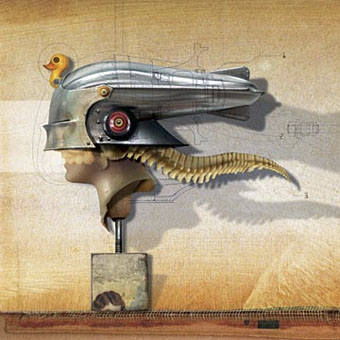
Toy No. 20

Two prints by artist Viktor Koen who was born in Greece but currently lives in the US. Koen’s Dark Peculiar Toys will be showing throughout October at United Photo Industries, Brooklyn, New York. This month there’s also an exhibition of dismembered toys showing at the October Gallery in London. Benin artist Gérard Quenum‘s salvaged doll heads and limbs are repurposed in a series of sculptures he calls Dolls Never Die.

koen2.jpg

Toy No. 15

Weekend links 128

wrongeye.jpg

Seven-inch sleeve design by Savage Pencil for Wrong Eye (1990) by Coil.

• “Can you use sensory deprivation to explore ESP? And then make music from the process?” Drew Daniel and MC Schmidt of Matmos decided to find out for their new EP. Related: Occult Voices—Paranormal Music, Recordings of Unseen Intelligences, 1905–2007 at Ubuweb. Details of the original CD release can be found here.

Gorgeous Gallery: The Best in Gay Erotic Art is a new book by David Leddick featuring the work of contemporary gay artists. Howard G. Williams has a review at Lambda Literary.

Trip or Squeek by Savage Pencil, a book collection of the artist’s comic strips for The Wire magazine, forthcoming from Strange Attractor Press.

The novels of the middle period are Burgess’s most vital because it was in these that he forged what we might now recognize as the Burgessian – the antic puns and wordplay, the etymological digressions, the opacity, the glamorous pedantry, the tympanic repetitions, and an alliterative, assonantal musicality that makes every sentence seem vivid and extrovert: “Seafood salt with savour of seabrine thwacking throat with thriving wine-thirst”; “the lucent flawlessness of the skin, of the long fleshly languor that flowered into visibility”; “he was in a manner tricked, coney-caught, a court-dor to a cozening cotquean”. This is Burgess’s description of an Elizabethan brothel: “He entered darkness that smelled of musk and dust, the tang of sweating oxters, and, somehow, the ancient stale reek of egg after egg cracked in waste, the musty hold-smell of seamen’s garments, seamen’s semen spattered, a ghost procession of dead sailors lusting till the crack of doom”.

Ben Masters on A Clockwork Orange and its creator, fifty years on

• A streaming album for the beginning of autumn, the self-titled debut by Eraas, available in a range of formats at Bandcamp.

• “How Collecting Opium Antiques Turned Me Into an Opium Addict.”

Ted Hughes reads from Crow. Related: Raptors by Leonard Baskin.

• Janitors of Lunacy: Jonny Mugwump remembers Coil.
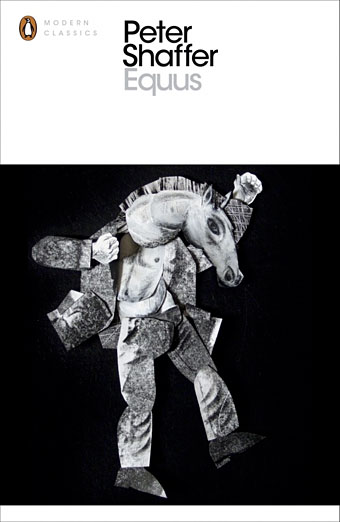
equus.jpg

Back in June I suggested Clive Hicks-Jenkins’ paintings as potential artwork for Penguin’s Modern Classics series. Last week Clive revealed that Penguin will be using one of his painted maquettes for a new edition of Equus next year.

150 Years of Lesbians and Other Lady-Loving-Ladies

Color Sound Oblivion: a Coil/TG/related Tumblr.

Tune in, psych out: the new black psychedelia.

The Hills Are Alive (1995) by Coil | QueenS (2012) by THEESatisfaction | Goldblum (2012) by Oddience.

Tentacles #3: Dwellers in the Mirage

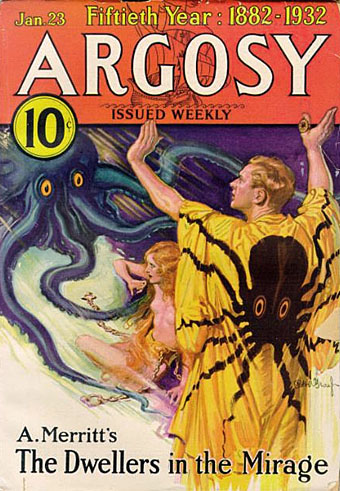
dwellers01.jpg

Illustration by Robert A. Graef (1932).

If the predatory octopuses of the Sargasso Sea are too mundane for you, how about an extra-dimensional Kraken named Khalk’ru which has to be placated with human sacrifice? This creature is the prime menace in A. Merritt’s Dwellers in the Mirage (1932), a novel I’m afraid I haven’t read despite its quite evident tentacular delirium. The story is a Lost Race adventure with the unlikely setting of a warm valley in Alaska where the usual heroic outsider encounters the diabolical Kraken worshippers. Merritt’s work is out of copyright in Australia so the text of the book can be found at the Australian Project Gutenberg. There you’ll discover that chapter four is entitled Tentacle of Khalk’ru.

A handful of covers and illustrations follow.

dwellers06.jpg

Virgil Finlay (1941).

Continue reading “Tentacles #3: Dwellers in the Mirage”

Tentacles #1: The Boats of the ‘Glen Carrig’

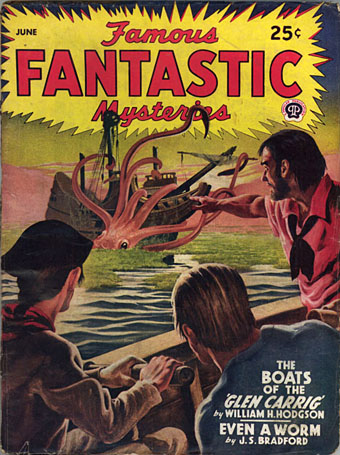
boats-1945.jpg

Famous Fantastic Mysteries, June 1945. Illustration by Lawrence (Sterne Stevens).

Following last week’s revelation of Lovecraftian horror, I thought it might be worth demonstrating just how much the tentacle-menacing-a-ship scenario is owned by William Hope Hodgson. The Boats of the ‘Glen Carrig’ (1907) is one of Hodgson’s lesser novels, overshadowed by the cosmic horrors of The House on the Borderland and The Night Land, but it’s a memorable work all the same. The narrative fits into his cycle of Sargasso Sea stories: a small band of 18th-century sailors, survivors of the wreck of the ‘Glen Carrig’, drift across the Atlantic into the weed-strewn “cemetery of the oceans” where they have to fight off giant octopuses and the predations of “weed men”, humanoid creatures with tentacular hands. As will be seen below, it’s the attack on a wrecked ship trapped in the weed that many of the illustrators have chosen to focus on.

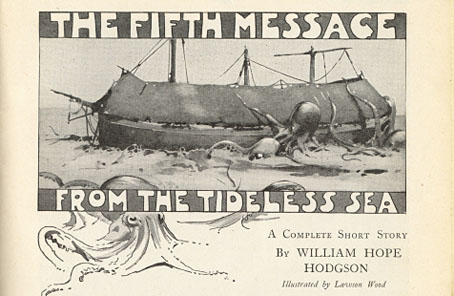
tideless-1911.jpg

Illustration by Lawson Wood (1911).

This was something I hadn’t seen before: an illustration for a story with a scenario very similar to ‘Glen Carrig’ where the sailors journey under canvas in their lifeboats. Another tale of the sinister Sargasso:

This is the fifth message that I have sent abroad over the loathsome surface of this vast Weed-World, praying that it may come to the open sea ere the lifting power of my fire-balloon be gone, and yet, if it come there, how shall I be the better for it? Yet write I must, or go mad, and so I choose to write, though feeling as I write that no living creature, save it be some giant octopus that lives in the weed about me, will ever see the thing I write. (more)

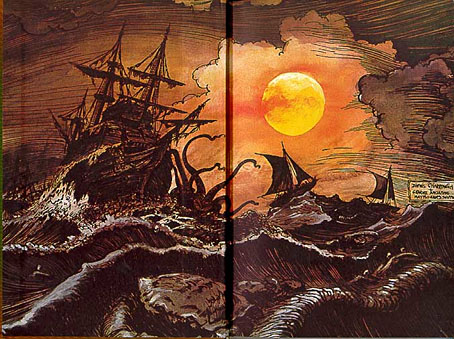
boats-1971-1.jpg

Les Canots du “Glen Carrig” / La Maison au bord du monde / Les pirates fantômes (1971). Illustration by Philippe Druillet.

A French Hodgson collection, the octopoid cover of which can be seen here. These were the endpapers; the rest of Druillet’s illustrations can be seen here.

Continue reading “Tentacles #1: The Boats of the ‘Glen Carrig’”

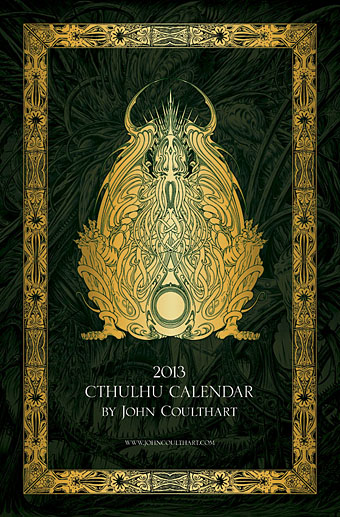
Cthulhu Calendar

calendar00.jpg

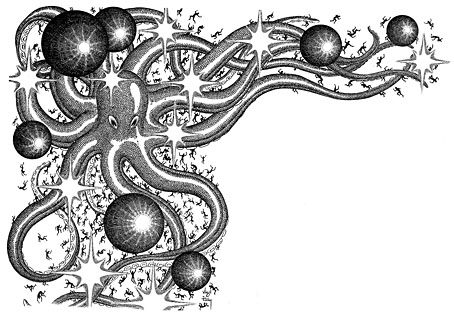
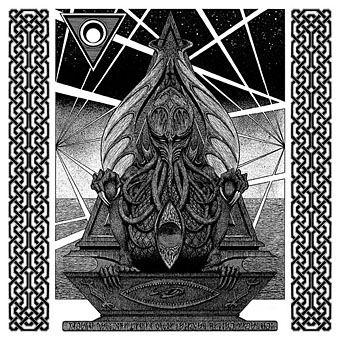
So here it is at last, the stars are right, etc. I had the idea for a Cthulhu calendar after I finished the Cthulhoid piece in January and realised I had about eight or more different representations of everyone’s favourite dreaming alien monstrosity. In gathering them together I’ve alternated between old and new works to avoid the front of the run being all black-and-white drawings. I could have coloured the black-and-white pieces, of course, but since they were never intended to be seen that way I prefer to leave them alone. The main alteration has been the adding of side panels or borders in order to help rectangular artwork fill out a square space. As usual this calendar is available through CafePress, priced at $19.99 / £15.00 / €18.50.

Before making a purchase please note: CafePress recently added a completely unnecessary feature to their calendars whereby purchasers can choose to have the pages start in late 2012 instead of January 2013. They don’t give me any way to disable this option, hence the warning. If you want a calendar beginning in January 2013 you have to select that option yourself.

Examples of the pages follow. See the artwork at a larger size here.

calendar01.jpg

JANUARY: Title page from The Call of Cthulhu (1987).

The opening page from my comic strip adaptation of the story.

calendar02.jpg

FEBRUARY: Resurgam (2012).

calendar03.jpg

MARCH: Cthulhu Arisen from The Call of Cthulhu (1988).

Cthulhu’s appearance from the comic strip adaptation.

calendar04.jpg

APRIL: De Profundis (2012).

Continue reading “Cthulhu Calendar”