Weekend links 226

na.jpg

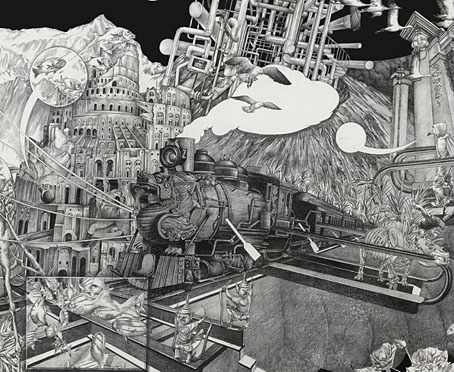
Fly (2012, detail) by Zhao Na.

• This week in psychedelia: the UK now has its own Psychedelic Society (just in time for the mushroom season), and is using some of my psychedelic Wonderland/Looking-Glass artwork for its headers and things. Over at The Quietus John Doran asks what makes music psychedelic in 2014, while a number of the site’s writers offer suggestions for a survey of modern European psychedelia (bonus points for using the alien head from the cover of Heldon 6: Interface at the top of the page).

Rick Poynor looks at posters by Hans Hillmann for Jean-Luc Godard’s films while at the BFI site four directors pay tribute to Hillmann. “…poster art has stagnated over the last 30 or 40 years,” says Peter Strickland. “It’s an embarrassment for film when one considers how the music industry has completely embraced the graphic form.” Related: lots of Hans Hillmann at Pinterest.

• More psychedelics (and more of the usual suspects), neurologist Andrew Lees on William Burroughs’ experiences with yagé and apomorphine, and DJ Pangburn on a word-search puzzle containing “every word Borges wrote”. The life and work of William Burroughs is celebrated in London next month with a one-day event, Language is a Virus from Outer Space.

• At Dangerous Minds: Kenneth Anger – Magier des Untergrundfilms (1970), a 53-minute documentary by Reinold E. Thiel. The subtitles are obtrusive but the material itself, which includes footage of Anger filming Lucifer Rising, is priceless.

• 73 minutes of Pye Corner Audio playing in Ibiza last month. More electronica: Colm McAuliffe talks to former members of the BBC’s Radiophonic Workshop.

The Assassination of Margaret Thatcher – August 6th 1983, an excellent story by Hilary Mantel who talks about her own assassination fantasies here.

• Mixes of the week: Cosey Fanni Tutti‘s 2014 Mix for Dazed Digital, and Secret Thirteen Mix 128 by DSCRD.

Pond i, a video for a new piece of music by Jon Brooks.

Tomorrow Never Knows (1966) by The Mirage | Tomorrow Never Knows (1976) by 801 | Tomorrow Never Knows (1983) by Monsoon
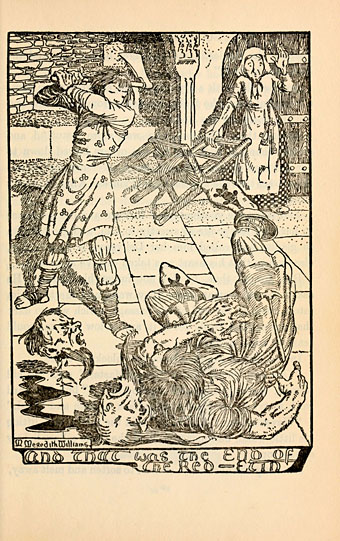
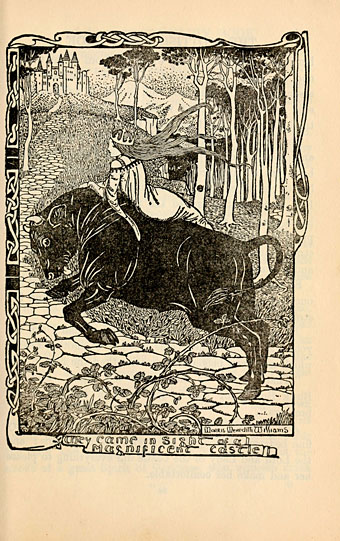
The Scottish Fairy Book

scots01.jpg

A post with some connection to the main news of the week, namely the vote for Scottish independence. At the time of writing the outcome is still in a quantum superposition between Yes and No. I’ve lived in England all my life but I’m half-Scottish (and a quarter Welsh) so the question has a personal relevance beyond being a citizen of the United Kingdom. For the record I would have voted Yes if I’d had the opportunity.

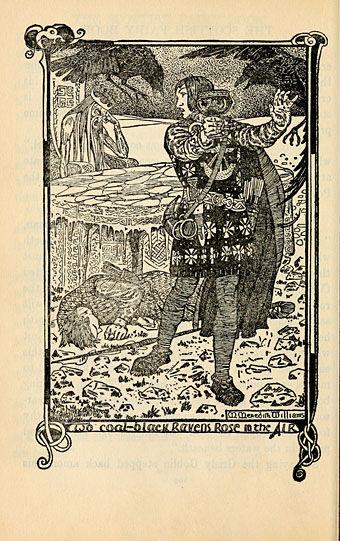
The Scottish Fairy Book (1910) is a popular retelling by Elizabeth Grierson of fairy stories and folk tales. The illustrations are by Morris Meredith Williams (1881–1973), an artist who was born in Wales but lived in Edinburgh for several years. This is only a small selection of Williams’ illustrations for the book which also include many half-pages, vignettes and two self-contained pictorial sequences: Times to Sneeze, and a dialect version of Monday’s Child. Browse the rest of the book here or download it here.

scots02.jpg

scots03.jpg

Continue reading “The Scottish Fairy Book”

Jacques Houplain’s Maldoror

houplain1.jpg

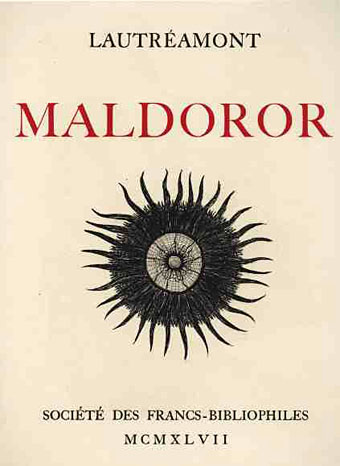
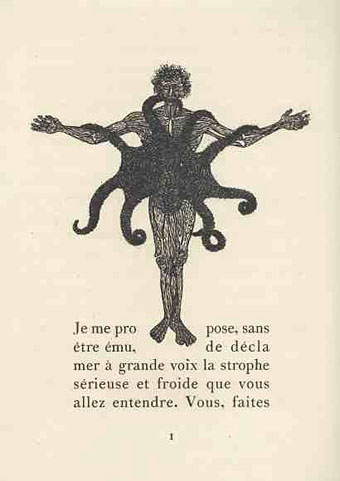
This is more like it. In 2008 when I posted one of Jacques Houplain’s etchings for a 1947 edition of Les Chants de Maldoror there were none of the other pictures in the series to be found. Now there’s a website devoted to Houplain’s work which features a page of his Maldoror illustrations. There’s a crude vigour to these pieces that gets much closer to Lautréamont’s fervour and viciousness than do the illustrations by Houplain’s famous contemporaries. Houplain is also one of the few illustrators to pay some attention to Lautréamont’s frequent digressions into the animal kingdom. The artist’s other work is worth a look; Legendes is a series of prints of medieval demons.

houplain2.jpg

Continue reading “Jacques Houplain’s Maldoror”

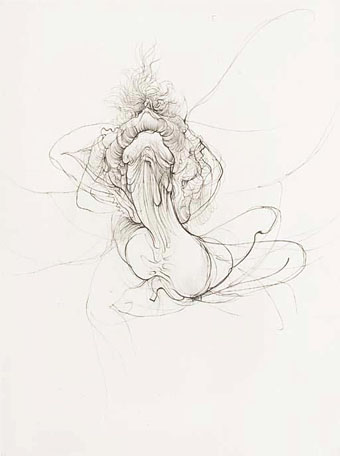
Hans Bellmer’s Maldoror

bellmer1.jpg

Les Fleurs du Mal.

That favourite novel of the Surrealists receives the attention of yet another Surrealist artist. Dalí and Magritte both made their own attempts to illustrate Lautréamont’s Les Chants de Maldoror, a book that many people would consider beyond the reach of easy pictorial representation. I tend to think that the novel’s delirious, dream-like prose offers endless interpretations; this earlier post managed to haul one paragraph in the direction of the Cthulhu Mythos.

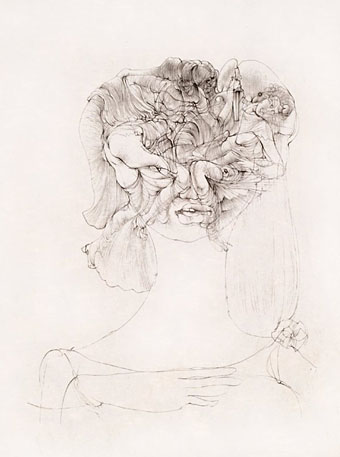
Hans Bellmer’s series of 33 intaglio prints were produced from 1967 to 1971, and use the book as a mirror for the artist’s erotic obsessions. Not an unwarranted point of view but Bellmer makes the novel seem much more overtly erotic than it is. The images here aren’t the best quality. Better copies and a complete set of the prints may be viewed at a larger size here.

bellmer2.jpg

Ecstasy.

Continue reading “Hans Bellmer’s Maldoror”

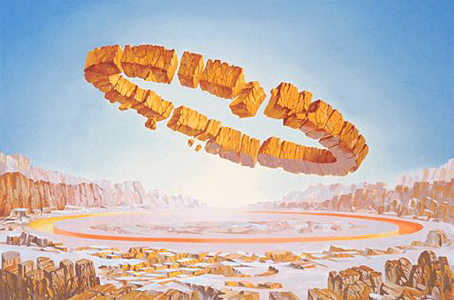
The art of Fabrizio Clerici, 1913–1993

clerici1.jpg

Un istante dopo (1978).

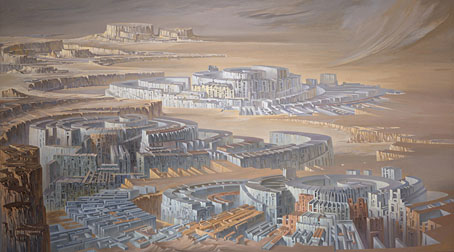
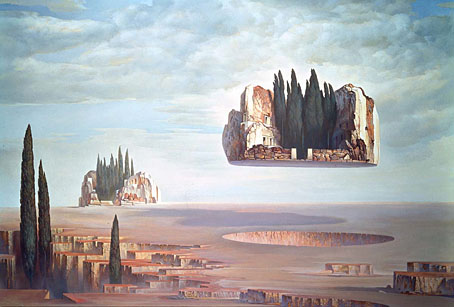
An Italian painter of the fantastic who’s managed to stay off my radar for one reason or another despite doing many of the things I like to see: weightless structures, imaginary architecture, and (towards the end of his career) a series of variations on Arnold Böcklin’s endlessly adaptable The Isle of the Dead. The latter paintings are some of the best Böcklin variants I’ve seen. These alone would have made him worthy of attention but the rest of his oeuvre is an equally accomplished development of late Surrealism (or, if you need another category, Fantastic Realism). The official website is a very good one so there’s plenty more to see. (Thanks to Michelangelo for the tip!)

clerici2.jpg

La tromba d’aria (1965).

clerici3.jpg

Latitudine Böcklin (1974).

Elsewhere on { feuilleton }
The fantastic art archive

Previously on { feuilleton }
A Picture to Dream Over: The Isle of the Dead
The Isle of the Dead in detail
Arnold Böcklin and The Isle of the Dead