Notor’s Lysistrata

lysistrata1.jpg

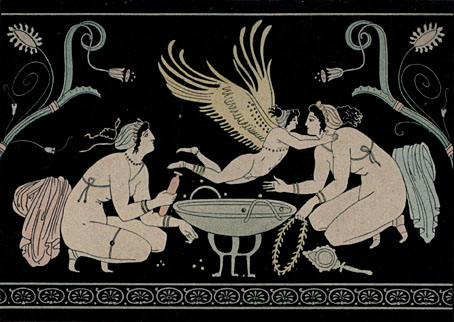
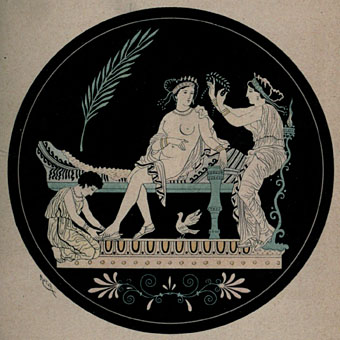
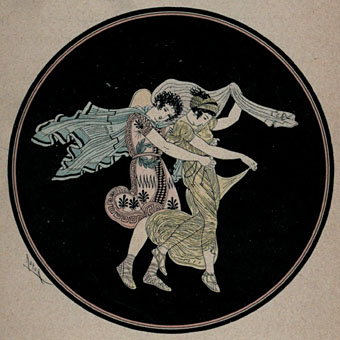
Earlier this week, a friend online (hi Wendy) suggested that if American politicians continue to insist on punitively interfering with the female body it might be time for women to deprive the same men of pleasurable access to those bodies. I directed her to the plot of Aristophanes’ Lysistrata, the most celebrated example of withholding sexual favours in order to effect political change. Aristophanes’ play is a comedy but the protest can be quite serious, as a group of Kenyan women demonstrated in 2009.

lysistrata2.jpg

These illustrations are from a French translation by Charles Marie Zévort published in 1898. The illustrator was “Notor”, better known as the Vicomte Gabriel de Roton, who specialised in imitating the decorative style of art from Ancient Greece. The subject matter may be bawdy but you wouldn’t really know it from the illustrations. For drawings that honour the details of the story it’s necessary to look to Aubrey Beardsley.

lysistrata3.jpg

Notor’s Lysistrata can be downloaded at the Internet Archive. There’s a French site about the artist here with examples of his other work.

Continue reading “Notor’s Lysistrata”

Richard Bruce Nugent’s Salomé

nugent1.jpg

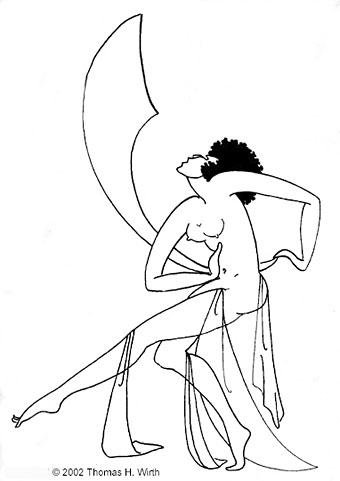
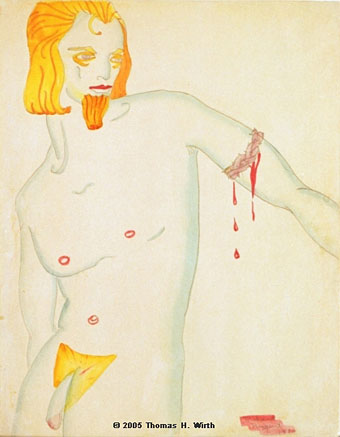
Untitled (Salomé, no date).

I was looking for work by the artist, Richard Bruce Nugent (1906–1987), not more Salomé illustrations so this was a surprise discovery. Nugent was an American writer, illustrator and painter who was friends in the 1920s with key figures in the Harlem Renaissance such as Langston Hughes and Zora Neale Hurston. Unlike Hughes, whose sexuality has been disputed for years, Nugent was openly gay at a time when such a stance carried considerable risks. According to the Nugent website he “stood for thirty years as the only African-American writer willing clearly to indicate his homosexuality in print.” That site hosts these pictures in a number of gallery pages which include some rather fine (and very gymnastic) erotic drawings. Among the writings there’s a piece entitled Slender Length of Beauty that dates from the same period as the picture below, a very Wildean retelling of the Salomé story which includes a character named after that favourite figure of Uranian myth, Narcissus.

nugent2.jpg

Untitled (John the Baptist? 1930).

Elsewhere on { feuilleton }
The gay artists archive
The Salomé archive

Heavy Metal, October 1979: the Lovecraft special

hm1.jpg

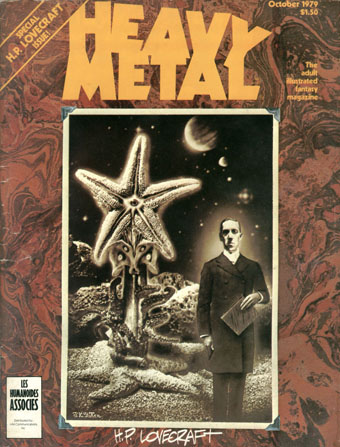
Mr Lovecraft by JK Potter.

HP Lovecraft died seventy-five years ago on 15th March, 1937. Twenty-five years ago I was halfway through drawing my comic strip adaptation of The Call of Cthulhu, conscious at the time that, yes, it was fifty years ago today… I mentioned at the weekend the special Lovecraft edition of Heavy Metal that was published in October 1979; of the many stimuli that led to the drawing of CoC, this magazine was by far the most important. Given the date, now seems as good a time as any to say something about it.
hm2.jpg

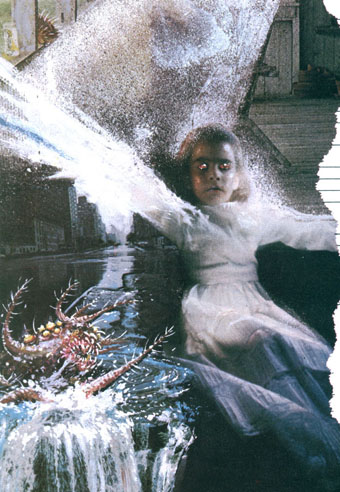
Illustration for the contents page by Stephen R. Bissette.

Heavy Metal was the US offshoot of Métal Hurlant, the sf/fantasy comics magazine founded by Jean Giraud (Moebius), Philippe Druillet and Jean-Pierre Dionnet in 1974. Copies of Métal Hurlant could be found in London but none ever made it further north. The advent of Heavy Metal provided an invaluable introduction to a generation of European artists whose work was otherwise difficult to find. Even better: their stories were being translated into English for the first time. The late 70s was a dizzying period for a Lovecraft reader: HR Giger appeared apparently out of nowhere in 1977 when Big O published the first UK collection of his art (which I couldn’t afford at the time), a book with Necronomicon in the title; a year later Thames & Hudson published Franz Rottensteiner‘s The Fantasy Book, an overview of the genre that devoted eight pages to Lovecraft and Arkham House, and which included many illustrations I’d never seen before; in 1979 Giger was all over the newspapers and magazines thanks to Alien; then in October the Lovecraft special dropped onto the shelves. I was stunned: this was that rare occasion when someone creates exactly the thing you want to see at precisely the right moment.
hm3.jpg

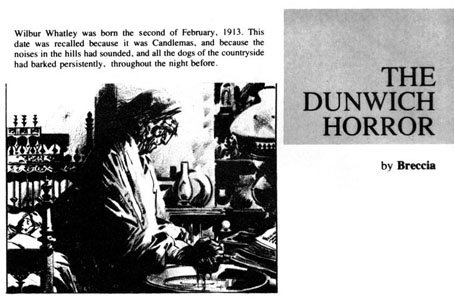
The Dunwich Horror by Alberto Breccia. A superb adaptation.

Looking back, the issue isn’t quite as good as it seemed at the time: many of the stories are slight, a couple have nothing whatever to do with Lovecraft, and, Breccia aside, none of the artists tackle the major works. What counted in the end was the idea of the issue, the implication that Lovecraft’s imagery was there to be seized and reworked in visual form. There were better issues of the magazine, before and after, but for the next six years this one remained for me a tantalising possibility. They hadn’t got it quite right…what if someone else did? After searching comic shop shelves in vain I eventually decided to have a go myself.

Continue reading “Heavy Metal, October 1979: the Lovecraft special”
Philippe Druillet album covers

druillet1.jpg

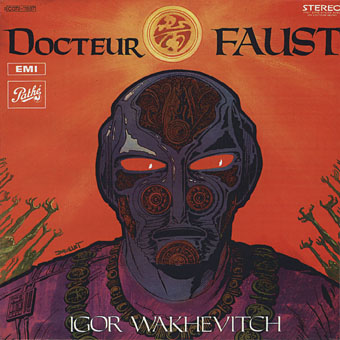
Docteur Faust (1971) by Igor Wakhévitch.

Philippe Druillet: album cover artist. As with John Martin, I’m surprised there aren’t more examples. Once again, Discogs.com proves incomplete so I’ve added a couple more including the first on this list, Docteur Faust. If you know of any others, please leave a comment.

Igor Wakhévitch’s berserk masterpiece is a cult item in this house, and something I’ve written about already. The cover art is the icing on an unclassifiable cake.

druillet10.jpg

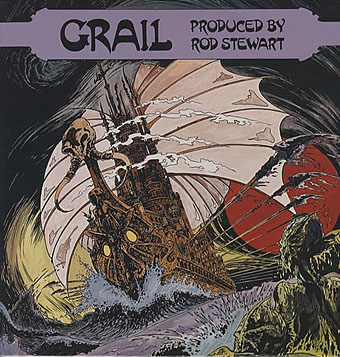
Grail (1970) by Grail.

The cover is the opening page of The Wild Wind Isles, one of Druillet’s Lone Sloane stories. Produced by Rod Stewart; did you notice? “We are sailing…”

druillet4.jpg

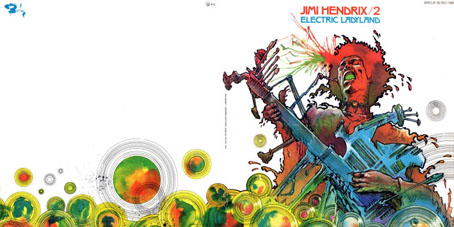
Electric Ladyland (1975) by The Jimi Hendrix Experience.

A gatefold sleeve for a series of four Hendrix reissues on the Barclay label. The other covers were provided by Moebius, Jean Solé and an artist unidentified on the link above but it looks to me like the work of Philippe Caza.

druillet3.jpg

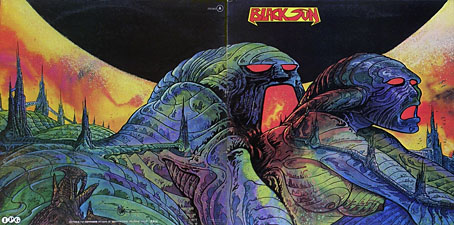
Black Sun (1978) by Black Sun.

Black suns are a regular feature of Druillet’s work (and mine, ahem) so the artist at least suits the title. The debut album of a short-lived French funk/soul group.

East/West (1980) by Richard Pinhas.

The French equivalent of Krautrock doesn’t have a name but Richard Pinhas is one of its leading practitioners. This is still my favourite among his solo works, not least because it’s more successfully musical than other albums which feature great slabs of guitar or synth doodling. In addition to a cover of David Bowie’s Sense Of Doubt there’s also science fiction author Norman Spinrad ranting through a vocoder on the opening and closing tracks. The great cover art is a page from Druillet’s 1980 adaptation of Flaubert’s Salammbô.

Continue reading “Philippe Druillet album covers”

Henry Keen’s illustrated Webster

keen2.jpg

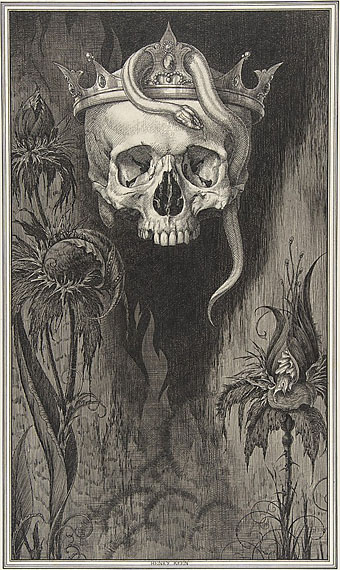
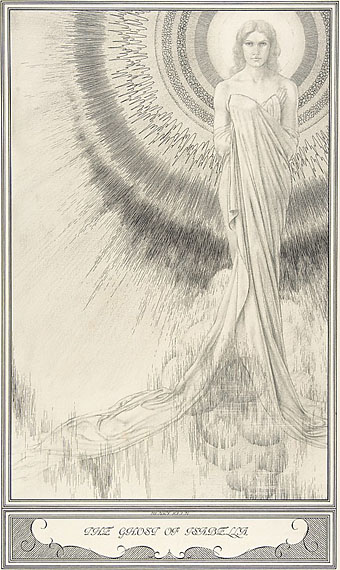
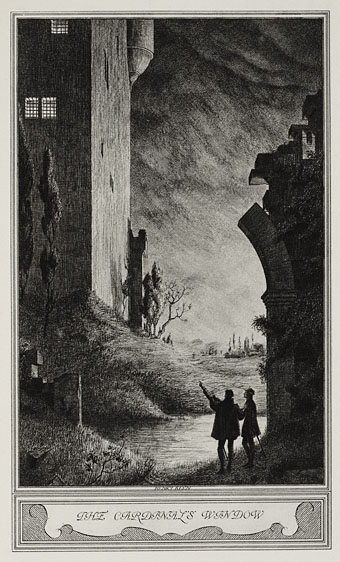
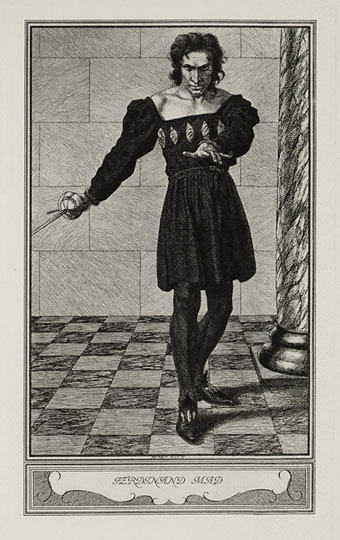
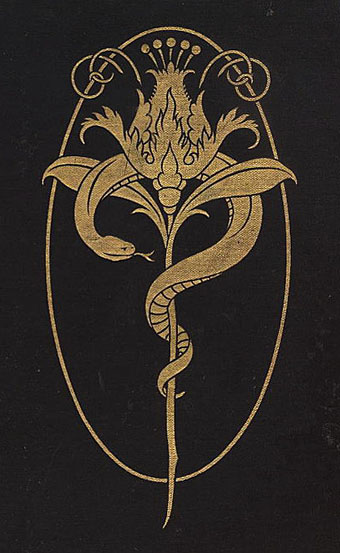
More gorgeous work from elusive British illustrator Henry Keen (1871–1935). These are some of the ink drawings Keen provided for a 1930 edition of John Webster’s Jacobean tragedies The Duchess of Malfi and The White Devil. In addition to eleven full-page illustrations there are decorative embellishments, and as usual it’s a shame there isn’t anywhere with a complete set of the artwork. I’m tempted to track down some of Keen’s books myself, this one seems especially good. That crowned skull is not only worthy of Carlos Schwabe, it makes me wonder why Webster wasn’t given more attention from earlier artists. Probably because the plays were too strong for 19th century tastes, violent revenge drama wasn’t what anyone wanted on stage at the time. Swinburne admired Webster’s work but then Swinburne wasn’t exactly a typical Victorian.

Thanks to ~Wunderkammer~ for the tip!

keen3.jpg

keen4.jpg

keen5.jpg

keen1.jpg

Elsewhere on { feuilleton }
The illustrators archive

Previously on { feuilleton }
Henry Keen’s Dorian Gray