Picasso-esque

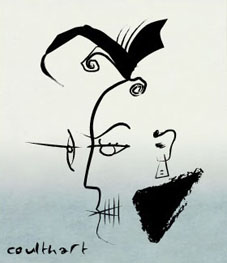
picasso1.jpgJessica Helfand at Design Observer draws attention to Mr Picassohead, a site which allows you to create your own Picasso-style portraits. The interface doesn’t have as much choice of elements as the Simpsonizer did but messing around with it this afternoon yielded a passable rendering of David Britton’s Lord Horror.

This idling reminded me that I’ve yet to finish reworking the Lord Horror series Reverbstorm which I’ve been engaged with on and off for the past year. The handful of people actually waiting for this magnum opus should know that other work and new Savoy projects keep intervening at the moment. Anyone who saw the original comics will be aware that pastiching Picasso was a consistent theme from issue five onwards. For those who haven’t seen the comics (and few people have…) I’ve posted a couple of the original Picasso-esque Horrors below, beginning with a more representational view of his Lordship for those unfamiliar with the appearance of the man.
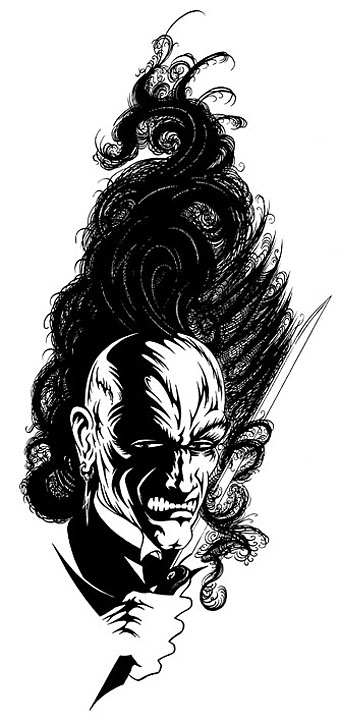
lord_horror.jpg

A 1997 portrait which owes much to the style of Burne Hogarth‘s later Tarzan illustrations.

Continue reading “Picasso-esque”

Maldoror illustrated

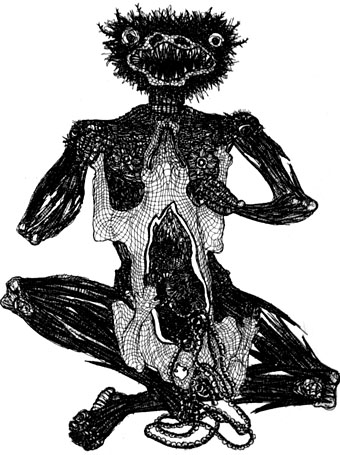
maldoror.jpg

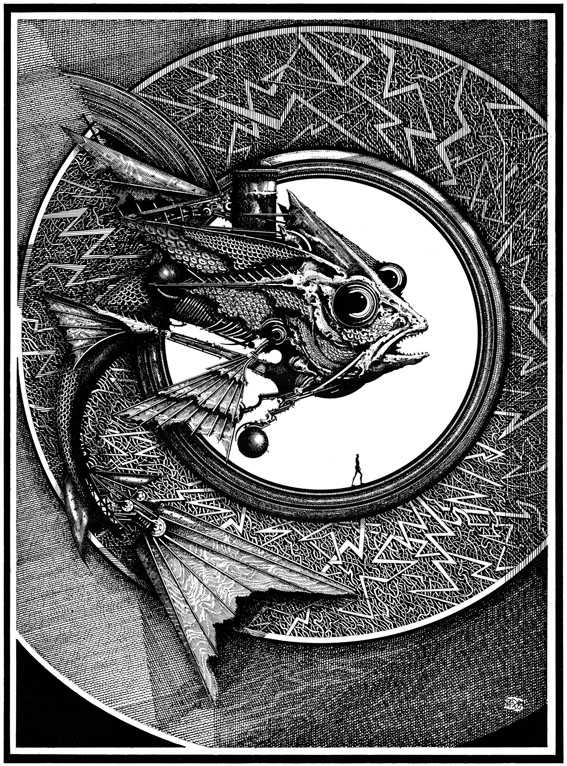
Les Chants de Maldoror by Corominas (2007).

There seems to be no escaping from HP Lovecraft just now, the illustration above having been created for a PDF publication entitled CTHULHU, Cómics y relatos de ficción oscura, produced by these people. The Cthulhu-zine seems to be unavailable but you can see more of these splendid illustrations, based on Lautréamont’s Les Chants de Maldoror (1869), at Dorian Gray BD. The artist, Corominas, has an additional blog showcasing more commercial work.

maldoror2.jpg

Les Chants de Maldoror by Jacques Houplain (1947).

Lautréamont’s delirious masterpiece isn’t exactly the easiest book to illustrate but the Corominas drawings certainly capture some of its ferocious energy. The Surrealists were big Maldoror enthusiasts, of course, and did much to establish Lautréamont’s current reputation. Salvador Dalí produced a series of engravings for a Skira edition in 1934 although his drawings look less like illustrations of the text than a rifling of the artist’s usual preoccupations. The picture above by Jacques Houplain is one of a series of twenty-seven engravings produced for a French edition in the 1940s. More recently, Jean Benoît created (among other things) a Maldororian dog and there’s even been an attempt at a comic-strip adaptation from Hernandez Palacios. On the whole I prefer the Corominas pictures but then I’m biased towards that style of drawing which owes something to all the comic artists and illustrators influenced by Franklin Booth.

Elsewhere on { feuilleton }
The illustrators archive
The etching and engraving archive

Previously on { feuilleton }
Franklin Booth’s Flying Islands
Carlos Schwabe’s Fleurs du Mal
The art of Jean Benoît

Aubrey by John Selwyn Gilbert

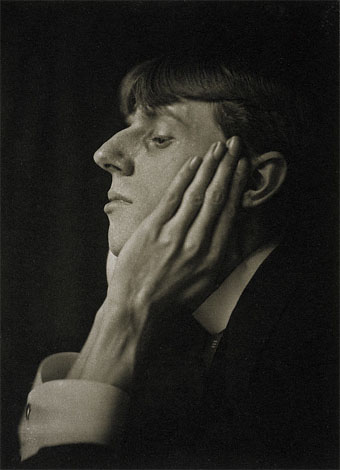
aubrey00.jpg

Aubrey Beardsley photographed by Frederick Evans (1894).

I’ve been going through the Coulthart VHS library recently, transferring to DVD recordings which can’t be purchased or found online. Among these is a drama from the BBC’s Playhouse strand, Aubrey by John Selwyn Gilbert, which was broadcast in 1982. This drama follows the life of artist Aubrey Beardsley from the time of Oscar Wilde’s arrest in April 1895—which event resulted in Beardsley losing his position at The Yellow Book—through the foundation of The Savoy magazine, to his tubercular death in March 1898.

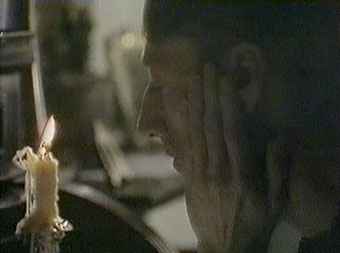
aubrey01.jpg

John Dicks as Aubrey.

Playhouse was a BBC 2 equivalent of Play for Today (which usually ran on BBC 1) and Aubrey, like many other dramas of the period, was shot on video in the studio. This was done for convenience as well as being cheaper than shooting on film, since scenes could be filmed using several cameras simultaneously. The drawback is that the image looks very harsh, and historical works such as this often seem unreal and artificial as a result. If you can forgive this deficiency, Aubrey was an excellent production with some great performances, especially Ronald Lacey as Leonard Smithers and Rula Lenska as Aubrey’s sister, Mabel. The details of Beardsley’s life are very accurate, down to his beloved Mantegna prints on the walls, and many of the scenes are arranged to correspond with his drawings, the production design being largely monochrome.

Continue reading “Aubrey by John Selwyn Gilbert”

Horror comics

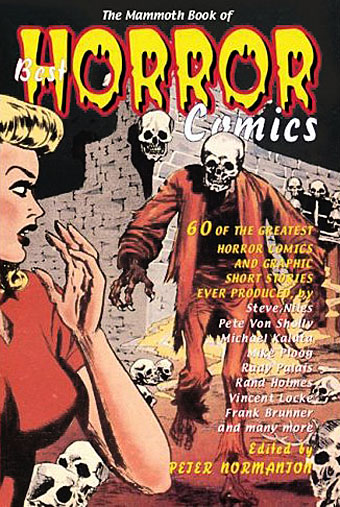
horror.jpg

More horror…. It’s been a while since I posted anything work-related here, not because I haven’t been busy but because much of the work this year is still waiting to see the light of day as a result of protracted schedules.

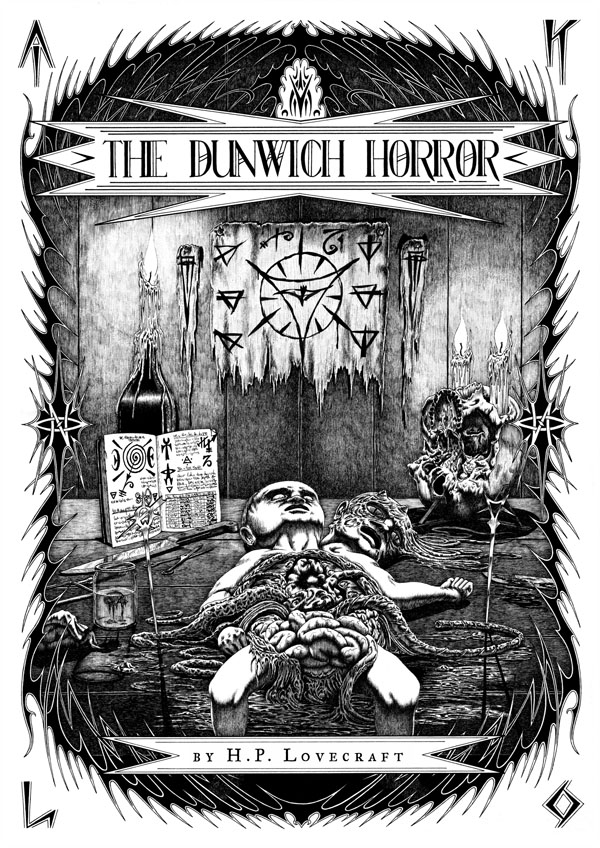
The Mammoth Book of Best Horror Comics is an anthology from Running Press (US) that really is mammoth—over 540 pages—and includes a reprinting of my Dunwich Horror pages from The Haunter of the Dark. You can see the selections in the Sprout widget below. (Not any more you can’t. Sprout decided to make everyone pay for their previously free service. Bye bye, Sprout.) It feels a bit fraudulent being in there since my drawings are more illustrations than a comics adaptation but I imagine most people buying the book will be happy to see poor old Wilbur Whateley’s demise receive another airing. Many of the featured strips are in the hokey EC mould which is often more comic than horror (one reason I was never very taken with EC) but the material gets better as it goes along and it’s a pleasure to be in anything with an artist as good as Mike Kaluta.

tdh.jpg

The Dunwich Horror, title page (1988).

Elsewhere on { feuilleton }
The Lovecraft archive

The art of Ian Miller

ian_miller9.jpg

From the Hollywood Gothic series (1984).

Jeff VanderMeer has a great post about artist/illustrator Ian Miller at io9 which prompts me to write a few words about his work myself, something I’ve intended for a while.

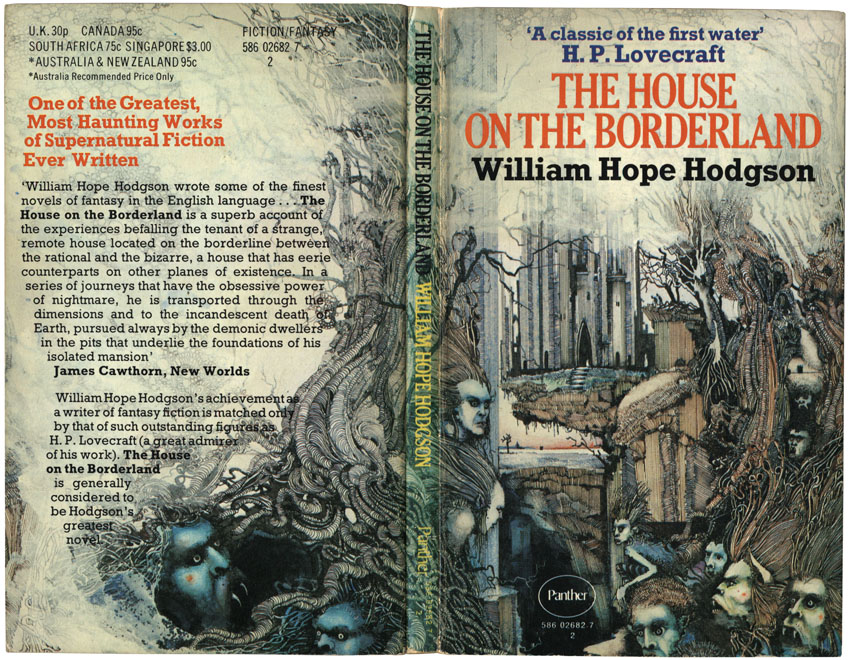
Miller is indelibly linked for me with HP Lovecraft on account of his covers for the Panther Horror editions of the 1970s, the first Lovecraft volumes I bought. His sinister and minutely detailed ink drawings were a big inspiration when I started to draw seriously myself, unsurprisingly when my own drawings possessed a similar quantity of detail and macabre atmosphere. I still think his cover for William Hope Hodgson’s The House on the Borderland (below) is one of the most successful anyone has produced for that novel. His Mountains of Madness cover, while not being a direct illustration, perfectly encapsulates the feel of much of Lovecraft’s later fiction.

Jeff’s post has a wide range of work which I’ve avoided duplicating. The items shown here are all scans from my own library. More of Miller’s Lovecraft illustration will appear in the forthcoming Artists Inspired by HP Lovecraft from Centipede Press, along with several pieces by yours truly.

ian_miller4.jpg

The House on the Borderland (1972).

Continue reading “The art of Ian Miller”