Odilon Redon lithographs

redon1.jpg

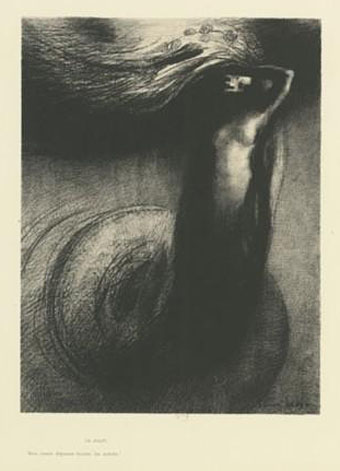
La mort: mon ironie dépasse toutes les autres! (1889).

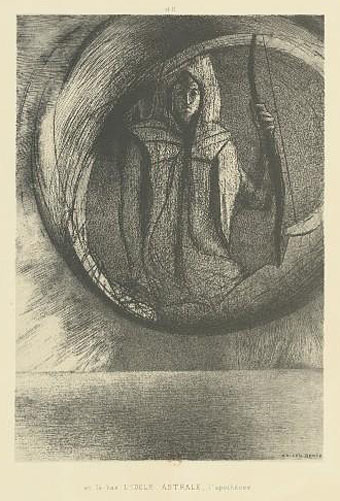
Two samples from a collection of Odilon Redon etchings lithographs at Gallica, an archive I’ve only recently begun to look at. A shame that the larger images scale up the content and the empty margin, often leaving a very small picture in the centre not much bigger than thumbnail size. Oh, well… On the plus side there’s a portrait I hadn’t seen before of Des Esseintes from Huysmans’ À Rebours, the book which in 1884 introduced Redon’s work to a wider public. Via BibliOdyssey, without whom, etc.

redon2.jpg

Et là-bas l’IDOLE ASTRALE, l’apothéose (1891).

Previously on { feuilleton }
The eyes of Odilon Redon
Arthur Zaidenberg’s À Rebours

The art of Hunter Stabler

stabler1.jpg

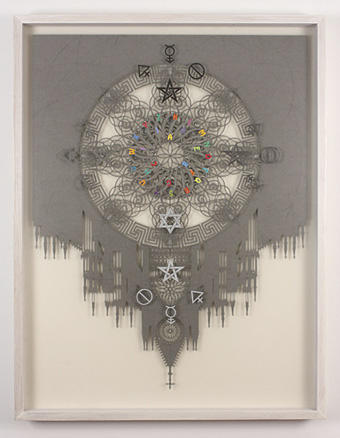
Magick Kruller Alefbet Lamen of the Golden Dawn.

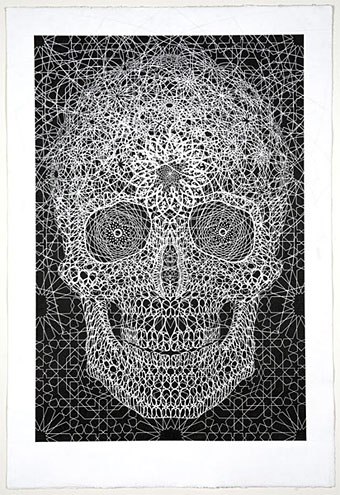
People cast around the superlatives when describing Hunter Stabler’s hand-cut paper artworks with good reason. The skull below is an ink drawing but the artist’s website features many paper works which are just as intricate. Via Phantasmaphile.

stabler2.jpg

Hare Christmas Maharishi.

Previously on { feuilleton }
The Sapphire Museum of Magic and Occultism

Charles Méryon revisited

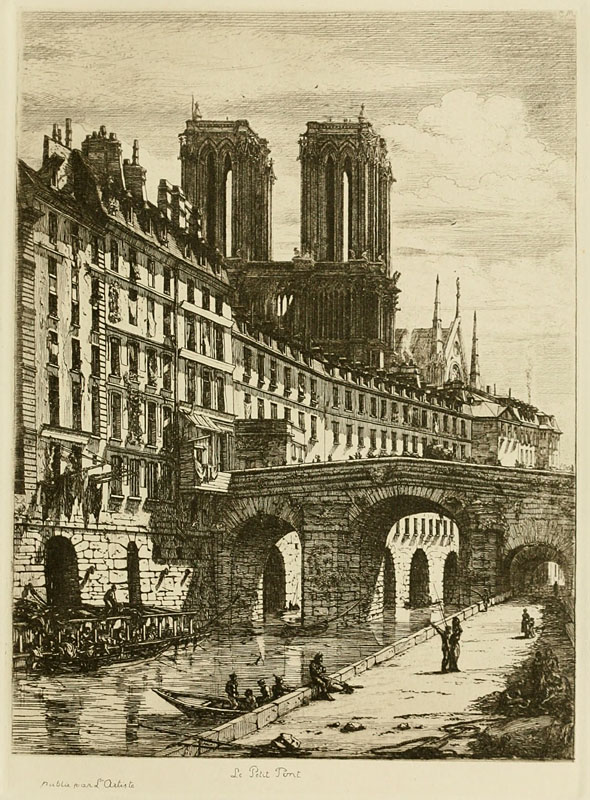
meryon1.jpg

Le Petit Pont (fifth state) (1850).

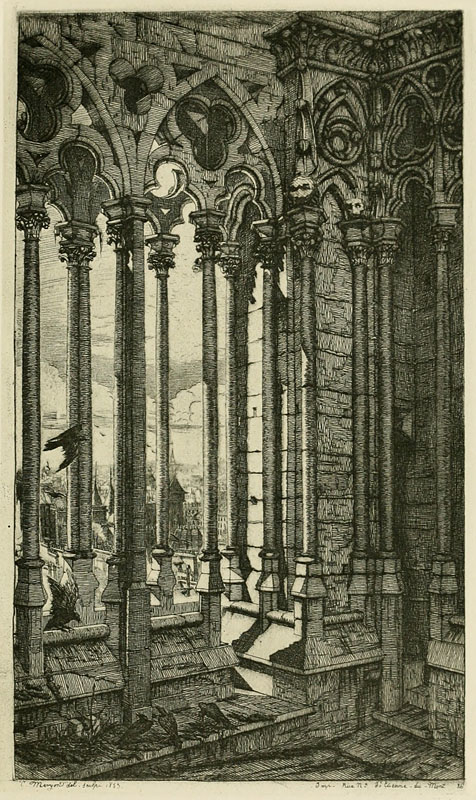
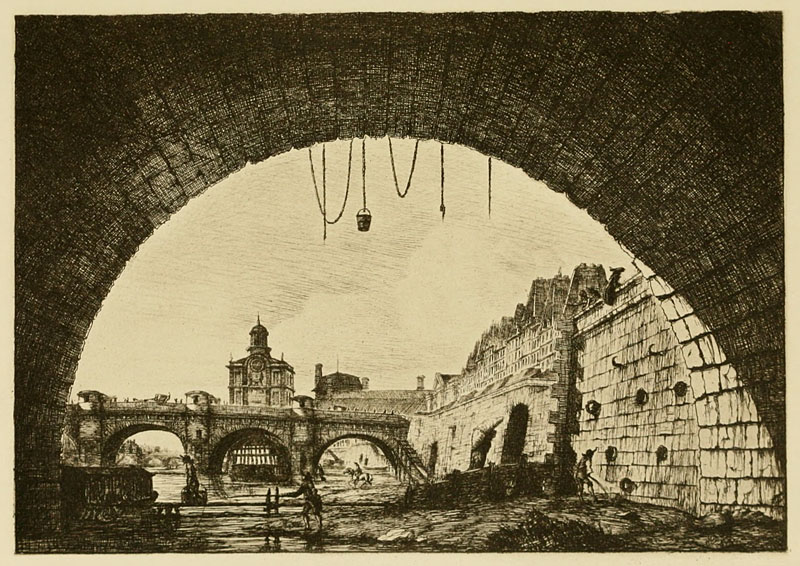
A short piece about the Paris etchings of Charles Méryon (1821–1868) was one of the first posts I made here. I’ve little to add to what I said four years ago other than to point out that the Internet Archive has The Etchings of Charles Méryon available for download, a rather fine collection of the artist’s Piranesi-like renderings of the city. The view below of Pont-Neuf through one of the Seine bridges is very Piranesian indeed and makes me wish Méryon had been as productive as his predecessor was with his Vedute di Roma.

meryon2.jpg

La Galerie Notre-Dame (third state) (1853).

meryon3.jpg

Le Pont-Neuf et La Samaritaine (third state) (1855).

Elsewhere on { feuilleton }
The etching and engraving archive

Previously on { feuilleton }
Vedute di Roma
Charles Méryon’s Paris

Scenes from a carriage

tenniel.jpg

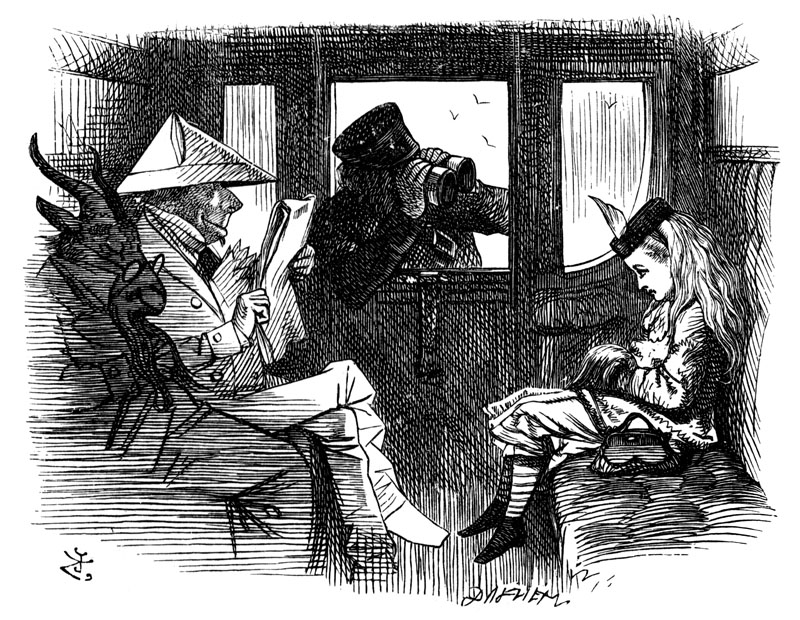
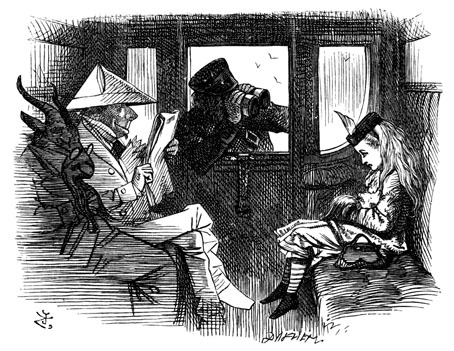
One of John Tenniel’s illustrations for Through the Looking-Glass (1871).

The collaboration with Carroll, and the production of this clairvoyant illustration gave Tenniel the chance to accuse the killer, whose identity he knew – because he had, at some level, shared in the crime. His capped (or crowned) Guard wears the Diamond and stares, eyeless, at the girl: because he is, or stands for, the Red King. He is checkmated. The Goat accuses him, a Tarot Devil, representing ‘ravishment, force, fatality’. So Tenniel is able to put into his depiction of Alice the details of the murders that the police have never made public. The hands of the victims were always tied in front of them – as Alice’s are, within her muff. They were all strangled with a knotted scarf, such as the one that Alice wears. And a single feather was knotted into their hair. I rest my case.

There’s further divination by Iain Sinclair of Tenniel’s carriage scene in his 1991 novel Downriver but you’ll have to search out the book if you want the rest. The picture above is scanned from my 1908 edition of the two Alice novels which has the sharpest reproductions of Tenniel’s illustrations I’ve seen, not least because they’re printed on quality paper. Later editions often print second- or third-generation copies with the cross-hatched areas reduced to black smudges.
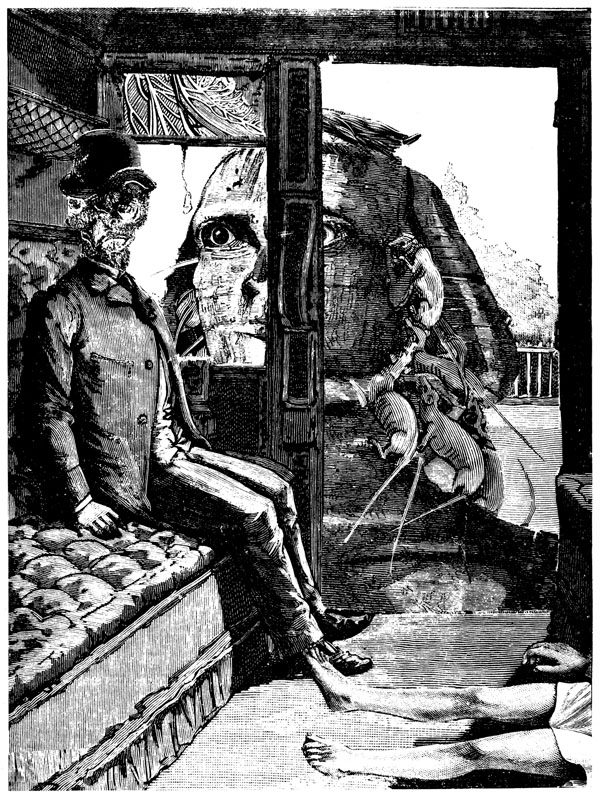
ernst.jpg

Oedipus by Max Ernst from Une semaine de bonté (1934).

Tenniel’s carriage scene has always been linked for me with this collage by Max Ernst from his Surrealist masterwork, Une semaine de bonté. Sinclair’s proposed murder scenario gives the two pictures an additional resonance when you notice the body on the floor of Ernst’s carriage. Is this Oedipus’s father, recently slain by his son, or some other victim?
ernst2.jpg

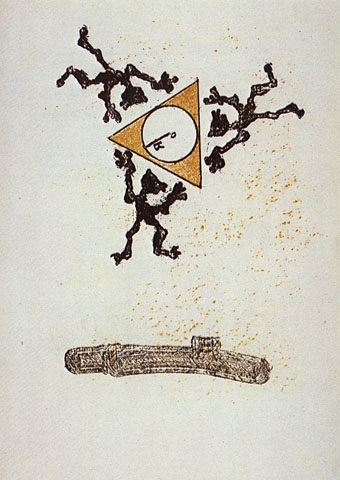
Lithograph by Max Ernst from Lewis Carroll’s Wunderhorn (1970).

Salvador Dalí illustrated Alice’s Adventures in Wonderland in 1969 which perhaps prompted Ernst’s own set of mysterious Alice-inspired lithographs a year later. I’ve yet to see a complete set of the Ernst prints, if anyone has a link then please leave a comment. The artist’s collage novel is a lot easier to find since it’s one of the many great books that Dover Publications keep in print.

Previously on { feuilleton }
Through the Psychedelic Looking-Glass: the 2011 calendar
Jabberwocky
Alice in Acidland
Return to Wonderland
Dalí in Wonderland
Virtual Alice
Psychedelic Wonderland: the 2010 calendar
Charles Robinson’s Alice’s Adventures in Wonderland
Humpty Dumpty variations
Alice in Wonderland by Jonathan Miller
The Illustrators of Alice

Weekend links: the Halloween edition

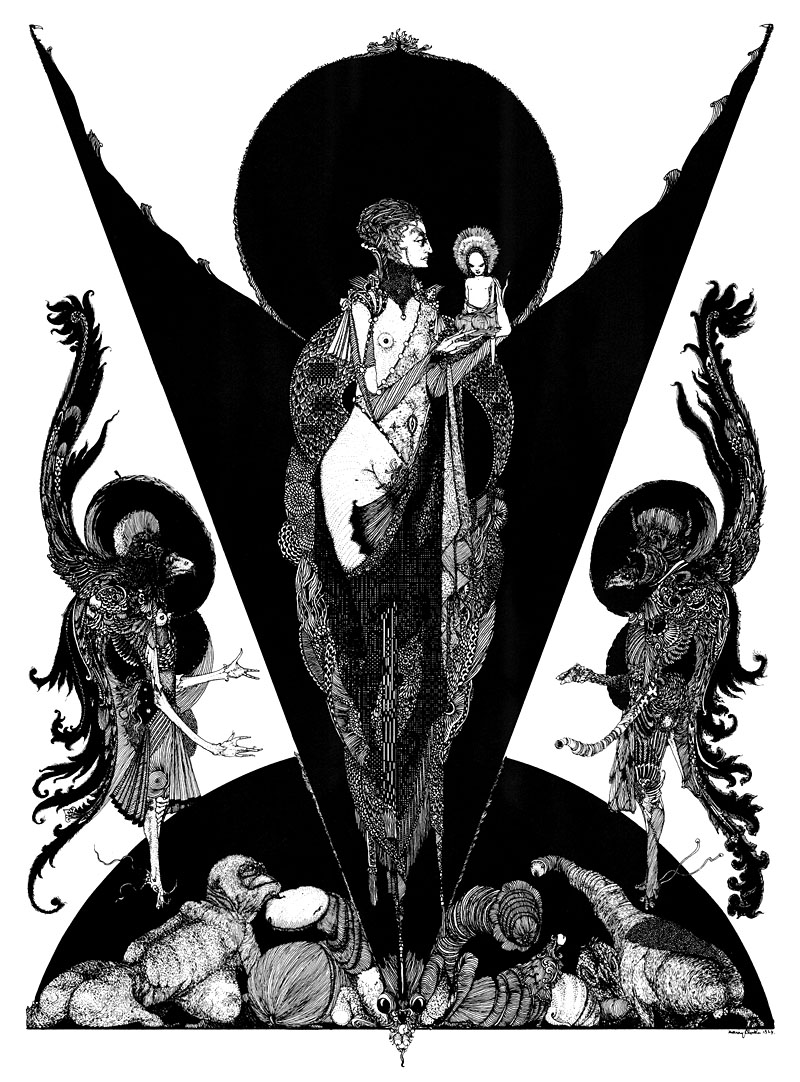
goddem.jpg

Goddem with Attendants (1924) by Harry Clarke.

• Some of Harry Clarke’s extraordinary illustrations from Goethe’s Faust can be seen at A Journey Round My Skull. And a reminder for anyone who missed them, Clarke’s Poe illustrations at Golden Age Comic Book Stories.

HP Lovecraft – Audio Books, Radio Plays, & Audio Documentaries. Out-of-print recordings and (no doubt) pirate copies of more recent things. I found this page by accident so it was a surprise to see my 1999 Lovecraft portrait used there. I used to own the David McCallum Dunwich Horror, an album with a singularly appalling sleeve illustration.

• Better album sleeves can be found here: Prospective 21e Siècle, a collection of foil designs from 1967. Some of the very challenging music within can be downloaded at the Avant Garde Project archive. Related: Have an electroacoustic Halloween with İlhan Mimaroğlu’s Le Tombeau d’Edgar Poe (1964) and Wings of the Delirious Demon (1969).

startrails.jpg

Star Trails and the Captain’s Ghost, a photo by Chris Kotsiopoulos at Astronomy Picture of the Day.

• “The horror industry is totally male dominated from its directors to its slashers, and even its bloggers…and I think that needs to change.” Day of the Woman, a blog for the feminine side of fear.

6 of the Scariest Queer Horror Books Ever. I think I’d agree with the commenter in picking The Haunting of Hill House by Shirley Jackson.

• Designer Jonathan Barnbrook (pictured in a graveyard by the looks of things) is interviewed at MyFonts.

A Weird and Scratching Beauty: The Art of John Coulthart and Call of Cthulhu.

Is the Royal Masonic School for Boys the scariest building in Britain?

50-million-year-old insect trove found in Indian amber.

The Café Kaput Samhain 2010 mixtape.

The Groovy Age of Horror.

Monster Mash (1962) by Bobby “Boris” Pickett & The Crypt-Kickers.