La Tour Eiffel

eiffel1.jpg

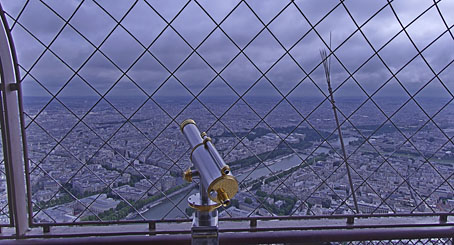
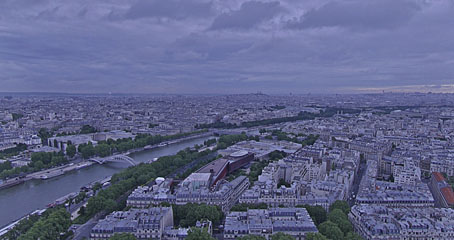
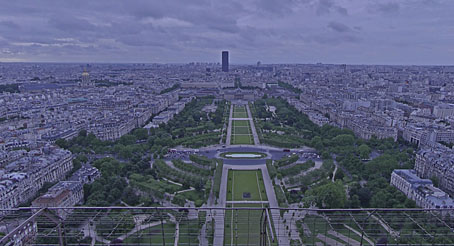
Another Google visit to a very tall structure. The views from the Eiffel Tower may not reach as high as those of the Burj Khalifa but you are at least looking at one of the greatest cities in the world. These pictures were taken in June of this year on a particularly gloomy day, possibly the early morning judging by the lack of people or car traffic. The views above and below look down on the section of the 7th arrondissement that was the site of the Exposition Universelle in 1900. As with the Burj Khalifa you can choose which floor to navigate.

eiffel2.jpg

eiffel3.jpg

The Champ de Mars.

Previously on { feuilleton }
Henri Rivière’s Eiffel Tower
Peter Eudenbach’s Eiffel Ferris wheel
City of Light

Weekend links 168

bell.jpg

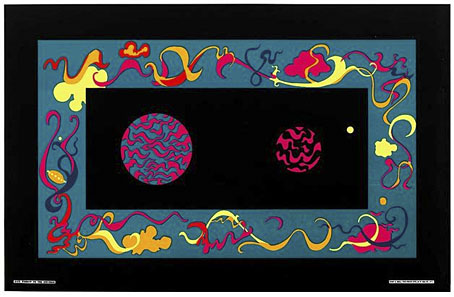
Window to the Universe (1967) by Roberta Bell. From Summer of Love: Psychedelic Posters from SCMA currently showing at the Smith College Museum of Art, Northampton, MA.

Sympathy for the Shoggoth: China Miéville’s Revolution of the Weird Tale, an essay by Christina Scholz which features one of my Cthulhu pictures among its embellishments. Related: “‘New Strange’ stories hold a chilling mirror to life” says Rick Kleffel discussing Robert Aickman and others. And speaking of Aickman (so to speak), Reese Shearsmith has recently recorded Aickman’s Cold Hand in Mine for Audible.

• An erotic alphabet book from the Soviet Union circa 1931, created to promote adult literacy. Who says porn can’t be educational?

Angelystor is a new 39-minute composition by Phil Legard which he describes as “often heavy, Saturnine and melancholic”.

• James Ward’s postcards of the Post Office Tower. Related: film of the revolving restaurant at the top of the Tower in 1967.

•You Might Never Find Your Way Back: Shirley Jackson’s Hangsaman by Nicholas Rombes.

satty.jpg

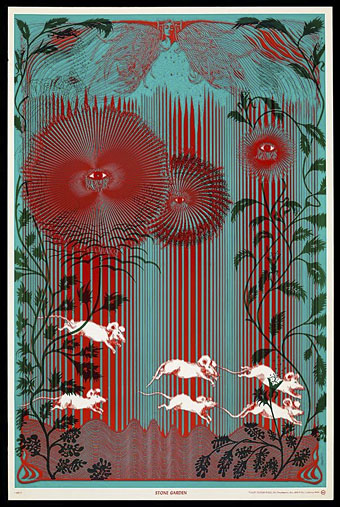
Stone Garden (1967) by Wilfried Sätty.

High Over Blue is “a mind-warping 20-minute freakout” by Moon Duo.

• Queer Visual Splendour: Jon Macy discusses his erotic comics.

The Origin of the Pilcrow, aka the Strange Paragraph Symbol.

• Mix of the week: the Kranky 20th Anniversary Mixtape.

Ten Amazing Cheeses and their Literary Counterparts.

PingMag looks at the past and present of Ginza.

Mind Gardens (1967) by The Byrds | The Garden (1981) by John Foxx | The Toy Garden (2006) by Helios

Astronomiae Instauratae Mechanica

tycho01.jpg

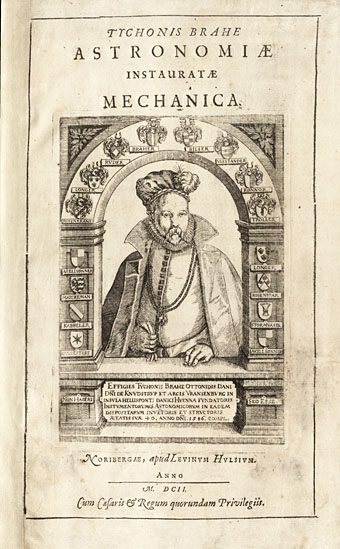
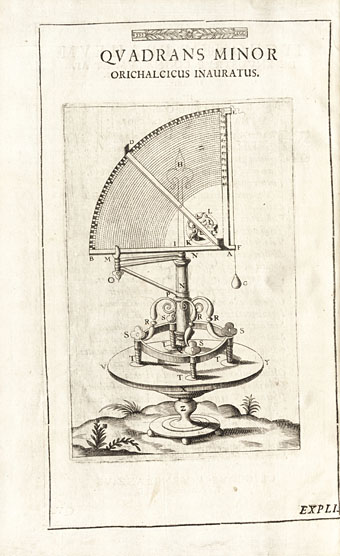
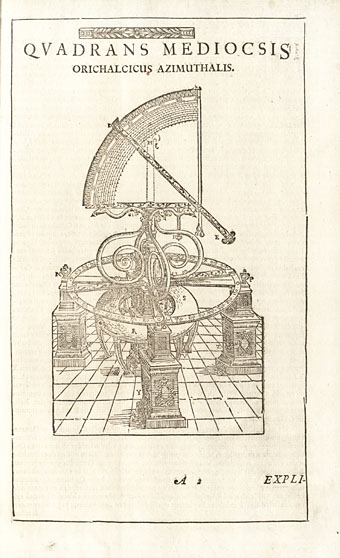
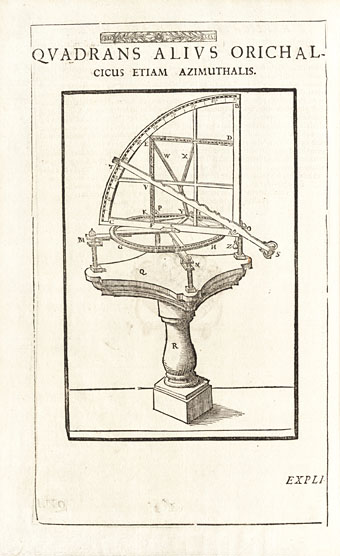
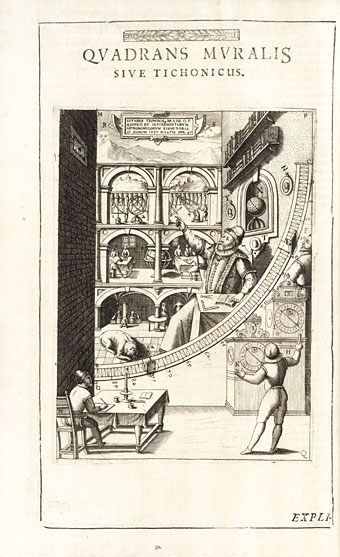
Let there be no complaints about lack of variety: fetish photography one day, 17th-century astronomical instruments the next. Tycho Brahe’s Astronomiae Instauratae Mechanica (1602) is a description of the astronomical devices used at Brahe’s Stjerneborg (Star Castle) on the island of Ven in Oresund, Denmark. One of the plates below shows the layout of the Star Castle while the others detail various sextants, armillary spheres and the like. A number of these are familiar from their more recent use as book illustrations so it’s good to once again find the source volume.

The concept of an observatory garden is very reminiscent of the Peking Observatory, and the much more impressive structures at Jaipur. Brahe wrote: “My purpose was partly to have placed some of the most important instruments securely and firmly in order that they should not be exposed to the disturbing influence of the wind, and should be easier to use, partly to separate my collaborators when there were several with me at the same time, and have some of them make observations in the castle itself, others in these cellars, in order that they should not get in the way of each other or compare their observations before I wanted this.”

Browse the rest of the book here or download it here. Tip via this tweet which linked to coloured copies of the plates.

tycho02.jpg

tycho03.jpg

tycho04.jpg

tycho06.jpg

Continue reading “Astronomiae Instauratae Mechanica”

Weekend links 167

field.jpg

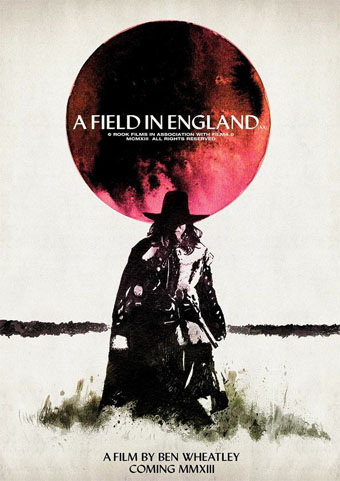
Poster by Luke Insect & Kenn Goodall.

In recent years I’ve had little patience for British cinema: too much dour “realism” with little of Alan Clarke’s vitality, too many comedies that aren’t funny, too many Hollywood calling cards, too much Colin Firth… So it’s been a pleasure to see Peter Strickland’s Berberian Sound Studio followed this month by Ben Wheatley’s A Field In England, a pair of films that stand out by daring to be different in a medium which seems to grow more creatively conservative with each passing year. A Field In England adds to the micro-genre of weird British films set around the time of the English Civil War. In place of witchfinders and devil worshippers we have magic, murder, madness, and a field of hallucinogenic mushrooms. Wheatley, like Strickland, takes risks that wouldn’t be allowed with a bigger budget which makes me excited to see what they’ll be doing next. A Field In England is already out on DVD & Blu-ray. The trailer is here. The director talked to Mat Colegate about the genesis of the film (spoiler alert). There’s more big hats and cloaks in this list of ten 17th century films.

• “I like to look at men…the way they look at women,” photographer Ingrid Berthon-Moine says about her pictures of sculpted testicles.

Roger Dean has finally sued James Cameron over the designs for Avatar. Will be interesting to see how this one turns out.

• Google has taken its Street View cameras to Battleship Island, “the most desolate city on earth“.

• The strange fantasy novels of Edward Whittemore are available again in digital editions.

Julia Holter talks about her forthcoming Gigi-inspired album Loud City Song.

• At Pinterest: Maneki-neko, the beckoning cat of good fortune.

Beautiful Books: Decorative Publishers’ Cloth Bindings.

• The abstract paintings of Hilma af Klint (1862–1944).

Lee Brown Coye illustrates August Derleth in 1945.

Bill Laswell’s discography intimidates the collector.

• Mix of the week: Kit Mix #23 by Joseph Burnett.

• The Soundcarriers: Last Broadcast (2010) | Signals (2010) | This Is Normal (2012)

Strange Days

doors1.jpg

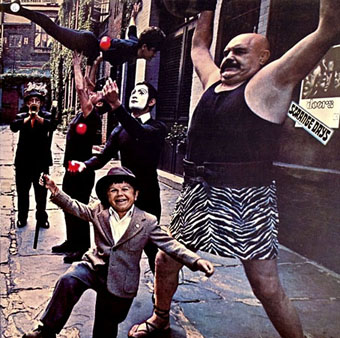
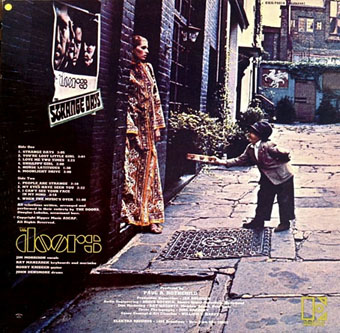
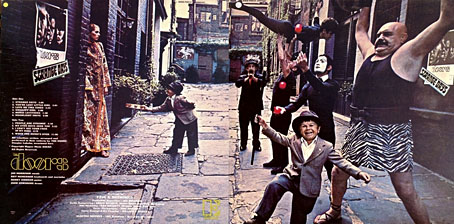
Strange Days was the second album by The Doors, released in October 1967. It’s the album that veers the closest to what people think of today as a psychedelic sound—which puts it in my favour—and is also unique in the group’s catalogue for minimising their presence on the gatefold sleeve, something Jim Morrison was always eager to do even as the record company were trying to turn him into a pop star.

doors2.jpg

The cover photo by Joel Brodsky of street performers was intended to be reminiscent of a scene from Fellini. For years I was under the impression that this street was European, it certainly doesn’t look typically American, so it was a surprise to read earlier today that the location is Sniffen Court, a small mews in the heart of New York City. New York or not, I’ve always wanted to live in a place like this. You can keep your gardens and empty lawns, I’d be quite happy to see those wonderfully eroded flagstones every day. Contemporary views of Sniffen Court show that much of its atmosphere on the cover derives solely from Joel Brodsky’s skill at capturing the light as it reflects from the paving stones. The place today looks neater, cleaner and a lot less attractive, but that’s not too surprising for a historic area in one of the most expensive cities on earth.

doors3.jpg

sniffen.jpg

Sniffen Court, NYC, in 2012. The plaques at the rear were sculpted by Malvina Hoffman.

Elsewhere on { feuilleton }
The album covers archive