Weekend links 197

field.jpg

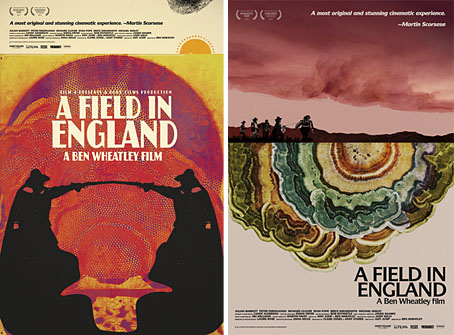
Posters by Jay Shaw for Ben Wheatley’s A Field in England which receives a US release this month.

Alvin Baltrop’s Gay New York: “the clandestine activities taking place under New York piers between 1975 and 1986”. AnOther samples some of the work on display at the Open Eye Gallery, Liverpool. Meanwhile, BUTT has some shots from Texas Porno Road Trip, a photo series by Mike McLeod. Related: HBO will show you anything but a male erection, says Justin Moyer.

• “[Robert] Desnos quickly proved himself to be one of the most gifted in these experiments – eventually known as ‘the period of sleeping fits’. He was capable of writing, speaking, drawing and composing entire fantastical narratives.” Eugene Thacker on the Surrealist séances of the 1920s.

• “It’s history, not a viral feed,” says Sarah Werner. A complaint about the way the ongoing decontextualisation of images is both pernicious and potentially lucrative.

His prose is a palimpsest of echoes, ranging from Eliot’s Preludes and Rhapsody on a Windy Night (lines like “Midnight shakes the memory / As a madman shakes a dead geranium” are Burroughsian before the fact) to Raymond Chandler’s marmoreal wisecracks and Herbert Huncke’s jive. I suspect that few readers have made it all the way through the cut-up novels, but anyone dipping into them may come away humming phrases. His palpable influence on JG Ballard, William Gibson, and Kathy Acker is only the most obvious effect of the kind of inspiration that makes a young writer drop a book and grab a pen, wishing to emulate so sensational a sound. It’s a cold thrill.

Peter Schjeldahl reviews Call Me Burroughs by Barry Miles.

• “Dance music was born in LGBT communities, but has this been forgotten?” Luis-Manuel Garcia on an alternate history of sexuality in club culture.

• Avant-Grade Hallucinogens: the Poetics of Psychedelic Perception in Moving Image Art by Stuart Heaney.

No Condition Is Permanent: weekly radio shows from Count Reeshard at LuxuriaMusic and iTunes.

The Golem: where fact and fiction collide. David Barnett on 100 years of Gustav Meyrink’s novel.

• Don’t Let Harlan Ellison Hear This: Nick Mamatas on a great writer.

• Mix of the week: the Ela Orleans Mix at A Sound Awareness.

Amon Düül II playing live on French TV, 1971 & 1973.

• A soundmap of London canals and minor rivers.

The Peculiar Underworld of Rare-Book Thieves.

• At Pinterest: William Burroughs and Phalluses.

Architecture of Doom

Hallucinations (1967) by Tim Buckley | Phallus Dei (1969) by Amon Düül II | Hallucinations (In Memory of Reinaldo Arenas) (1994) by Paul Schütze

Hiking in the CEZ

zone1.jpg

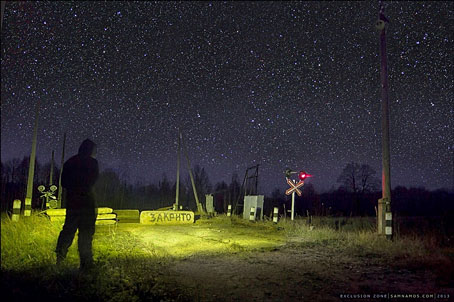
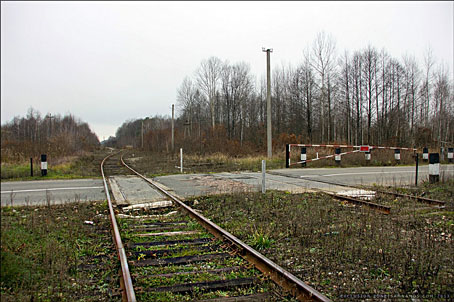
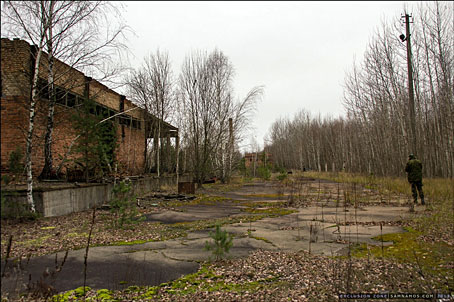
Two items of cult fixation collide in these photos of illicit exploration (1) into the irradiated exclusion zone around Pripyat (2) in northern Ukraine. According to English Russia the crew are a group of urban explorers from St Petersburg. The English Russia pages have two sets of photos with English annotations while the explorers themselves document their adventures to Pripyat (and elsewhere) in Russian at LiveJournal, here and here. (Google Translate works pretty well for the captions there.) Great photos in all of their posts. The shot above would be ideal as a wraparound cover for an edition of Roadside Picnic.

Official visits to the area now seem more common, and no doubt avoid the hazard of having to take drinking water from potentially toxic rivers. The Pripyat website advises on the pros and cons of the different seasons. Don’t forget your dosimeter.

zone2.jpg

zone3.jpg

Continue reading “Hiking in the CEZ”

Giovanni Battista Pian’s Pictorial Alphabet

muller1.jpg

Another recommendation from Paul Rumsey (thanks, Paul!), these are from a series of lithographs dated 1842–43 by Leopold Müller based upon paintings (?) by Giovanni Battista Pian, or Giovanni Battista de Pian (1813–1857). Shades again of (Giovanni Battista) Piranesi in the name, although the pictures are a lot less Piranesian than Antonio Basoli’s; the only time Piranesi bothered with wooden materials was as a support for building stone arches, and in the spars and torture engines of his Prisons. See more of the series here.

muller2.jpg

muller3.jpg

Continue reading “Giovanni Battista Pian’s Pictorial Alphabet”

Antonio Basoli’s Pictorial Alphabet

basoli1.jpg

My thanks to Paul Rumsey for reminding me of the Alfabeto pittorico (1839) by Antonio Basoli (1774–1848). This is the same idea as yesterday’s pictorial alphabet but with an architectural theme. Basoli’s series of prints depicts each letter in an architectural style which matches the initial: A is for Arabia but also for aranciera (orangery). The attention to detail and the rendering of light and shade is very Piranesian, and it so happens that Piranesi had earlier designed a small number of capitals for use in books, the letterforms being created by architectural scenes. It’s tempting to see Basoli’s series as an elaboration of this idea done in the manner of Piranesi’s Prima parte di Architettura e Prospettive.

Given how much I enjoy this kind of thing I would have posted something about them by now, but seeing as they’d already been covered by the late-lamented Giornale Nuovo I stayed my hand. Mister Aitch’s post on the subject is still worth a look for the detail he supplies regarding the prints and their creator. For scans of the entire volume, go here.

basoli2.jpg

basoli3.jpg

basoli4.jpg

Continue reading “Antonio Basoli’s Pictorial Alphabet”

Weekend links 194

roberts.jpg

Untitled glass sculpture by Richard Roberts.

Lord Horror: Reverbstorm, my collaboration with David Britton, makes The Quietus list of Literary Highlights of 2013. At the same site there’s Russell Cuzner talking to English Heretic. “His methodology takes in magick, psychogeography and horror film geekdom, along with firm roots in Britain’s industrial music culture of the early 1980s, to form potent, novel topographies of an otherwise unconnected world of occultists and psychopaths.”

• A slew of London links this week: Geoff Manaugh on how the capital was redesigned to survive wartime blackouts, a piece which inadvertently explains why you see so much black-and-white street furniture in post-war films | Bob Mazzer’s photos of the London Underground in the 1970s and 1980s | Philipp Ebeling’s photos of the capital and its inhabitants today.

• “Science has become an international bully. Nowhere is its bullying more outrageous than in its assault on the phenomenon known as subjectivity.” David Gelernter on “The Closing of the Scientific Mind”. Related: “When Science Becomes Scientism” by Stanislav Grof.

• My favourite book about Orson Welles is This is Orson Welles (1992), a collection of Peter Bogdanovich’s interviews with Welles edited by Jonathan Rosenbaum. Bogdanovich’s interview tapes can now be heard at the Internet Archive.

• Brian Dillon on Dada collagist Hannah Höch who he calls “art’s original punk”, and Sean O’Hagan talking to another collage artist, Linder Sterling, who says “Lady Gaga didn’t acknowledge I wore a meat dress first”.

• One Hundred Years Of Weird Fear: Daniel José Older on HP Lovecraft’s literature of genealogical terror. More fear (and Lovecraft): Will Wiles on the growth of Creepypasta.

The Last Alan Moore Interview? A lengthy discussion with Pádraig Ó Méalóid. Shunning interviews hasn’t done Cormac McCarthy any harm so if I was Alan I wouldn’t worry.

• And speaking of Cormac McCarthy, the headline of the week: “Cormac McCarthy’s ex-wife busted after pulling gun from vagina during alien argument“.

• Where the bodies are buried: Mick Brown presents a potted biography of Kenneth Anger who offers a few reluctant quotes.

• A short animation for gore-obsessed kids: Pingu’s The Thing by Lee Hardcastle.

Helen Yentus designs a 3D-printed slipcase for a novel by Chang-rae Lee.

Ralph Steadman‘s illustrations for Alice’s Adventures in Wonderland.

• Mix of the week: Secret Thirteen Mix 103 by Lustmord.

Collage art at Pinterest.

No Escape (1966) by The Seeds | Pushin’ Too Hard (1966) by The Seeds | No Escape (1979) by Cabaret Voltaire | Pushin’ Too Hard (1982) by Paul Parker