Weekend links 82

morris.jpg

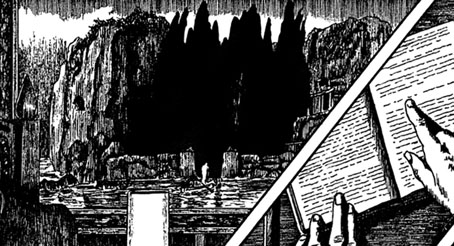
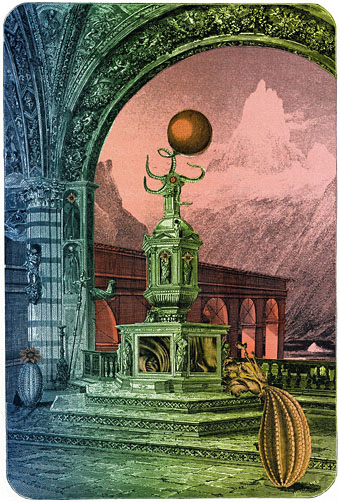
At the Mountains of Madness (1979) from Halloween in Arkham by Harry O. Morris.

• Golden Age Comic Book Stories always pulls out the stops in the run up to Halloween. In addition to a wonderful collection of Harry O. Morris collages, Mr Door Tree has also been posting Virgil Finlay’s illustrations for Edgar Allan Poe, Lynd Ward’s tremendous illustrations for a collection of weird tales entitled The Haunted Omnibus, Barry Moser’s woodcuts for an edition of Frankenstein, and Virgil Finlay’s illustrations for stories and poems by HP Lovecraft.

• “Eugene Thacker suggests that we look to the genre of horror as offering a way of thinking about the unthinkable world. To confront this idea is to confront the limit of our ability to understand the world in which we live – a central motif of the horror genre. In the Dust of This Planet explores these relationships between philosophy and horror.”

• “…the reader […] becomes a conscious participant in the process of imposing a linear sequence, while at the same time remaining aware that all narrative is an act of memory, and that memory is necessarily random.” Jonathan Coe reviews Marc Saporta’s book-in-a-box, Composition No.1, recently republished by Visual Editions.

• Nearly fifty years after its first performance, Peter Weiss’s Marat/Sade is still disturbing playgoers. And nearly ninety years after its release, Alla Nazimova’s silent film production of Oscar Wilde’s Salomé is touring the UK with live musical accompaniment.

Tom of Sinland at Homotography, in which illustrator Bendix Bauer portrays some of the fashion world’s notable male designers as Tom of Finland-style characters for Horst magazine.

Neil Gaiman Presents is a new audiobook imprint which launches with works by Jonathan Carroll, Alina Simone, Keith Roberts, M. John Harrison and Steven Sherrill.

• The Weird Wild West: Paul Kirchner has put all his Dope Rider comic strips online.

Leonora Carrington prints at Viktor Wynd Fine Art, London, from November 5th.

The Fall to Earth: David Bowie, Cocaine and the Occult.

Photos of New York City, 1978–1985.

Kathy Acker recordings at Ubuweb.

The Occupied Times of London.

The Golden Age of Dirty Talk.

Pushkin silhouettes.

• This week I’ve been lost in the Velvet Goldmine (again): John, I’m Only Dancing (1972) by David Bowie | The Jean Genie (1972) by David Bowie | Drive-In Saturday (1973) by David Bowie.
A Picture to Dream Over: The Isle of the Dead

iod_basle.jpg

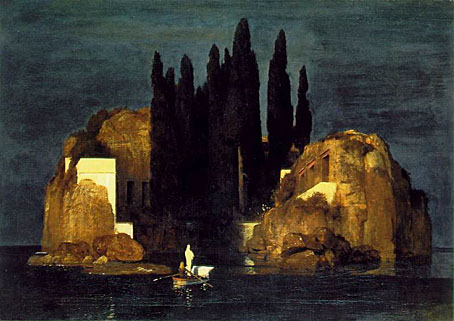
The Isle of the Dead (second version, 1880), Kunstmuseum, Basel.

In the sudden flares of light over the water, reflected off the sharp points of his cheeks and jaw, a harder profile for a moment showed itself. Conscious of Sanders’s critical eye, Father Balthus added as an afterthought, to reassure the doctor: “The light at Port Matarre is always like this, very heavy and penumbral – do you know Böcklin’s painting, ‘Island of the Dead’, where the cypresses stand guard above a cliff pierced by a hypogeum, while a storm hovers over the sea? It’s in the Kunstmuseum in my native Basel –”

The Crystal World (1966) by JG Ballard.

rachmaninov.jpg

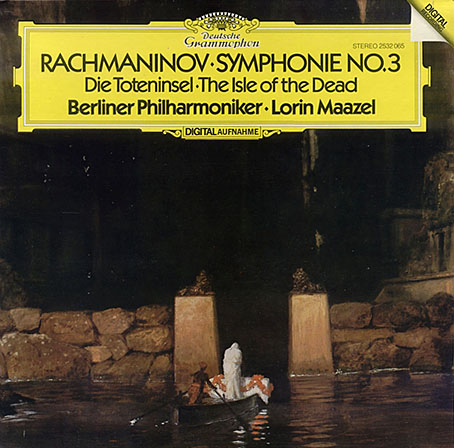
A 1982 recording.

Today’s post is another guest piece over at Tor.com where I run through a history of some of the works in different media inspired by Arnold Böcklin’s The Isle of the Dead (1880–1886). The four versions of Böcklin’s painting are favourites of mine so I’ve touched on this subject a couple of times before but this is the first time I’ve gone into any detail examining their influence. Many artworks have become highly visible in the past century via copies, parodies and imitations: think of Leonardo’s Mona Lisa and The Last Supper, or Michelangelo’s David and The Creation of Adam. What’s fascinating about The Isle of the Dead is that it’s not one picture but four versions of the same scene, and they’ve all been very influential not as parodies but as direct inspirations for other artworks—musical compositions, feature films, a novel—yet few people would recognise the artist’s name. My post only scratches the surface by running through some of the more well-known works but there’s a whole website devoted to the subject for anyone wishing to investigate further.

coc.jpg

The Call of Cthulhu (1988).

Modesty prevented me from mentioning my own work in the Tor post but I’ll do so here. Among the many references ladled into my adaptation of The Call of Cthulhu there’s the 1886 Leipzig version of Böcklin’s painting in the background of a panel. A prefiguring of the end of the story and also an excuse to add to the list of works acknowledging one of the great Symbolist paintings.

Previously on { feuilleton }
The Isle of the Dead in detail
Arnold Böcklin and The Isle of the Dead

Ver Sacrum, 1899

vs-1899-14.jpg

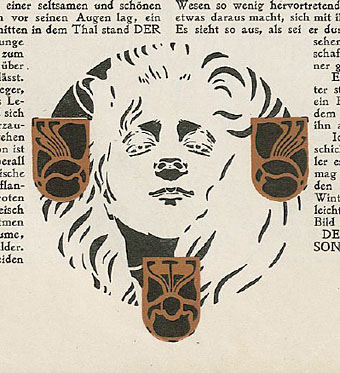
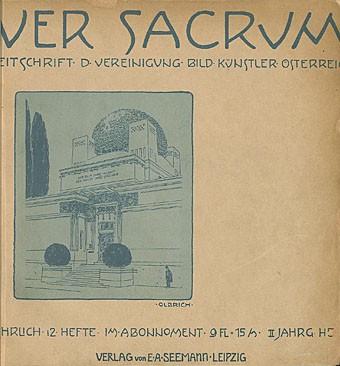
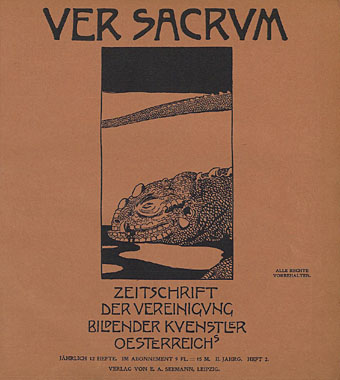
Another post about Ver Sacrum, the art journal of the Viennese Secession and one of the world’s major art magazines during its short run from 1898 on. This is another digitised edition from the University of Heidelberg’s archive and is the second volume of the journal’s monthly issues. It’s difficult to make a small selection from over 450 pages of high-quality Art Nouveau graphics and design so I’ve mostly chosen the covers again. Anyone wanting to see more is encouraged to download the whole volume or browse individual pages here.

vs-1899-01.jpg

vs-1899-02.jpg

Continue reading “Ver Sacrum, 1899”

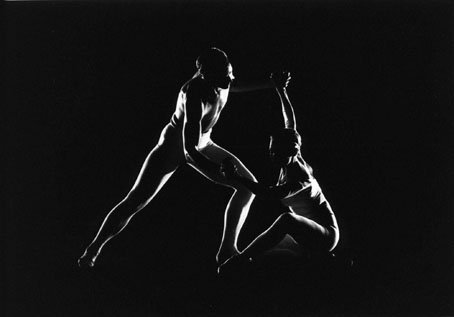
Pas de Deux by Norman McLaren

pasdedeux.jpg

Norman McLaren’s 1968 film is not only one of the greatest ballet films ever made, it’s also an astonishing combination of high-contrast photography and optical printing. Choreography by Ludmilla Chiriaeff, dance by Margaret Mercier and Vincent Warren, music by Dobre Constantin and the Folk Orchestra of Romania. YouTube isn’t the ideal medium to watch anything like this but there’s now a quality copy here in all its 13-minute glory. If you’ve never seen it, do so before it vanishes.

Previously on { feuilleton }
Norman McLaren

The Classical alibi in physique photography

stowitts.jpg

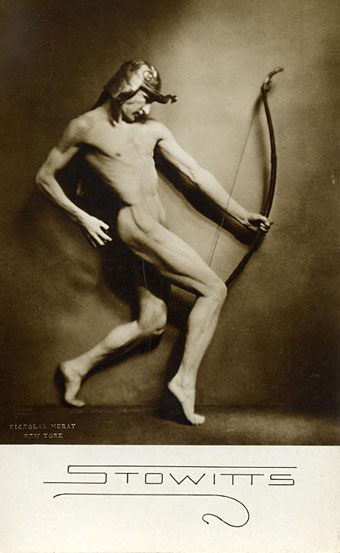
Stowitts photographed by Nickolas Muray.

The title is from two gallery pages at the Queer Arts Resource which runs through a history of the old subterfuge whereby homoerotic pictures were decorated to look suitably Greek or Roman. This seldom fooled anyone, even in Oscar Wilde’s day, but it no doubt helped to keep the studios out of the law courts. Amid the plaster columns and antique props there’s a card I hadn’t seen before promoting dancer and artist Hubert Stowitts whose role as a satyr is one of the most memorable moments in Rex Ingram’s 1926 film of The Magician.

physique.jpg

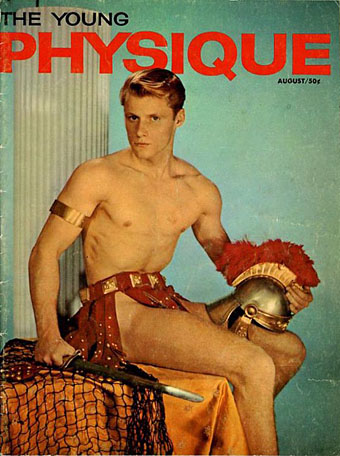
Jim Galahad.

Also at Queer Arts is a copy of The Dying Gaul with a model who’s in the peak of health and a lot more well-hung than most Greek sculptures.

pose.jpg

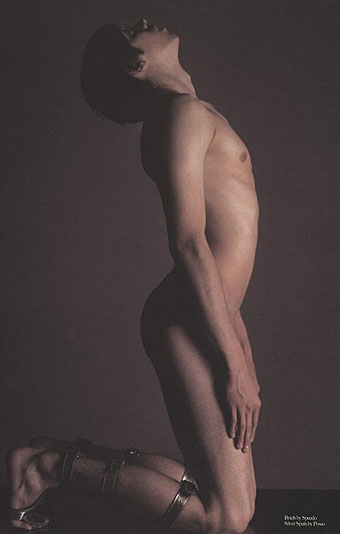
This picture is something I found ages ago on a lost web page and now have a tenuous reason to post here. What looks like erotica is actually a fashion shoot (and he’s wearing swimming trunks) but it shows how the Classical mode persists. He looks like he wants to see more of Jim’s sword…

Elsewhere on { feuilleton }
The gay artists archive
The men with swords archive