Max Klinger’s New Salomé

klinger.jpg

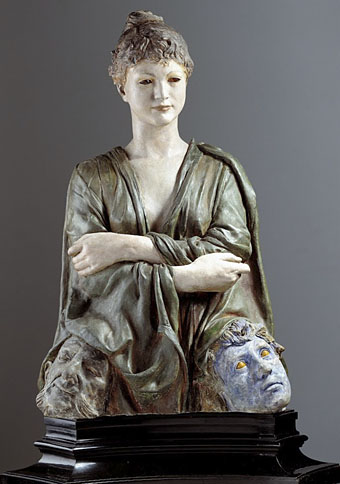
The New Salomé (1887–1888) by Max Klinger.

The German Symbolist Max Klinger (1857–1920) is celebrated today for the etchings which comprise his Ein Handschuh (A Glove) series, ten prints that in their curious details and dream-like quality prefigure Surrealism and Giorgio de Chirico’s “metaphysical” paintings. During his life Klinger was highly regarded for his sculpture as well as his etchings: his Beethoven was a centrepiece of the Secession building in Vienna in 1902. His New Salomé is one of the handful of Klinger works at the Google Art Project where I still feel we ought to be able to view sculpture in the round. I’ve seen many photos of this piece before but hadn’t realised until now that the eyes were…what? Rubies? Amber? Whatever they are, their fiery cast ensures that his imperious female sits unequivocally with the Evil Women that proliferated in the late 19th century.
pla.jpg

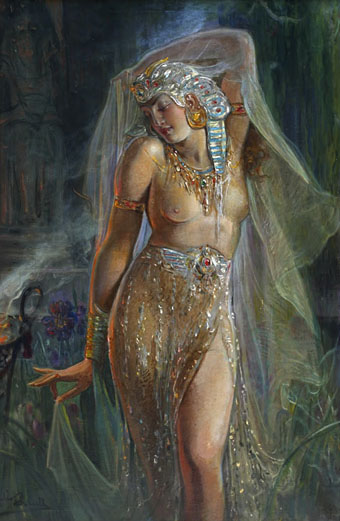
Salomé (c.1910) by Julio Borrell Pla.

Klinger’s sculpture may have been fashionably misogynist but it was at least a serious piece of art. Twenty years later the Salomé theme had devolved to little more than titillating exotica, as with this vaporous painting by Julio Borrell Pla which I hadn’t come across before. The last gasp of this exhausted trend is William Dieterle’s 1953 film in which Rita Hayworth plays Herod’s daughter as all titillation and little else.

Elsewhere on { feuilleton }
The Salomé archive

Rex Ingram’s The Magician

magician1.jpg

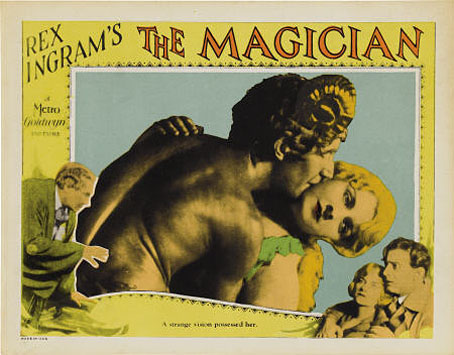
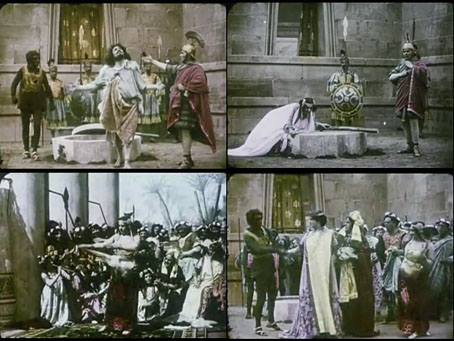
The Magician (1926), Rex Ingram’s curious occult horror film, receives a rare screening with live music accompaniment at the Brighton Fringe Festival on Tuesday, 22nd May. The film is notable for being based on the 1908 Somerset Maugham novel of the same name whose modern-day magus character, Oliver Haddo, was modelled on Aleister Crowley. The screening will feature an introduction by Gary Lachman, and a live soundtrack by the fabulous Ragged Ragtime Band, featuring members of Blondie, Indigo Octagon, Raagnagrok and Time. Booking details and other information here.

magician2.jpg

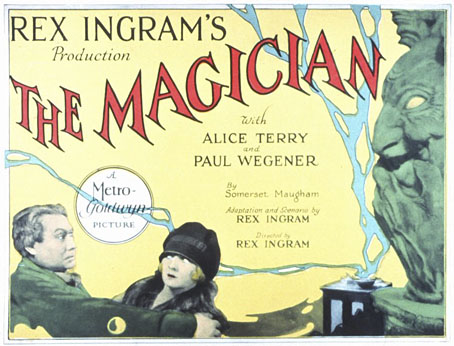
Maugham’s book has always been easier to find than Ingram’s film, more’s the pity when the film—despite some flaws—is the superior article. Read today, the novel comes across as a template for the standard Dennis Wheatley tale of middle-class innocents imperilled by grandiloquent villainy. A young couple, Arthur Burdon and his fiancée, Margaret, are pitted against Haddo’s extravagant diabolisms; for assistance they have a friend, Dr Porhoët, a Van Helsing type, older than the couple and with a convenient (but purely intellectual) interest in the occult. Haddo kidnaps Margaret and forces her with hypnosis into an unconsummated marriage. Haddo’s goal is to create artificial life—homunculi—and for that he requires a virgin’s blood. Maugham later described his novel as “lush and turgid”, an honest and accurate appraisal. Aleister Crowley was amused at being portrayed as a “Brother of the Shadows” but pretended to be scandalised by Maugham’s alleged plagiarism which he condemned in a Vanity Fair review that he signed “Oliver Haddo”. The best parts of the novel certainly owe something to other authors, usually the scenes concerning the sinister magus and his occult activities; the rest of the characters are lifeless by comparison. Some of the better passages read like HP Lovecraft writing Dorian Gray, and Maugham not only quotes from Walter Pater but also (uncredited) from Wilde’s Salomé.

magician4.jpg

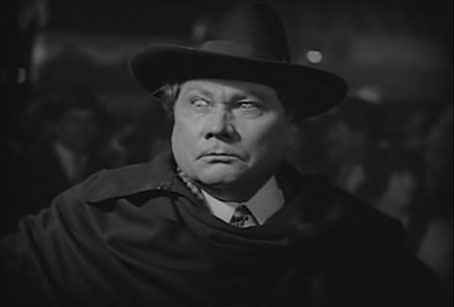
Paul Wegener as Oliver Haddo.

Continue reading “Rex Ingram’s The Magician”

Lindsay Kemp’s Salomé

kemp1.jpg

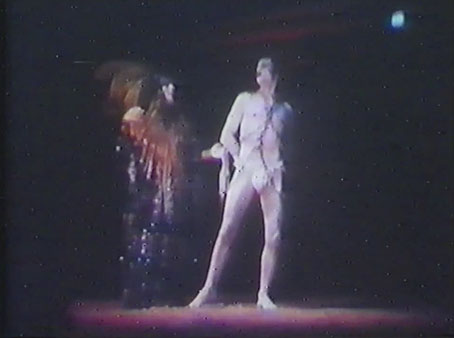
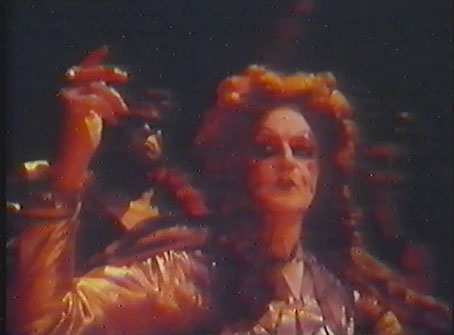
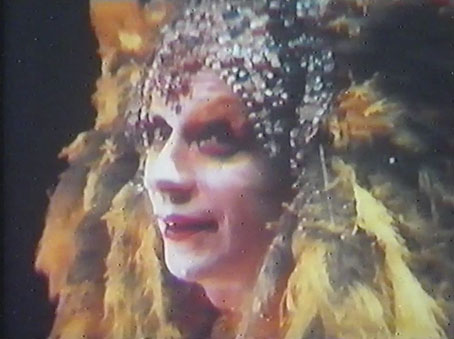
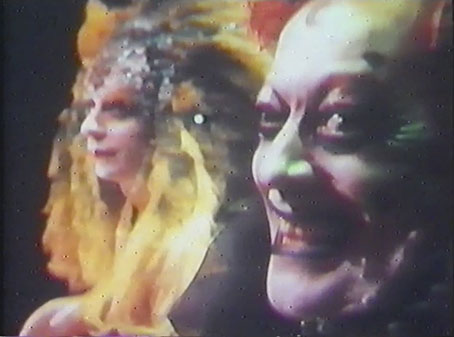
Fragments are all you get with this one, unfortunately, but how tantalising they are. Lindsay Kemp’s 1975 stage production of Oscar Wilde’s play was probably the queerest there’s been to date, with Kemp himself playing Herod’s doomed daughter under a heap of silks and feathers. These stills from a sequence of Super-8 shots of the performance arrive courtesy of Nendie Pinto-Duchinsky, director of the forthcoming Kemp documentary Lindsay Kemp’s Last Dance, a film whose title echoes Ken Russell’s film of the Wilde play. The connections circulate wildly (so to speak) around Kemp’s production: prior to this performance Kemp had acted for Ken Russell, while two of the other actors went on to work with Derek Jarman (as did Kemp). John the Baptist (above) was played by David Haughton who appeared as Ariel in Jarman’s Jubilee; Jack Birkett’s grinning features (bottom, right) appear in many of Jarman’s films. All the more reason to wish these clips were longer.

The Kemp documentary YouTube channel has a few more items related to Kemp’s stage work, notably another tantalising sequence of stills from Flowers (1974), an adaptation of Genet’s Our Lady of the Flowers that also featured Haughton and Birkett.

Update: Thanks to Suzanne in the comments for pointing to her video which includes further film moments including Salomé performing with a live snake à la Salammbô.

kemp2.jpg

kemp3.jpg

kemp4.jpg

Elsewhere on { feuilleton }
The Salomé archive

Previously on { feuilleton }
Mister Jarman, Mister Moore and Doctor Dee
Saint Genet

Weekend links 107

schwabe.jpg

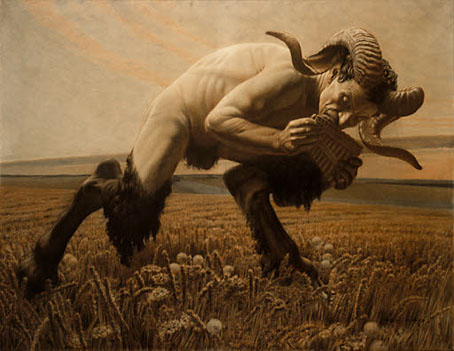
Le Faune (1923) by Carlos Schwabe.

• “When I recently attended a conference in China, many of the presenters left their papers on the cloud—Google Docs, to be specific. You know how this story ends: they got to China and there was no Google. Shit out of luck. Their cloud-based Gmail was also unavailable, as were the cloud lockers on which they had stored their rich media presentations.” Ubuweb’s Kenneth Goldsmith on why he doesn’t trust the Cloud.

• “I’m a poet and Britain is not a land for poets anymore.” A marvellous interview with the great Lindsay Kemp at Dangerous Minds. Subjects include all that you’d hope for: Genet, Salomé, David Bowie, Ken Russell, Derek Jarman, The Wicker Man and “papier maché giant cocks”.

• “As early as the 1950s, Maurice Richardson wrote a Freudian analysis which concluded that Dracula was ‘a kind of incestuous-necrophilious, oral-anal-sadistic all-in wrestling match’.” Christopher Frayling on the Bram Stoker centenary.

Björk gets enthused by (among other things) Leonora Carrington, The Hourglass Sanatorium and Alejandro Jodorowsky’s YouTube lectures.

• Before Fritz Lang’s Metropolis there was Algol – Tragödie der Macht (1920). Strange Flowers investigates.

marsh.jpg

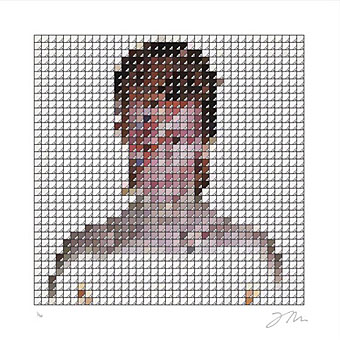
David Marsh recreates famous album covers using Adobe Illustrator’s Pantone swatches.

• New titles forthcoming from Strange Attractor Press. Related: an interview with SAP allies Cyclobe.

• 960 individual slabs of vinyl make an animated waveform for Benga’s I Will Never Change.

• An exhibition of works by Stanislav Szukalksi at Varnish Fine Art, San Francisco,

Keith Haring‘s erotic mural for the NYC LGBT Community Center is restored.

The Situationist Times (1962–1967) is resurrected at Boo-Hooray.

• Doors Closing Slowly: Derek Raymond‘s Factory Novels.

Will Wilkinson insists that fiction isn’t good for you.

• More bookplates at BibliOdyssey and 50 Watts.

The Top 25 Psychedelic Videos of All Time.

Flannery O’Connor: cartoonist.

• RIP Adam Yauch.

• Their finest moment: Sabotage (1994) by Beastie Boys.