Der Eigene: Kultur und Homosexualität

eigene1.jpg

Der Eigene, collected edition, 1906. Design credited to Adolf Brand.

The subtitle is from an article (see below); Der Eigene, the world’s first homosexual periodical was devoted to an ideal of “masculine culture” which looked to Ancient Greece for a model of same-sex relationships. Adolf Brand (“Editor, photographer, poet, polemicist, activist, anarchist, enfant terrible“) founded Der Eigene in Berlin 1896, and to give some idea of how advanced the Germans were in these matters, consider that not only was this a year after Oscar Wilde had been imprisoned in Britain but that Brand’s publication was only the first of several journals advocating gay rights at a time when homosexual acts were still illegal in Germany. The radicalism fell short of including women, unfortunately; like many Grecophile pioneers of the time, Brand’s world had no place for females. All this activity was part of a peculiar ferment in Germany around 1900 which saw the rise of many small groups devoted to naturism, Theosophy, occultism in general, and various pagan revivals. There were also plenty of fiercely nationalist factions, of course, and these took a dim view of Brand’s outspoken homo-anarchism. When the nationalists later turned into the Nazis they destroyed Germany’s nascent gay culture.

eigene3.jpg

Morgendämmerung (Dawn) by Sascha Schneider, 1897. This drawing also appeared in Jugend magazine the same year.

The pictures here are from sets at Wikimedia Commons where the section devoted to the magazine has finally been amended with some higher-resolution copies. It’s a shame there isn’t more to see given that Der Eigene ran until 1932. I’ll be hoping for further works to come to light as the digitisation of rare publications gathers pace.

eigene2.jpg

Der Eigene, November, 1920.

Elsewhere on { feuilleton }
The gay artists archive

Previously on { feuilleton }
Sanctuarium Artis Elisarion
Jugend Magazine revisited
The art of Sascha Schneider, 1870–1927
Hadrian and Greek love

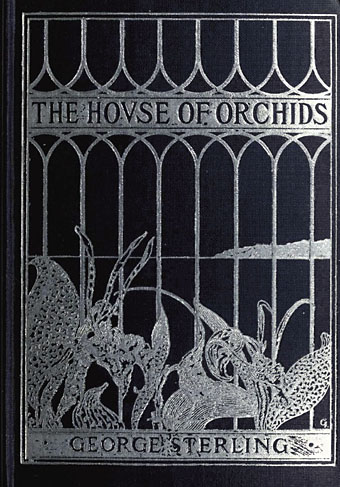
The House of Orchids by George Sterling

sterling1.jpg

Do all roads lead to the Internet Archive? Not really but I keep ending up there when I happen to discover an interesting old book and wonder whether they have a PDF of the volume in question. The volume for consideration today, The House of Orchids, is a 1911 collection of verse by George Sterling (1869–1926), an American but another of those writers whose poetry looked to Decadent London and Paris for its flavour, hence the Wildean title, and, it should be said, the cover design. I haven’t been able to find an artist credit for this; if anyone knows who was responsible, please leave a comment.

sterling2.jpg

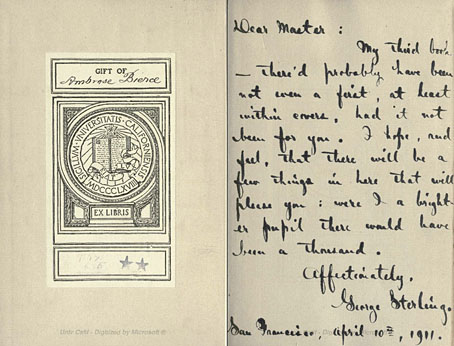
Many of the books at Archive.org are unremarkable library editions but this is a rare exception, being a gift to the University of California of writer Ambrose Bierce, Sterling’s idol and the person to whom he writes the above thanks and a dedication. Bierce praised Sterling’s work but must have passed the book on fairly soon after receiving it since he famously disappeared in Mexico two years later. Or maybe his library was passed to the university after his disappearance? Whatever the answer, this edition contains another curious feature in the form of a pasted-in newspaper clipping from 1926 concerning the death in mysterious circumstances of Sterling himself at San Francisco’s Bohemian Club. The general supposition is that he killed himself with a vial of cyanide he was in the habit of carrying around. One of Sterling’s young poetic protégés at the time The House of Orchids appeared was Clark Ashton Smith whose first volume of verse, The Star-Treader, and Other Poems, was published a year later. That book and another of Smith’s titles is also available at Archive.org, as I noted in June. Also there, and of particular {feuilleton} interest, is Sterling’s The Evanescent City, a paean to San Francisco’s 1915 Panama-Pacific International Exposition. (This site has scans of the text and photos.)

George-Sterling.org is a site devoted to the writer which includes many of his poems and other texts. Looking at his lengthy piece from 1907, A Wine of Wizardry, you can see what it was about his work that so appealed to Clark Ashton Smith and others.

Elsewhere on { feuilleton }
The book covers archive

Previously on { feuilleton }
Odes and Sonnets by Clark Ashton Smith
Clark Ashton Smith book covers
The Evanescent City

John Vassos’s Salomé

vassos1.jpg

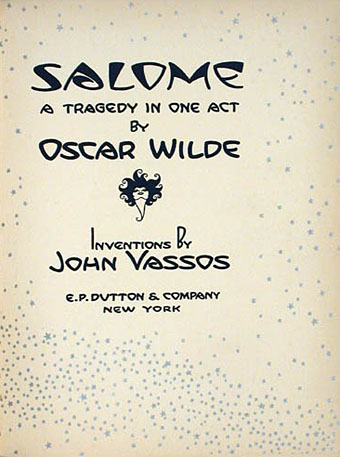
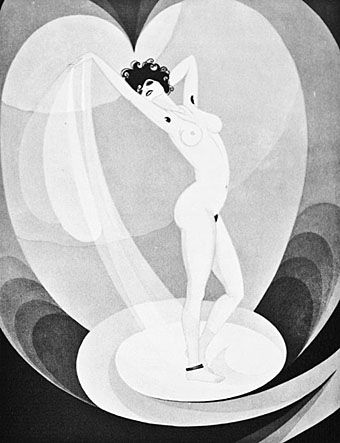
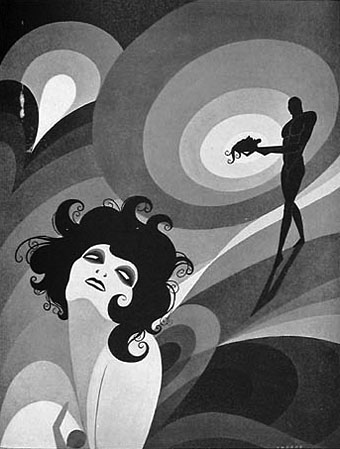
Yet another Salomé, this 1927 edition being a beautifully stylised Art Deco version by John Vassos (1898–1985), a Greek artist who moved to America in the 1920s. There aren’t many examples of these drawings online, unfortunately, I love to see a complete set of the illustrations. Salomé’s underarm hair is a detail one can’t imagine seeing in many renderings before or after this. Vassos followed Salomé with two more Wilde editions, The Ballad of Reading Gaol (1928) and The Harlot’s House and Other Poems (1929). Bud Plant’s page has more about the artist’s life and work and further examples of his monochrome art.

vassos2.jpg

vassos3.jpg

Elsewhere on { feuilleton }
The illustrators archive
The Salomé archive

Weekend links: Ghosts, Spooks and Spectres edition

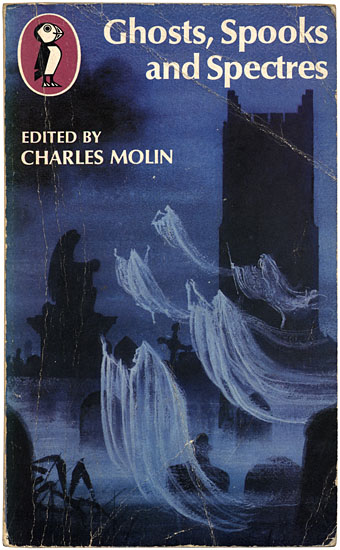
spectres.jpg

Cover design by Philip Gough.

Ghosts, Spooks and Spectres (1972 reprint). Editor Charles Molin collected nineteen ghost stories by writers including Oscar Wilde (The Canterville Ghost), Charles Dickens (The Signal-Man), J. Sheridan Le Fanu (Madame Crowl’s Ghost) and HG Wells (The Inexperienced Ghost). This was one of my favourite books when I was ten-years old. There’s nuffin like a Puffin. Puffin Books’ parent company, Penguin, is 75 this year.

• The good people at the Outer Alliance have posted an interview with me here in which I talk about the subversive sexualities of sf in the 1970s and also admit to writing fiction.

• There’s just time to mention It Came From Pebble Mill, an event which includes another screening of David Rudkin’s Penda’s Fen.

• “In our society, there has tended to be a very strong compartmentalization of different experiences, different cultural forms, different genres. We can talk in a very broad sense and say art is separate from science, for example, or body is separate from mind, or we can talk in a specific sense and say one certain form of dance music is separate from one form of, say, heavy metal. I don’t really buy those compartmentalizations. I understand why they exist, how they’ve come into being and why they’re convenient, but it’s not the way I think, it’s not the way I experience the world, it’s not the way I believe things should be.” From an interview by Colin Marshall with David Toop at 3QD. Toop’s latest book is Sinister Resonance: The Mediumship of the Listener.

The Kingdom of the Pearl by Léonard Rosenthal, illustrated by Edmund Dulac.

Ghost Stations by Dollboy, a CD package. And then there’s the Ghostly Bento.

7 Inch Cinema are Birmingham-based cultural historians.

• Mark Pilkington’s Mirage Men now has its own site.

Borges on Pleasure Island: JLB and his love of RLS.

• RIP Arne Nordheim, Norwegian composer.

• Charlie Visnic’s Modular Ghost Synth.

On the trail of Tutankhamen’s penis.

Photos by Thom Ayres.

Ghosts by Japan | Spooky Rhodes by Laika | Purple Dusk by Spectre.

The voice of Oscar Wilde

record.jpg

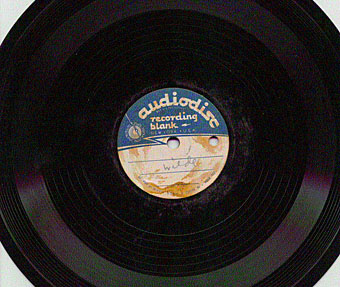
How to combine two recent {feuilleton} obsessions? Ask whether Oscar Wilde had his voice recorded on an Edison machine at the Exposition Universelle in Paris, 1900. It’s a tantalising question. We know from Wilde’s letters that he visited the Exposition several times; he talked with Rodin and admired a self-portrait by his old painter friend Charles Shannon in the British pavilion. Edison staff were prominent at the exposition and did us a favour by filming parts of it. Several of the Wilde biographies mention the rumoured recording, the details of which are recounted at Utterly Wilde:

According to H Montgomery Hyde’s 1975 biography of Oscar Wilde: “…It was during one of these visits to the Exhibition that Wilde was recognized in the American pavilion, where one of the stands was devoted to the inventions of Thomas Edison. One of these inventions was the ‘phonograph or speaking machine,’ and Wilde was asked to say something into the horn of the recording mechanism. He responded by reciting part VI of The Ballad Of Reading Gaol, which consists of the last three stanzas of the poem, and identifying it with his name at the end.” (More.)

The purported wax cylinder is lost but an acetate copy surfaced in the 1960s. Wilde’s son, Vyvyan Holland, identified his father’s voice then changed his mind later on. An analysis by the British Sound Archive threw further doubt on the recording so we’re left to make up our own minds which you can do for yourself here. It doesn’t sound to me like the voice one would expect from a man of Wilde’s physical size, but then I also never expected Aleister Crowley’s voice to be so highly-pitched. If anyone knows of more recent research or detail about the Wilde recording, please leave a comment.

Elsewhere on { feuilleton }
The Oscar Wilde archive