Weekend links 57

softmachine.jpg

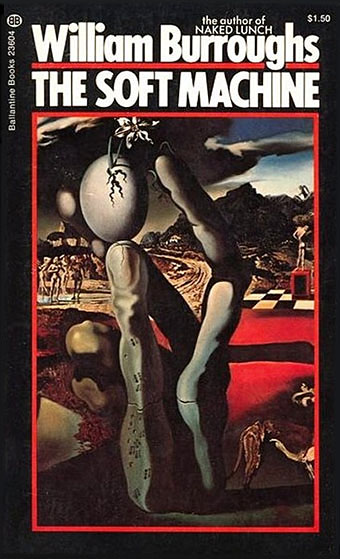
A 1973 Ballantine edition of William Burroughs’ novel with a cover illustration from Metamorphosis of Narcissus (1937) by Salvador Dalí. Via the Burroughs Book Covers archive.

The Sel Publishing House, Turkey, published a new translation of The Soft Machine by William Burroughs in January, an edition which is now under investigation by the Istanbul Prosecutor’s Office following a report by the (deep breath) Prime Ministry’s Council for Protecting Minors from Explicit Publications. The Council lodged a number of complaints, among them assertions of “lacking unity in its subject matter,” “incompliance with narrative unity,” “using slang and colloquial terms” and “the application of a fragmented narrative style.” Details here. Does Turkey still want to join the EU? Because this kind of persistently illiberal bullshit (see the earlier treatment of Orhan Pamuk) isn’t helping their case at all.

• Related to the above: Evan J Peterson reads Allen Ginsberg’s Howl in the toilet of a Seattle gay bar; Ginsberg himself reads Kaddish and other works here.

• More illiberal bullshit: LGBT activists arrested during royal wedding; Queer Resistance released a statement about the arrests. MPs, activists and trade unionists condemn new attacks on the right to protest.

The Dorian Gray That Wilde Would Want Us To Read. Harvard University Press publishes an uncensored and annotated edition of Wilde’s novel. Kudos for using Caravaggio’s Narcissus on the cover.

One weekend in late 1967, they all decamped to a hotel suite in California’s Ojai Valley for a brainstorming session. Amid clouds of pot smoke, they talked all weekend with the tape recorder running. [Jack] Nicholson then took the tapes and turned the conversations into a screenplay; according to Rafelson, he structured it while on LSD.

Revisiting The Monkees’ psychedelic movie, Head.

kraftwerkicons.jpg

Kraftwerk icons for Windows and Mac OS X by Dave Brasgalla.

Robert Louis Stevenson gets his revenge on sneaky literary agent – 120 years later. And Michael Moorcock imagines tales of unseen Mervyn Peake pictures.

Painting doesn’t look so good on the web. It looks better in life. Sculpture looks better in life. What you end up with is just a reproduction. Whereas with film or with sound or with poetry, you get the deep primary experience not the secondary experience. The web delivers those primary experiences very well.

Ubuweb’s Kenneth Goldsmith interviewed.

• Arkhonia’s Another Dispatch in a World of Multiple Veils is now a free download.

• The story of This Is The Sea: An interview with Mike Scott of The Waterboys.

Fairlight: The Rolls Royce of synthesizers.

Haeckel Clock, a free app for the iPad.

What is totalitarian art?

Porpoise Song (1968) by The Monkees | Hope For Happiness (1969) by The Soft Machine | I’m A Believer (1974) by Robert Wyatt.
Deutsche Kunst und Dekoration #18

dkd18-01.jpg

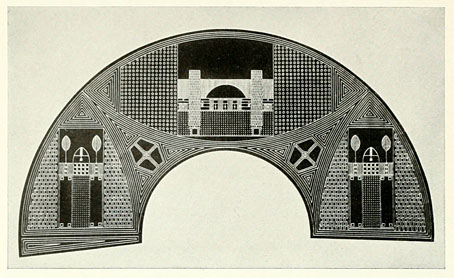
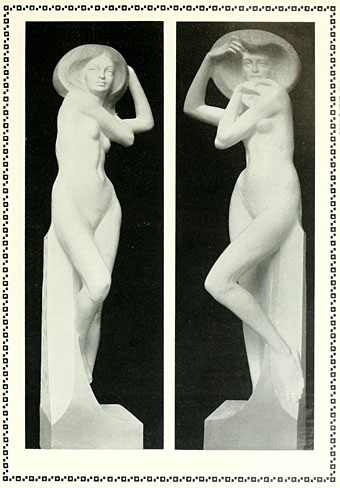
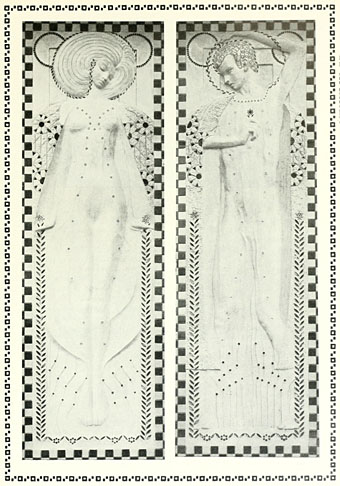
Continuing the delve into back numbers of Deutsche Kunst und Dekoration, the German periodical of art and decoration. There’s yet another frustrating jump in the numbers here, from volume 16 to volume 18 which covers the period from April to September 1906. Inside there’s more rectilinear interior design from the Wiener Werkstätte (above) as well as a great deal of less interesting interior design from elsewhere. The most notable feature of this edition is the article on the illustration work of Marcus Behmer, a member of Adolf Brand’s pioneering gay rights circle in Berlin whose drawings from this volume were featured in an earlier post.

As usual, anyone wishing to see these samples in greater detail is advised to download the entire number at the Internet Archive. There’ll be more DK&D next week.

dkd18-02.jpg

dkd18-03.jpg

Continue reading “Deutsche Kunst und Dekoration #18”

L’Hôtel, Paris

lhotel1.jpg

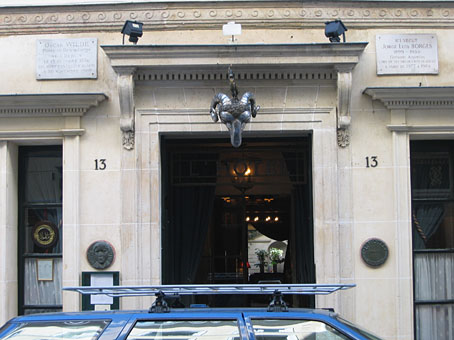
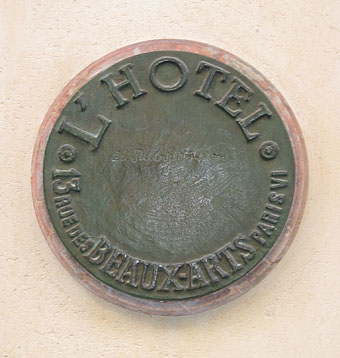
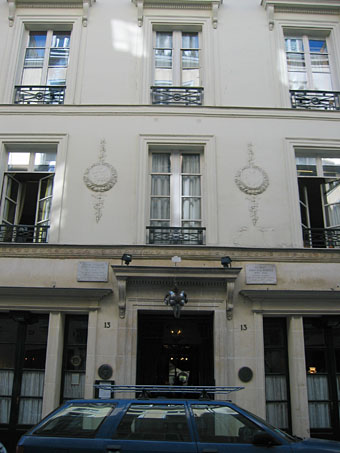
The London broadsheets have been in a ferment for the past few days over a forthcoming exhibition at the V&A, The Cult of Beauty: The Aesthetic Movement 1860–1900 which opens on April 2nd. The Guardian‘s Jonathan Jones wrote a piece pointing out the French associations of the British Aesthetes in which he mentions the Hôtel d’Alsace at 13 Rue des Beaux-Arts, Paris, the place where Oscar Wilde spent his last few months in 1900 prior to expiring in room no. 16. By coincidence I’d been looking at my own photos of the hotel only the day before so here they are, little more than snapshots but they give an idea of the building at least.

lhotel2.jpg

The hotel is now merely L’Hôtel, and I had a couple of surprises when I went to find the place the last time I was in Paris. The first is that the Rue des Beaux-Arts is some distance away from any main thoroughfares, although this perhaps isn’t so surprising given Wilde’s straitened circumstances. The second was seeing a plaque to Jorge Luis Borges (see below) on the wall opposite the one for Oscar Wilde with its incorrect year of birth. Borges had a lifelong fascination with Wilde, the first piece he had published was a translation into Spanish of The Happy Prince (and The Modern Word has a short essay by Borges about Wilde). I knew that Borges had stayed in the hotel (there’s a famous photo of him standing in the atrium) but didn’t expect his patronage to be commemorated in this way; once again, Paris has a respect for writers that puts many other cities to shame. Wilde is celebrated with two plaques—there’s another beside the door which can be seen here—but what these pictures don’t show is the atrium itself, a small space in the centre of the building which gives the hotel a distinction Wilde might have appreciated even if he would have preferred to spend his final hours in one of the more luxurious establishments.

There are more views of the narrow Rue des Beaux-Arts at Google Maps while the hotel has a website here.

lhotel3.jpg

Continue reading “L’Hôtel, Paris”

Wildeana 5

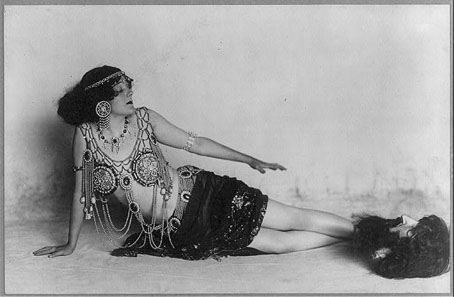
salome.jpg

Gertrude Hoffmann dressed for her opera role as Salome (1908).

Continuing an occasional series. Some people may be surprised to hear that Al Pacino loves Oscar Wilde’s Salome. He acted in a stage version of the drama in 1992 playing Herod to Sheryl Lee’s Salome (the Godfather versus Laura Palmer), and in 2006 announced an intention to make a drama documentary about the play. He talks about his interest in Wilde’s work here. IMDB currently has a page showing a 2011 release for Wilde Salome by Al Pacino but the film’s release has already been subject to delays. Related: Clive Barker’s Salome from 1973; Derek Jarman meets Hammer Horror.

• A post from last year that I should have linked to a lot earlier: A Wilde Library at Little Augury, being a detailed exploration of Wilde’s Tite Street furnishings and interior decoration.

• Oscar Wilde at Tumblr: Oscar Fingal O’Flahertie Wills Wilde and Oscar Wilde Assembly. Then there’s Youth is wasted on the young, a charmingly obsessive Dorian Gray blog.

• Actor Brian Bedford (again) is interviewed by Kevin Sessums about playing Lady Bracknell in a New York production of The Importance of Being Earnest.

What Oscar Wilde could teach us about art criticism by Jed Perl.

Oscar Wilde, classics scholar by Daniel Mendelsohn.

Scarlet letters lift the lid on Wilde’s dalliances.

Elsewhere on { feuilleton }
The Oscar Wilde archive

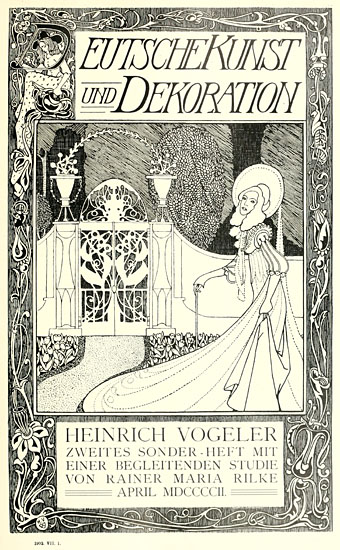
Deutsche Kunst und Dekoration #10: Heinrich Vogeler

dkd10-01.jpg

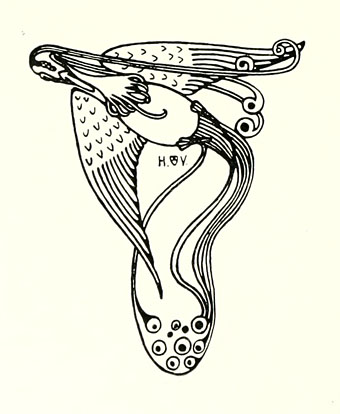
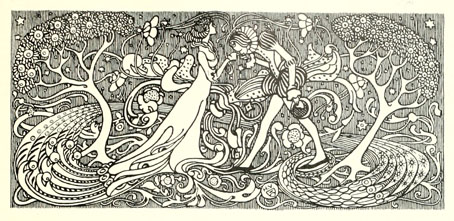
Continuing the delve into back numbers of Deutsche Kunst und Dekoration, the German periodical of art and decoration. Volume 10 covers the period from April to September 1902. There’s so much of interest in this edition I thought it worth making a two-part post. The number opens with a substantial piece devoted to artist and illustrator Heinrich Vogeler (1872–1942) whose edition of Oscar Wilde stories was featured here a while ago. One of the pleasures of this journal is the attention they devote to overlooked artists. Vogeler has an unusual and distinctive style, playful and florid, and with the same enthusiasm for filling the paper with tiny details as later illustrators such as Harry Clarke. Some of these illustrations are for fairy stories, others for more adult fare; peacocks abound. The article also has examples of his painted work although I find his line drawing to be of greater interest. As before, anyone wishing to see these samples in greater detail is advised to download the entire volume at the Internet Archive. Part two follows tomorrow.

dkd10-02.jpg

dkd10-03.jpg

Continue reading “Deutsche Kunst und Dekoration #10: Heinrich Vogeler”