Weekend links 65

plakhova.jpg

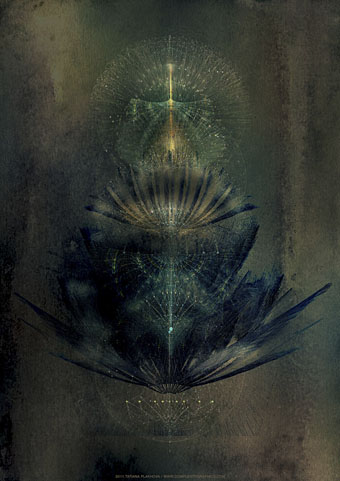
From Light Beyond Sound, a new series of works by Tatiana Plakhova.

“The invasion philosophy of the Olympic Park strikes me as just like the invasion philosophy behind going into Iraq,” he says, “or anywhere else that you blast into, put up the fence, establish the Green Zone, explain everything, put it all into this lovely eco-terminology…” Iain Sinclair

• Iain Sinclair has a new book out, Ghost Milk: Calling Time on the Grand Project, a critique of the tendency of British governments to waste money on white elephant projects. He’s visited this territory before in Sorry Meniscus, the small book/essay about the Millennium Dome. That book grew out of a piece for the London Review of Books which can be read here. Among the current round of interviews there’s this piece in which the title of the book is explained, and a talk with John Walsh at The Independent where he describes how the site for the 2012 Olympics has destroyed his patch of London.

A celebration of the writing and art of Mervyn Peake: “Mervyn Peake, creator of Gormenghast, is now recognised as a brilliant novelist and artist. Michael Moorcock, China Miéville, Hilary Spurling and AL Kennedy celebrate his achievements.”

• Looking like a children’s book invaded by the inhabitants of alchemical engravings, Die Geburtstagsreise (The Birthday Trip, 1976) by Monika Beisner.

• At AnOther mag this week: The ear in Blue Velvet and publisher Peter Owen on Salvador Dalí’s novel Hidden Faces.

Four Days, Four Recordings by Jon Brooks aka The Advisory Circle. Related: The Hauntological Society.

Leaving it to Chance: maverick director Nicolas Roeg on Don’t Look Now.

Brian Eno: “This is my problem with Tracey Emin; who fucking cares?”

• Scans of Max Ernst’s masterwork Une Semaine de Bonté.

Susie Bright: Mapping the Erotic and the Revolutionary.

How to Become a Sensuous Witch, 1971.

The View From Her Room (1982) by Weekend | Weekend live on the OGWT (October, 1982) • Gormenghast Drift (1992) by Irmin Schmidt.

Weekend links 50

selski1.jpg

Invisible Light by Margo Selski.

The Glass Garage Fine Art Gallery has an online collection of paintings by Margo Selski, many of which feature her cross-dressing son, Theo. Coilhouse profiled artist and model earlier in the week. Some of these paintings mix oil with beeswax which is something I’ve not come across before.

• The Periwinkle Journal‘s first issue will be available online, free, from March 22nd until mid-June, featuring work by filmmaker and artist Hans Scheirl (Dandy Dust), artwork and collages by Genesis Breyer P-Orridge, a 7-page colour comic by Mavado Charon, artwork by Timothy Cummings, artwork and installations by Cody Chritcheloe/SSION, photos by Megan Mantia, Science-Heroes by Peter Max Lawrence, an illustration portfolio by Diego Gómez, selections from the queer photography pool on Flickr, reviews and other stuff. More later.

• The Quietus wanted to remind us that this year is the 25th anniversary of the NME‘s C86 compilation tape, a collection that sought to capture a moment of ferment but which inadvertently inspired too much dreary sub-Velvet Underground pop. I’d rather celebrate the 30th anniversary of the NME‘s C81 compilation, a far more diverse collection and musically superior. If you want to judge for yourself, both tapes can be downloaded here.

selski2.jpg

Machine in the Garden — Our Island Shall Know Abundance Without End by Margo Selski.

• Rick Poynor continues his exploration of Ballardian graphics with a piece about the paintings of Peter Klasen. Related: Where Will It End? JG Ballard interviewed by V. Vale & introduced by Michael Moorcock (Arthur No. 15/March 2005).

In his autobiography, Miracles of Life, JG Ballard suggested that illustrated versions of The Arabian Nights helped prepare him for surrealism.

Robert Irwin, author of The Arabian Nightmare, on the illustrators of The Arabian Nights.

• Another Coulthart cult movie surfaces, Jerzy Skolimowski’s Deep End (1970), out of circulation for many years but newly restored by the BFI. A re-release is scheduled for May so I’m hoping now that a DVD release will follow soon after.

Thom Ayres’ photostream at Flickr, and more long-exposure photos.

Fuck You, A Magazine of the Arts, number 5, volume 8.

Nicolas Roeg: “I don’t want to be ahead of my time.”

• MetaFilter looks at the films of René Laloux.

• The Eerie covers of Frank Frazetta.

Indie Squid Kid.

Requiem (for String Orchestra) by Toru Takemitsu.

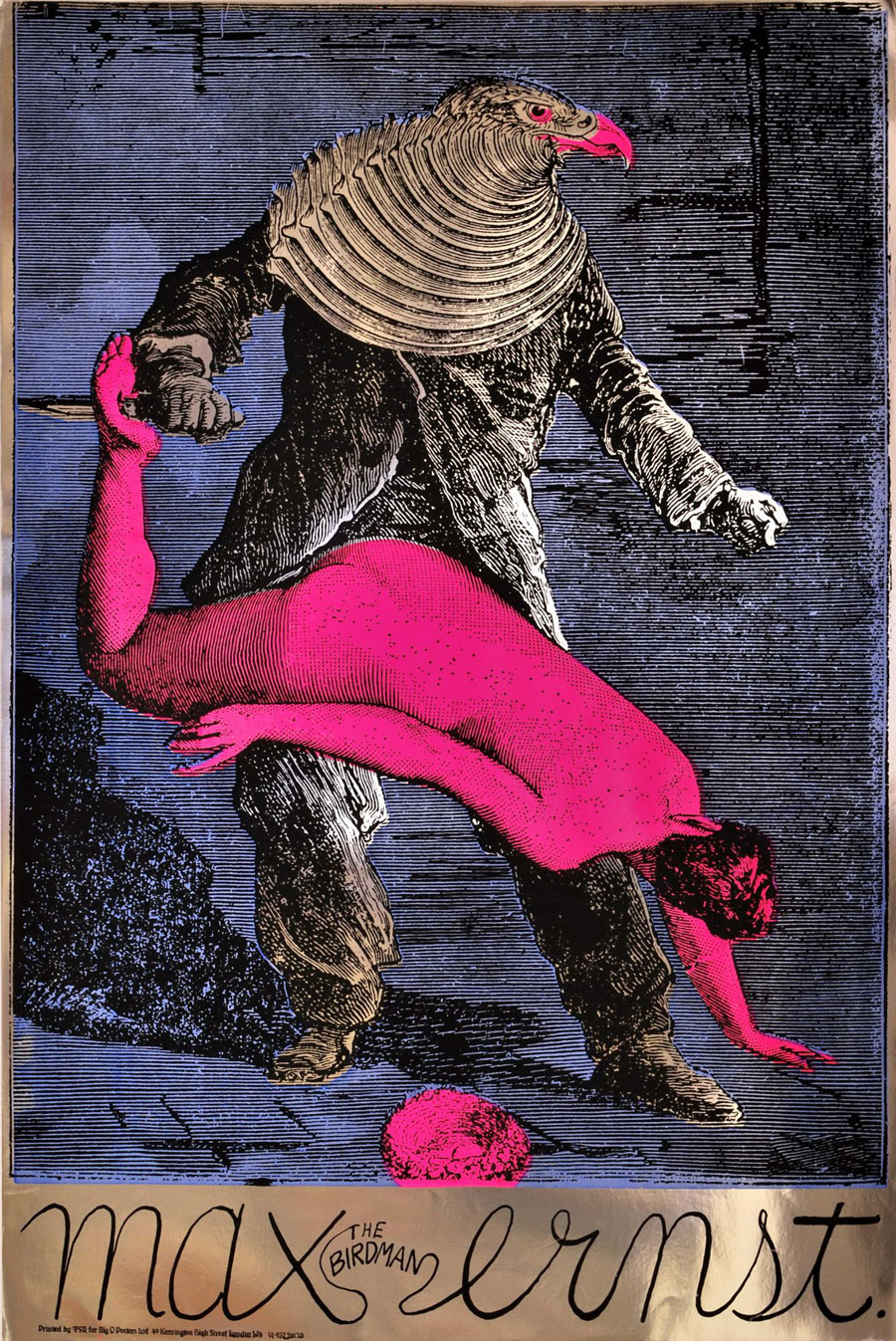
Max (The Birdman) Ernst

birdman.jpg

Max (The Birdman) Ernst (1967).

Psychedelia is never far away here at { feuilleton }. Yesterday’s film poster reminded me of this work from the psychedelic era by Martin Sharp, an Australian artist who moved to London and became closely-associated with Oz magazine and London’s other leading psych poster designers, Michael English and Nigel Waymouth, aka Hapshash & the Coloured Coat. Sharp’s homage to the great Max was one of a number of his designs produced on metallic foil sheets, the reflective nature of which often presents difficulties for reproduction in other media.

performance.jpg

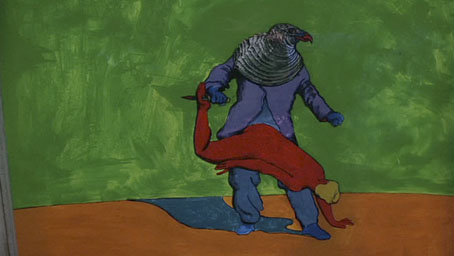
Performance (1970).

I wonder how many people who admired Sharp’s poster puzzled over the meaning of the image, one of twenty-eight similar collages from the fourth chapter of Ernst’s 1934 “collage novel” Une Semaine de Bonté. Chapter four—Wednesday; Blood—concerns the criminal travails of a series of bird-headed individuals (or possibly the same individual in different guises) which end in abduction, possible rape/murder, and suicide. This picture of Ernst’s has always struck me as a very obvious rape metaphor with the woman stretched over the birdman’s lap and the knife piercing her foot. Ernst’s dark imagination—informed by Freudian concerns, as were most of his fellow Surrealists—separates the picture from the more lightweight Art Nouveau/Beardsleyesque stylings of the other London artists. Martin Sharp was producing collages of his own during this period so it’s easy to see why he was attracted to Ernst. And the popularity of his poster may explain why the birdman turns up in a painted version in Donald Cammell & Nicolas Roeg’s Performance, seen when Pherber (Anita Pallenberg) goes to pick mushrooms in the greenhouse. Ernst’s sinister birdman suits Performance very well, a token of the film’s atmosphere of weirdness and violence. (“A heavy evil film, don’t see it on acid” warned underground newspaper International Times.)

sharp_dylan.jpg

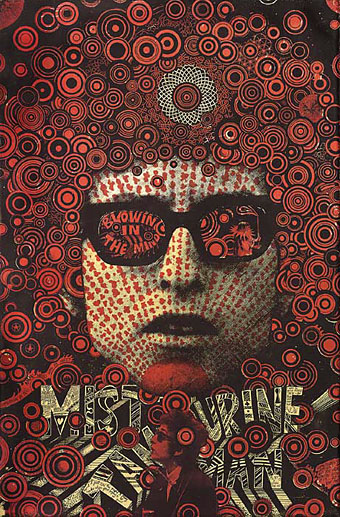
Bob Dylan: Blowing in the Mind (1967).

And to compound the connections a little more, Sharp’s famous Bob Dylan collage portrait (another foil sheet production) also turns up in Performance as part of the collage-covered screen in one of Turner’s rooms. Unlike his fellow Hapshash artists, Sharp’s work is under-documented on the web beyond pages such as this one. The same goes for Ernst’s collage novel but then the best way to experience that is to buy the Dover book edition.

Previously on { feuilleton }
The Robing of The Birds
Gandharva by Beaver & Krause
The Look presents Nigel Waymouth
The New Love Poetry
Judex, from Feuillade to Franju
Further back and faster
Quite a performance
Borges in Performance

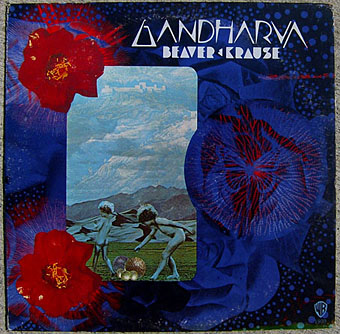
Gandharva by Beaver & Krause

gandharva.jpg

I mentioned Wilfried Sätty’s collage work last week and this album sports one of his few cover designs. A cult object for several reasons, not least Sätty’s involvement. The title lettering was by fellow psychedelic artist David Singer who I had the good fortune to meet in California in 2005 whilst researching Sätty’s career. That chunky Seventies lettering style now looks distinctly contemporary having come back into fashion over the past couple of years.

Beaver & Krause were among the pioneers of Moog-based electronic music in the 1960s and notably provided the throbs and drones which Jack Nitzsche mixed into the soundtrack for Donald Cammell & Nicolas Roeg’s Performance. Gandharva was released in 1971 and one of the few all-electronic pieces on the album, Nine Moons in Alaska, is an outtake from those sessions. The first side is very uneven, with a blues jam and a gospel piece that don’t sit well with each other, never mind with the Moog tracks. Side two, however, is a far more successful suite of improvisations with organ, electronics, guitar, harp and saxophone (played by Gerry Mulligan) recorded live in Grace Cathedral, San Francisco.

Cover photo from the Psychedelic Music Flickr pool which features many fine examples of cover design from the late Sixties on.

Elsewhere on { feuilleton }
The illustrators archive

Elsewhere on { feuilleton }
The album covers archive

Previously on { feuilleton }
Ginsberg’s Howl and the view from the street
Further back and faster
Quite a performance
Borges in Performance