Alan Moore: Tisser l’invisible

moore.jpg

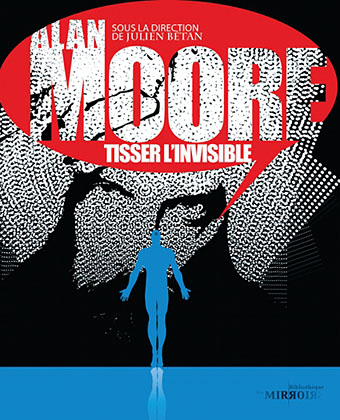
Arriving in the post this week was Alan Moore: Tisser l’invisible from French imprint Les Moutons Électriques. The book is a substantial collection of appreciative texts and analyses of work by the Northampton Ipsissimus edited by Julien Bétan, and, as the title would imply, is in French throughout. A couple of the pieces are reprints which I presume are receiving their first translation here. Michael Moorcock’s Homage to Cornucopia first appeared in Alan Moore: Portrait of an Extraordinary Gentleman and is also reprinted in Moorcock’s Into the Media Web which I designed and Savoy Books published earlier this year.

highpost.jpg

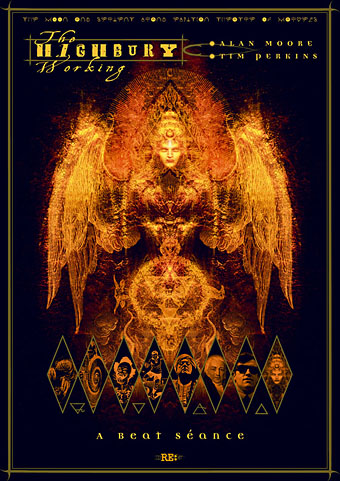
Best thing for me about the French collection is seeing some of my Moore-related work printed in colour as a mini gallery at the front of the book. There are two of the poster designs for the Moon & Serpent CDs, The Highbury Working (above) and Angel Passage, and also my 1999 portrait of Promethea and the Kabbalistic Underground map which I created as a design of my own and Alan subsequently incorporated into the Promethea comic series.

And speaking of Mister Moore, issue 6 of Dodgem Logic is now on sale sporting a cover which can either be interpreted as a gloomy Halloween design or a faithful depiction of the nation’s slough of despond; you decide.

Previously on { feuilleton }
Into the Media Web by Michael Moorcock
Watchmen
Alan Moore interview, 1988

The art of Ray Frederick Coyle, 1885–1924

coyle1.jpg

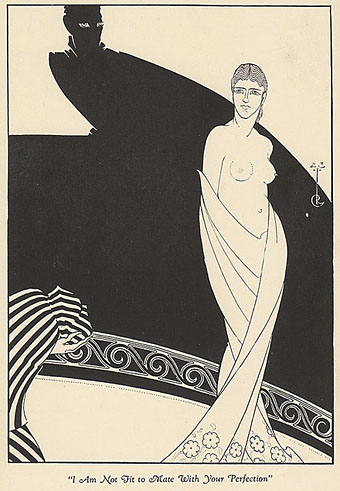
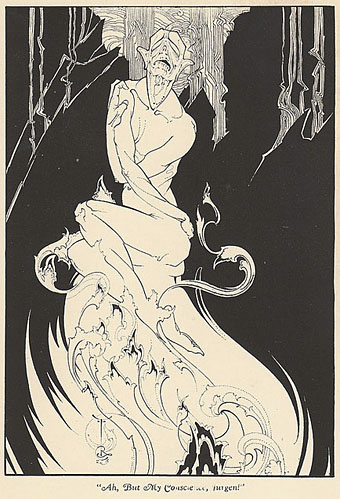
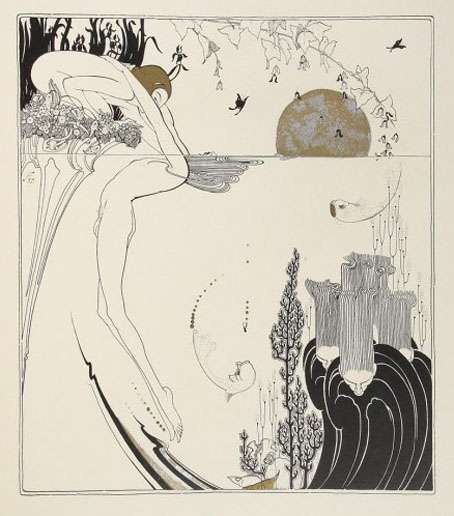
Another illustrator who died young, Ray Coyle’s short life no doubt explains why his work isn’t more visible today. The first two illustrations here are from a 1920s edition of Jurgen (1919), the scurrilous fantasy novel by James Branch Cabell which has been praised by enthusiasts of ironic comedy as diverse as Aleister Crowley and Michael Moorcock.

coyle2.jpg

Some of the illustrations in this Flickr set bear the date 1923 so they may have been Coyle’s last major work. Frank C Papé is the artist more commonly associated with Cabell, and while his art complements the author’s humour, Coyle’s elegant post-Beardsley style seems more suited to Jurgen’s worldly temperament.

coyle3.jpg

This beautiful drawing is one of six pieces from a memorial book, To Remember Ray Frederick Coyle, published in 1926. A stunning piece of art and this rebound edition has an equally stunning cover design by Jeannie Sack. If anyone has a link to other drawings in this series, please leave a comment.

Elsewhere on { feuilleton }
The illustrators archive

Previously on { feuilleton }
Fantazius Mallare and the Kingdom of Evil

Design as virus 12: Barney’s faces

lowe.jpg

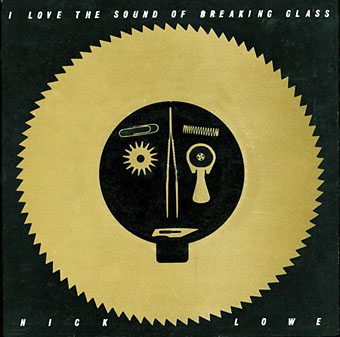
Sleeve for I Love The Sound Of Breaking Glass (1978), a 7″ single by Nick Lowe. Design by Barney Bubbles.

Continuing an occasional series. Designer Vic Fieger had a guest post at Reasons To Be Cheerful earlier this week examining Barney Bubbles’ use of the human face in his graphic designs. This is one side of the Bubbles work I really enjoy, he had a remarkable facility for demonstrating a versatility with abstract shapes—or found objects, as in the piece above—while playing games with our pattern recognition. A recurrent playfulness was one of the many notable things about his approach to design.

colour.jpg

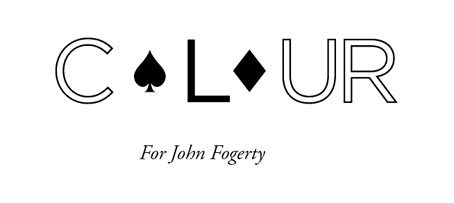
Story title from The Best of Michael Moorcock (2009).

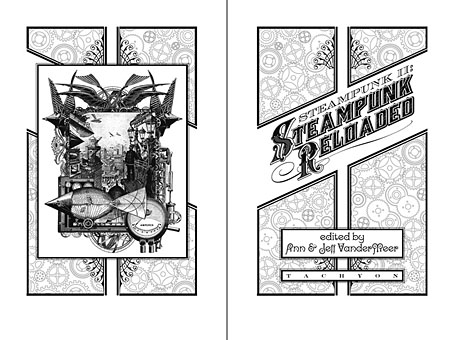
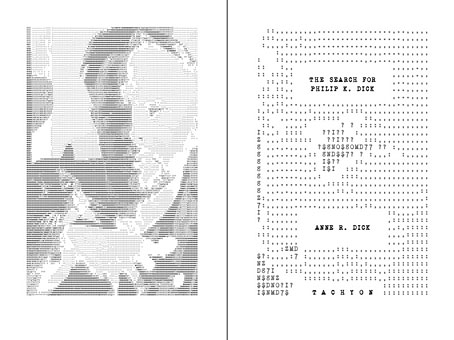
Fieger’s focussing on the faces in Barney’s work struck a chord for me since I’d deliberately tried something similar last year, taking a cue from Barney’s example. The Colour piece above is one of the story titles from The Best of Michael Moorcock published by Tachyon. For each story I designed a different title in a style which complemented the subject; Colour is a science fiction piece in which card games figure, hence the symbols. Mike Moorcock was friends with Barney during the 1970s so there was an additional reason for the reference.

booklife.jpg

I don’t know whether anyone has noticed the face on the cover of Booklife but it is there, with the two flowers at the top forming the eyes and the book’s title standing for the mouth. Once again, this wasn’t strictly necessary for the success of the design but it gave a rationale for the arrangment of the flowers. There’s also the hope when something is this subtle that the attraction of the pattern impells a browser to pick up the book in a shop without quite knowing why.

Booklife and The Best of Michael Moorcock are both available from Tachyon. Paul Gorman’s Barney Bubbles book, Reasons To Be Cheerful: The Life & Work Of Barney Bubbles, will be relaunched later this year in a new edition.

Previously on { feuilleton }
Into the Media Web by Michael Moorcock
Design as virus 11: Burne Hogarth
Design as virus 10: Victor Moscoso
Design as virus 9: Mondrian fashions
The Best of Michael Moorcock
Design as virus 8: Keep Calm and Carry On
Designing Booklife
Design as virus 7: eyes and triangles
Design as virus 6: Cassandre
Design as virus 5: Gideon Glaser
Design as virus 4: Metamorphoses
Design as virus 3: the sincerest form of flattery
Design as virus 2: album covers
Design as virus 1: Victorian borders
Barney Bubbles: artist and designer

Weekend links 24

early.jpg

Delta-Wing (2009) by Chloe Early.

• “Feted British authors are limited, arrogant and self-satisfied, says leading academic”. Stating the bleeding obvious but it still needs to be said, apparently, especially when the announcement of the Booker list this year caused the usual confusion when Amis Jr. and McEwan weren’t included, as though the mere existence of their novels makes them prize-worthy. And as someone pointed out, the word “male” is missing from that headline.

Hero of Comic-Book World Gets Real: Alan Moore again, in the NYT this time. Related: a review of Unearthing live.

• Announcing The Hanky Code by Brian Borland & Stephen S Mills, a 40-poem book to be published next year by Lethe Press. For an explanation of the Hanky Code there’s this, and there’s also an iPhone app.

Folk—the ‘music of the people’—is now hip again, says (who else?) Rob Young who can also be heard on the archived podcast here. Related: the folk roots of Bagpuss. Related to the latter: The Mouse Mill.

zvorykin.jpg

An endpiece from The Firebird and other Russian Fairy Tales by Boris Zvorykin.

‘Yes’ to Catastrophe: Roger Dean, Prog and SF. A lengthy and thoughtful analysis of Roger Dean’s early work.

Into the Media Web, the enormous Michael Moorcock book which I designed, is officially published this week.

Cassette playa: in praise of tapes. I’ve complained about tapes in the past but people continue to find them useful. Some technologies die harder than others.

Boy BANG Boy: “Quiet moments made suddenly very loud with the attitude and opinion of what it means to be a young male in an impossibly diverse world.” An exhibition opening at Eastgallery, London, on August 5th.

Empty your heart of its mortal dream: Alfred Kubin’s extraordinary novel, The Other Side.

Ghostly and Boym Partners devise a new way to deliver digital music.

Besti-mix #27: a great selection by producer Adrian Sherwood.

Agnostics are troublemakers. Amen to that.

• RIP Harry Beckett.

Acousmata.

Let Us Go In To The House Of The Lord by Pharoah Sanders (live, 1971): Part 1 | Part 2

Weekend links 21

nagai.jpg

A poster by Kazumasa Nagai.

• Franco Maria Ricci creates the world’s largest maze. “The former publisher said he first confided his ambition to Jorge Luis Borges, who characteristically told him the world’s largest maze already existed and was called a desert.” Related: Mirror, Mask, Labyrinth, a review of two new collections of Borges’ poetry.

FACT mix 164 is a dubstep collection by Pinch and a promotion for the Dark Matter compilation which I designed earlier this year.

• One of the monuments of 20th century music, Bitches Brew by Miles Davis, is released in another new (and expensive) edition next month by Sony. Nice packaging, and there’s a vinyl edition included, but these things always come across as a cyncial attempt to milk the hardcore fans one more time. And have you noticed how all vinyl releases are now described as “audiophile”? If the big record companies had shown this much dedication to quality in the 1980s when they were jobbing out sub-standard vinyl pressings their reputation might be slightly higher today.

• More Gysin: Brion Gysin, William Burroughs, and the secret life of a building on the Bowery. And Ubuweb’s page of Gysin sound works and recordings.

Michael Moorcock: “I think I preferred my own imagination”. A two-part interview about the cover designs for Moorcock books.

The Pansy Project: “Artist Paul Harfleet plants pansies at the site of homophobic abuse, he finds the nearest source of soil to where the incident occurred and generally without civic permission plants one unmarked pansy. The flower is then photographed in its location and posted on his website, the image is entitled after the abuse … The Pansy Project also marks locations where people have been killed as a result of homophobic attack”

This Gaming Life: Travels in Three Cities. Jim Rossignol’s book is available as a free download.

Lost London. Also, the Victorian Catacombs of South London.

Dedalus Books had its Arts Council grant reinstated.

’Zine Lutefisk: fashion/art/escape.

Time Will Show The Wiser (1968) by Fairport Convention | She Moves Through The Fair (1969) by Fairport Convention | She Moved Through The Fair (1994) by Jam Nation.