Weekend links 415

varo.jpg

The Creation of the Birds (1957) by Remedios Varo.

• “I think my music is very modern and very old. Together.” Sandy Robertson interviewed Popol Vuh’s Florian Fricke for Sounds in 1981. The Fricke-directed Sei Still Wisse ICH BIN referred to in the feature may be viewed here. Further Vuh-ing: Popol Vuh on Beat Club, 1971; a news clip of the group from the same year; a filmed improvisation from around the same time (Florian still had his Moog); and the group miming to recorded music from a year or two later.

• More Rammellzee (see last week): Gothic Futurism, a video collage based on Rammellzee’s treatise of the same name. Probably the only place you’ll ever see Rammellzee, the late Glenn Branca and art historian Kenneth Clark thrown together.

• After releasing 5 albums, Disjointed Oddities And Other Such Things is the first EP of “odd strange electronics, psych, Radiophonics, drone and quirky folk” by Keith Seatman.

Alina Cohen on Remedios Varo, a Spanish Surrealist painter whose work has been receiving increased attention in recent years but whose life remains under-examined.

• More German music: “I grew up in total ruins”—Irmin Schmidt of Can on LSD, mourning and musical adventures.

• Mixes of the week: FACT mix 655 by Matthewdavid, and The Monday Is Okay mix by JQ.

Olivia Laing, Sarah Wood and Philip Hoare discuss Modern Nature by Derek Jarman.

National Geographic has digitized its collection of 6,000+ vintage maps.

• At Bandcamp: The Transcendental Sound of Moroccan Gnawa Music.

Joe Fletcher on the nightmarish dream logic of Bruno Schulz.

Levi Stahl on the mind of Donald E. Westlake.

Affenstunde (1970) by Popol Vuh | Toy Planet (1981) by Irmin Schmidt & Bruno Spoerri | Adithaim (2005) by The Cracow Klezmer Band
Weekend links 348

wright.jpg

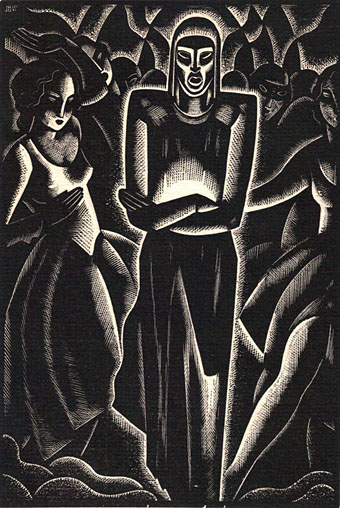
The Masque of the Red Death (1932) by John Buckland Wright.

• Thanks to MeadesShrine I’ve been working my way through Jonathan Meades’ television essays so this is timely: The Plagiarist in the Kitchen, an “anti-cookbook” by the man with forthright opinions.

• “‘Decopunk’ deserves to be bigger than Steampunk,” says Sam Reader. I consider my work on Bruce Sterling’s Pirate Utopia to be more Futurist than Deco but the period is right.

• “Celebrating the cinematically surreal, bizarre, cult, oddball, fantastique, strange, psychedelic, and the just plain WEIRD!”: 366 Weird Movies

But Fascism is also a political and economic system. Why, then, cannot we have a clear and generally accepted definition of it? Alas! we shall not get one—not yet, anyway. To say why would take too long, but basically it is because it is impossible to define Fascism satisfactorily without making admissions which neither the Fascists themselves, nor the Conservatives, nor Socialists of any colour, are willing to make. All one can do for the moment is to use the word with a certain amount of circumspection and not, as is usually done, degrade it to the level of a swearword.

George Orwell discussing the imprecise application of the “F” word

• At The Psychedelic Museum, a report on this month’s art show, Alice’s Adventures in Underground Culture.

M. John Harrison announces a new story collection which will be published later this year by Comma Press.

• Mixes of the week: Iceland: Foreboding Joy by Abigail Ward, and Secret Thirteen Mix 211 by Fluxion.

Daisy Woodward on how LSD adventures inspired John Waters’ Multiple Maniacs.

• More Moomins: Graeme Miller talks to Patrick Clarke about his soundtrack music.

• Some recent cultural highlights as chosen by Timothy J. Jarvis.

Benge presents a list of his favourite electronic albums.

Is this the underground Everest?

Strange Things Are Happening (1968) by Rings & Things | Strange Magic (1975) by Electric Light Orchestra | Strange (1977) by Wire |

Alice’s Adventures in the Horse Hospital

alice_poster.jpg

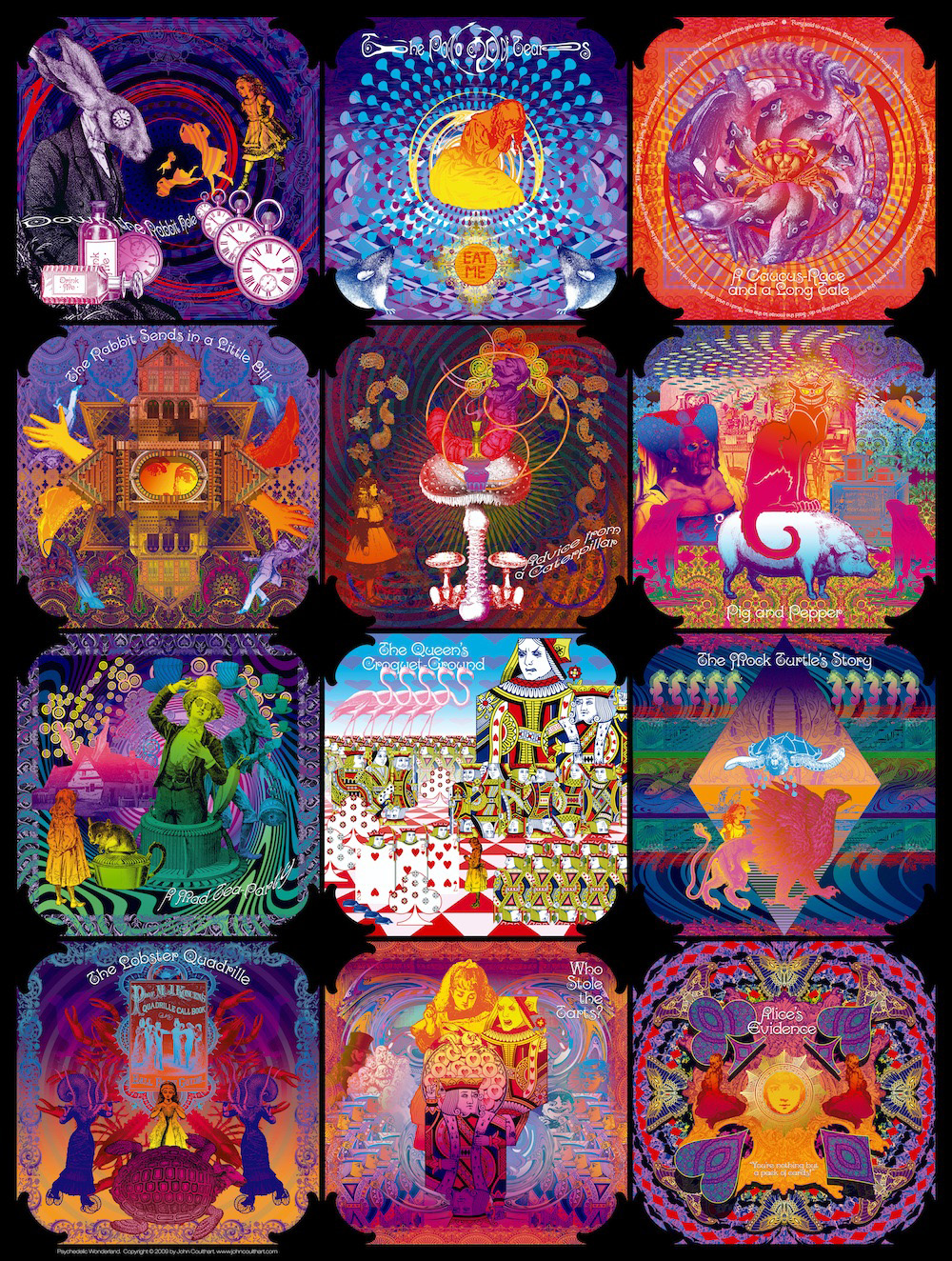
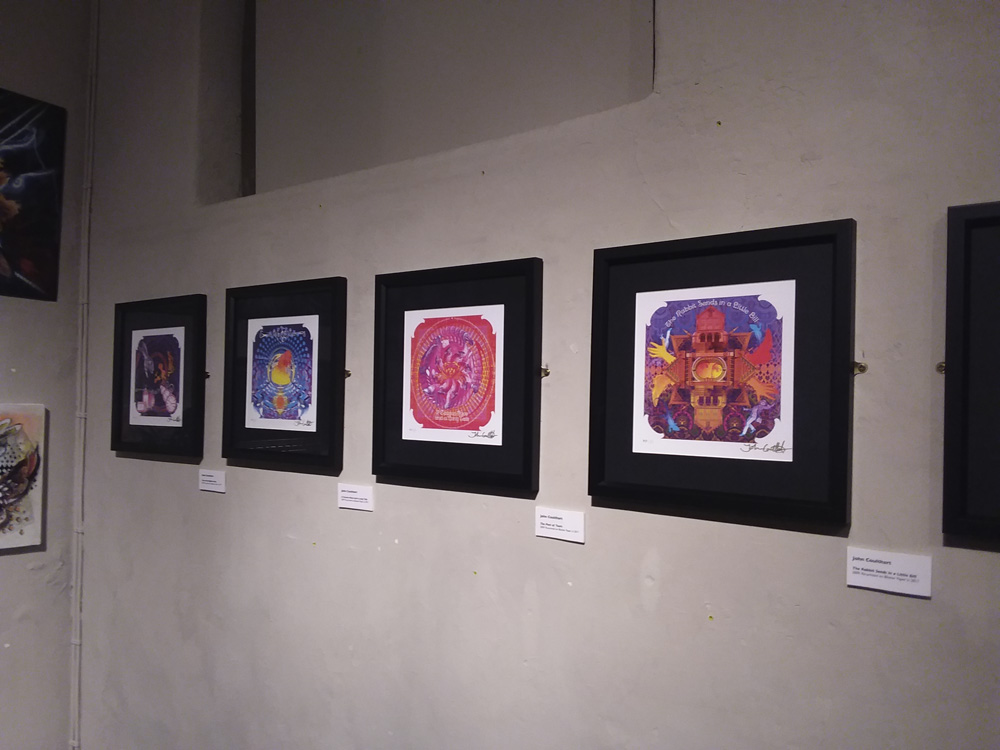
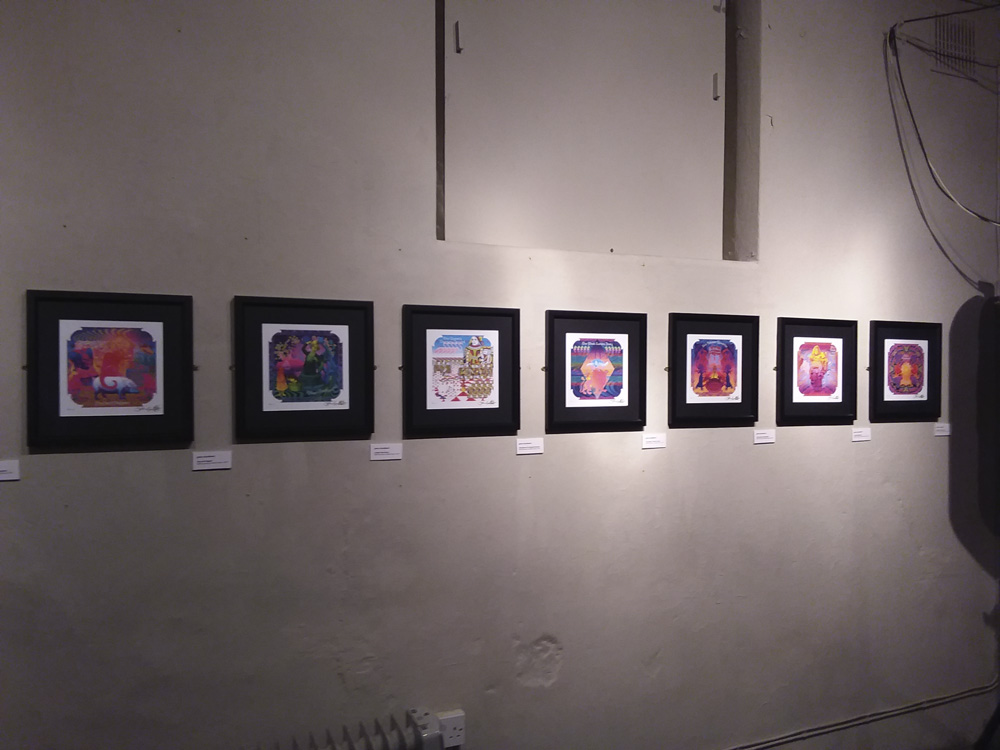
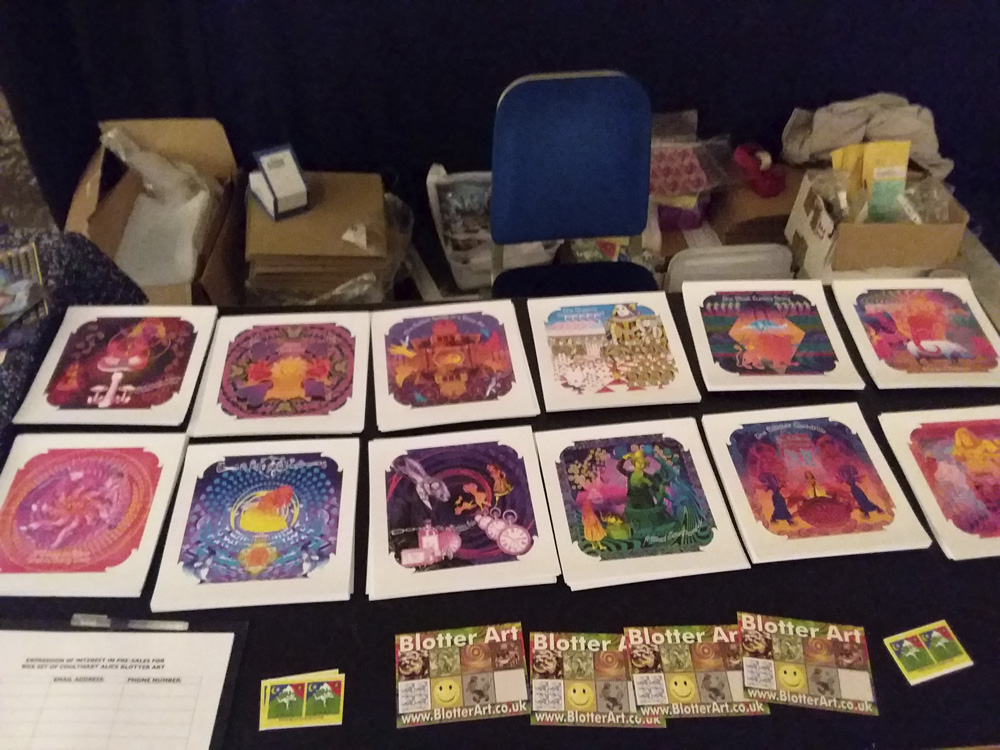
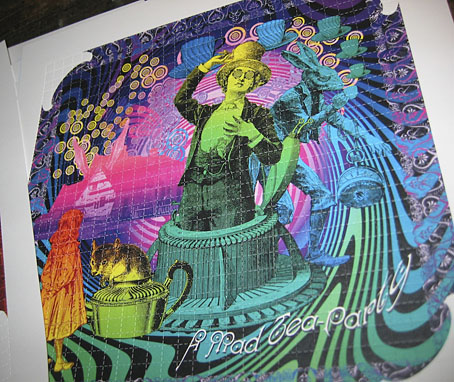
A few snapshots of the exhibits from Wednesday’s sold-out event at the Horse Hospital, Bloomsbury, London. As noted here before, the impetus for the event was Paul Guest’s printing of my series of psychedelic Alice pictures (above) as blotter prints, sheets of blotting paper having been a common medium for the delivery of LSD doses in the late 60s and 1970s. Since my pictures are relatively small and only filled out one of the walls the rest of the exhibition space was filled with Alice art of a similar tone. The opposite wall also featured a variety of fascinating period artefacts from The Psychedelic Museum, including a few original (and rare) blotter sheets. My time was taken up preparing for the discussion so I wasn’t as diligent as I usually try to be in documenting all the artists involved.

alice04.jpg

The discussion itself went really well. The audience was receptive and small enough to be easily communicable, while the talk never strayed too far from the subject at hand. My thanks to my fellow participants—Nikki Wyrd, Jake Fior, Sophia Satchell-Baeza and Andy Roberts—and huge thanks to Vyvy and John and the rest of the Horse Hospital staff for making the event run so smoothly.

alice05.jpg

The exhibition continues through to Saturday (Feb. 4th), noon to 6pm; entry is free. My blotter prints will remain on sale at the exhibition, and they can also be ordered from Paul at Blotterart.biz, either as single prints or a collected set of 12. For serious collectors the set of 12 will be available as a boxed edition of signed and numbered prints (limited to 100 sets) with a lid design adapted from my 2010 Alice calendar. I should note that the print quality is excellent, and web reproduction doesn’t do justice to the colour or the detail.

alice14.jpg

alice1.jpg

Continue reading “Alice’s Adventures in the Horse Hospital”

Weekend links 305

marchbank.jpg

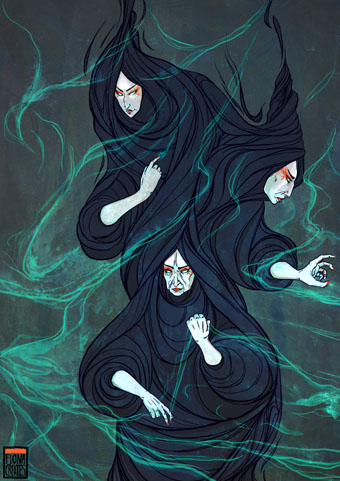
Threads of Fate—The Weird Sisters from Macbeth (2013) by Fiona Marchbank.

• The week in books: Claire Cameron on the difference between US & UK cover designs | Jason Diamond asks “Why do cats love bookstores?” | Alan Moore’s cover art for his forthcoming novel, Jerusalem, has been revealed | Brian Phillips on the typefaces used by New English Library for their Dune covers in the 1970s.

• On writing: Poetry and horror “share a universally human quest toward intimacy” says Evan J. Peterson | “The best work neither shows nor tells: it says by being, not by saying,” says M. John Harrison.

• At the BFI this week: Where to begin with Jerzy Skolimowski, and 10 overlooked British horror films of the 1970s. Both lists include Skolimowski’s excellent The Shout (1978).

Cultures do not, and cannot, work through notions of ‘ownership’. The history of culture is the history of cultural appropriation—of cultures borrowing, stealing, changing, transforming.

Nor does preventing whites from wearing locks or practicing yoga challenge racism in any meaningful way. What the campaigns against cultural appropriation reveal is the disintegration of the meaning of ‘anti-racism’. Once it meant to struggle for equal treatment for all. Now it means defining the correct etiquette for a plural society. The campaign against cultural appropriation is about policing manners rather than transforming society.

Kenan Malik on ill-considered complaints against “cultural appropriation”. Malik isn’t the first to note the intersection of such complaints with those of white supremacists who also want cultural purity and segregation

OUT, DEMONS, OUT!: The 1967 Exorcism of the Pentagon and the Birth of Yippie! An oral history by Larry “Ratso” Sloman, Michael Simmons and Jay Babcock.

• The long-overdue republication of Moebius’s work in English will begin with a new edition of The World of Edena (1985).

• More from radioactive Russia: Nadav Kander’s photographs of Soviet nuclear test sites.

• Comic artist and illustrator Kris Guidio in conversation with Jonathan Barlow.

• Francesca Gavin meets Tadanori Yokoo, “the Grandmaster of Pop-Psych Art”.

• “LSD’s impact on the brain revealed in groundbreaking images”

• Mix of the week: Secret Thirteen Mix 182 by Paul Jebanasam.

• A trailer for Nicolas Winding Refn’s The Neon Demon.

• Tony Conrad: 1940–2016 by Geeta Dayal.

Brian Eno’s favourite records

Neonlicht (1994) by Mitja VS (with Enzo Fabiani Quartet) | On Demon Wings (2000) by Bohren & Der Club of Gore | Shout At The Devil (2002) by Jah Wobble & Temple Of Sound

Weekend links 301

ruscha.jpg

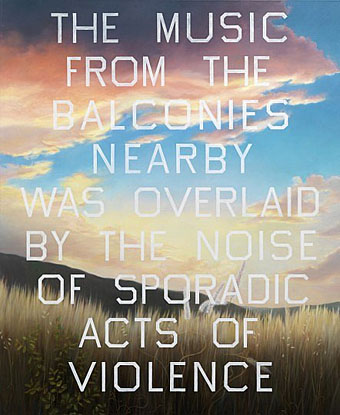
The Music from the Balconies (1984) by Edward Ruscha.

• At The Quietus: High-Rise director Ben Wheatley runs through his favourite films. Kudos for mentioning Elem Klimov’s Come and See (1985) among the more familiar fare, a nightmarish masterwork that everyone should watch at least once. On the same site, author Joe R. Lansdale also lists some favourite films while discussing the new TV series of his Hap and Leonard books.

Electric Hintermass (Sound Apart) by Hintermass, a track from The Apple Tree, their debut album on the Ghost Box label.

Michael Mann’s Heat: “A complex, stylistically supreme candidate for one of the most impressive films of the Nineties”.

• Despair Fatigue: David Graeber on how [political] hopelessness grew boring, and what happens next.

• Mix of the week: FACT Mix 541 by Tortoise, and Blowing Up The Workshop 56 by Eric Lanham.

• At Dennis Cooper’s: “Some books (1961–1975) that either faked ingesting LSD or did”.

• David Litvinoff again: “Was he only an opportunistic hustler?” asks David Collard.

John Carpenter’s The Thing rescored with one of the director’s Lost Themes.

Overlooked: a book by Marina Willer about the manhole covers of London.

• Pam Grossman (words) and Tin Can Forest (art) ask What is a Witch?

• A long way down: Oliver Wainwright on JG Ballard and High-Rise.

• A conversation with designer and typographer Erik Spiekermann.

• The BFI compiles a list of “The 30 Best LGBT Films of All Time“.

• Decoding the spiritual symbolism of artist Hilma af Klint.

Sabat Magazine

Heat (1983) by Soft Cell | The Heat (1985) by Peter Gabriel | Heat Miser (1994) by Massive Attack