Weekend links 802

grimshaw.jpg

November (1879) by John Atkinson Grimshaw.

• As usual, the first links in November are heavy with the spirit of Halloween. At the BFI: Zombies in the Lake District: how locations from The Living Dead at Manchester Morgue look today; Adam Scovell looks back at one of the more curious zombie films of the 1970s, a Spanish/Italian production directed by Jorge Grau in and around my home city. Also at the BFI: Georgina Guthrie selects 10 great erotic horror films.

• “We must recognise that reality without mystery is impossible.” In a recently digitised film clip, René Magritte is interviewed (in French) by Belgian TV in 1961.

• The Italian edition of The Moon and Serpent Bumper Book of Magic is out now from Panini. Thanks to Smoky Man for posting photos!

• Among the new titles at Standard Ebooks, the home of free, high-quality, public-domain texts: Short Fiction by Saki.

• At Smithsonian Mag: Elizabeth Djinis explains how an Italian town came to be known as the “City of Witches”.

• New music: The Whole Woman by Anna von Hausswolff ft. Iggy Pop; Forces, Reactions, Deflections by Scanner.

• RIP Jack DeJohnette, jazz drummer; Prunella Scales, actor; Peter Watkins, film-maker.

Space Type Generator

Algiers November 1, 1954 (1965) by Ennio Morricone | November Sequence (2011) by Pye Corner Audio | Richter: November (2019) by Mari Samuelsen
Weekend links 644

binnie.jpg

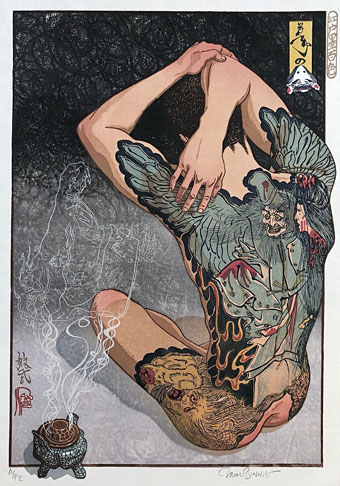
Yoshitoshi’s Ghosts (2004) by Paul Binnie.

• “The later Grand Etteilla series, printed well into the nineteenth century, and the present-day proliferation of Tarot decks, following ephemeral fads and fashions, all trace their origins to this beautiful and beguiling creation from the enigmatic Egyptophile at 48 Rue de L’Oseille.” Kevin Dann on the Livre de Thot Tarot (ca. 1789) by Jean-Baptiste Alliette, better known as “Etteilla”.

• “Death is not a subject he has ever shied away from, in his fiction or conversation. Indeed, he has measured other writers by how seriously they address it.” Richard B. Woodward on his friend, Cormac McCarthy, and McCarthy’s new novels. There’s an exclusive extract from The Passenger here.

• “…addicts, psychopaths, lovelorn outsiders, cult leaders, lesbian and gay icons…you name it, the vampire has become it.” Christopher Frayling on the perennial popularity of the vampire, and a new book collection of vampire film posters.

Robert Wilson‘s new production of Ubu Roi by Alfred Jarry is “a sinister, multilingual pantomime bathed in red light and looped in noise…fittingly violent, absurd, ominous and infantile”.

• “What kind of music goes with a show that originates in deep space?” Aquarium Drunkard on Sonny Sharrock’s final recordings, the soundtrack music for Space Ghost Coast To Coast.

• At Wormwoodiana: Mark Valentine takes a fresh look at the health of secondhand bookshops in Britain.

• Tokyo nightlife photographed by Hosokawa Ryohei.

• New music: Approach by Lawrence English.

The Passenger (1977) by Iggy Pop | The Passenger (1987) by Siouxsie And The Banshees | The Passenger (1997) by Lunachicks

Weekend links 533

calvino.jpg

Cover art by Domenico Gnoli, 1959.

• After decades of ignoring the output of Tangerine Dream it feels strange to be interested in the group once again; musicians you’re compelled to dismiss seldom manage to recapture your attention later on. Stranger still when the group itself is now completely detached from its origins following the death of founder Edgar Froese in 2015. But it was Froese’s departure, and with it the disappearance of many years of poor aesthetic choices, that helped renew my interest. At FACT the group take up the against-the-clock challenge in which musicians are given 10 minutes to create a new piece of music.

• “We were both working at Sounds at the time and we thought that instead of listening to these terrible ’80s records like Haircut 100 we’d go off and look for Montague Summers books, so off we went!” Savage Pencil (Edwin Pouncey) on his enthusiasm for Summers, Austin Spare and Louis Wain.

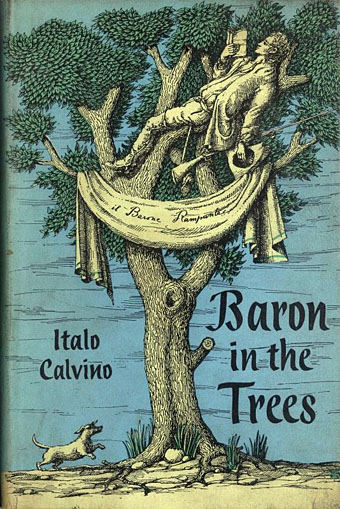
• At the Paris Review: Valerie Stivers bakes pies for Italo Calvino. I’d like to see someone create a series of dishes based on every location from Invisible Cities. Elsewhere there’s William N. Copley on Joseph Cornell: “No art historian ever prophesied the coming of the box.”

• On the experimental realism of an eccentric Russian Anglophile: “For Sigizmund Krzhizhanovsky, strangeness was a matter of perspective,” says Caryl Emerson.

Nova Reperta: John Boardley on a series of 16th-century prints showing new inventions.

• RIP David Graeber. From 2014: “What’s the point if we can’t have fun?

• “Damn your blood”: John Spurr on swearing in early modern English.

• At Wormwoodiana: Mark Valentine maps the esoteric in Britain, 1920.

• At Dennis Cooper’s: Seijun Suzuki Day.

Big Fun/Holly-wuud (Take 3) (1972) by Miles Davis | Funtime (1977) by Iggy Pop | Funny Time Of Year (2002) by Beth Gibbons and Rustin Man

Weekend links 391

mueck.jpg

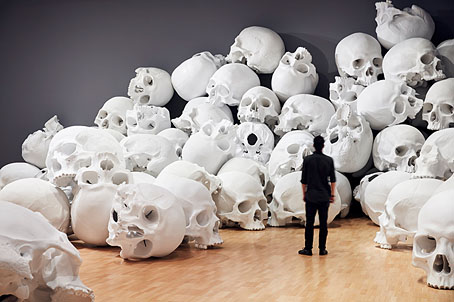
Mass by Ron Mueck at the National Gallery of Victoria Triennial. Photo by Tom Ross.

• Thanks of the week: to In Wild Air for asking me to fill their list of six favourite things; to Hodderscape for including my cover for Jeannette Ng’s Under the Pendulum Sun among their choice of best book covers of the year; and to Dennis Cooper for listing this blog among his own end-of-year favourites. Ta, all!

• New/old music: The Quietus reissues, etc, of the year, new Pye Corner Audio, Soul Jazz presents Deutsche Elektronische Musik 3, and The Cleansing is a new album by Annabel (lee).

• Mixes of the week: Seeing The Forest For The Trees by Gregg Hermetech, FACT mix 631 by Zola Jesus, and Secret Thirteen Mix 240 by Restive Plaggona.

Were a normally sexed person to enter such an establishment, he might be puzzled to see so many finely dressed men sitting there with soldiers, though he would find nothing particularly offensive. The friendships between homosexuals and soldiers forged here over sausage, salad and beer frequently endure for the full term of service, and often longer. The soldier returns home, living as a married farmer far from his beloved Berlin garrison, but many a uranian still receives freshly killed quarry as a token of friendship. Sometimes these relationships are even passed on to younger brothers; I know one case where a homosexual had relations with three brothers one after the other, all of whom were with the Cuirassiers.

An extract from Berlin’s Third Sex by Magnus Hirschfeld, one of the new titles from Rixdorf Editions. Ostensibly straight soldiers supplementing their income by having sex with “uranians” was still a common thing decades later, as detailed in John Lehmann’s In The Purely Pagan Sense.

The Cremator (1968) a film by Juraj Herz, was reviewed on these pages a while ago. It’s now out on region-free blu-ray. Highly recommended.

• At Wormwoodiana: Mark Valentine on a map of old Dunwich, and Egypt in England.

Clive Hicks Jenkins on Mapping the Tale: image making and the narrative tradition.

Wyrd Daze returns with a free pdf, and a mix by The Ephemeral Man to download.

• At the BFI: Chris Gallant on where to begin with giallo cinema.

The Parisian Cabinet of Curiosities Loved by Wes Anderson.

Mass Production (1977) by Iggy Pop | Mass (1981) by Yellow Magic Orchestra | Mass Transit Railway (1997) by Monolake

Weekend links 278

sanmartin.jpg

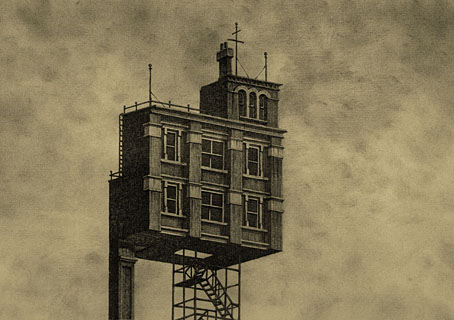
El Hotel Satina (2006) by Oscar Sanmartin.

Andrew Kötting’s By Our Selves is “a melancholy, maverick film” says David Jays. With Toby Jones following in the footsteps of poet John Clare, Iain Sinclair in a goat mask, and Alan Moore warning about the “vision sump” of Northampton.

• “Shunga means ‘spring pictures’. They depict sometimes spectacular sexual contortions and come imbued with the power of taboo. For years they have largely been out of sight—until now.” Related: shunga prints at Ukiyoe Gallery.

• “Who else could link Smokey Robinson and JG Ballard, Iggy Pop and Josephine Baker, James Bond and Stephen Sondheim, Gary Numan and Johnny Cash, Tricky and Tom Moulton…” Grace Jones is the best, says Joe Muggs.

Ballardian space – what he called “inner space” to differentiate it from the science fiction that concerned itself with distant planets and space rockets – is in fact a fusion of inner and outer space. There is no “out there” totally separate from his characters; just as there is no exclusively private, isolated inner life. His most psychologically fulfilled characters look to transcend their physical surroundings, however hostile, by embracing them.

Chris Hall on High-Rise by JG Ballard

• “In March 1984, Jorge Luis Borges began a series of radio ‘dialogues’ with the Argentinian poet and essayist Osvaldo Ferrari, which have now been translated into English for the first time.”

• “I came up with a couple of tunes, literally in my bedroom. People think of bedroom recordings as a modern, laptop invention. It wasn’t.” Daniel Miller on the accidental success of Mute Records.

• “It was in Prague that I first awoke.” Strange Flowers on Gustav Meyrink’s life in Prague.

• At 50 Watts: Stencilled ornament and illustration by William Addison Dwiggins.

• Mix of the week: The Ivy-Strangled Path Vol. X by David Colohan.

Wyrd Daze, Lvl2 Issue 4, is free and brimming with the weird.

Mythology, a new series of drawings by Howard Hardiman.

Spike Jones is the best, says MetaFilter.

Peacocks at National Geographic.

Warm Leatherette (1980) by Grace Jones | Warm Leatherette (1998) by Chicks On Speed | Warm Leatherette (2013) by Foetus