Weekend links 741

magritte.jpg

The Empty Mask (1928) by René Magritte.

A Walk Across Northampton: Iain Sinclair and John Rogers wander the streets in search of significant historical locations before ending up at the home of the local magus, Alan Moore. I recently illustrated a new piece of writing by Iain Sinclair but can’t talk about that just now. Later.

• New music: The Invisible Road: Original Recordings, 1985–1990 by Sussan Deyhim & Richard Horowitz, and Through Other Reflections by The Soundcarriers.

• At Wormwoodiana: Mark Valentine reviews Joseph Hone’s The Book Forger: the true story of a literary crime that fooled the world.

• At Colossal: Across rural Europe, Ashley Suszczynski photographs remarkable and ancient masked traditions.

• Among the new titles at Standard Ebooks, the home of free, high-quality, public-domain texts: Poetry by WB Yeats.

• At Unquiet Things: Maggie Vandewalle’s enchanted autumns.

Richard Norris’s favourite albums.

Tapedeck.org

Preludes For Magnetic Tape (1966–76) by İlhan Mimaroğlu | Tape Hiss Makes Me Happy (1995) by Stars Of The Lid | Those Tapes Are Dangerous (1997) by The Bug

Weekend links 725

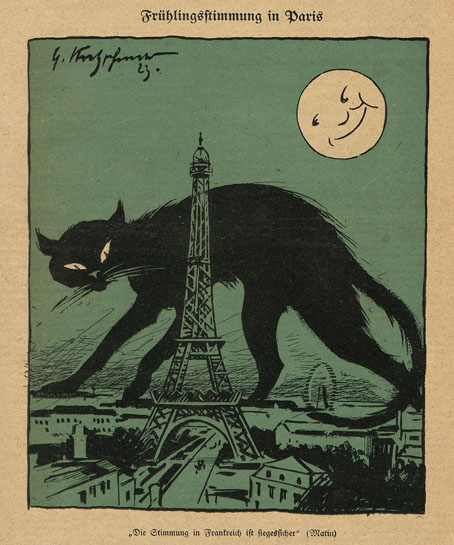
Springtime in Paris (1923) by Georg Kretzschmar.

• I’ve been asked to mention that the tribute book put together for Alan Moore’s 70th birthday, Alan Moore: Portraits of an Extraordinary Gentleman, is still available. As before, the book features contributions from many well-known comic artists, a foreword by Iain Sinclair, and this piece of my own.

• “I never posted any lecture of mine on Tumblr, even though Tumblr would seem to have plenty of elbow-room for hour-long, learned, European public lectures (with many lecture slides).” Utopian Realism, a speech by Bruce Sterling.

• Reading the Signs: John Kenny in conversation with Mark Valentine about Mark’s new collection Lost Estates.

There remains something suspect about blotter, a stain that is both a blessing and a curse. As the blotter producer Matthew Rick, who started selling sheets as non-dipped ‘art’ collectables at festivals in 1998, puts it: ‘[B]lotter is the last underground art form that’s going to stay underground, simply because you’re creating something that looks like and functions like a felony.’ In other words, blotter is ontologically illicit; it is, as Rick says, ‘drug paraphernalia by its very existence’.

Erik Davis (again) on LSD and the cultural history of the printed blotter

• At Colossal: Uncanny phenomena derail domestic bliss in Marisa Adesman’s luminous paintings.

• Standing stones, urban hellscapes and male nudes: Andrew Pulver on Derek Jarman’s Super-8 films.

• “ [breaking news] An anomaly on earth has brought the cats to over 150 meters. Please be patient.”

• At We Are The Mutants: Alien Renaissance: An interview with illustrator Bob Fowke.

• At Dennis Cooper’s: Spotlight on…René Crevel My Body and I (1926).

• At Public Domain Review: The Little Journal of Rejects (1896).

• Steven Heller’s font of the month is Sandhouse.

• RIP Steve Albini.

Sandoz In The Rain (1970) by Amon Düül II | Bon Voyage Au LSD (2001) by Acid Mothers Temple & The Melting Paraiso U.F.O. | Careful With That Sheet Of Acid, Eugene (2019) by Jenzeits

Weekend links 693

sime.jpg

Imaginary (no date) by Sidney Sime.

• Victor Rees was in touch this week to alert me to a one-off screening of The Gourmet (previously), a cult TV drama from 1986 written by Kazuo Ishiguro and directed by Michael Whyte. The screening, which will take place at Swedenborg House, London, on 16th October, is one of a series of retrospective events based around an exhibition from 1974, Albion Island Vortex, by Brian Catling and Iain Sinclair. The film, which is connected to Sinclair’s oeuvre by its use of one of the Hawksmoor churches, will be followed by a Q&A session with Sinclair and Michael Whyte. The screening is free but places are limited so prior booking is required.

• “Alongside his thieves and vagabonds, Hotten includes religious slang, public schoolboy slang, pirate slang, equine stable slang, phrases coined by Dr. Johnson, the slang of softened oaths, workmen’s slang, stagehand slang, shopkeeper’s slang, and dozens of other argots.” Hunter Dukes on A Dictionary of Modern Slang, Cant, and Vulgar Words (1860) by John Camden Hotten.

The Night Land, William Hope Hodgson’s “Dying Earth” doorstop, is republished in an abridged version as part of MIT Press’s Radium Age series, “proto–science fiction stories from the underappreciated era between 1900 and 1935”. All the reprints come with new introductions, the one for Hodgson being by Erik Davis.

• “My partner wanted me to stop buying lava lamps. It was an expensive hobby, and we were running out of room in our apartment.” Nora Claire Miller on the lure of the lava lamp. I only own a single one but I appreciate the obsessive attraction.

• Rambalac takes his roaming camera for a walk through teamLab Planets, Tokyo, a labyrinthine exhibition featuring plenty of water (and wet feet), and a moss garden filled with large silver eggs.

• At Strange Flowers: An examination of the connections between the self-mythologising Marie Corelli and her fictional counterparts in the Mapp and Lucia novels of EF Benson.

• Coming soon from Strange Attractor: Cabarets of Death, a book about the otherworldly cabarets of Montmartre by Mel Gordon, edited by Joanna Ebenstein.

• Among the new titles at Standard Ebooks, the home of free, high-quality, public-domain texts: The Secret Glory by Arthur Machen.

10 essential Japanese reggae releases selected by Kay Suzuki.

• Mix of the week: A Fact Mix by Venus Ex Machina.

Modern Art in Mid-Century Comics.

• RIP Michael Gambon.

Planet Caravan (1970) by Black Sabbath | Planet Queen (1971) by T. Rex | Oszillator Planet Concert (1971) by Tangerine Dream

Weekend links 676

binnie.jpg

Sleeve Study, from Kakitsubata (1998) by Paul Binnie.

• “London was not a project for me. It was the curse that never stops giving.” Iain Sinclair talking to Matthew Stocker about his new book for Swan River Press, Agents of Oblivion.

The Ultimate DMT Breakthrough Replication Compilation, a video guide to the DMT experience by Josie Sims. Related: Kristen French on what hallucinogens will make you see.

• At Spoon & Tamago: A return to Tokyo Genso’s depictions of an urban Japan transformed by vegetation and neglect.

• New music: The Shell That Speaks The Sea by David Toop & Lawrence English.

• At Bajo el Signo de Libra: San Sebastián de Mártir a Icono Homosexual.

• Cosmic views from the Milky Way Photographer of the Year, 2023.

Nakamura Mitsue makes a Noh mask from a single block of wood.

• Mix of the week: A mix for The Wire by Eleni Poulou.

• At Dennis Cooper’s: Delphine Seyrig Day.

Of Ancient Memory (The Oblivion Seekers) (1994) by Jarboe | Oblivion (2001) by Lustmord | Oblivion (2004) by Redshift

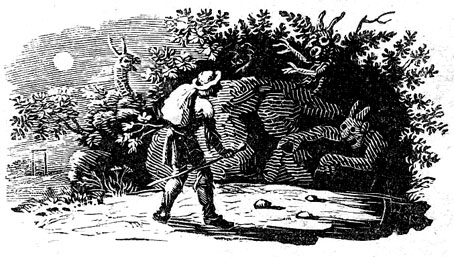
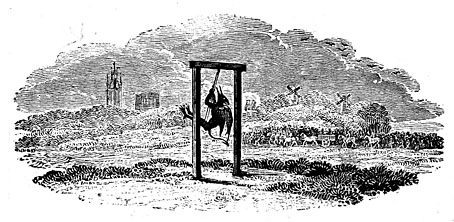
Painted devils

bewick1.jpg

Alright, these devils are inked rather than painted, but the phrase is a memorable one from Macbeth which was also used by Robert Aickman as a title for one of his story collections.

bewick2.jpg

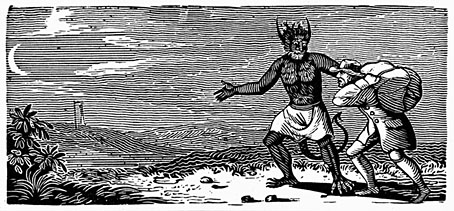
The devils in question are the work of Thomas Bewick (1753–1858), an English engraver referred to twice in Casting the Runes by MR James. I was reminded of this recently after I’d watched the excellent film adaptation, Night of the Demon, and decided to reacquaint myself with its origin. In James’ story, Karswell, a vengeful occultist with a vague resemblance to Aleister Crowley, torments a man he’s cursed by reminding him of the escalating supernatural threat and its potentially fatal outcome. One of the warnings is as follows:

…two things came for him by post during those weeks, both with a London postmark, and addressed in a commercial hand. One was a woodcut of Bewick’s, roughly torn out of the page: one which shows a moonlit road and a man walking along it, followed by an awful demon creature. Under it were written the lines out of the “Ancient Mariner” (which I suppose the cut illustrates) about one who, having once looked round—
walks on,

And turns no more his head,
Because he knows a frightful fiend
Doth close behind him tread.

bewick4.jpg

The Coleridge quote makes it into the film but there’s no mention of the woodcut, although we do see some other engravings of medieval devils. (Likewise, the ITV Playhouse adaptation from 1979 includes the quote but omits the woodcut.) Since the quote is a genuine one I was curious to know whether the Bewick picture also existed. Unfortunately, this doesn’t seem to be the case. I’m equivocating, as usual, because I’m not entirely certain, but in an article from 2006 Tom Lubbock had this to say about Bewick and James:

Like Borges, James delights in the fictional but plausible work of literature. In Casting the Runes, he also contrives a fictional work of art. Though a contemporary of Coleridge, the engraver Thomas Bewick never made any woodcuts illustrating The Rime of the Ancient Mariner, nor do any of his works quite correspond to the one described in this passage. Still, it’s a good fake. Many of Bewick’s woodcuts have travellers. Some of them have moonlight and demons, too. You can see what James had in mind.

bewick3.jpg

Continue reading “Painted devils”