The Occult Explosion

occult01.jpg

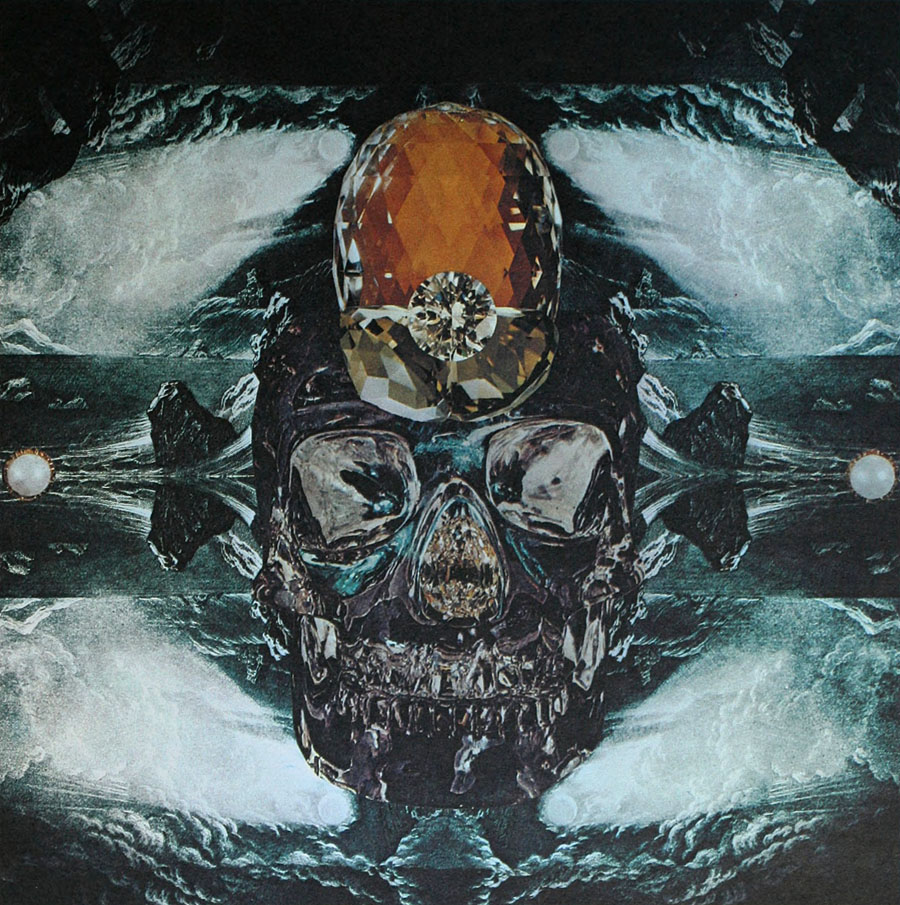
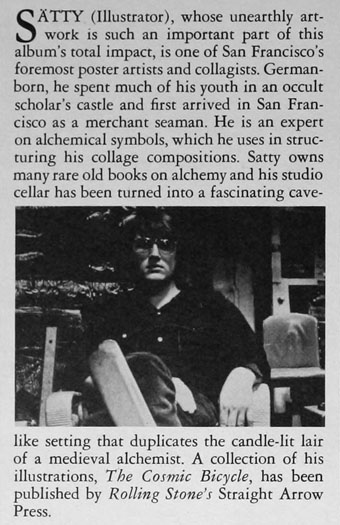
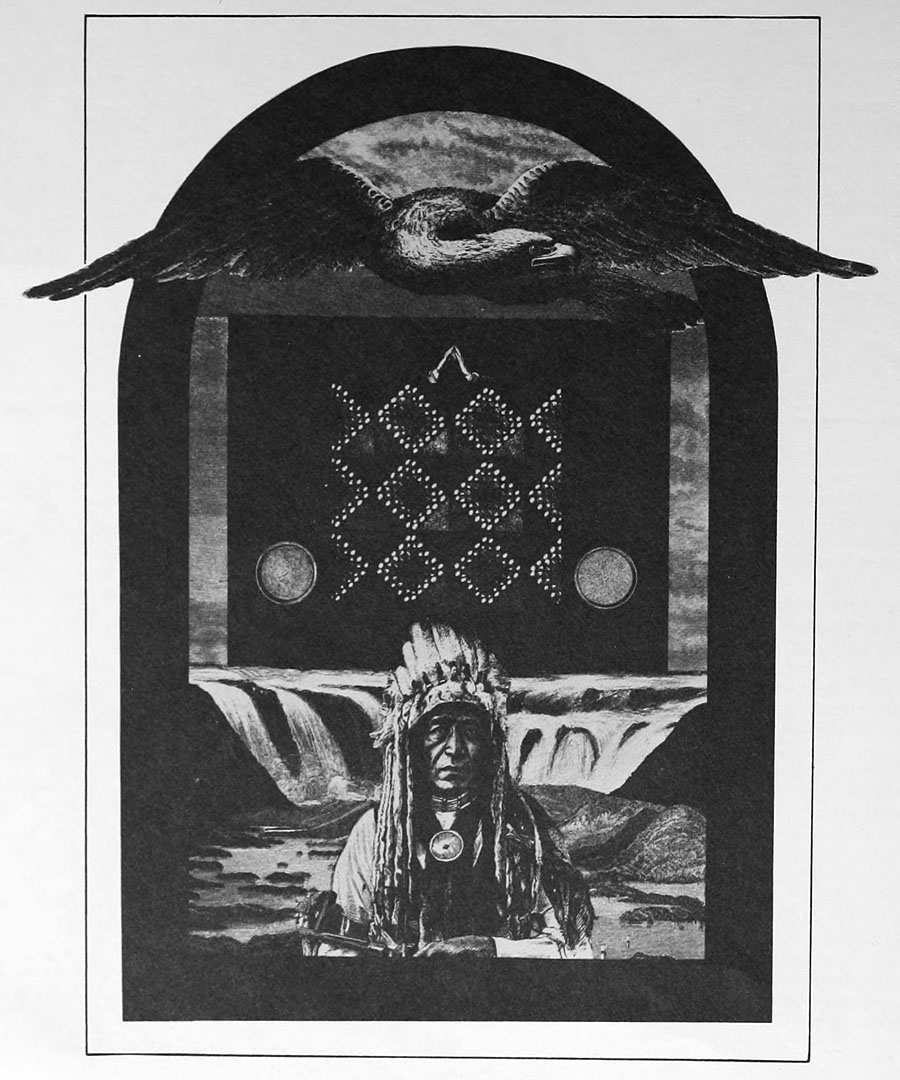
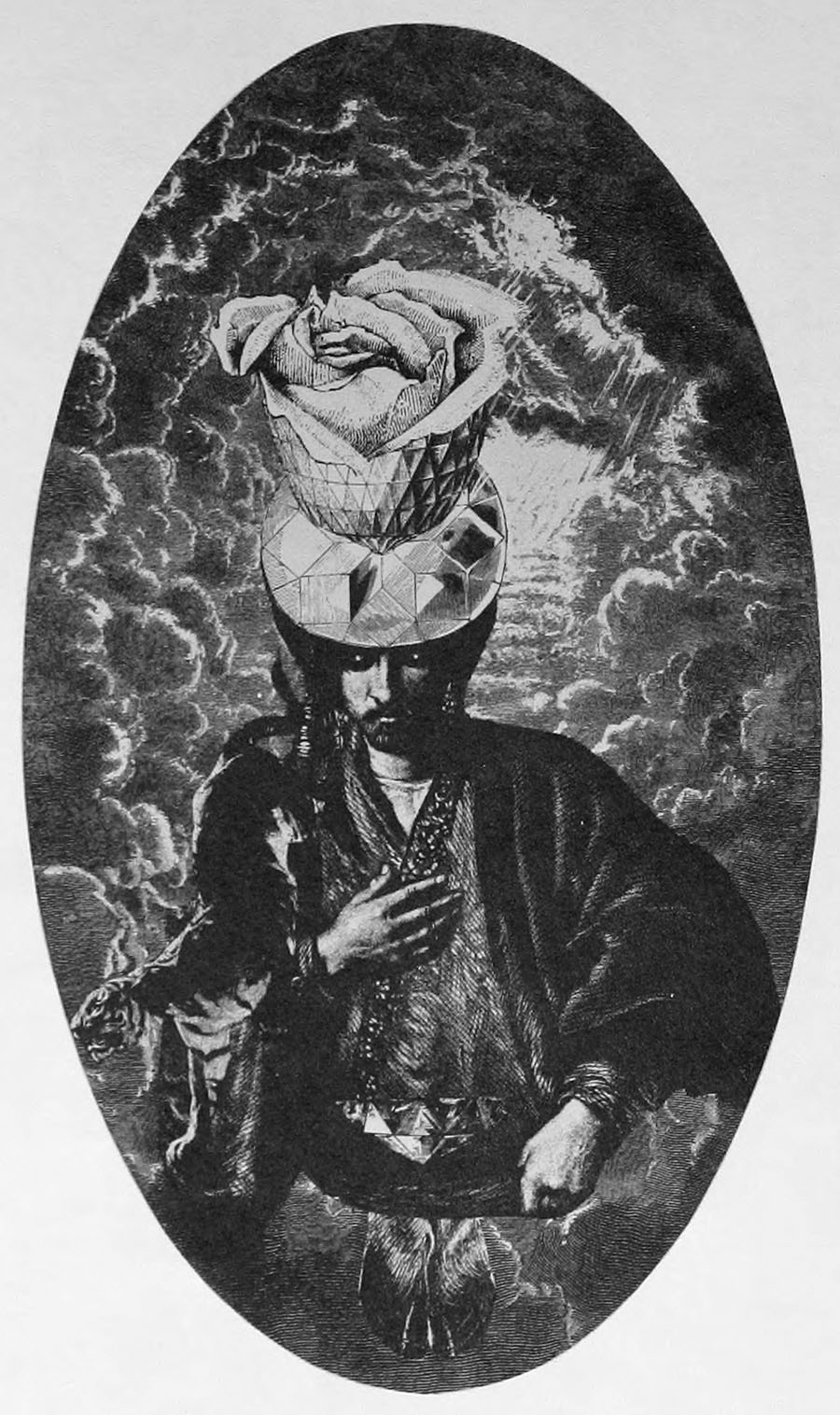
So here’s a strange thing: having spent another working week sifting through scanned books at the Internet Archive what do I find but scans of album booklet art by Wilfried Sätty only a couple of days after writing about his album covers. The album in question may be familiar to some readers but it was a new one to me. The Occult Explosion (1973) was a collection of recorded interviews with people such as Alan Watts and Anton LaVey discussing subjects pertinent to the title, although the general tone is more in the direction of catch-all mysticism than occultism as such. Anton LaVey is there to pronounce about Satanism, of course, and the album also features two songs by British rock band Black Widow, one of which, Come To The Sabbat, has since achieved a kind of novelty notoriety. (There’s a nice video-feedback recording of them playing the song live on Beat Club in 1970.)

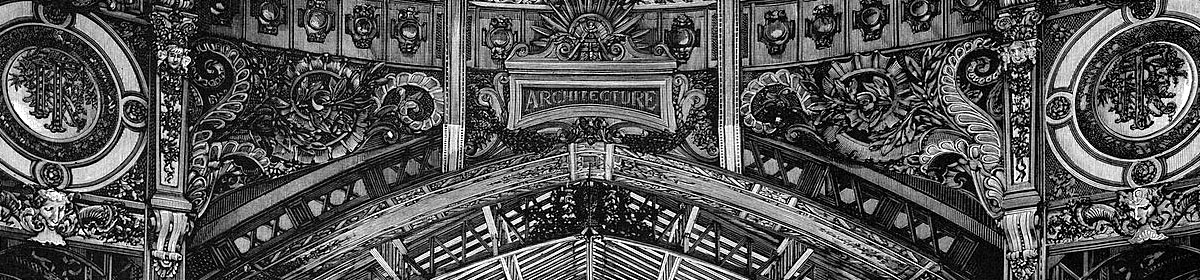
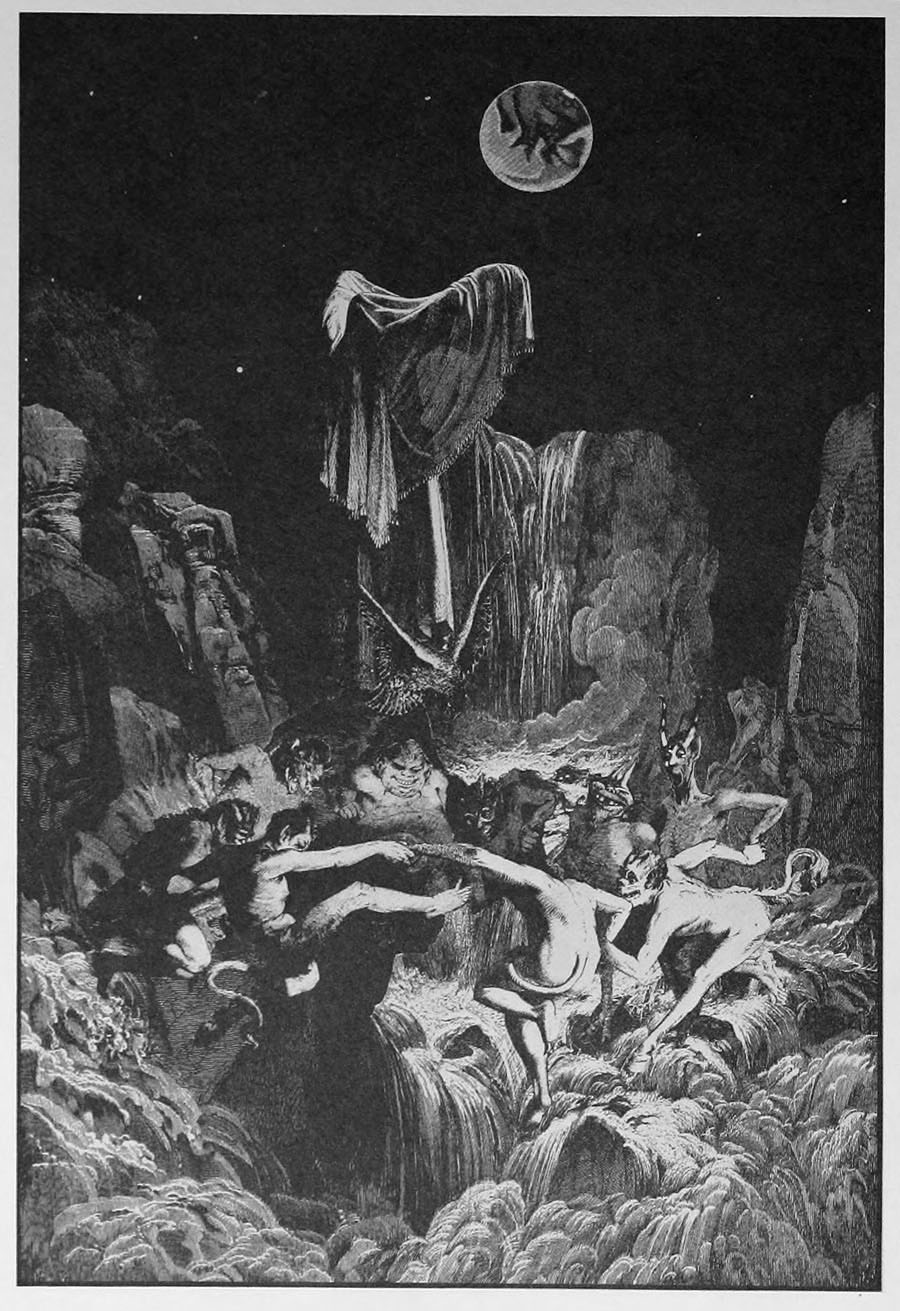
Nat Freedland was the author of a book entitled The Occult Explosion for which the album acts as an audio appendix. This is all so typically 1970s: witchcraft, Satanism, rock music, yoga, Alan Watts, UFOs, ESP, and the whole thing packaged in Sätty’s post-psychedelia collages. The entire album is available at the Internet Archive: the recordings are here while the badly-scanned insert pages are here. (There’s a better view of the cover art at Flickr.) Some of the more impressive pieces of Sätty’s art follow, work which has been buried for almost forty years. Just to add to the net of coincidences this week, the last of the pictures below borrows a demon from Gustave Doré’s Divine Comedy, the same source as yesterday’s Rick Griffin poster.

occult08.jpg

occult02.jpg

occult03.jpg

occult04.jpg

Continue reading “The Occult Explosion”

Lucifer Rising posters

lucifer1.jpg

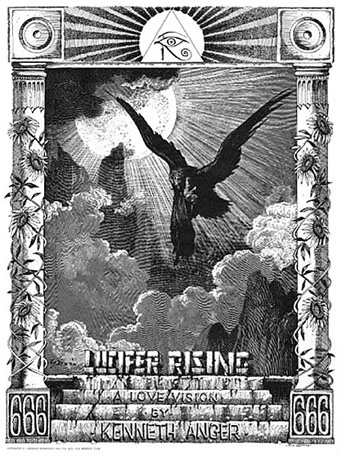
Lucifer Rising: A Love Vision by Kenneth Anger (1967) by Rick Griffin.

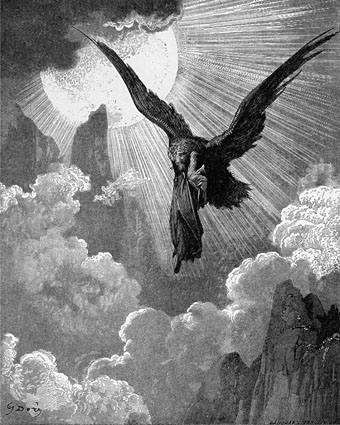
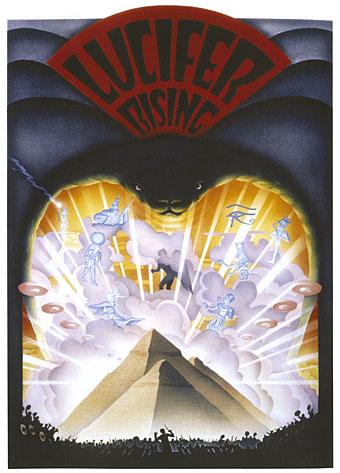
The status of Kenneth Anger’s Lucifer Rising as a kind of poly-cultural crossroads even extends to its poster art. The original poster by Rick Griffin dates back to the earliest drafts of the film, and with its swipe from Gustave Doré makes me think it’s the kind of thing Wilfried Sätty might have produced for Anger had he been asked. (They were both living in San Francisco at this time.)

dore.jpg

The San Francisco poster artists happily plundered the past for unusual images; Doré was a popular choice since his images are frequently striking and copies of the books (or reprints) would have been easy to find. This is one of the illustrations from the Purgatorio section of his illustrated Divine Comedy (1867) showing Dante being ferried up Mount Purgatory (“like Ganymede”) by a giant eagle.

lucifer2.jpg

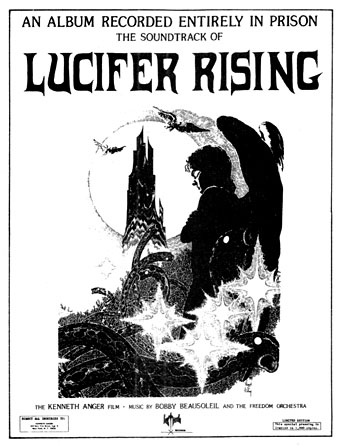
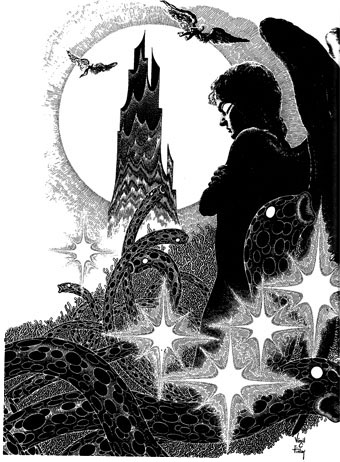
From Dante and Virgil to Virgil Finlay, one of whose illustrations was used on this promo sheet advertising a limited run of Bobby Beausoleil’s soundtrack for the film.

finlay.jpg

Earth’s Last Citadel (1950) by Virgil Finlay.

The illustration this time is for a reprint of Earth’s Last Citadel by CL Moore and Henry Kuttner in Fantastic Novels Magazine for July 1950. I’ve never seen any mention of William Burroughs meeting Kenneth Anger which is a shame since they had acquaintances in common and Burroughs occasionally showed an interest in some of Aleister Crowley’s ideas. The Henry Kuttner connection in this case would provide a link to some of the borrowings Burroughs himself made from Kuttner’s writing. But no, it’s too much of a reach.

lucifer3.jpg

Lucifer Rising (1980) by Page Wood.

After all that the final poster is an original piece of work by Page Wood for a premier screening at the Whitney Museum, New York in 1980. The art avoids the overt occultism in favour of making a resolutely low-budget piece seem like a Hollywood epic. Given Anger’s lifelong obsession with Hollywood’s myths and tragedies I think he would have appreciated that.

Previously on { feuilleton }
Externsteine panoramas
San Francisco by Anthony Stern
The art of Alia Penner
Missoni by Kenneth Anger
Anger in London
Arabesque for Kenneth Anger by Marie Menken
Edmund Teske
Kenneth Anger on DVD again
Mouse Heaven by Kenneth Anger
The Man We Want to Hang by Kenneth Anger
Relighting the Magick Lantern
Kenneth Anger on DVD…finally

Sea and Land: An Illustrated History

sealand1.jpg

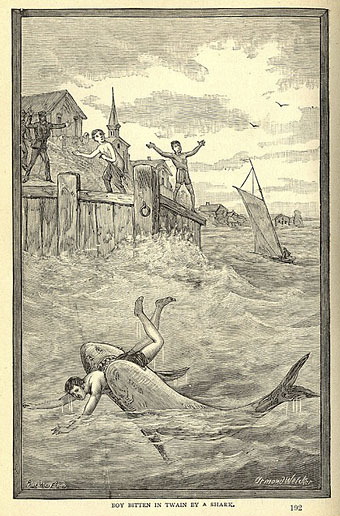
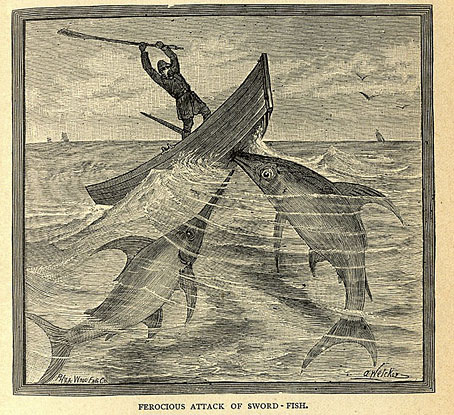
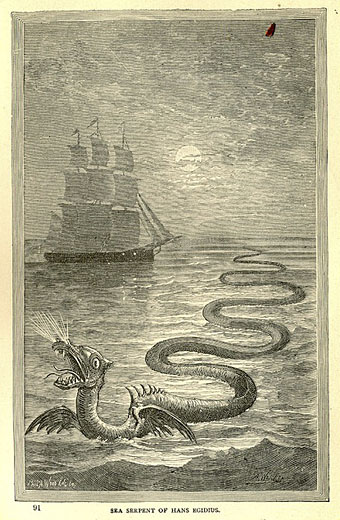
It’s all fun and games until someone gets bitten in twain by a shark. Illustrations from a Flickr selection of plates from Sea and Land: An Illustrated History (1887) by JW Buel, a compendium of stories about the natural world which tend towards the sensational. Many of these pictures are from what I call the “Die you brute!” school of illustration, in which exotic fauna is always on the rampage and needs to be violently subdued before someone is eaten alive (or bitten in twain). Buel’s book reprints pictures from other volumes including Gustave Doré’s Rime of the Ancient Mariner while one of the tentacled fiends below is an oft-reprinted item by Alphonse de Neuville & Edouard Riou from Twenty Thousand Leagues Under the Sea. The only copy of Sea and Land at the Internet Archive is poor quality, unfortunately; being partial to Victorian sensation I wouldn’t mind seeing the whole thing.

sealand2.jpg

sealand3.jpg

Continue reading “Sea and Land: An Illustrated History”

Richard Williams’ Christmas Carol

williams1.jpg

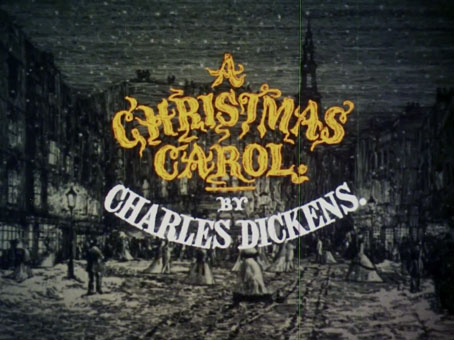
It’s easy to loathe the teeth-grinding sentimentality of Charles Dickens’ seasonal tale, as well as its subtext which isn’t so far removed from Emperor Ming’s instruction to his cowed populace in Flash Gordon: “All creatures shall make merry…under pain of death.” Yet as a ghost story I prefer A Christmas Carol to the sketchier The Signal-Man, and I’ve always enjoyed this memorable 1971 adaptation from the animation studio of the great Richard Williams.
williams2.jpg

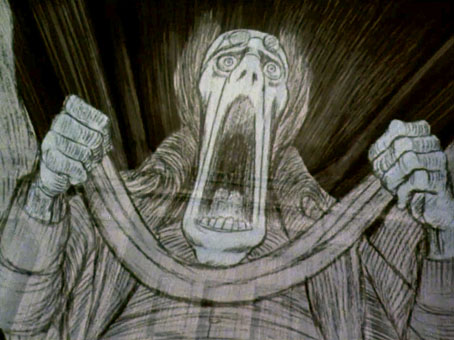
Marley’s ghost.

Williams is best known today for his role as animation director on Who Framed Roger Rabbit? but prior to this he’d distinguished himself as creator of the florid title sequence for What’s New, Pussycat? (1965), and the animated sections—done in the style of 19th-century engravings and political cartoons—for Tony Richardson’s The Charge of the Light Brigade (1968). Williams’ Christmas Carol owes a similar debt to Victorian graphics, not only to the original story illustrations by John Leech, but also to Gustave Doré’s views of Victorian London, scenes which had earlier influenced the production design for David Lean’s adaptation of Oliver Twist. Williams’ film crams Dickens’ story into 25 minutes but nonetheless manages to maintain the tone of the original to a degree which eludes many feature-length travesties, especially those in which the nightmare squalor of Victorian London is reduced to a shot or two of dressed-down extras. Dickens had first-hand experience of the squalor: Kellow Chesney’s The Victorian Underworld (1970) quotes at length from one of the journeys Dickens took (under police escort) through the notorious St Giles rookery, and his ghost story was intended as much as a warning to the complacency of middle-class Victorian readers as a Christmas celebration.
williams3.jpg

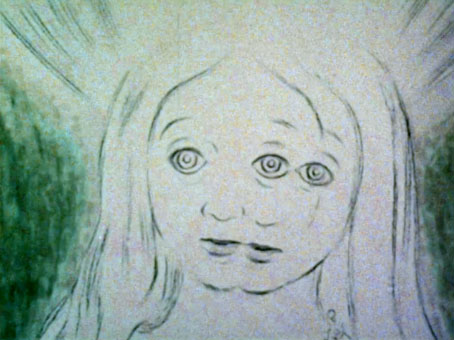
The Ghost of Christmas Past.

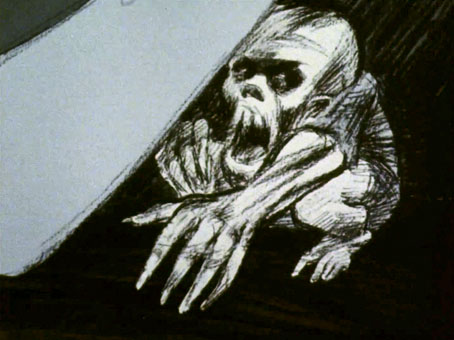
For me the crucial moment in any adaptation comes when the Ghost of Christmas Present shows Scrooge the figures of Ignorance and Want: in most film versions these tend to be a pair of well-fed child actors in rags and make-up; Williams shows us two grim spectres that owe more to Gerald Scarfe than Walt Disney. Williams is also truer to the ghosts themselves: Dickens describes Jacob Marley unfastening his jaw which falls open then remains that way while he proceeds to speak to his former friend; the Ghost of Christmas Past is the androgynous figure from the story with its ambiguous nature also shown by its shimmering indeterminate outline.
williams4.jpg

Ignorance.

Any animated drama relies on its voice actors, and Williams was fortunate to have Alistair Sim (as Scrooge) and Michael Hordern (as Marley) reprising their roles from the 1951 film version, while Michael Redgrave narrates the tale. The film used to be a seasonal fixture of British television, and may still be for all I know (I haven’t owned a TV for years). For the time being it’s on YouTube, of course, with a full-length version here that’s blighted by compression artefacts but is watchable enough. 2012 is the Dickens bicentenary so expect to hear a lot more about the author and his works in the coming year.

Update: The version linked to originally has been deleted. No matter, there’s a much better copy here (for now).

As usual I’ll be away for a few days so the { feuilleton } archive feature will be activated to summon posts from the past below this. Have a good one. And Gruß vom Krampus!

Previously on { feuilleton }
“Who is this who is coming?”
Gustave Doré’s Ancient Mariner

dore01.jpg

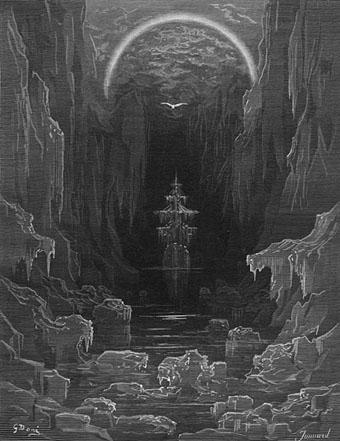
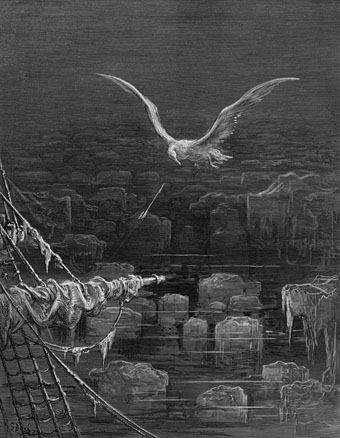
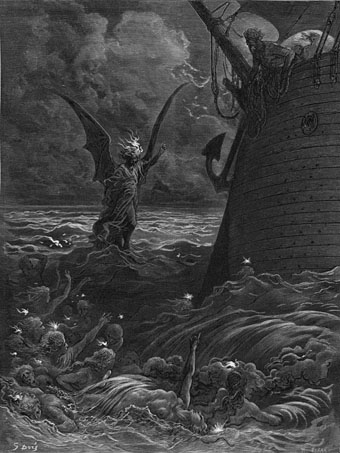
A final Coleridge post, also the oldest illustrated edition featured this week. Gustave Doré’s The Rime of the Ancient Mariner was first published in 1870, and the poet’s sombre, doom-laden tale was more suited to Doré’s Gothic proclivities than many of the lighter books he illustrated. Despite their age, these engravings have proved memorable enough to keep turning up whenever an illustration of the poem is required. The ship among the icebergs above is close enough to a scene in the third Pirates of the Caribbean film to have maybe been an influence, while the ice-bound section of the poem inspired one of Doré’s few paintings.

Art Passions has a complete set of these engravings together with many more of the artist’s works. And while we’re on the subject, two of Harry Clarke’s surviving Ancient Mariner drawings appeared in a post last year. A third drawing from the series can be seen here.

dore02.jpg

dore03.jpg

Continue reading “Gustave Doré’s Ancient Mariner”