Albin Grau’s Nosferatu

nosferatu01.jpg

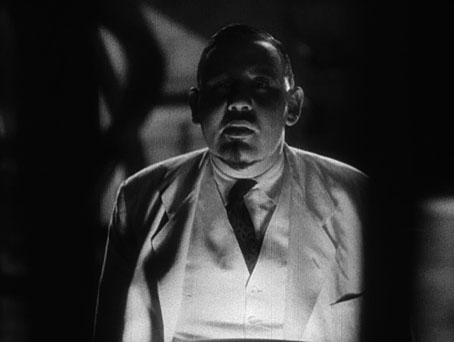
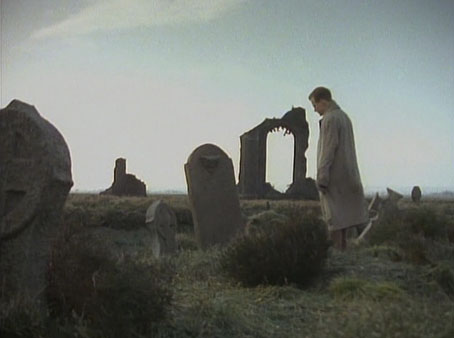
For many directors a film like Nosferatu: A Symphony of Horror (1922) would have been a career peak, but Friedrich Murnau went on to make The Last Laugh (1924), Faust (1926) and Sunrise (1927). All those films improve cinematically on Nosferatu but the vampire film continues to cast the longest shadow: quoted, remade, and with even its production fictionalised in Shadow of the Vampire (2000). The lasting success of Nosferatu wasn’t all Murnau’s doing, however.
nosferatu05.jpg

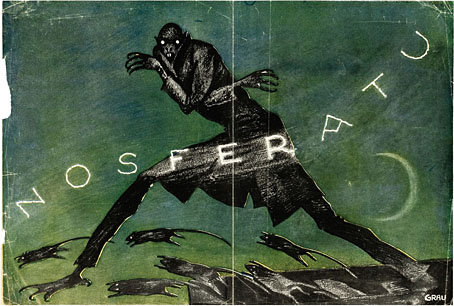
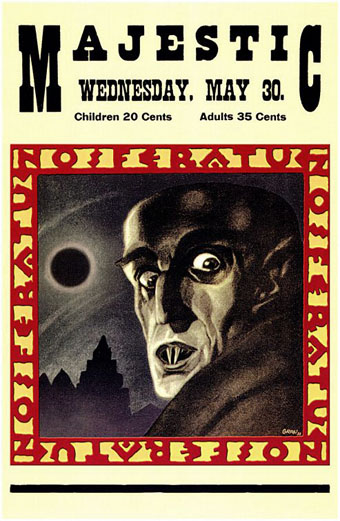
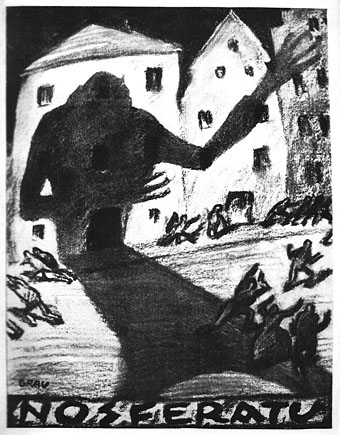
It’s arguable that without the preliminary work of production designer Albin Grau (1884–1971) the film might have been little more than a curious precursor of the Universal Dracula (1931). Grau was responsible for the set design and the extraordinary appearance of Max Schreck’s Count Orlok; Grau also created the film’s memorable poster and advertising imagery in which the vampire’s appearance hints at something even more terrible than the figure that stalks before the camera.
nosferatu03.jpg

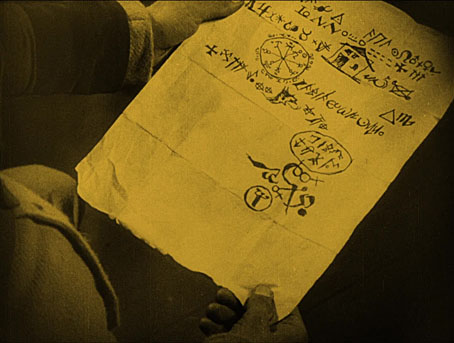
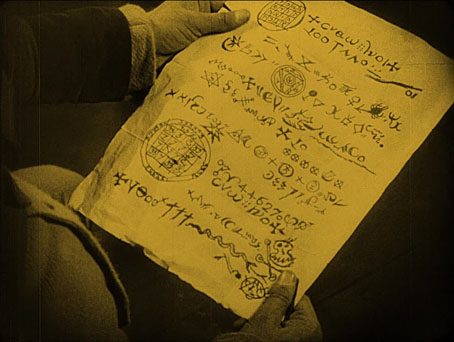
A great deal of German silent cinema is labelled “Expressionist” even if the films themselves show little in the way of overt Expressionism. Nosferatu isn’t very Expressionist at all but Albin Grau’s sketches and posters certainly tend in that direction, so much so that they make me wonder how different the film might have been if it had been as stylised as The Cabinet of Dr. Caligari (1919). In addition to his artistic pursuits, Grau was an occultist which explains the attention to detail in the bizarre contract drawn up between Knock and Count Orlok, a document that looks more like a page from a grimoire than anything used by an estate agent. There’s a quote from Grau in his occult capacity in John Symonds’ Aleister Crowley biography, The Great Beast, complaining in 1925 about Crowley’s ascension to the heights of the Ordo Templi Orientis.
nosferatu11.jpg

Nosferatu: The Knock-Orlok contract.

nosferatu12.jpg

Nosferatu comes out of the occult preoccupations, having been Grau’s project from the beginning when he formed a film company, Prana-Film, with Enrico Dieckmann. The pair announced plans for three films: Dreams of Hell, The Devil of the Swamp, and a drama about a vampire. Only Nosferatu materialised then sank the company almost as soon as it was finished: Prana-Film had spent more on publicity than on the film itself, and went deep into debt. The success of the film might have helped their finances but the death blow was struck by Florence Stoker and the British Society of Authors who won a court case against the company for filming Dracula without permission. The efforts of the Stoker estate to destroy Nosferatu are recounted in detail in David J. Skal’s fascinating Hollywood Gothic (1990). Many of Murnau’s minor films were lost through various misfortunes, and it’s a fluke that a handful of prints of Nosferatu survived. Happily for us, it’s not only vampires that manage to remain undead.
Continue reading “Albin Grau’s Nosferatu”

Count Dracula

dracula1.jpg

Vampires: if they’ve never been very scarce they didn’t used to be quite so commonplace. The fortunes of Dracula, on the other hand, seem to have diminished in recent years following a centenary peak in 1997. The surprising spike of interest in the 1970s might explain the BBC’s decision to adapt Bram Stoker’s novel for television in 1977. I often used to wonder why the corporation didn’t turn some of its costume-drama prowess to more generic material. Anthony Trollope’s The Pallisers sprawled over 26 50-minute episodes in 1974 but you’d search in vain for an adaptation of HG Wells. The closest was the yearly Ghost Story for Christmas most of which were period pieces.

dracula2.jpg

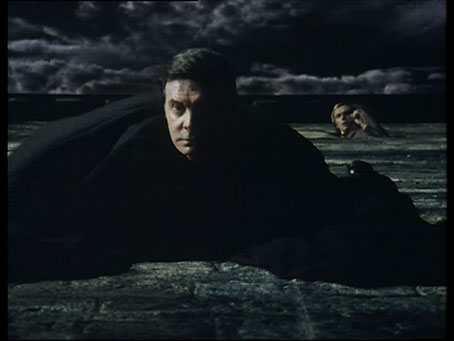
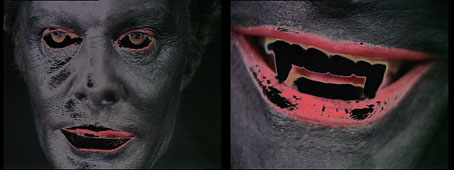
Louis Jourdan bares his fangs.

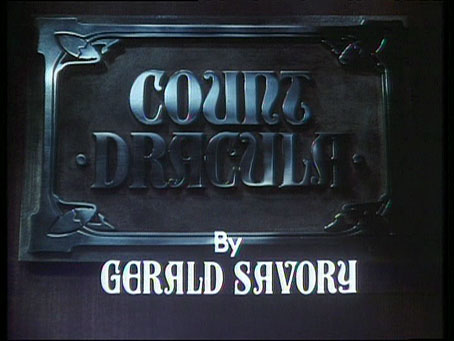
Gerald Savory’s Count Dracula, subtitled “A Gothic Romance”, was broadcast a few days before Christmas, 1977, in a single 150-minute programme. Repeat screenings broke the drama into two episodes so it’s often referred to as a mini-series. I’d read Dracula for the first time earlier that year so it was a thrill to see the story presented in such a faithful manner after all the liberties taken by feature films and derivative dramas. Count Dracula may seem primitive when compared to lavish Hollywood productions but 37 years later it’s still the adaptation that most closely adheres to Stoker’s epistolary novel.

dracula3.jpg

Louis Jourdan and Bosco Hogan (Jonathan Harker).

Continue reading “Count Dracula”

Uncharted islands and lost souls

lostsouls1.jpg

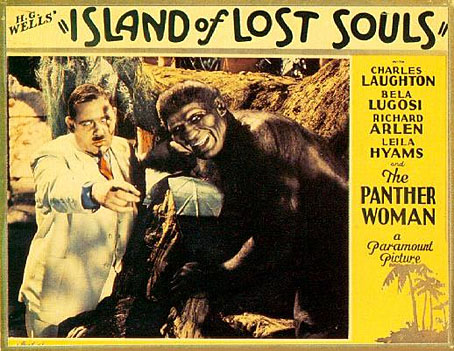
The pulp fiction of the early 20th century favoured remote or uncharted islands as locations for the bizarre and the fantastic; in isolated jungles all manner of savage and grotesque behaviour could take place out of sight of the civilised world. Islands are secure from interference; they can be visited by accident or intention, and later fled from when everything goes wrong. The Island of Doctor Moreau is an early example of the type although Jules Verne’s The Mysterious Island (1874) pre-dates it by twenty-two years. The Island of Lost Souls (1932), the first film adaptation of the Wells novel, is one of a crop of mysterious islands that appeared in the 1930s following the success of the Universal adaptations of Dracula (1931) and Frankenstein (1931). The recent Eureka DVD/Blu-ray edition of the film is the first UK release to present the film in its original, uncensored form. I watched it this weekend.

lostsouls3.jpg

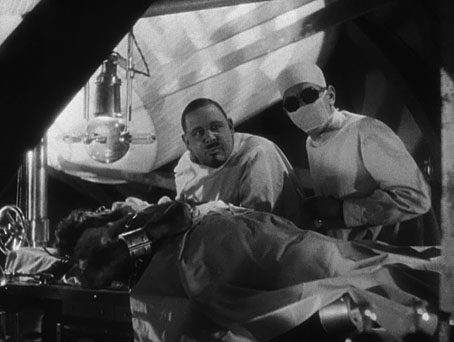
Moreau (Charles Laughton) and Montgomery (Arthur Hohl) at work.

HG Wells famously hated the film, and his vociferous complaints helped to ensure it was banned in Britain until 1958. Even without Wells’ complaints there was enough there to bait the censors who declared it to be “against nature”: writers Philip Wylie and Waldemar Young push the erotic implications of Wells’ story to a degree that would have been impossible in 1896, and would be equally impossible two years later when the Hays Code clamped down on cinematic salaciousness. Charles Laughton’s Moreau is eager to discover whether Lota, the Panther Woman (Kathleen Burke), will show any sexual interest in the marooned Edward Parker (Richard Arlen). The bestiality theme continues when Parker’s fiancée arrives on the island and finds one of Moreau’s Beast People at her bedroom window. Add to this Moreau’s declaration that he feels like God (a similar line was cut from James Whale’s Frankenstein), a traditional British squeamishness towards maltreating animals (unless they’re foxes), and the Panther Woman’s skimpy outfit, and it’s no surprise that the authorities collapsed with the vapours.

lostsouls4.jpg

Sensationalism aside, this is one of the greatest horror films of the early 1930s, and one which follows its source material with much more fidelity than Universal’s Dracula and Frankenstein. The production had been commissioned by Paramount to capitalise on the success of the Universal films, hence the presence of a very hirsute Bela Lugosi as the Sayer of the Law. Cinematographer Karl Struss had worked the year before on Rouben Mamoulian’s excellent Dr. Jekyll and Mr. Hyde; prior to this he photographed Sunrise (1927) for Friedrich Murnau. The combination of Struss’s chiaroscuro compositions, some adept direction from Erle C. Kenton (including crane shots), and a tremendous performance by Charles Laughton puts The Island of Lost Souls in a different league entirely to Tod Browning’s stagey and over-rated Dracula. Laughton’s cherub-faced Mephistopheles is a performance that runs counter to the cod theatricals of the period: he’s sly, confident and completely authoritative even if he looks nothing like Wells’ white-haired doctor.

Continue reading “Uncharted islands and lost souls”

Weekend links 191

strongowski.jpg

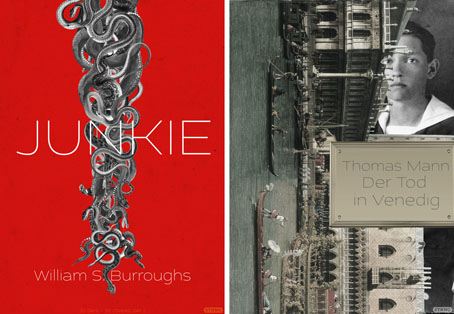
Two cover designs from Eliash Strongowski’s 30 Days—30 Covers project.

My thanks once again to Dennis Cooper for placing this blog on his end-of-year lists. Meanwhile. one of the albums I designed earlier this year, Cold Mission by Logos, made the 30 Best Album Covers of 2013 list at FACT.

• “Many of their more outlandish ideas never saw fruition: an organ powered by an entire factory, an electro-acoustic orchestra mounted on a fleet of airplanes.” Colin McSwiggen reviews Sound in Z: Experiments in Sound and Electronic Music in Early 20th Century Russia by Andrey Smirnov.

Queer Pagan Punk, a major film retrospective of the work of Derek Jarman, will take place in February and March 2014 at the BFI Southbank, London.

• “For over forty years, Iain Sinclair’s work has combined obsessive myth-making with urban despair. But what do we know about him?” asks Fatema Ahmed.

• “Rather than trying to intercept alien communications, perhaps we should go looking for alien artefacts.”

• Mix of the week: Radio Belbury Programme 12, and Winter Hours, the Cafe Kaput 2013 winter mix.

BEEP BEEP. BLOOP BLEEP: Road Runner cartoons soundtracked by a Eurorack synthesizer.

Historia Discordia: Documenting the Origins, History & Chaos of the Discordian Society.

gebbie.jpg

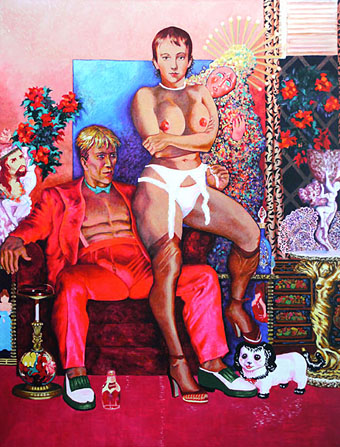
Pink Boy by Melinda Gebbie.

Suffered From The Night: Queering Stoker’s Dracula edited by Steve Berman.

• At Dangerous Minds: An interview with soundtrack composer Cliff Martinez.

Sarah Schoenfeld puts recreational drugs under the microscope.

• Powerplant Art-déco, a set of photos by Romain Veillon.

Adrian Curry chooses the best film posters of 2013.

Portent’s Content Idea Generator

Tarkovsky at Pinterest

The Sea Named Solaris (1977) by Tomita | Is That What Everybody Wants? (2002) by Cliff Martinez | Reyja (2011) by Ben Frost & Daníel Bjarnason

Nigel Kneale’s Woman in Black

wib1.jpg

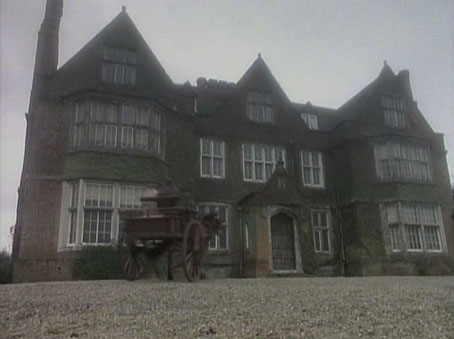
The British television tradition of screening a ghost story at Christmas was filled in 1989 with Nigel Kneale’s adaptation of Susan Hill’s novel The Woman in Black. This isn’t one of the best contributions to the annual ghost drama but at 100 minutes it’s one of the longest, and it has its supporters, some of whom value it above the recent Hammer film production. Seeing as I’d re-watched Nigel Kneale’s major film and TV works earlier this year I thought I’d give The Woman in Black another look. It was better than I remembered although it still left me feeling unsatisfied.

I’ve not read Susan Hill’s book so can’t say how it compares to the television version in any detail. (Wikipedia has a spoiler-heavy list of the differences.) I did see Stephen Mallatratt’s play in 1988, however, the first adaptation of the book which has since become one of London’s most popular theatre productions. The play conjures an effective sense of dread but relies a little too much on loud noises to shock the audience at crucial moments. This is a cheap trick in bad horror films (Wes Craven does it a lot), and it’s just as cheap a trick on a stage. Nigel Kneale may have altered Hill’s story to a degree which apparently displeased her but he didn’t resort to any Craven tricks.

wib2.jpg

The BBC’s Christmas ghost stories have tended to be MR James stories, and The Woman in Black is very much a James pastiche which no doubt helped make it attractive to ITV. All the James hallmarks are there: a man of letters (solicitor rather than a scholar) visiting an isolated part of the English countryside; a lonely house; fearful locals; mysterious deaths; documentary evidence that requires examination; a haunting.

Adrian Rawlins is the young solicitor, Arthur Kidd, given the task of putting the estate of a dead woman in order. Rawlins would have been fine in a smaller role but he wasn’t a good choice for a central character, not when Kidd is on screen every minute of the running time. Far better is the always excellent Bernard Hepton as a genial landowner, a very different role to his sinister Fisher in Robin Redbreast. There’s a lot of solid period detail—Kneale’s dialogue fixes the date at around 1925—and the writing and direction manages to avoid insulting the intelligence. In place of the usual voiceover reading of letters we have Kidd listening to a succession of recording cylinders, an unlikely thing for an elderly woman to be using but it does give the film a connection back to Van Helsing’s device in Dracula. There’s even a surreptitious reference to Kneale’s “stone tape” theory when Kidd says that the ghostly sounds he keeps hearing are like a recording of a terrible event. Director Herbert Wise does some clever hide-and-seek business with the spectral woman, only fumbling things near the end when he makes the mistake of trying to imitate Jack Clayton’s The Innocents. So why does this version still remain unsatisfying?

Continue reading “Nigel Kneale’s Woman in Black”