Weekend links 201

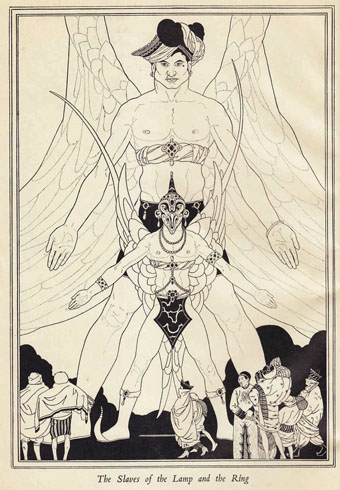
kettelwell.jpg

An illustration by John Kettelwell for The Story of Aladdin and the Wonderful Lamp (1928).

• “The strain in everything I write, of not being taken with the bounteousness of humankind, was also the attitude of both my parents.” Jonathan Meades talking to James Kidd about his forthcoming memoirs.

• 7 Trumps From the Tarot Cards and Pinions (1969), and album of electronic music by Ruth White, is being given a limited vinyl reissue. Related: Ruth White—An American Composer.

• 82 minutes of Michael Moorcock talking in 1972 to Jean-Pierre Turmel, co-founder of the Sordide Sentimental record label.

If Verne’s protagonists often seem to stop short of revelation, it’s because the revelation is not meant to be known. Revelation has a way of putting man back at the front of the evolution chart, moving neatly toward a happily progressing future, out of the darkness and into the light. The characters who embark upon the Voyages Extraordinares move backward and forward and all about, spun around like blindfolded children trying to pin the tail on the donkey. The point of the adventure, after all, is not to have a conclusion; it is to get knocked off your feet.

Stefany Anne Golberg on Journey to the Center of the Earth at 150.

• Photographs of pre-Haussmann Paris by Charles Marville, and photographs by Amy Heiden of industrial ruins.

• Mixes of the week: FACT Mix 427 by Wild Beasts, and Secret Thirteen Mix 108 by Kangding Ray.

• Hear Italo Calvino read selections from Invisible Cities, Mr Palomar and others.

William S. Burroughs in Dub conducted by Dub Spencer & Trance Hill.

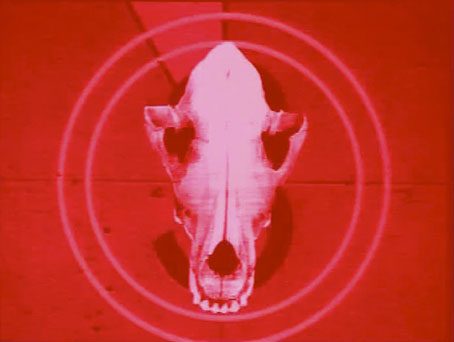
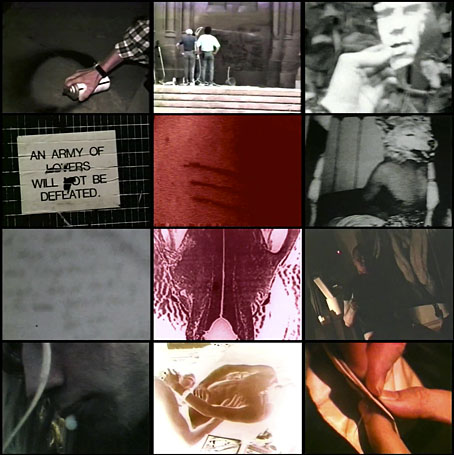
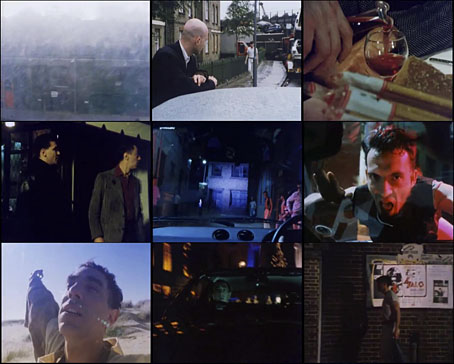
• Cycles, Returns & Rebirth: Alexander Tucker on Derek Jarman.

Harold Budd: the composer with no urge to make music.

The Museum of Imaginary Musical Instruments.

• 80 minutes of Monolake playing live in 1999.

• At 50 Watts: Dyl’s Dance.

Owls And Flowers (2006) by Belbury Poly | Learning Owl Reappears (2011) by The Advisory Circle | The Owls (2013) by Félicia Atkinson

Derek Jarman album covers

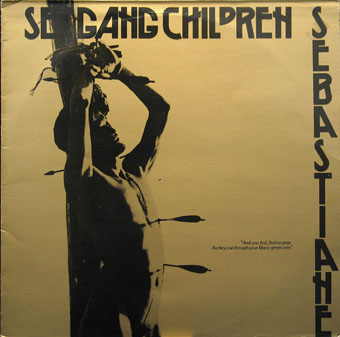
sexgang.jpg

Sebastiane (1983) by Sex Gang Children. A 12″ single using a still from Jarman’s film.

A final post for this Jarman week. Derek Jarman sustained his film career with regular music promo commissions (see this earlier post) but he never produced any album covers as such. What you have here are music releases which happen to feature his artwork or stills from his films. One thing I like about these cover art posts is the disparate music lists they create; the process of investigation also turns up surprises such as a Jayne County album for which he supplied the lettering.

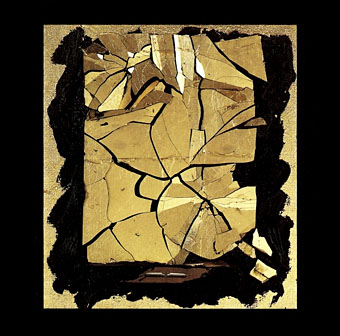
coil.jpg

How To Destroy Angels (1992) by Coil. Painting: Fine Balance (1986).

Coil’s album of remixes and digital mangling of one of their earliest recordings. A great collection of rumbling ambience, some of which I used in my Night Music mixes.

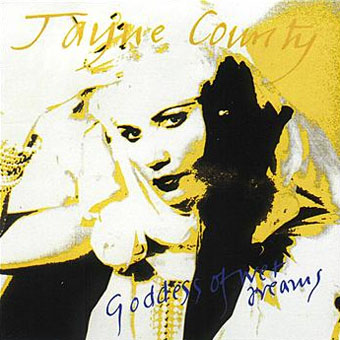
county.jpg

Goddess Of Wet Dreams (1993) by Jayne County. Graphics by Derek Jarman, painting by Michael Spencer Jones, design by Warren Heighway.

towering.jpg

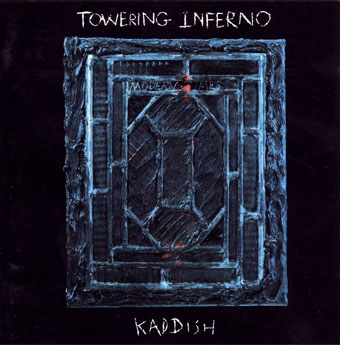
Kaddish (1993) by Towering Inferno. Painting: Modern Times.

An odd album. Towering Inferno were Richard Wolfson and Andy Saunders, who on this album are joined by a large cast of musicians including well-known names such as Márta Sebestyén, Jocelyn Pook, Elton Dean, Chris Cutler, and others. The album is described as “a dream history of Europe in the wake of the Holocaust”, and received great praise on its release although I wonder how often anyone listens to it today. Beautiful pieces of music spoiled throughout by surprisingly hamfisted use of vocal samples.

Continue reading “Derek Jarman album covers”

The Salivation Army, a film by Scott Treleaven

salivation1.jpg

I think of the area of magic as a metaphor for the homosexual situation. You know, magic which is banned and dangerous, difficult and mysterious. I can see that use of magic in the Cocteau films, in Kenneth Anger and very much in Eisenstein. Maybe it is an uncomfortable, banned area which is disruptive, and maybe it is a metaphor for the gay situation.

Derek Jarman, in conversation with Simon Field and Michael O’Pray, 1985

Derek Jarman’s face appears briefly in The Salivation Army (2002), a short history/memoir by Canadian artist Scott Treleaven concerning This Is The Salivation Army, a zine Treleaven produced with a small group of friends from 1996 to 1999. The film itself is credited as the ninth issue, and makes me sorry to have missed the zine in its original incarnation.

salivation2.jpg

The season of Jarman films which is currently running in London is entitled Queer Pagan Punk, and will include a screening of Treleaven’s film next month, along with Glitterbug (1994). The phrase “Queer Pagan Punk” encapsulates the ethos of This Is The Salivation Army, and Treleaven’s narration describes the origin of his zine in a familiar sense of unfocused rage, and also the alienation he and his friends felt towards the vapidities and conformity of contemporary gay culture. Being someone who’s always loathed clubbing, and the consumerist drivel that fills so many gay magazines, this is music to my ears; I just wish the zine been around in the 1980s. The shadow of the Temple of Psychic Youth—which was around in the 1980s—hangs heavily over this project; Derek Jarman had his own connections with PTV/TOPY, of course, being an ally of Throbbing Gristle, and later of Coil. The fanzine may have run its course but Treleaven continues to explore queer paganism in his artwork. The Salivation Army can be seen at Vimeo.

Previously on { feuilleton }
Just the ticket: Cabaret Voltaire
Abrahadabra
The art of Scott Treleaven

Ostia, a film by Julian Cole

ostia1.jpg

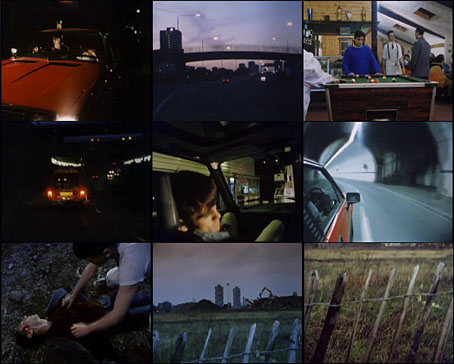
One of Derek Jarman’s many unfilmed projects was PPP in the Garden of Earthly Delights, a study of the last days in the life of director Pier Paolo Pasolini seen through a prism of references to the director’s cinematic work, and also the paintings of Hieronymus Bosch. Jarman’s proposal exists as a synopsis rather than a screenplay, presenting a series of isolated scenes: the film set for the final scene from Salò, or the 120 Days of Sodom (1975); an expensive restaurant; a street at night where Pasolini is cruising for sex; a cheap restaurant; a petrol station; an area of waste ground where Pasolini is killed by the rent boy he’s picked up. The foreground events parallel moments from Pasolini’s life and death, while the background would have featured characters from his earlier films, and various Boschian figures or motifs. The synopsis was printed in the Derek Jarman issue of Afterimage in autumn 1985, and it’s likely that the outline contributed to Julian Cole’s film, Ostia, which was made as a final-year student project a year later.

Ostia is unusual for being a film in which Derek Jarman is the lead actor, although when you see his acting it’s not so surprising that he kept himself out of his own films; Cole says on a commentary track for Ostia that some of Jarman’s performance was so bad it had to be cut. There is the curiosity value of seeing him playing the part of Pasolini, something that Jarman suggested when they were discussing the film.

The title refers to the name of the Tyrrhenian resort near Rome where Pasolini was murdered in November 1975, and the narrative favours the theory that Pasolini wasn’t so much murdered as assassinated by an establishment for whom he was a continual thorn in the side. The unforgettable Salò uses De Sade as a frame to explore the worst period of Italian Fascist brutality at the end of the Second World War. Many of those who were complicit in wartime atrocities were still active in Italian society in 1975, and even without the film’s other excesses they wouldn’t have been impressed by Pasolini’s dwelling on the crimes committed during the period of the Salò Republic, or his allusion to the Marzabotto massacre. Pasolini was also a vocal Marxist, of course (Jarman’s synopsis throws some barbs at this), and heavily critical of the deleterious effects of consumerism on post-war Italian society. The assassination theory carries some weight, in other words, even if the face-value explanation—a rough-trade assignation gone awry—seems just as likely. Philo Bregstein’s documentary, Whoever Says the Truth Shall Die (1981) explores the theory in a roundabout fashion, while Ostia (The Death of Pasolini) (1986) by Coil looks at the tragedy through a symbolic lens. “Kill to keep the world turning.”
ostia2.jpg

Julian Cole was working with a micro-budget so beyond the token presence of an Alfa Romeo like the one Pasolini drove (and which was driven over him on the beach) there’s no attempt at verisimilitude. All the scenes are shot in London locations circa 1986, and the dour skies of the metropolis are no match for the perfect blue of Italy. Cole’s film can’t help but be less ambitious than Jarman’s project but at least it got made. Viewed today Ostia has an unavoidable melancholy quality; Cole says that Jarman had just been diagnosed with HIV when they were making the film, and he refused to kiss actor David Dipnall because of this; at the time little was known about the infectiousness of the illness. Dipnall himself, in an unrelated chain of circumstances, died of AIDS a few years later. Ostia is also a reminder of how Pasolini’s death has gained a martyr-like quality among a certain group of gay men, making it a kind of cinematic equivalent to the martyrdom of Oscar Wilde 70 years earlier. It can be seen as an extra on the BFI’s Derek DVD or watched here.

Previously on { feuilleton }
Derek Jarman In The Key Of Blue
The Dream Machine
Jarman (all this maddening beauty)
Sebastiane by Derek Jarman
A Journey to Avebury by Derek Jarman
Derek Jarman’s music videos
Derek Jarman’s Neutron
Mister Jarman, Mister Moore and Doctor Dee
The Tempest illustrated
In the Shadow of the Sun by Derek Jarman
Derek Jarman at the Serpentine
The Angelic Conversation
The life and work of Derek Jarman
Derek Jarman In The Key Of Blue

jarman.jpg

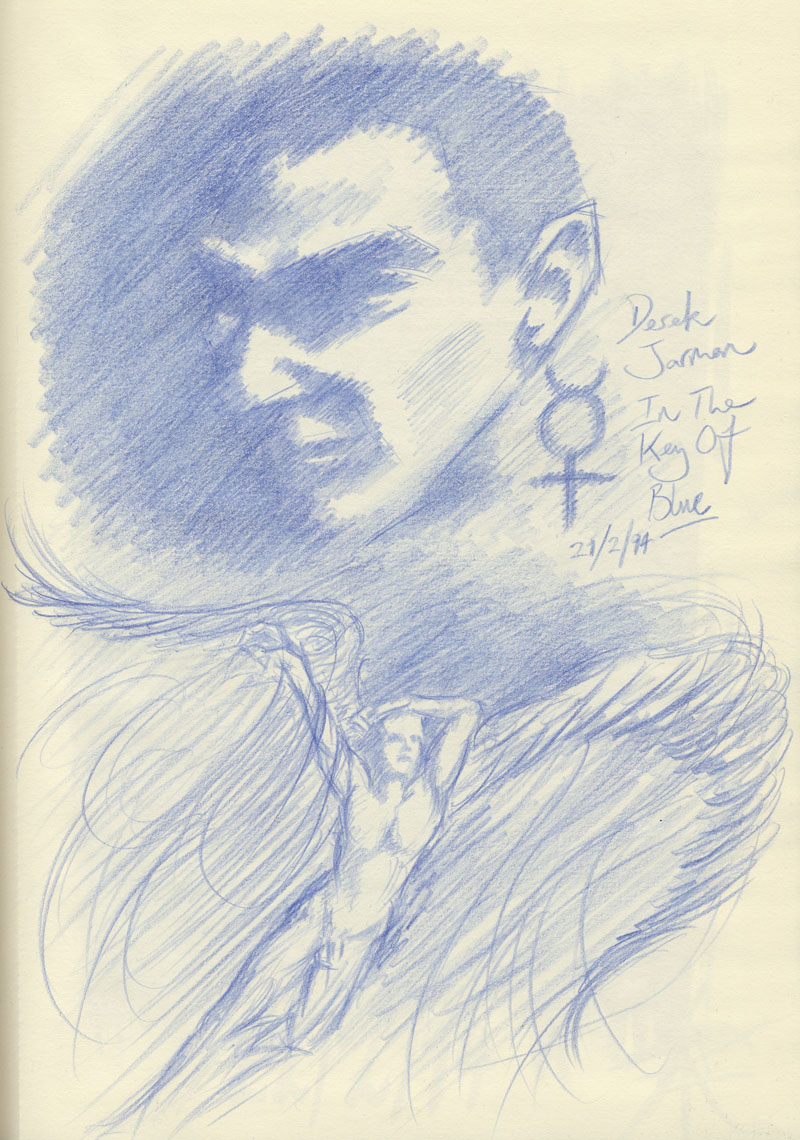
Derek Jarman died 20 years ago today. I was keeping a sketchbook at the time, something I’ve seldom bothered with before or since, and this was my reaction to the news a couple of days later, possibly drawn whilst watching one the TV documentaries which were being screened at the time.

Some current news items:
England’s alchemist, a piece by Philip Hoare
Unseen nightclub film to get London premiere
‘So Mum covered me in cooking oil. Then Dad came home’
Queer Pagan Punk, a season of films by Jarman and others, is currently running at the BFI Southbank.

Previously on { feuilleton }
The Dream Machine
Jarman (all this maddening beauty)
Sebastiane by Derek Jarman
A Journey to Avebury by Derek Jarman
Derek Jarman’s music videos
Derek Jarman’s Neutron
Mister Jarman, Mister Moore and Doctor Dee
The Tempest illustrated
In the Shadow of the Sun by Derek Jarman
Derek Jarman at the Serpentine
The Angelic Conversation
The life and work of Derek Jarman