Design as virus 14: Curse of the Dead

curse.jpg

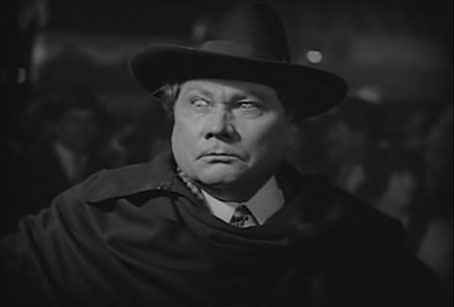
Curse of the Dead (1966).

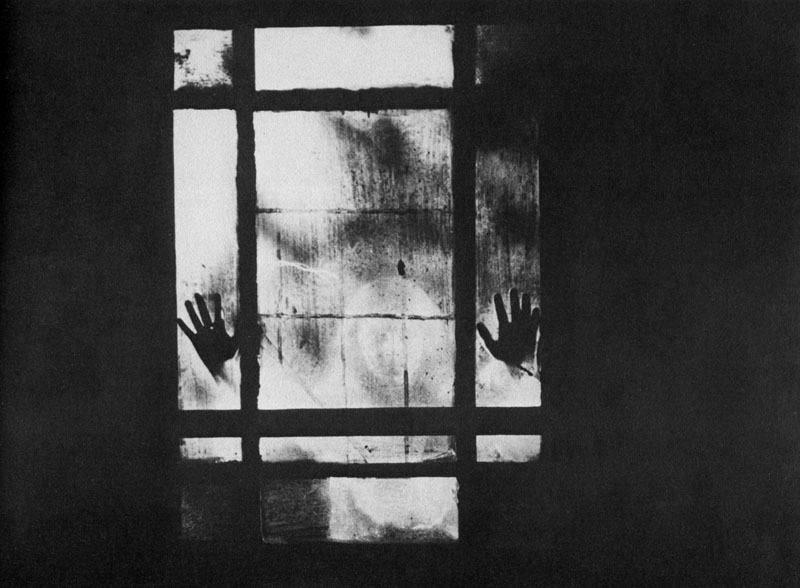
Continuing an occasional series. This photograph, reproduced in Denis Gifford’s A Pictorial History of Horror Movies (1973), intrigued me for years. Gifford’s book is a very good collection of stills from horror films of all kinds, ranging from the earliest days of cinema to the 1970s. The pictures are mostly black-and-white, and are often far more stimulating than the films they would have been promoting. The text generally refers to the films depicted but in the case of this picture there’s only a single credit, Curse of the Dead (1966), a film I’d never heard of. These kinds of mysteries have been banished for good now we have resources like IMDB where you can learn immediately that Curse of the Dead is a Mario Bava film whose original Italian title was Operazione Paura. (It’s also known, with the usual hyperbole, as Kill, Baby…Kill!) “An 18th century European village is haunted by the ghost of a murderous little girl” says the summary. Bava’s films were always visually impressive so it’s really no surprise to find it was one of his.
carnacki.jpg

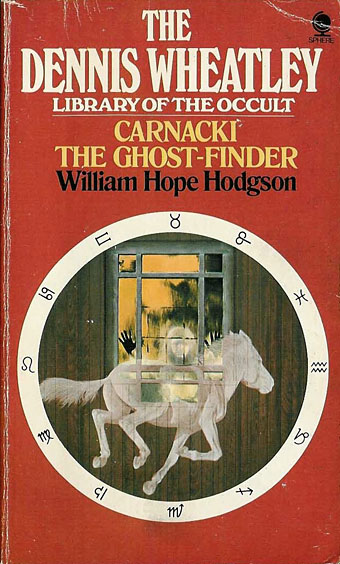
The first repeat usage I know of is this cover from the Dennis Wheatley Library of the Occult series published by Sphere books from 1974–77. Sphere used Wheatley’s name to sell a lot of reprints but the series was substantial and featured a number of titles that would have been appearing in paperback for the first time. Unfortunately the best thing about the covers was the uniform design of the horoscope circle against a coloured background. The quality of the illustrations was very uneven so it’s probably for the best that the artists and photographers went uncredited.
arkham.jpg

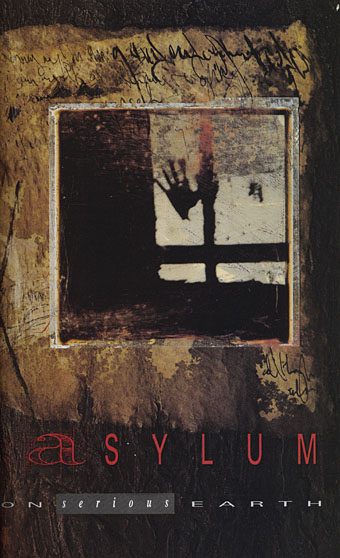
Then there’s one of Dave McKean’s title pages for Arkham Asylum (1989), the heavily symbolic Batman book he created with Grant Morrison. There’s only a portion of the picture but I’d say it’s a good guess he used the Gifford book since at least one of the panels in his earlier Violent Cases was based on another of the Gifford photos.

This isn’t all, I’m sure I’ve seen the Gifford picture used on a record sleeve but there’s little way of discovering which one unless somebody recognises the photo. If anyone knows, please leave a comment. And despite all of this I still haven’t seen Bava’s film even though I’m told it had a strong influence on Twin Peaks. This account at The Horror Digest is slightly disappointing when a colour equivalent of the Gifford still lacks the particulated creepiness of the black-and-white version. More surprising is finding yet another film featuring the arms-out-of-the-walls motif. This obviously requires further investigation.

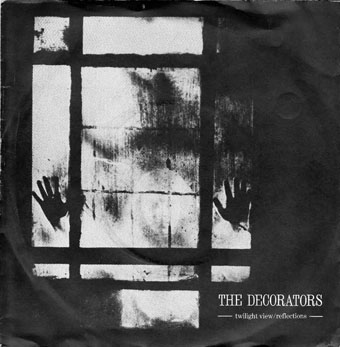
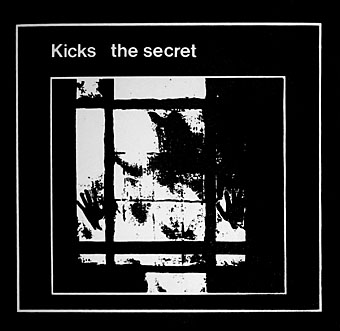
Update: Thanks to Irv in the comments for finding the following singles so quickly. The Decorators sleeve was the one I remembered. (See it larger here.) Kicks were an Australian band. Odd that these were both released in the same year.
decorators.jpg

Twilight View (1980) by The Decorators. Design by Malcolm Garrett.
kicks.jpg

The Secret (1980) by Kicks.

Previously on { feuilleton }
Design as virus 13: Tsunehisa Kimura
Design as virus 12: Barney’s faces
Design as virus 11: Burne Hogarth
Design as virus 10: Victor Moscoso
Design as virus 9: Mondrian fashions
Design as virus 8: Keep Calm and Carry On
Design as virus 7: eyes and triangles
Design as virus 6: Cassandre
Design as virus 5: Gideon Glaser
Design as virus 4: Metamorphoses
Design as virus 3: the sincerest form of flattery
Design as virus 2: album covers
Design as virus 1: Victorian borders
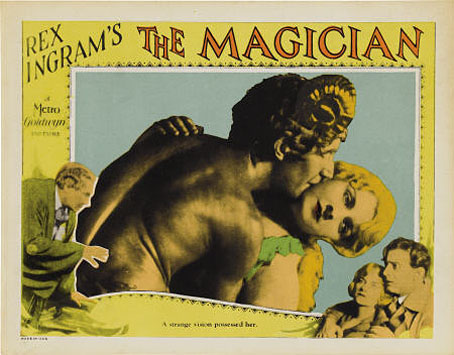
Rex Ingram’s The Magician

magician1.jpg

The Magician (1926), Rex Ingram’s curious occult horror film, receives a rare screening with live music accompaniment at the Brighton Fringe Festival on Tuesday, 22nd May. The film is notable for being based on the 1908 Somerset Maugham novel of the same name whose modern-day magus character, Oliver Haddo, was modelled on Aleister Crowley. The screening will feature an introduction by Gary Lachman, and a live soundtrack by the fabulous Ragged Ragtime Band, featuring members of Blondie, Indigo Octagon, Raagnagrok and Time. Booking details and other information here.

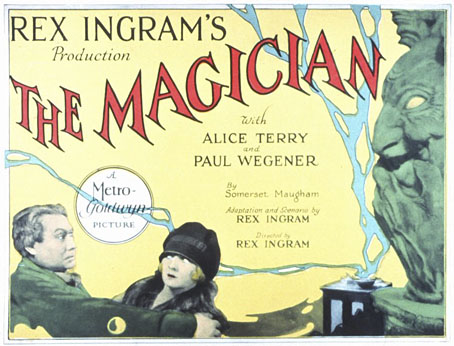
magician2.jpg

Maugham’s book has always been easier to find than Ingram’s film, more’s the pity when the film—despite some flaws—is the superior article. Read today, the novel comes across as a template for the standard Dennis Wheatley tale of middle-class innocents imperilled by grandiloquent villainy. A young couple, Arthur Burdon and his fiancée, Margaret, are pitted against Haddo’s extravagant diabolisms; for assistance they have a friend, Dr Porhoët, a Van Helsing type, older than the couple and with a convenient (but purely intellectual) interest in the occult. Haddo kidnaps Margaret and forces her with hypnosis into an unconsummated marriage. Haddo’s goal is to create artificial life—homunculi—and for that he requires a virgin’s blood. Maugham later described his novel as “lush and turgid”, an honest and accurate appraisal. Aleister Crowley was amused at being portrayed as a “Brother of the Shadows” but pretended to be scandalised by Maugham’s alleged plagiarism which he condemned in a Vanity Fair review that he signed “Oliver Haddo”. The best parts of the novel certainly owe something to other authors, usually the scenes concerning the sinister magus and his occult activities; the rest of the characters are lifeless by comparison. Some of the better passages read like HP Lovecraft writing Dorian Gray, and Maugham not only quotes from Walter Pater but also (uncredited) from Wilde’s Salomé.

magician4.jpg

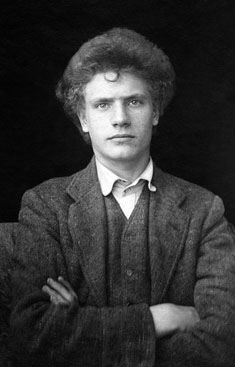
Paul Wegener as Oliver Haddo.

Continue reading “Rex Ingram’s The Magician”

Coming soon: Sea Monsters and Cannibals!

lantern1.jpg

No, not Pirates of the Caribbean III although that film will be with us soon and is certain to contain at least one of the above ingredients. The dubious delights of exploitation cinema have been put back on the map recently by Grindhouse, the double feature from Quentin Tarantino and Robert Rodriguez, but garish melodrama is nothing new in the film world. Silent films had more than their share of sex, violence, monsters and maniacs, and many featured a degree of nudity that wouldn’t be seen again until the late Sixties, thanks to the Hays Code. “Everything in life is exploitation,” Barbara Stanwyck was told in Baby Face (1933) and she went on to prove it by sleeping her way to the top in a film considered by moral guardians of the time to be so scurrilous that its uncensored print remained buried until 2005.

lantern2.jpg

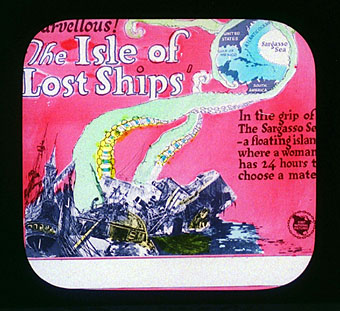
These wonderful hand-tinted plates from the George Eastman archive are lantern slides used to display information about coming attractions, and would have been screened between features as a kind of motionless trailer. The movie trailer as we know it today had been around since about 1910 but it wasn’t until the late Twenties that the regular production and screening of trailers took off. Lantern slides were a cheap way of keeping audiences attentive while the next feature was being prepared.

lantern3.jpg

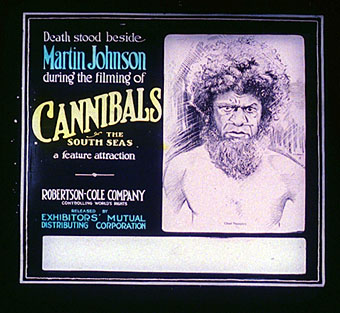
Cannibals of the South Seas was a 1912 documentary by Osa and Martin E. Johnson and it’s a good bet it was a lot more prosaic than this slide implies. The Isle of Lost Ships seems from the picture to be a sea-faring horror tale but turns out to be a 1923 adventure story based on a novel by one Crittenden Marriott and directed by Maurice Tourneur, father of the great horror and noir director, Jacques Tourneur (Cat People [1942], Out of the Past [1947], Night of the Demon [1957]). This first film is now as lost as the becalmed ships of its title but it was remade as an early talkie in 1929 and that film still exists somewhere. Film remakes are also nothing new. The tentacles and Sargasso setting made me suspect Mr Marriott had purloined an idea or two from William Hope Hodgson, writer of a series of excellent horror stories concerning the Sargasso Sea and (in his fiction) its population of tentacled abominations; Dennis Wheatley certainly stole from Hodgson, as I’ve mentioned before. But Marriott’s novel, The Isle of Dead Ships, and the films based upon it, prove to be less interesting than the slide promises. And so we learn a primary rule of exploitation cinema that was well-established even then: promise much but don’t always deliver.

Previously on { feuilleton }
Seamen in great distress eat one another
Druillet meets Hodgson
Rogue’s Gallery: Pirate Ballads, Sea Songs, and Chanteys
Davy Jones

Davy Jones

davy_jones.jpg

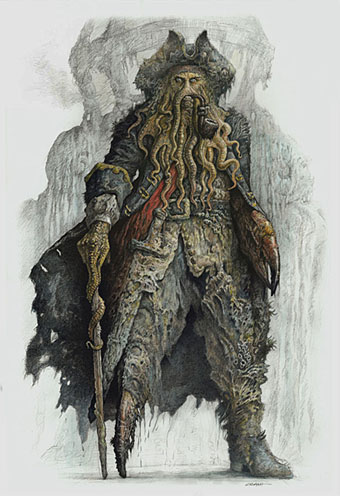
No, not the dreadful singer from The Monkees but he of the undersea locker and also the new villain in Pirates of the Caribbean: Dead Man’s Chest. Bill Nighy plays this splendidly-designed character, with the assistance of some CGI to get those tentacles working. I’ve still not seen the first film but the look of this makes me more interested in the series as a whole.

Aside from William Hope Hodgson‘s sea tales, the pirates plus voodoo/Sargasso Sea angle has rarely been exploited properly in fiction. Tim Powers had a go in On Stranger Tides but the results fell rather flat. In film there’s been hardly anything apart from the Hammer oddity The Lost Continent (1968), based on Uncharted Seas, a Dennis Wheatley potboiler that plundered Hodgson’s Sargasso Sea stories. The new Pirates film may be about to amend this situation; Davy Jones looks like something dreamed up after a heavy diet of Hodgson and HP Lovecraft.

Austin Osman Spare

spare.jpg

Today is the 50th anniversary of the death of one of my favourite artists, Austin Osman Spare.

Like many people in the 1970s, I was introduced to the work of Austin Spare by Man, Myth and Magic, a seven volume “illustrated encyclopedia of the supernatural” published weekly in 120 112 parts by Purnell. My mother was a Dennis Wheatley reader so we had a couple of occult paperbacks in the house, among them one of William Seabrook‘s accounts of voodoo in Haiti and a copy of Richard Cavendish’s wonderful magical primer, The Black Arts, (later retitled The Magical Arts). Cavendish had been chosen as editor of Man, Myth and Magic and included occultist and writer Kenneth Grant on his editorial staff, a decision that gave the book’s producers access to Grant’s collection of Spare pictures. In a rather bold move, they launched Man, Myth and Magic in 1970 with a detail of a Spare drawing on the cover, a work often referred to as The Elemental although the authoritative Spare collection, Zos Speaks has it titled as The Vampires are Coming. It’s a shame that AOS didn’t live for a few more years to see this; after labouring in poverty and obscurity for most of his life he would have found his work flooding Britain, with this first issue on sale all over the country and the cover picture being pasted on billboards and sold as posters. It’s possible there were even television adverts for the book (although I don’t recall any), since there usually were for expensive part works like this.

Continue reading “Austin Osman Spare”