Weekend links 790

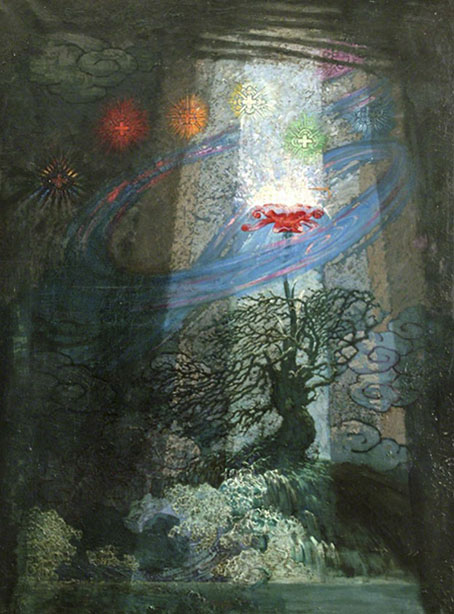
firebird.jpg

Set design by Vladimir Pleshakov for the Ballets Russes’ The Firebird (1923).

• The latest book from Swan River Press is A Mystery of Remnant and Other Absences, a collection of fictions by the late B. Catling. Copies include postcards with accompanying texts by Alan Moore and Catling’s friend and regular collaborator, Iain Sinclair.

• New music: The Loneliness Of The Hollow Earth Explorer Vol. 1 by Arrowounds; The Eraserhead: Music Inspired By The Film Of David Lynch by Various Artists.

• Among the new titles at Standard Ebooks, the home of free, high-quality, public-domain texts: The Purple Cloud by MP Shiel.

• A catalogue of lots at another After Dark: Gay Art and Culture online auction. Homoerotic art, photos, historic porn. etc.

• At Colossal: Laser-cut steel forms radiate ornate patterns in Anila Quayyum Agha’s immersive installations.

• Photographs by Man Ray and Max Dupain showing at the Heide Museum of Modern Art, Melbourne.

• Mix of the week: Isolatedmix 134 by Artefakt.

• At Dennis Cooper’s it’s Anna Karina’s Day.

Three Imposters

Purple Haze (1967) by The Jimi Hendrix Experience | Pilots Of Purple Twilight (1981) by Tangerine Dream | Purple Rain (live, 1985) by Prince & The Revolution

Weekend links 693

sime.jpg

Imaginary (no date) by Sidney Sime.

• Victor Rees was in touch this week to alert me to a one-off screening of The Gourmet (previously), a cult TV drama from 1986 written by Kazuo Ishiguro and directed by Michael Whyte. The screening, which will take place at Swedenborg House, London, on 16th October, is one of a series of retrospective events based around an exhibition from 1974, Albion Island Vortex, by Brian Catling and Iain Sinclair. The film, which is connected to Sinclair’s oeuvre by its use of one of the Hawksmoor churches, will be followed by a Q&A session with Sinclair and Michael Whyte. The screening is free but places are limited so prior booking is required.

• “Alongside his thieves and vagabonds, Hotten includes religious slang, public schoolboy slang, pirate slang, equine stable slang, phrases coined by Dr. Johnson, the slang of softened oaths, workmen’s slang, stagehand slang, shopkeeper’s slang, and dozens of other argots.” Hunter Dukes on A Dictionary of Modern Slang, Cant, and Vulgar Words (1860) by John Camden Hotten.

The Night Land, William Hope Hodgson’s “Dying Earth” doorstop, is republished in an abridged version as part of MIT Press’s Radium Age series, “proto–science fiction stories from the underappreciated era between 1900 and 1935”. All the reprints come with new introductions, the one for Hodgson being by Erik Davis.

• “My partner wanted me to stop buying lava lamps. It was an expensive hobby, and we were running out of room in our apartment.” Nora Claire Miller on the lure of the lava lamp. I only own a single one but I appreciate the obsessive attraction.

• Rambalac takes his roaming camera for a walk through teamLab Planets, Tokyo, a labyrinthine exhibition featuring plenty of water (and wet feet), and a moss garden filled with large silver eggs.

• At Strange Flowers: An examination of the connections between the self-mythologising Marie Corelli and her fictional counterparts in the Mapp and Lucia novels of EF Benson.

• Coming soon from Strange Attractor: Cabarets of Death, a book about the otherworldly cabarets of Montmartre by Mel Gordon, edited by Joanna Ebenstein.

• Among the new titles at Standard Ebooks, the home of free, high-quality, public-domain texts: The Secret Glory by Arthur Machen.

10 essential Japanese reggae releases selected by Kay Suzuki.

• Mix of the week: A Fact Mix by Venus Ex Machina.

Modern Art in Mid-Century Comics.

• RIP Michael Gambon.

Planet Caravan (1970) by Black Sabbath | Planet Queen (1971) by T. Rex | Oszillator Planet Concert (1971) by Tangerine Dream

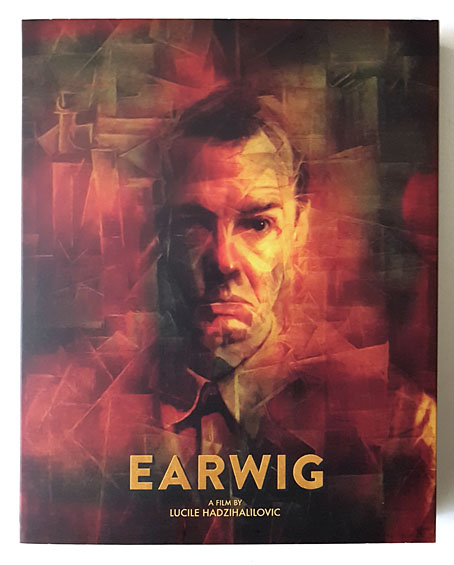
Earwig

earwig.jpg

In today’s post, the third feature film by Lucile Hadžihalilović on blu-ray from Anti-Worlds. I’ve been waiting a while to see this one.

Limited edition blu-ray special features

Director supervised presentation of the film
Original 5.1 surround sound
Newly filmed interview with director Lucile Hadžihalilović
Feature length Documentary on the original novel author Brian Catling
“A New Music” – Short documentary about the unique instrument used extensively in the score
Theatrical trailer
Optional English Hard of Hearing subtitles and audio description for the visually impaired
Limited edition exclusive 52-page booklet containing new writing on the film by Anton Bitel, Geoff Cox and Brian Catling, film credits and technical details
O card Limited edition of 500 copies ONLY from the website!

Weekend links 624

griffiths.jpg

An alphabet designed by Ben Griffiths. Via.

• “From the cellular to the galactic, via Paleolithic cave markings to the trace impressions left by drone photography on our mind’s eye, incorporating dancing plagues, communist psychedelic witches, hyper-sexual fungi, chthonic descents, and skyward ascents, The Neon Hieroglyph weaves together a series of painterly and poetic considerations on a feminized history of the rye fungus Ergot, the chemical basis of LSD.” Coming soon from Strange Attractor: The Neon Hieroglyph, a book, LP and folio of prints by Tai Shani.

• “3rd From The Sun was the last album of Chrome’s imperial phase, and it cemented their status as one of the most inhuman and superhuman rock bands that America ever produced. More people need to recognize.” Agreed. (previously)

• “People often say, ‘How can you be so disciplined?’ It’s easy. Otherwise, I would have to go work for somebody else!” John Waters (again). Also here.

I’ve always thought that literature should be entertaining as well as instructive—a very old-fashioned idea but one that I adhere to. When I set out to write in this way—particularly in this way, a political way, if you want to call it that—I intend to make a donation, to try to give something. There doesn’t seem to me to be any point in giving more misery or exacerbating unhappiness through some kind of hyper-intellectual, pyrotechnical writing about unhappiness and the shit that we all find ourselves in. That’s been done plenty. I think first of all that it doesn’t need to be done any more and second of all there’s a kind of reactionary aspect to it which is that the emphasizing of misery without any anti-pessimism, as you put it, would be simply seduction into inactivity and political despair. In other words, to do politics at all on any level, especially on a revolutionary or on an insurrectionary level, there has to be some anti-pessimism—I won’t say optimism because that sounds so fatuous, futile; but anti-pessimism is a nice phrase. And there’s a deliberate attempt at that in the writing. Then again it’s a matter of my personality, I guess, inclined towards the notion of the healing laugh to some extent. We have an anarchist thinker in America, John Zerzan, who wrote an essay against humour which maybe is one of the things I was reacting against. Even if irony is counter-revolutionary which I think it might be to a certain extent I don’t see any way in which you could say that laughter itself is counter-revolutionary. This doesn’t make any sense to me unless you mean to get rid of language and thought altogether, which is just another form of nihilism. So as long as you’re going to accept culture on some level you’re certainly going to have to accept humour. And as long as you’re going to have to accept humour you might as well see humour as potentially revolutionary.

Peter Lamborn Wilson aka Hakim Bey, who died last month. Many of Wilson’s writings are available at The Anarchist Library. From 2008: A poem for Leonora Carrington

• “It’s such a fundamental question,” says Midori Takada, “why do humans need to make rhythm, and the space that structure creates?”

• “14 Warning Signs That You Are Living in a Society Without a Counterculture” by Ted Gioia.

• A trailer for Earwig, the new film from Lucile Hadžihalilović, based on a story by Brian Catling.

• New music: Aura by Hatis Noit, and Warmth Of The Sun by Pye Corner Audio.

• At Dennis Cooper’s: Spotlight on…SE Hinton Rumble Fish (1975).

• “Hear tracks from the 1980s Peruvian electronic underground”.

Intermittent Eyeball Fodder at Unquiet Things.

West Tulsa Story (1983) by Stewart Copeland | Kála/Assassins Of Hakim Bey (1997) by Coil | Neon Lights (2000) by Señor Coconut Y Su Conjunto

Serious houses: The Lud Heat Tapes, 1979

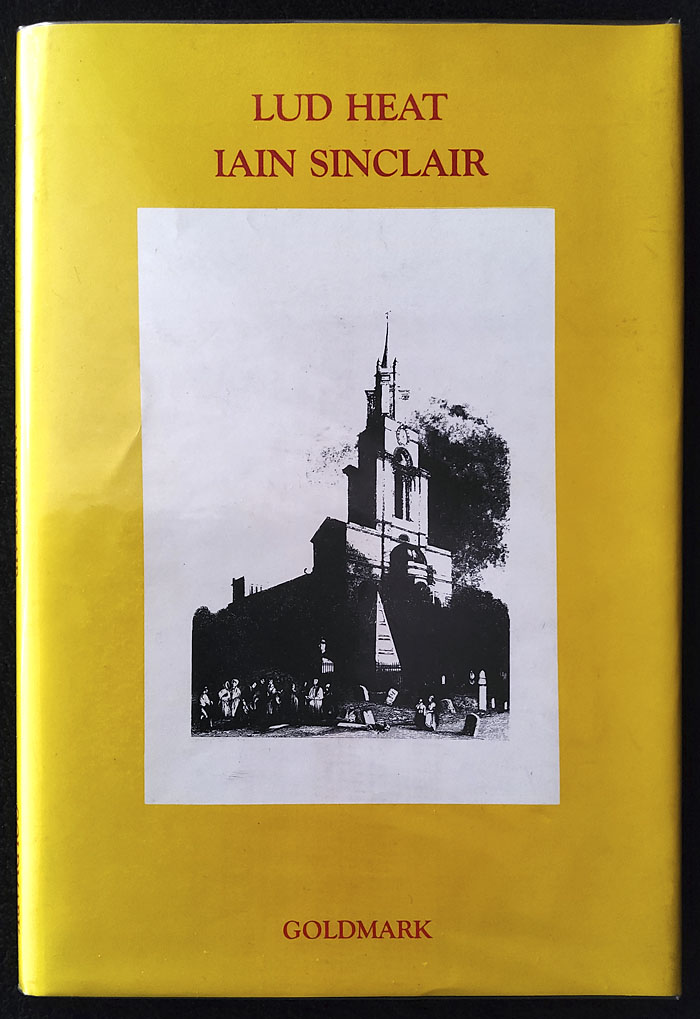
ludheat.jpg
Goldmark hardcover, 1987.

The old maps present a sky-line dominated by church towers; those horizons were differently punctured, so that the subservience of the grounded eye, & the division of the city by nome-wound, was not disguised. Moving now on an eastern arc the churches of Nicholas Hawksmoor soon invade the consciousness, the charting instinct. Eight churches give us the enclosure, the shape of the fear; – built for early century optimism, erected over a fen of undisclosed horrors, white stones laid upon the mud & dust. In this air certain hungers were activated that have yet to be pacified; no turning back, as Yeats claims: “the stones once set up traffic with the enemy.”
—Iain Sinclair, Lud Heat

A serious house on serious earth it is
—Philip Larkin, Church Going

“Serious” is a word with many meanings. The Oxford English Dictionary gives one of these as “attended with danger; giving cause for anxiety”, a definition that wouldn’t suit Philip Larkin’s poem describing a visit to a moribund country church, but which is easily applied to a longer cycle of poems by Iain Sinclair. Lud Heat: A Book of the Dead Hamlets is the collection of writings that lifted Sinclair’s authorial profile out of the poetry ghetto in which he’d been situated throughout the 1970s. He published the first edition through his own Albion Village Press in 1975 but it wasn’t until the arrival of Peter Ackroyd’s Hawksmoor a decade later that wider public attention began to turn in Sinclair’s direction. Lud Heat set out for the first time a series of observations concerning the peculiar and sinister qualities of the churches built by Nicholas Hawksmoor in 18th-century London: Christ Church, Spitalfields; St George’s, Bloomsbury; St Mary Woolnoth; St George in the East; St Anne’s, Limehouse; St Alfege Church, Greenwich; plus those built in collaboration with John James: St Luke Old Street, and St John Horsleydown. The book separates the poetry with prose pieces—diary extracts, accounts of a film viewing and an art exhibition—that anticipate the author’s subsequent explorations of London’s margins and esoterica. Like many of Sinclair’s later writings, the texts in the early editions are accompanied by a variety of illustrations: engravings, contemporary photographs, and a map of London drawn by Brian Catling that posits a network of “lines of influence…invisible rods of force” connecting the churches with each other and with significant locations such as William Blake’s house, Cleopatra’s Needle and so on. Paperback reprints omitted the illustrations* but retained the map which was redrawn by Dave McKean. The new version gave greater emphasis to the Egyptian symbols that Sinclair and Catling had scattered across the city: jackal-headed Anubis as the presiding deity of the Isle of Dogs.

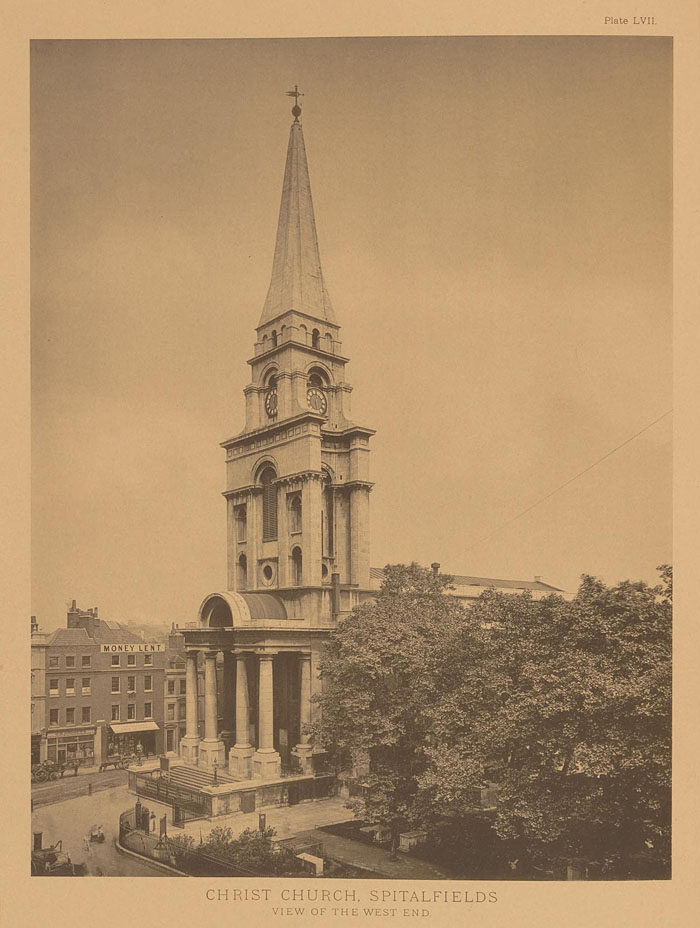
christchurch.jpg

Photo by Charles Latham from London Churches of the XVIIth and XVIIIth Centuries (1896) by George H. Birch.

Lud Heat is a beguiling and potent book; it’s also a book that’s of its time in its suggestion of malefic “rods of force” scored across the capital. Sinclair’s map may be the earliest artistic development of a process begun in 1969 when John Michell published The View Over Atlantis, an elaboration of ideas set forth in another of his books, The Flying Saucer Vision. Michell’s free-wheeling speculations gave new life to the innocuous studies of Alfred Watkins, inflating amateur archaeological ruminations into full-blown Aquarian metaphysics. Where Watkins considered that “ley lines” (a term of his own invention) might have been ancient trading routes, Michell’s enthusiasm for the full range of Fortean phenomena transmuted the alleged paths into channels of unspecified “Earth energy”, flying-saucer guides and the axes of a sacred geometry. Other crank scholars were eager to follow Michell’s lead, leaving an opening for Sinclair to adopt the conceit for its poetic resonances. New Age trappings were inverted to reveal a darker pattern more suited to London’s history of plague, murder and mass destruction. (The Hawksmoor churches had been built to compensate for the devastations of the Great Fire of 1666; two of them were hit by bombs during the Blitz, with one being damaged beyond repair.)

This isn’t to suggest that Sinclair was borrowing directly from Watkins and Michell; in an interview he mentions an earlier precursor of both his map and Watkins’ ley lines in Prehistoric London: Its Mounds and Circles (1914) by Elizabeth O. Gordon. But something was in the air in the 1970s. Lud Heat appeared shortly before the release of a pair of albums that borrowed heavily from Michell’s books—Green (1978) by Steve Hillage, and Blake’s New Jerusalem (1978) by Tim Blake—while two TV serials exploited the idea of ley lines as channels of Earth energy, Children of the Stones (1977) and Nigel Kneale’s Quatermass (1979). Lud Heat stands apart from these works by concentrating on urban structures rather than isolated monoliths and ancient pathways. The suggestion that the city of London could be home to mysterious “rods of force” is an especially intriguing one, hence the appropriation of the idea by Peter Ackroyd in Hawksmoor, and Alan Moore in From Hell. Any church of a sufficient size or age is a kind of time machine, maintaining in its appearance and its grounds a pocket of history separated from the changes that take place around it. The churches in Lud Heat are also batteries of stone, impregnated with the unspent energies of the dead who lie in their crypts. These latent forces overflow their containers, spilling into the streets beyond the church walls. Sinclair has always been adamant that his Lud Heat map is a fabrication; the degree to which he believes in the rest of his thesis is for the reader to decide. It is a fact that St George in the East is close to the location of the Ratcliffe Highway Murders of 1811 (Sinclair includes a illustration of the murderer’s corpse in Lud Heat), while Christ Church, Spitalfields, sits at the centre of maps of the Jack the Ripper murders. The fifth and most brutal of these occurred a short distance from that colossal porch on the opposite side of Commercial Street. “Dead Hamlets” also has many meanings.

Continue reading “Serious houses: The Lud Heat Tapes, 1979”