Weekend links 812

satantango.jpg

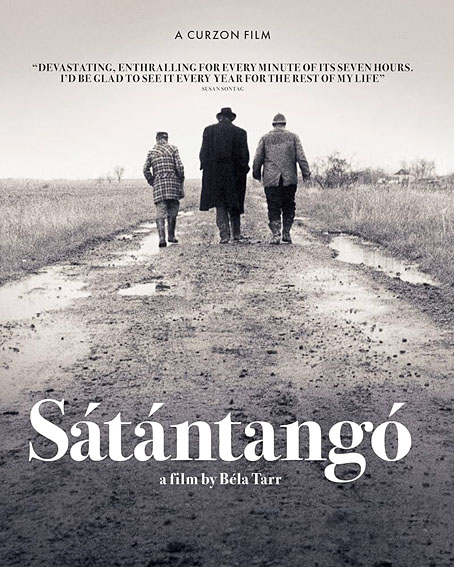
• RIP Béla Tarr. I came late to Tarr’s films, he’d retired from directing by the time I worked my way through most of his oeuvre in 2019. As I’m always saying: better late than never. What I never expected from reading reviews was the irreducible strangeness at the heart of the later films, as well as their meticulous construction. With regard to the latter, mention should be made of the director’s regular collaborators: Ágnes Hranitzky (wife, editor and co-director), László Krasznahorkai (writer), and Mihály Víg (composer).

More Tarr: “The whole fucking storytelling thing is everywhere the same. That’s why I decided I have to do my movies.” Tarr talking to R. Emmet Sweeney in 2012; and at Criterion, Béla Tarr: Lamentation and Laughter by David Hudson.

• “When [Fela Kuti] first saw Lemi Ghariokwu’s work, he said, ‘Wow!’ Then he plied him with marijuana and asked him to design his album sleeves. The artist recalls their extraordinary partnership – and the day Kuti’s Lagos HQ burned.”

• At Smithsonan Mag: “Hundreds of mysterious Victorian-era shoes are washing up on a beach in Wales. Nobody knows where they came from.”

• At Ultrawolvesunderthefullmoon: The collage art of Wilfried Sätty.

• At the BFI: Leigh Singer selects 10 great Lynchian films.

• At Unquiet Things: The vast luminous art of Andy Kehoe.

• At Dennis Cooper’s it’s another Jan Švankmajer Day.

• New music: Light Self All Others by Tarotplane.

• At I Love Typography: Heart-shaped books.

• At Colossal: Luftwerk.

• Sailin’ Shoes (1972) by Van Dyke Parks | Dead Man’s Shoes (1985) by Cabaret Voltaire | New Shoes (2007) by Angelo Badalamenti.
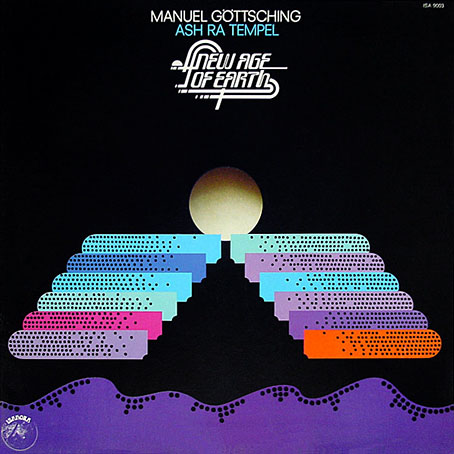
Manuel Göttsching, 1952–2022

ashra.jpg

Cover design for the French release by Peter Butschkow.

Another post about the recently deceased; my apologies. In an unhappy coincidence, Angelo Badalamenti’s death was also announced today. 2022 has been one of those years when you wish the good people could stick around for a while longer.

gottsching.jpg

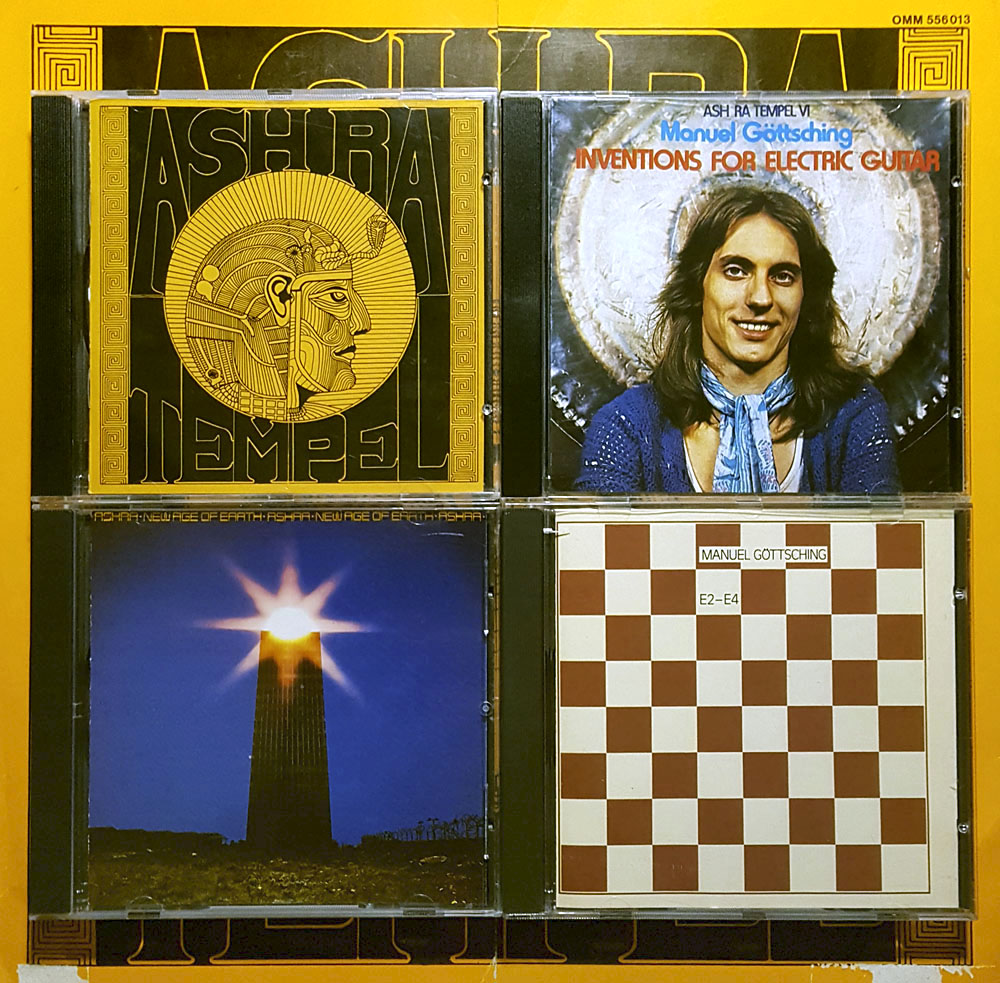
upper left: Ash Ra Tempel (1971) by Ash Ra Tempel; upper right: Inventions For Electric Guitar (1975) by Ash Ra Tempel/Manuel Göttsching; lower left: New Age Of Earth (1976) by Ashra; lower right: E2–E4 (1984) by Manuel Göttsching.

If I had to make a choice, these discs are my four favourite Göttsching-related releases, although I’m partial to just about everything he was involved with, whether under his own name, in Ash Ra Tempel, Ashra or The Cosmic Jokers, the fake group concocted by Rolf-Ulrich Kaiser. The Ash Ra Tempel debut is a power trio on a Kosmische voyage, and remarkably assured considering that two of the players were still in their teens. Inventions For Electric Guitar is really Göttsching’s first solo album, a demonstration that you could create music that sounded “electronic” (in the Tangerine Dream sense) with nothing more than an overdubbed guitar, an echo unit and a four-track recorder. As for New Age Of Earth, if you can look past the hippyish title you’ll find one of the finest synthesizer albums of the decade, one that just happens to be made by a guitarist. E2–E4 is the album that took these explorations further while also predicting future developments. There was nothing else like it in the mid-1980s. The techno-heads who contribute to its inflated reputation only ever listen to vinyl but on CD it’s a single piece of music that runs for 59 minutes.

ashra2.jpg

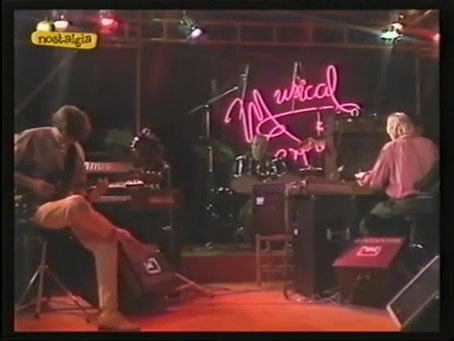
Attention from those techno-heads has ensured that there’s a lot of live footage of Göttsching’s Ashra line-ups in later years. There’s very little from the 1970s or 80s, unfortunately, but Göttsching, Lutz Ulbrich and Harald Grosskopf did make this appearance on Musical Express for Spain’s Televisión Española in 1981. This was the same programme that filmed Vangelis improvising in his studio, embracing opportunities missed by the BBC. ¡Gracias!

• “Manuel Göttsching laid the groundwork for generations of electronic musicians,” says Brian Coney.
• From 2017: “Everything was in the moment.” Manuel Göttsching discussing his career with Robert Barry.

Weekend links 625

styrsky.jpg

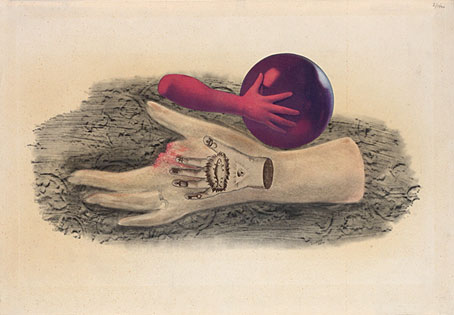
Hand (1940) by Jindřich Štyrský.

• “I love very much Symbolist painters like Odilon Redon, Ferdinand Knopf or Léon Spilliaert. Or Nordic European painters such as Munch or Gallen-Kallela. I like the way they often mix nature and mythology. Some Surrealist painters are very inspiring too: De Chirico, Tanguy, Toyen, Styrsky, or Dorothea Tanning, for instance.” Lucile Hadžihalilović talking to Mark Cousins about her new film, Earwig, and her approach to cinema.

• “It was no accident that Mishima chose to experiment with science fiction. It was a genre he had long admired. He adored Arthur C. Clarke, and lavished praise on Godzilla…” Alexander Lee on Yukio Mishima’s sole venture into science fiction, Beautiful Star.

• Old music: Roforofo Fight by Fela Kuti, a great favourite round here, is receiving a 50th anniversary reissue.

Readers of Berlin’s Third Sex were confronted with a whole fête galante of misfits, deviants, and sexual mutineers cavorting on the legal edgelands of society. There’s the “gathering of obviously homosexual princes, counts and barons” discussing Wagner, the women-only ball where a “dark-eyed Carmen sets a jockey aflame”, the drag act burlesquing Isadora Duncan, a café in the city’s north where Jewish lesbians play chess, gaggles of gay labourers meeting up to gossip before tending to their needlework, the Russian baron distributing alms to hustlers in the Tiergarten, a canal-side tavern where soldiers from the nearby barracks find gay men only too willing to pick up their tab, and the encrypted classified ads with which the lonesome and horny sought to make the vast metropolis just a little smaller.

James Conway on the pioneering sexology of Magnus Hirschfeld

• At Aquarium Drunkard: The Miles Davis Septet playing live at Chateau Neuf, Oslo, in 1971.

Industrial Symphony No. 1 by David Lynch & Angelo Badalamenti featuring Julee Cruise.

• Mix of the week: Ghosts & Goblins 1 by The Ephemeral Man.

• New music: The Homeland Of Electricity by Scanner.

• Steven Heller’s font of the month is Pufff.

• Galerie Dennis Cooper presents Ilse Bing.

• RIP Paula Rego and Julee Cruise.

Teacher Of Electricity (1970) by Old Gold | Electricity (1980) by Orchestral Manoeuvres In The Dark | Night Electricity Theme (2017) by Dean Hurley

Weekend links 431

eckman-lawn.jpg

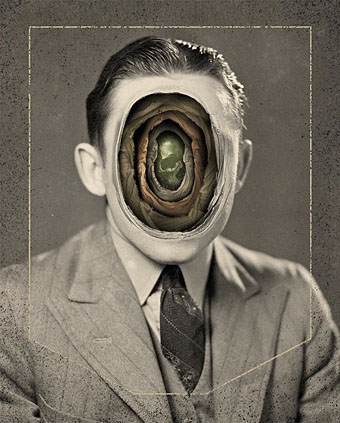
Postcard collage by Alex Eckman-Lawn.

• “He deserves to be a major figure not only in the history of Japanese music, but in popular music writ large.” Geeta Dayal on Haruomi Hosono, a musician whose solo albums from the 1970s are reissued this month by Light In The Attic.

Erica X Eisen reviews Black Light: Secret Traditions in Art since the 1950s, an exhibition of occult art at the Barcelona Contemporary Culture Centre. Related: Gary Lachman‘s talk from the same exhibition.

• Mixes of the week: Jesús Bacalão’s Light Entertainment Programme 2, Secret Thirteen Mix 265 by Alexander Tucker, and FACT Mix 672 by Rian Treanor.

Whenever horror is criticised, it is criticised for staging a dark carnival of physicality. Perhaps the only sort of media we moralise more than we do horror is that other mainliner of bodily response, pornography.

Horror’s historical ghettoisation has meant that weightier, smarter horror reliably gets labelled as something else. The finest films of our current golden age have been dubbed “elevated horror” and “post-horror”. In literary circles, works of horror seen as sufficiently cerebral get relabelled “Gothic”. It’s certainly true that great horror is always about more than gore. But we should be careful not to gentrify the genre by cleansing it of everything but the philosophy.

MM Owen on the perennial attractions of a perennially despised genre

• “Netflix is a woeful service,” says Jeremy Allen who prefers DVD/Blu-ray to streaming video (as do I). Related: The problem with film aspect ratio on Netflix.

• The Thought Gang album, a Twin Peaks-related collaboration between David Lynch & Angelo Badalamenti from 1993, will be released next month.

Tangerine Dream: Sound From Another World: a TV documentary from 2016. In German but with auto-translated subtitles.

The Thing’s Incredible! The Secret Origins of Weird Tales by John Locke.

Haute Macabre Staff Favorites: Tarot Decks

First Light (1980) by Harold Budd & Brian Eno | Blue Light (1993) by Mazzy Star | Black Light (1994) by Material

A mix for Halloween: Teatro Grottesco

Teatro Grottesco by Feuilleton on Mixcloud

Presenting the tenth Halloween playlist, and another mix of my own. This year the compilation honours the recent Penguin collection of stories by Thomas Ligotti, hence the title and dedication. Whether a Ligotti theme can be perceived in the arrangement depends on the familiarity of the listener with Ligotti’s brand of weird fiction, but even if the mix communicates little in this direction having something to aim for helped me narrow the focus. The presence of David Lynch-related pieces is justified by Ligotti’s inclusion in a collection of fiction inspired by Lynch’s films.

As to some of the other selections: French composer Igor Wakhévitch is a {feuilleton} favourite whose orchestral works are unique, bizarre and often disturbing; Jean-Claude Eloy is another French composer who (like Tod Dockstader) has used electronics to create doom-laden dronescapes; and the piece by Sinoia Caves is an extract from the nightmarish bad-trip sequence in Beyond the Black Rainbow, a film directed by Panos Cosmatos.

Recent changes at Mixcloud mean that listeners can no longer see a tracklist before playback so here’s the detail:

Alan R. Splet, David Lynch, Ann KroeberTextured Night Wind Gently Rises And Falls (2000)
Igor WakhévitchErgon (1970)
CoilCardinal Points (1988)
Tod DockstaderMyst (2005)
Julee CruiseInto The Night (1989)
Jean-Claude EloyFushike-e (1er Extrait) (1979)
Mica LeviLonely Void (2014)
Stars Of The LidTaphead (1996)
Belbury PolyA Thin Place (2005)
Einstürzende NeubautenArmenia (1983)
Igor WakhévitchAmenthi (Attente De La Seconde Mort) (1973)
Sinoia Caves1966 – Let The New Age Of Enlightenment Begin (2014)
Angelo BadalamentiDark Mood Woods/The Red Room (2007)
Bohren & Der Club Of GoreThe Art Of Coffins (2002)

Previously on { feuilleton }
A mix for Halloween: Unheimlich Manoeuvres
A mix for Halloween: Ectoplasm Forming
A playlist for Halloween: Hauntology
A playlist for Halloween: Orchestral and electro-acoustic
A playlist for Halloween: Drones and atmospheres
A playlist for Halloween: Voodoo!
Dead on the Dancefloor
Another playlist for Halloween
A playlist for Halloween