Labyrinths

labyrinth.jpg

The Breamore Miz-Maze, Hampshire. Photo by Jim Champion.

As part of the work-related research this week I was looking for designs of old turf labyrinths. It turns out I have two pages of the things in a book I’d earlier considered dropping into Oxfam so that particular volume may have gained a reprieve. Before I went to the bookshelves I’d been browsing the rather wonderful Labyrinthos site which is just the kind of detailed resource you hope to find in these circumstances. There we find an explanation for the difference between a maze and a labyrinth (the general rule being that a maze has more than one choice of route), and a wealth of examples from ancient history to the present day. I’ve long been fascinated by the labyrinths found in churches and cathedrals, of which the most famous example is the one in Chartres Cathedral. They’re a rare incidence of a symbolic device in Christian architecture which is near-universal, and which has clear antecedents in the labyrinths and mazes found in ancient temples. Labyrinthos has a guide to some of the surviving examples to be found in England. As to England’s turf labyrinths, there’s a page devoted to those here with a number of photos.

Previously on { feuilleton }
Jeppe Hein’s mirror labyrinth

Weekend links 75

darde.jpg

Eternal Pain (1913) by Paul Dardé. (And also here)

Rain Taxi caused a stir this week with its savaging of Hamlet’s Father by science fiction writer Orson Scott Card. The book is another of Card’s blatherings about the hell of being homosexual dressed in garments stolen from the unfortunate William Shakespeare. Rain Taxi made the obvious point about many of Shakespeare’s sonnets being homoerotic. For my part I was more appalled by the quoted extract which reduced one of the greatest plays in the language to that lifeless, cardboard-character-speak which is endemic in bad genre writing. News of the travesty quickly spread to gay news blogs, The Outer Alliance and elsewhere, ensuring that what’s left of Card’s reputation continues to spiral down a Mel Gibson-shaped black hole.

• “Sounds only like itself, like no one before or after.” Julian Cope on Tago Mago by Can which will be reissued in a new edition in November. Nice to see the return of the original sleeve design, something I saw once in a record shop then didn’t see again for years. For a long time I thought I’d imagined it. Related: two German art exhibitions inspired by the group.

The Responsive Eye (1965), a catalogue for the MoMA exhibition that launched Op Art. Also at Ubuweb: La femme 100 têtes, a film by Eric Duvivier based on the collage work by Max Ernst.

• More apocalyptic art: William Feaver on John Martin whose exhibition will be opening at Tate Britain later this month. There’s a trailer here.

Borges and I, an essay by Nandini Ramachandran. Related: Buenos Aires: Las Calles de Borges, a short film by Ian Ruschel.

• “Who was JG Ballard? Don’t ask his first biographer,” says Robert McCrum.

Biologically-inspired fabric and material design by Neri Oxman.

• Cross-pollinating subgenres: “Steampunk ambient” at Disquiet.

In the Shadow of Saturn, a photo by the Cassini spacecraft.

• The art and fashion designs of Alia Penner.

Fleet of hybrid airships to conquer Arctic.

• RIP Jordan Belson, filmmaker.

• Ten years of Ladytron whose new album is released on the 12th of September: Playgirl (2001), Seventeen (2002), Destroy Everything You Touch (2005), Sugar (2005), Ghosts (2008), Ace Of Hz (2011).

Taj Mahal panoramas

tajmahal1.jpg

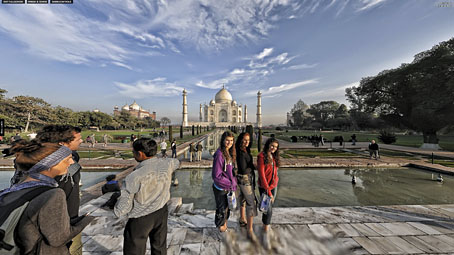
The standard view plus tourists by Michael Maniezzo.

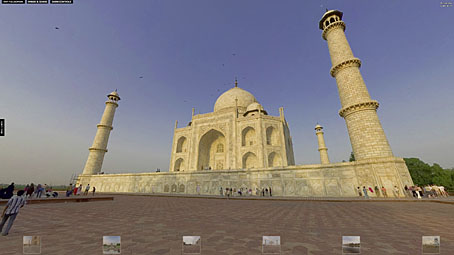
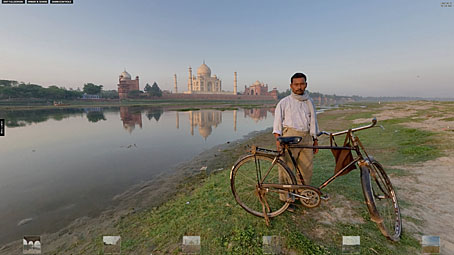
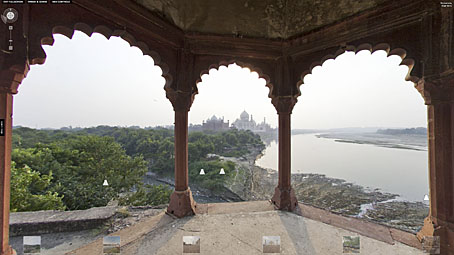
Jeffrey Bartholet has a lengthy piece at Smithsonian Magazine entitled How to Save the Taj Mahal?, a brief history of the monument and also an examination of the preservation problems the site faces. Reading his essay it occurred to me that despite the Taj Mahal being one of the world’s most famous and recognisable buildings the pictures we’re shown of it are nearly always the same, showing a view along one of the canals that runs through the gardens towards the monument. The panoramas at 360cities immediately rectify this with some stunning shots showing the site up close or from a considerable distance. The latter selection are unlike any I’ve seen before, and give a great sense of the river which runs around the Taj Mahal complex and the countryside around the city of Agra. Bartholet notes that five million people visited Agra between March 2010 and March 2011, many of them adding to the damage the monument has already sustained. People may rail against virtual tourism as an iniquity but where sites such as this are concerned it’s a lot less polluting and destructive than the alternative.

tajmahal2.jpg

Sunset by Justin Imhoff.

tajmahal3.jpg

The Yamuna River by Justin Imhoff.

tajmahal4.jpg

A view by Roger Berry from nearby ruins.

Elsewhere on { feuilleton }
The panoramas archive

Weekend links 74

johnnyyesno.jpg

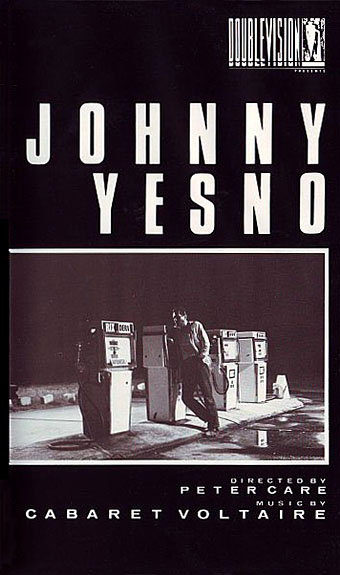
Johnny YesNo video cover, 1983. Design by Neville Brody.

Being a Cabaret Voltaire enthusiast of long standing it was good to hear last week about the imminent reappearance of Johnny YesNo, an hour-long film by Peter Care for which the Cabs provided the soundtrack. Mute Records will be releasing Care’s debut on DVD in a set which includes two versions of the film together with two music CDs. I never got to see the original release on CV’s VHS label, Doublevision; for most of the 1980s I didn’t even have a colour TV never mind a video recorder so I missed all CV’s videocassettes aside from Gasoline In Your Eye. The new edition will be available in November. Brainwashed has a list of the contents while The Quietus posted a clip from the new “redux” version. (And before anyone tells me it’s on YouTube…yeah, everything is on YT in shitty quality and barnacled with the misanthropy-inducing drivel which passes there for comment. If I’m going to watch something for the first time I’d prefer it to be on a shiny disc, thanks.)

• The world has noticed Terrence Malick again following the release of The Tree of Life. Malick’s second feature is returning briefly to UK cinema screens, an event which prompted David Thomson to ask Is Days of Heaven the most beautiful film ever made?

• This week in imaginative art: S. Elizabeth on The Fantastical Fairy Tale Art of Sveta Dorosheva, AS Byatt on the strange paintings of Richard Dadd (there’s another Dadd article here), and Rick Poynor on Chris Foss and the Technological Sublime.

Ethan Hein demonstrates how Alan Lomax came to have copyright control over many songs he had nothing to do with simply by recording traditional music.

Visual Vitriol:  The Street Art and Subcultures of the Punk and Hardcore Generation, a book by David Ensminger.

• More Club Silencio: Inside David Lynch’s Paris nightclub and a gallery of photos.

Histoire un-Naturelle, selected works by Ruth Marten.

Come hither: The deceptive beauty of orchids.

Facsimile Dust Jackets.

• More Peter Care: Just Fascination (1983) by Cabaret Voltaire | Sensoria (1984) by Cabaret Voltaire | Rise (1986) by Public Image Ltd.

The recurrent pose 43

guillemain.jpg

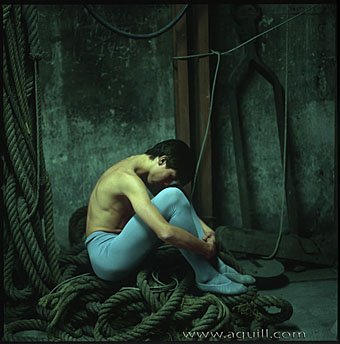
Not had one of these posts for a while but the theme still seems inexhaustible. The cute dancer above is Mathieu from a set I linked to earlier by Jean-Philippe Guillemain.

Below there’s a pose that’s closer to Flandrin’s original, complete with seascape and a no doubt uncomfortable rocky perch. This one is from a set of photos by Tony Patrioli at Homodesiribus, and was a tip from Mexicology. (Thanks!)

flandrin.jpg

Elsewhere on { feuilleton }
The recurrent pose archive