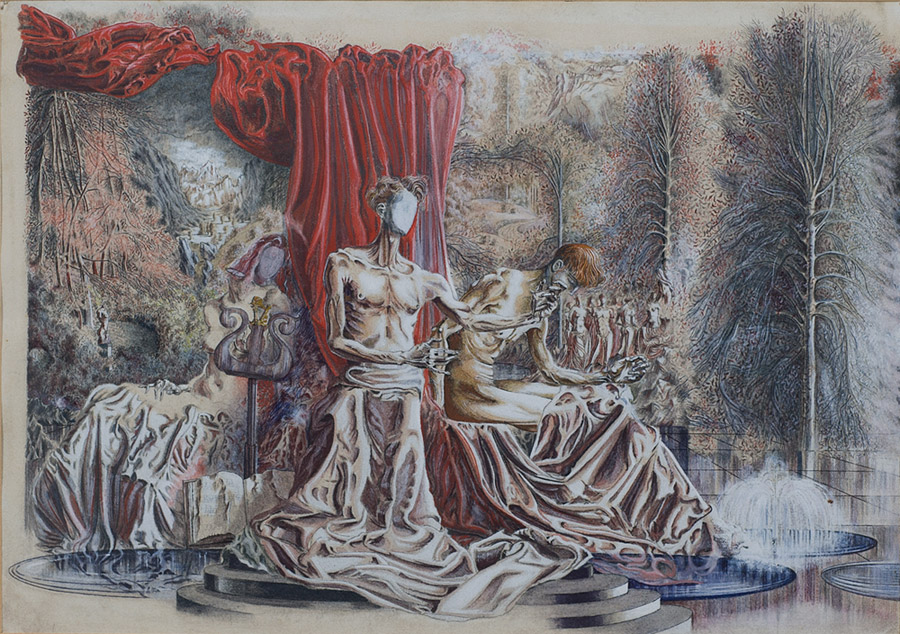
The art of Robin Ironside, 1912–1965

ironside1.jpg

Rossetti’s Willow Wood (1944).

In one of those odd coincidences that occur from time to time, a picture by Robin Ironside is featured in a book I’ve been reading this week just as news arrives of a forthcoming talk about Ironside’s strange paintings. The book is Baroque Baroque by Stephen Calloway, while the talk is being given by the artist’s niece, Virginia Ironside, at the Viktor Wynd Museum of Curiosities, Fine Art & Natural History in London on April 21st. (Details here.)
ironside2.jpg

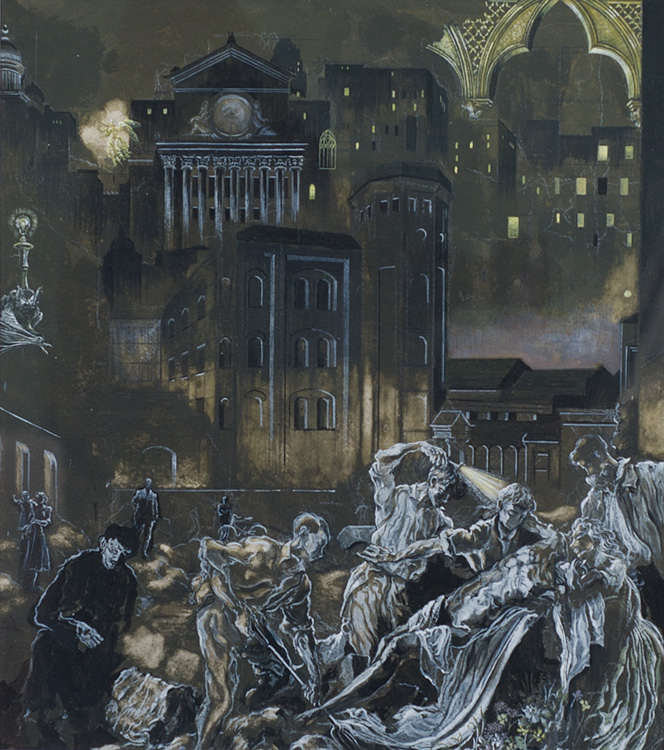
Secret burial (1954).

I have to admit that I’d not encountered Ironside’s work until now despite a long-term fetish for unusual or unfashionable art. This isn’t too surprising since he and his fellow Neo-Romantics (a term he coined) had the misfortune to be working during a period that was deeply antagonistic towards this kind of painting. Rex Whistler is the most popular exponent of the style but Ironside’s art has the added attraction of a vaguely Surrealist flavour without any of the absurdities that usually ruin English attempts to follow Dalí and company. The Ironside website has further examples of his paintings plus designs for the theatre and some illustration work. For those who can’t attend The Last Tuesday Society there’s a lengthy reminiscence by Virginia Ironside about her fascinating uncle.
More Alberto Solsona

solsona01.jpg

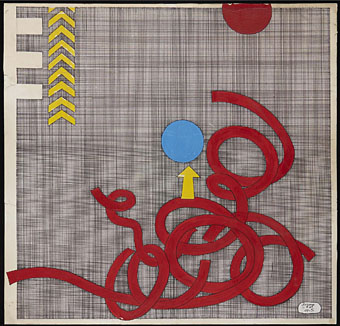
Opus 5 (1968).

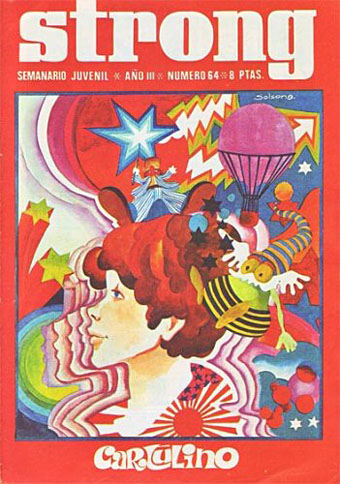
It’s dismaying to learn that Alberto Solsona, the creator of the wonderful Agar-Agar, was only 41 when he died in 1988. It’s also a little disappointing to discover that his work for comics is the least part of an artistic career begun in the late 1960s; I’d been hoping there might be other work in the same style. Solsona’s early paintings are very much in the Pop Art sphere which makes them more attractive to me than his later shift into a form of Abstract Expressionism. Between painting he was working as a book illustrator and a comic artist in magazines for children. Among the examples of the latter the page from Strong (1971) is the closest to Agar-Agar, unsurprisingly when they both date from the same period. This museum page has examples of many more paintings and prints.

solsona02.jpg

Strong (1971).

solsona03.jpg

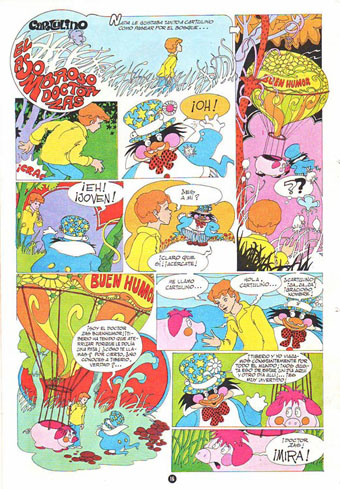
El asombroso doctor Zas (1971).

Solsona also had a humorous strip about King Arthur in Strong but I prefer the drawing style in this one, yet another example of the diluted psychedelic graphics that filtered into children’s stories in the early 70s. (See this post.)

solsona04.jpg

Símbolos (1971).

Not very surprising seeing American symbols mixed with swastikas—the war in Vietnam provoked many such responses—but I wonder how much of a risk it was to do the same with the Spanish flag when the Franco regime was still in power. This painting also refers to Superman, a character that Agar-Agar takes a dig at.

Continue reading “More Alberto Solsona”

Weekend links 253

mackey.jpg

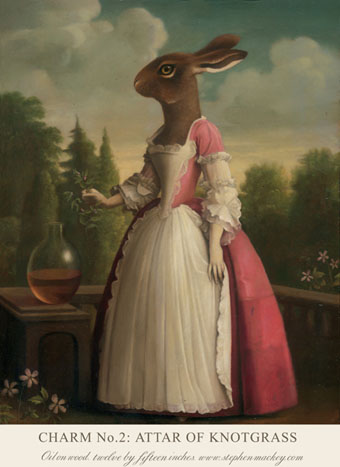
A painting by Stephen Mackey.

• “Creativity is visual, not informed thought. Creativity is not polite. It barges in uninvited, unannounced—confusing, chaotic, demanding, deaf to reason or to common sense—and leaves the intellect to clear up the mess. Above all else, creativity is risk; heedful risk, but risk entire. Without risk we have the ability only to keep things ticking over the way they are.” Revelations from a life of storytelling by Alan Garner. Related: Tygertale on Garner’s Elidor (1965), “the anti-Tolkien”. The BBC’s 1995 adaptation of Elidor remains unavailable on DVD but may be watched on YouTube.

• “One of my revelations was to reverse everything I’d been taught. Making lettering as illegible as possible falls into that way of thinking.” Psychedelic artist and underground cartoonist Victor Moscoso talks to Nicole Rudick about a life in art and design. Related: “I’ve gotten a lot of bad write-ups in newspapers over the years and they like to refer to my stuff as ‘kitsch’…Well, my stuff is way fuckin’ kitsch. It’s kitsch to an abstract level, you understand. It’s fuckin’ meretricious.” I love it when Robert Williams kicks the art world.

• “…a cerebral, challenging, visually stunning piece of 1970s American science fiction that enweirds the human perspective by challenging it with a nonhuman one.” Adam Mills on the inhuman geometries of Saul Bass’s Phase IV.

• “[Delia Derbyshire] taught me everything I knew about electronic music.” David Vorhaus talks to David Stubbs about White Noise and why he prefers the latest technology to old synthesizers.

• Costumes from Alla Nazimova’s film of Salomé (1923) have been discovered in a trunk in Columbus, Georgia.

• Mix of the week: The Ivy-Strangled Path Vol. I, “music for a residual haunting” by David Colohan.

• At Dangerous Minds: Queer, boho or just plain gorgeous: photographs by Poem Baker.

Grimm City, a speculative architectural project by Flea Folly Architects.

Mad Max: “Punk’s Sistine Chapel” – A Ballardian Primer.

In Search of Sleep: photographs by Emma Powell.

Drains of Manchester

Road Warrior (1985) by The Dave Howard Singers | Warriors Of The Wasteland (Original 12″ mix, 1986) by Frankie Goes To Hollywood | Drive It Mad Max (Super Flu Remix, 2009) by Marcus Meinhardt

Weekend links 252

brizzi.jpg

Waiting by Liz Brizzi.

• “Music, politics, sex, and art were also widely represented by Evergreen. Gerald Ford famously maligned the magazine on the floor of Congress for printing the likeness of Richard Nixon next to a nude photo.” Jonathon Sturgeon on the return of an avant-garde institution.

• “The hallucinogenic properties of language are widely recognized by all repressive societies…which treat words like other tightly controlled substances.” Askold Melnyczuk reviews Where the Bird Sings Best, a novel by Alejandro Jodorowsky.

• Mixes of the week: A Mix For Thomas Carnacki by Jon Brooks whose Music for Thomas Carnacki has been reissued on vinyl; Solid Steel Radio Show 27/3/2015 by DJ Food.

One of the few vice-friendly cities left in the US, New Orleans remains his spiritual home, or whatever the atheist equivalent is. Waters’ supposed favourite bar in the world is here in the historic French Quarter. The Corner Pocket is a gay dive bar with tattooed strippers—filthy in exactly the way Waters likes.

“Trash and camp just don’t cut it any more,” he told a rapt audience at his interview panel on Friday. “Filth still has a punch to it. The right kind of people understand it and it frightens away the timid.”

John Waters growing older disgracefully

Songs of a Dead Dreamer and Grimscribe by Thomas Ligotti are being republished in a single edition by Penguin. Jeff VanderMeer wrote the foreword.

• “The film is brimming with Bacchanalian revelry, arcane mystery and mortal dread.” Robert Bright on The Saragossa Manuscript by Wojciech Has.

Alistair Livingston has posted page scans from When Darkness Dawns, volume two of his zine from the early 80s, The Encyclopedia of Ecstasy.

• “Without first understanding the flâneur we cannot understand the development of arcades,” says Aaron Coté.

• At A Journey Round My Skull: Jo Daemen cover designs; at 50 Watts: the art of Manuel Bujados.

• Vast spacecraft and megastructures: Jeff Love on the science-fiction art of Chris Foss.

• At Dangerous Minds: RE/Search’s Vale on JG Ballard and William Burroughs.

• RIP John Renbourn

Pentangling (1968) by Pentangle | Lyke-Wake Dirge (1969) by Pentangle | Lord Franklin (1970) by Pentangle

Yuggoth details

yuggoth01.jpg

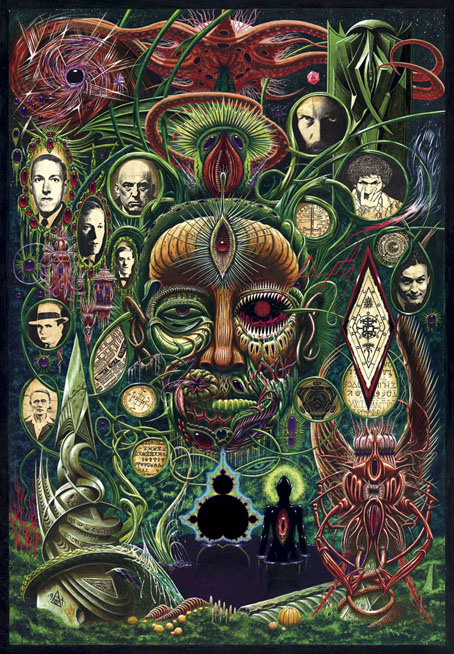
Yuggoth Cultures (1994) by John Coulthart.

Earlier this week I spent a day scanning this painting—which I’m now surprised to find is 21 years old—so I might at last have a good quality digital copy. There’s been a copy on the website for years but that was a print made at a high-street copy shop that did nothing for the detail and range of colour. It’s quite a large piece—49.54 x 71.39 cm (19.5 x 28.1 inches)—done with acrylics on board. Since 2003 the painting has been used (in another poor reproduction) on the cover of The Starry Wisdom, the controversial collection of Lovecraftian fiction from Creation Books. The painting wasn’t originally intended for that collection, however, and doesn’t quite fit since a number of the portraits don’t feature in the book at all.

Yuggoth Cultures would have been an earlier collection of Lovecraftian fiction and non-fiction that Alan Moore had begun writing for Creation in 1993. Alan’s idea was to take Lovecraft’s Fungi from Yuggoth sonnet sequence as the basis for a collection that would explore Lovecraft’s fictional world and also draw together a variety of figures from the same era: fellow writers, occultists like Aleister Crowley and Austin Spare, and Harry Houdini for whom Lovecraft ghost-wrote Imprisoned with the Pharaohs in 1924. Unfortunately the stars were not right on this occasion; Alan took the sole copy of the half-written manuscript to London in order to read selections at an event in Soho but left the papers in a cab. Some pieces survived, having been copied and stored elsewhere—The Courtyard in The Starry Wisdom is one of these—and there was talk for a while of the lost pieces being rewritten but enthusiasm for the project flagged.

yuggoth08.jpg

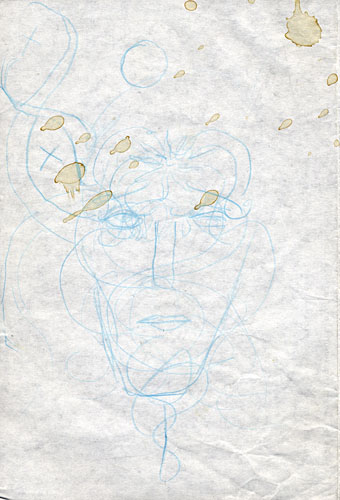
This is Alan’s sketch for the cover, the idea being to have a Lovecraft head made of fungal growths rather like an Arcimboldo painting. The head would be sprouting tendrils whose loops would contain pictures of some of the people featured in the book. Alan’s quick sketch is actually a better approximation of Lovecraft’s strange features than my painted version which isn’t narrow enough. For the record (and because people always ask), the other people on the cover are Alan himself, Austin Osman Spare, Aleister Crowley, Harry Houdini, Robert E Howard (not Al Capone as people often think) and Clark Ashton Smith.

yuggoth09.jpg

yuggoth10.jpg

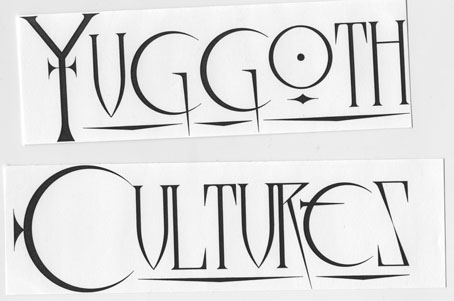
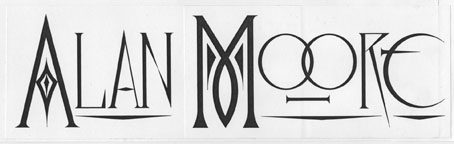
While searching through the archives I discovered these lettering designs although they’re probably not bold enough to read very well on such a busy painting. Before I started using a computer, designs like this had to be drawn at large size then scaled down using a photocopier.

Continue reading “Yuggoth details”