L’Hôtel, Paris

lhotel1.jpg

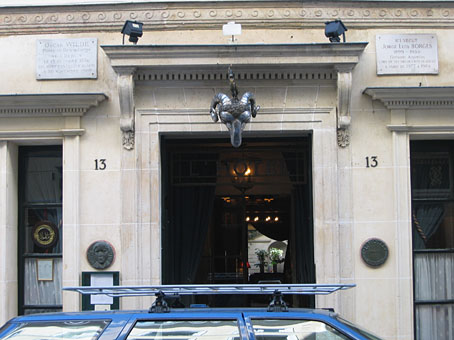
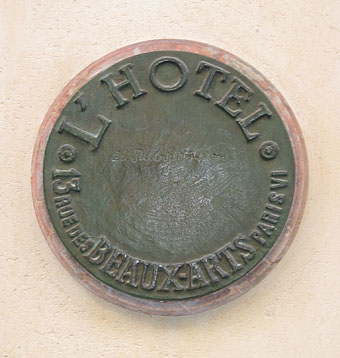
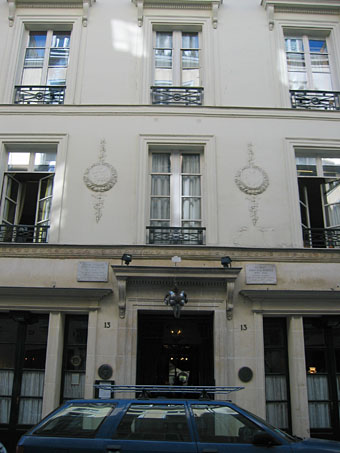
The London broadsheets have been in a ferment for the past few days over a forthcoming exhibition at the V&A, The Cult of Beauty: The Aesthetic Movement 1860–1900 which opens on April 2nd. The Guardian‘s Jonathan Jones wrote a piece pointing out the French associations of the British Aesthetes in which he mentions the Hôtel d’Alsace at 13 Rue des Beaux-Arts, Paris, the place where Oscar Wilde spent his last few months in 1900 prior to expiring in room no. 16. By coincidence I’d been looking at my own photos of the hotel only the day before so here they are, little more than snapshots but they give an idea of the building at least.
lhotel2.jpg

The hotel is now merely L’Hôtel, and I had a couple of surprises when I went to find the place the last time I was in Paris. The first is that the Rue des Beaux-Arts is some distance away from any main thoroughfares, although this perhaps isn’t so surprising given Wilde’s straitened circumstances. The second was seeing a plaque to Jorge Luis Borges (see below) on the wall opposite the one for Oscar Wilde with its incorrect year of birth. Borges had a lifelong fascination with Wilde, the first piece he had published was a translation into Spanish of The Happy Prince (and The Modern Word has a short essay by Borges about Wilde). I knew that Borges had stayed in the hotel (there’s a famous photo of him standing in the atrium) but didn’t expect his patronage to be commemorated in this way; once again, Paris has a respect for writers that puts many other cities to shame. Wilde is celebrated with two plaques—there’s another beside the door which can be seen here—but what these pictures don’t show is the atrium itself, a small space in the centre of the building which gives the hotel a distinction Wilde might have appreciated even if he would have preferred to spend his final hours in one of the more luxurious establishments.

There are more views of the narrow Rue des Beaux-Arts at Google Maps while the hotel has a website here.
lhotel3.jpg

Continue reading “L’Hôtel, Paris”

The Cliff House revisited

cliffhouse1.jpg

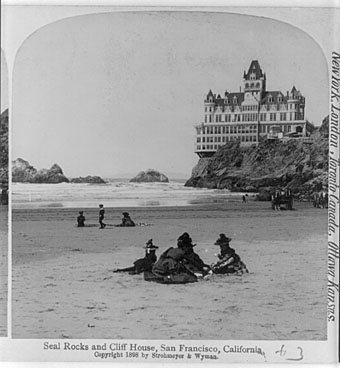
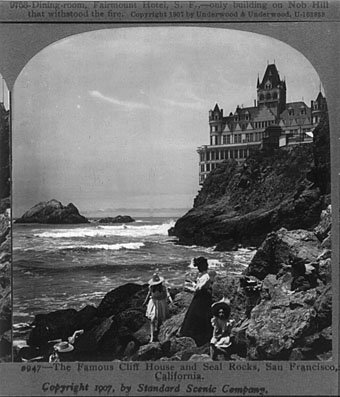
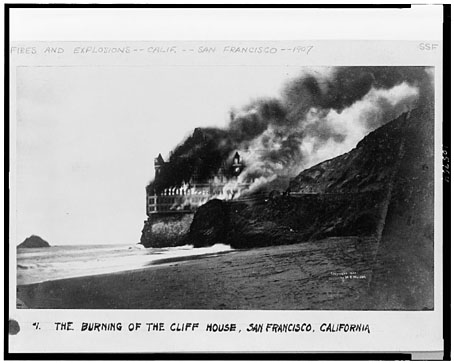
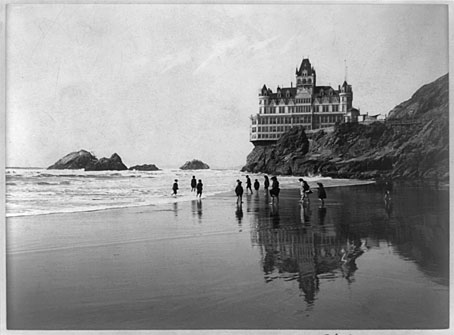
Adolph Sutro’s Cliff House restaurant, San Francisco, has appeared here before but these are some additional photos of the improbable structure from the Library of Congress archives, including a picture of the fire that destroyed the building in 1907. As noted in the earlier post, Blue Öyster Cult aficionados may recognise the house from the cover of the group’s 1988 album, Imaginos.

cliffhouse2.jpg

cliffhouse3.jpg

cliffhouse4.jpg

Previously on { feuilleton }
Adolph Sutro’s Gingerbread Palace

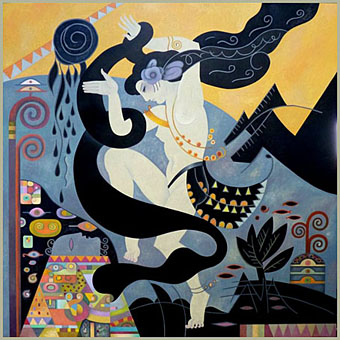
The Salomé paintings of Caroline Smith

smith_seduction.jpg

Seduction.

One of a series of paintings by a British artist, and what a great series it is with echoes of ancient art as well as Gustav Klimt. Also further evidence that this theme isn’t a wholly masculine preoccupation.

Elsewhere on { feuilleton }
The Salomé archive

Weekend links 52

judd.jpg

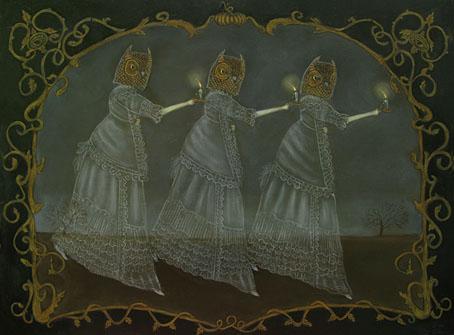
Three Seekers (2009) by Kelly Louise Judd.

Kevin Sessums talked to Elizabeth Taylor in 1997 about Tennessee Williams, her AIDS activism and related matters. Other related matters: Catholics lead the way on same-sex marriage and Mahatma Gandhi was in love with a German body-builder named Hermann.

• Cray porn (the computer, that is) at Barnbrook Design as the CD package for Interplay by John Foxx and The Maths is unveiled.

Michael Rother and Friends Play the Music Of Neu! A stream of an hour-long concert from August 2010.

One of the tragedies of drug prohibition is that we have never developed a culture in which young people can learn how to use powerful drugs properly from older, wiser and more experienced psychonauts. I count myself lucky to have encountered such good teachers to guide me with such drugs as LSD, psilocybin, DMT, MDMA and mescaline.

Dr Susan Blackmore on using LSD.

Another Dispatch in a World of Multiple Veils, a new release by Arkhonia.

Micromachina by Scott Bain “examines what makes the insect world tick”.

Down with art!: the age of manifestos. Related: The Manifesto Manifesto.

• John Patterson: “We’re all living in the future as seen by Philip K Dick.”

Music To Play In The Dark: A Wake For Peter ‘Sleazy’ Christopherson.

Albert Einstein, Radical: A Political Profile.

Was “God’s Wife” edited out of the Bible?

Porn made for women, by women.

Hallogallo (1972) by Neu! | Opa-Loka (1975) by Hawkwind | Jenny Ondioline (1993) by Stereolab | Hallogallo (1997) by Porcupine Tree.

The Vengeance of Nitocris

weirdtales.jpg

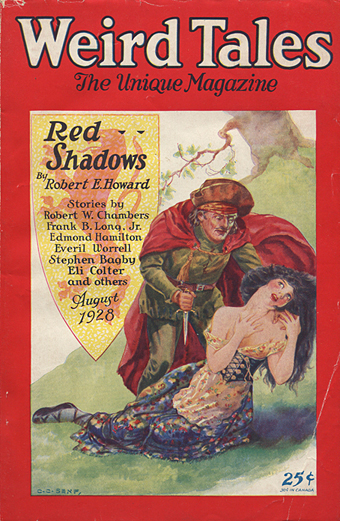
Cover illustration by CC Senf.

In her mind the queen Nitocris was seeing a ghastly picture. It was the picture of a room of orgy and feasting suddenly converted into a room of terror and horror, human beings one moment drunken and lustful, the next screaming in the seizure of sudden and awful death. If any of those present had been empowered to see also that picture of dire horror, they would have clambered wildly to make their escape. But none was so empowered.

Everyone today will be marking the Tennessee Williams centenary by noting his theatre work, of course, or his subversive celebration of outsiders and, yes, the gays. I’ll confine myself to reminding people that Williams’ first published work was a short story entitled The Vengeance of Nitocris in Weird Tales for August 1928, written when he was only 17. The story reads like the work of a teenager but editor Farnsworth Wright evidently enjoyed an atmosphere of lurid Egyptian melodrama which you can appraise for yourself here. Also in this issue was the debut appearance of Robert E Howard’s Solomon Kane, and The Demoiselle d’Ys by Robert Chambers. Seeing the name Nitocris I have to wonder whether Williams chose it after reading HP Lovecraft who used the name twice in earlier stories published in the same magazine, Imprisoned With the Pharaohs (1924) and The Outsider (1926). That last piece was one of Lovecraft’s most popular tales, and it’s easy to imagine its grotesque parable of alienation making an impression on a would-be writer who, as a gay youth, would have looked upon himself as another kind of outsider.

Previously on { feuilleton }
The King in Yellow