Tarotism and Fergus Hall

gille.jpg

Gille Lettmann pictured in 1973 flourishing some of Fergus Hall’s Tarot cards. At the time Ms Lettmann was helping run partner Rolf-Ulrich Kaiser’s Kosmische Musik, Pilz and Ohr record labels, and thus oversaw the release of many fine albums—and a few dubious ones—before Kaiser’s empire imploded amid much bad feeling. It’s a fascinating saga, detailed at length here. Gille’s photo stood out for me in a week when I’ve been working on some new Tarot designs (about which more later) whilst listening to the latest Deutsche Elektronische Musik compilation from Soul Jazz Records which includes among its tracks a couple of Kosmische and Pilz recordings. Gille’s Tarot cards will have been a result of Kaiser’s most ambitious project, a double-disc concept album entitled Tarot (1973), and credited to Swiss artist Walter Wegmüller whose narration is backed by Ash Ra Tempel and members of Wallenstein. The album came in a lavish metallic silver box with a sheet of cut-out-and-keep Tarot trumps of Wegmüller’s own design, not the Fergus Hall cards Gille is holding. Wegmüller’s Major Arcana was expanded into a deck he calls the Gipsy Tarot. (I have the later CD box which included a complete deck of the Tarot cards.)

hall1.jpg

The Tarot of the Witches by Fergus Hall.

All of which gives me the opportunity to draw attention to Fergus Hall, an idiosyncratic Scottish artist who achieved worldwide prominence in 1973 when his Tarot designs were used on the cards seen in the James Bond film Live and Let Die. A complete deck called The Tarot of the Witches was later published as a spin-off from the film. I like his naive painting style which seemed a surprising choice for a blustering Bond movie; the production people could easily have used the Waite deck or something which suited the film’s vague Voodoo theme.

hall2.jpg

hall3.jpg

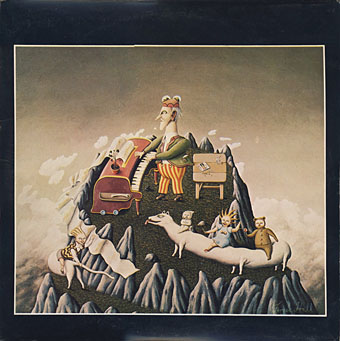
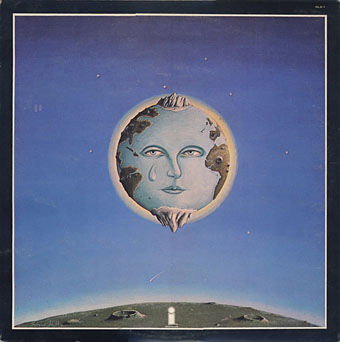
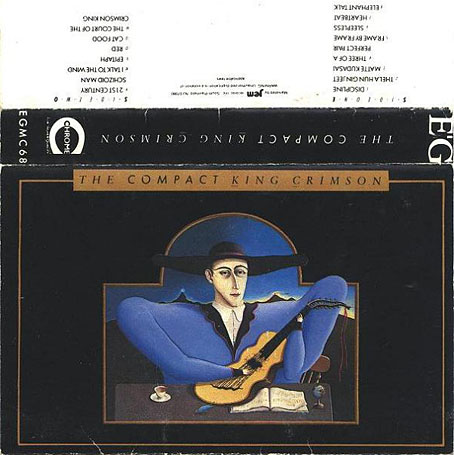
Robert Fripp liked Fergus Hall’s paintings enough to buy some of them. Two of these can be seen on the sleeve of the vinyl-only compilation A Young Person’s Guide to King Crimson (1975), while a third appeared a decade later on a King Crimson tape compilation. Despite this attention the artist’s only other major work is a book for children, Groundsel (1982), which features many more of his strange paintings. The compilations and the children’s book are all long out of print but decks of the Tarot of the Witches are still being published. As for Hall himself, his Wikipedia page says he’s now a Buddhist monk.
kc1.jpg

A Young Person’s Guide to King Crimson (front).
kc2.jpg

A Young Person’s Guide to King Crimson (back).
kc3.jpg

The Compact King Crimson (1986).

Elsewhere on { feuilleton }
The album covers archive

Previously on { feuilleton }
Giger’s Tarot
The Major Arcana by Jak Flash
The art of Pamela Colman Smith, 1878–1951
The Major Arcana

On the pyramid

pyramid01.jpg

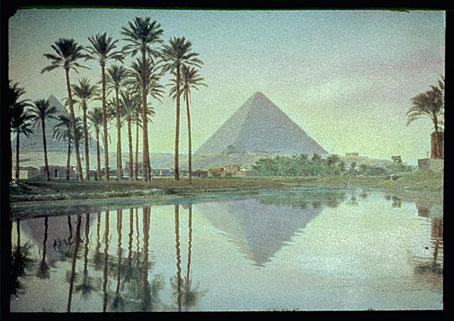
Lots of attention given this week to a series of photos taken from the summit of the Great Pyramid of Cheops by a Russian group of urban explorers. The Egyptian authorities who maintain the World Heritage site bar visitors from the place at night so the photographers hid in a tomb for a few hours before beginning their ascent. The original LiveJournal post with the full complement of photos is here, and is worth running through Google Translate if you’re interested in the details. One of the other photographers has a page devoted to his spectacular views here.

pyramid02.jpg

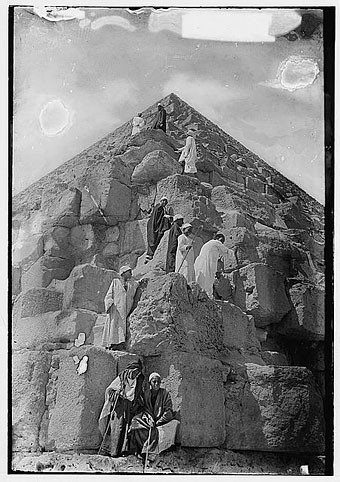
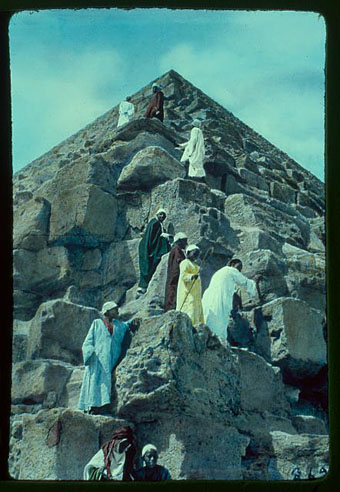
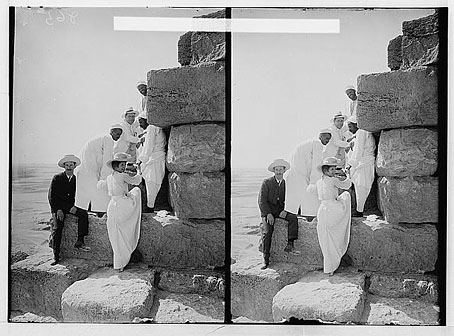
Ascent of the Cheops pyramid may be discouraged now but used to be a common pursuit for those visitors capable of making the climb. The Russian post mentions that among the graffiti carved into the stones on the summit they found the name of Tsar Nicholas II. The Library of Congress has many photos of Egyptian monuments in its archives, including a number showing pyramid ascents. Ex-Hawkwind man Nik Turner made the ascent himself after leaving the band in 1976. Whilst there he recorded three hours of solo flute in the sarcophagus of the King’s Chamber which later formed the basis for his Xitintoday album.

pyramid03.jpg

pyramid04.jpg

Continue reading “On the pyramid”

The art of Naomichi Okutsu

okutsu1.jpg

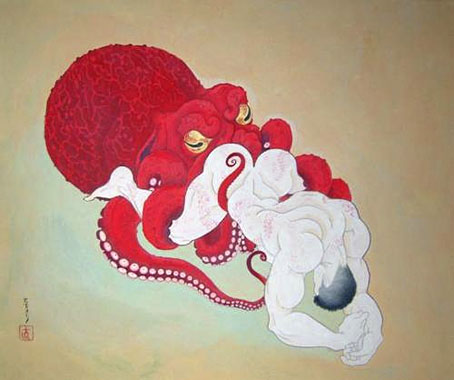
Hatsuyume – one’s first dream of the New Year – (2005).

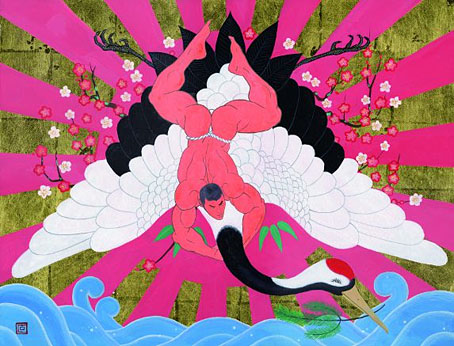
Naomichi Okutsu’s variation on the amorous octopus theme is understandably popular in the Tumblr world, but it often appears uncredited while his other work is far less visible. That seems unfortunate when there’s a lot more to his beautiful paintings than tentacle sex. His work applies homoerotic twists to Japanese iconography, with many of the paintings using gold leaf for the backing. Japanese Gay Art has many more examples, all of which are currently for sale.

okutsu2.jpg

Title unknown.

okutsu3.jpg

Bozu ni hanakanzashi.

Elsewhere on { feuilleton }
The gay artists archive

Eustace details

durer01.jpg

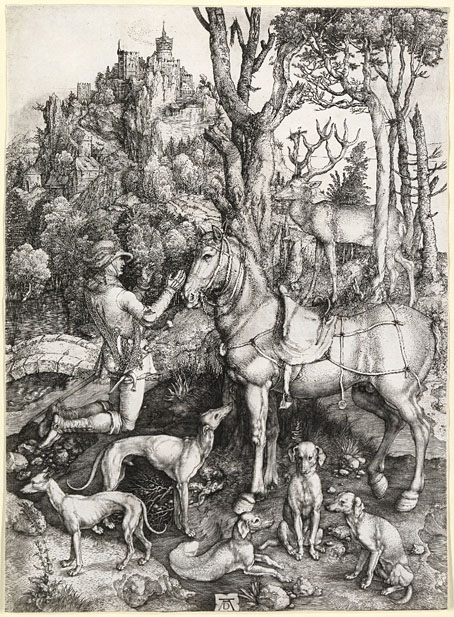
St Eustace (c. 1501) by Albrecht Dürer.

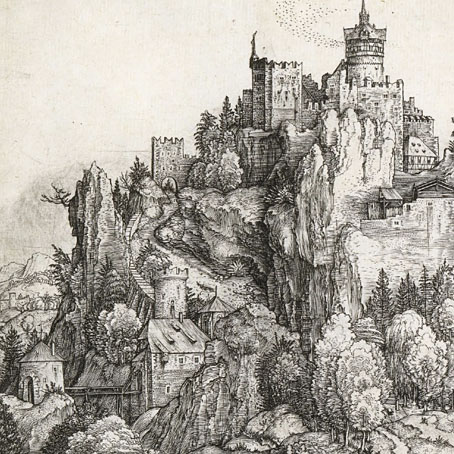
As is often the case with his engraving on religious themes, Dürer is less concerned with the Biblical story—in this case St Eustace’s vision of Christ appearing between the horns of a stag—than with the opportunity to render with great fidelity a wealth of natural detail. Everything here is observed with the utmost precision, down to the binding of the spurs on Eustace’s boots. A superb composition which leads the eye past the mystical deer, through the trees and up the hill.

durer09.jpg

Continue reading “Eustace details”

Rackham silhouettes

rackham01.jpg

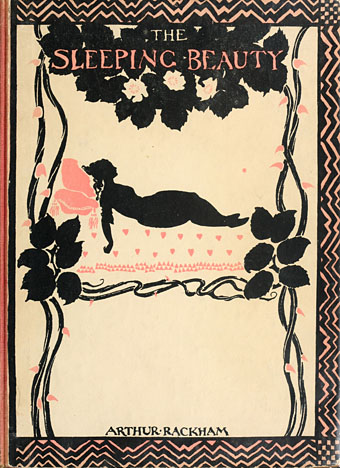
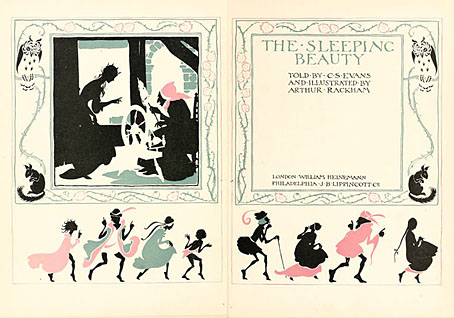
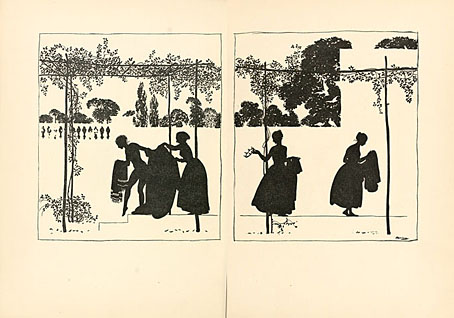
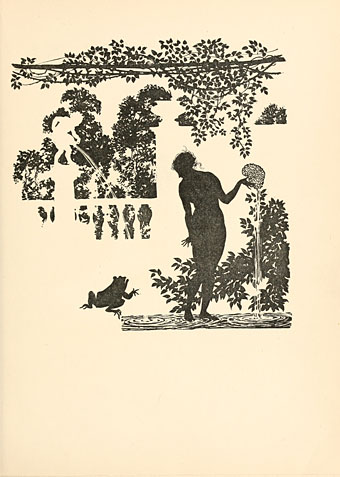
Another recent work-related discovery, this edition of the tale of Sleeping Beauty was published in 1920. The text is by CS Evans, and the book is illustrated throughout by Arthur Rackham who forgoes his usual ink-and-wash style in favour of silhouettes. Many of Rackham’s other books employ silhouettes, usually as vignettes at the ends of chapters, but this is the first book I’ve seen of his where the technique is applied to the book as a whole. The effect is stunning, with careful application of colour, and some very clever use of negative space. The combination of silhouettes with a fairy tale immediately brings to mind the animated films of Lotte Reiniger so it’s no surprise to find Rackham’s book being cited as an influence on both Reiniger and Fritz Lang. Browse the rest of the pages here or download the book here.

rackham02.jpg

rackham03.jpg

rackham04.jpg

Continue reading “Rackham silhouettes”