Weekend links 701

kawase.jpg

Frosty Morning in Nagaoka, Izu (1939) by Hasui Kawase.

• “A few years ago, retired professor of religious studies Chris Bache wrote a book called LSD and the Mind of the Universe. His book is the story of 73 high-dose LSD experiences he had over a period of 20 years, from 1979 to 1999, and how they changed his understanding of the very nature of reality. Bache believes psychedelics represent a ‘true revolution in Western thought,’ and his life has been lived around that premise. But after his long psychedelic journey, Chris ends up in a really interesting place. He wonders, ‘Can you have too much transcendence?'” Steve Paulson talks to Chris Bache about mega-dosing LSD.

• “Operating in the margins and intersections of folklore, experimental electronics, dreams and nightmares…” Or Hauntology, German-style. Louis Pattison at Bandcamp looks at some of the artists featured on Gespensterland, a compilation album released by Bureau B. The latest news reports about Bandcamp haven’t been encouraging. Download those digital purchases.

• “Cassel favored botanically inspired lines, distilled geometries, and a crepuscular-or-witching hour palette to capture the strange wind and cold light of a particular metaphysical space.” Johanna Fateman reviews Anna Cassel: The Saga of the Rose, a book about the occult artist edited by Kurt Almqvist and Daniel Birnbaum.

• At Dennis Cooper’s: 10 filmmakers, 20 short films, 2 each: Joyce Wieland, Vivienne Dick, Eileen Maxson, Sue de Beer, Amy Greenfield, Chiaki Watanabe, Coleen Fitzgibbon, Germaine Dulac, Lori Felker, Barbara Hammer.

• Rambalac took his roaming camera to the slopes of Mount Fuji. More drone shots, please.

• New music: A Field Guide To Phantasmic Birds by Kate Carr, and Inland Delta by Biosphere.

Winners and finalists for the 2023 Ocean Photographer of the Year.

• At Wyrd Daze: the latest Disco Rd zine and related podcast.

Transcendental Express (1975) by Can | Transcendence (1977) by Alice Coltrane | Transcendental Moonshine (1991) by Steroid Maximus

Moon Flight by Sándor Reisenbüchler

reisenbuchler1.jpg

Moon Flight is the English title given to Holdmese, a Hungarian word that Google translates as “Moon tale”. Both translations suit this short film by Hungarian animator Sándor Reisenbüchler in which we discover that the Moon is a giant space vehicle contructed by an alien race. Moon Flight was Reisenbüchler’s third short, made in 1975 using the same collage technique as an earlier film, The Year of 1812 (1973). The animation is minimal but there’s an immense amount of variety in the tableaux that convey the story. The visual style is also strikingly vivid in a manner that might be labelled “psychedelic” if that term means anything when applied to cinematic fare from the Eastern Bloc. Reisenbüchler wasn’t the only Hungarian animator borrowing Pop and psychedelic influences at this time. The first two feature films by Marcell Jankovics, Johnny Corncob (1973) and The Son of the White Mare (1982), are equally vivid; Johnny Corncob even mimics some of the style of Yellow Submarine. I’ve not seen much other Hungarian animation from this period so this makes me wonder what else I may have been missing.

reisenbuchler2.jpg

Moon Flight is a recent upload at Rarefilmm where you can also see The Year of 1812, both as high-quality transfers. The Year of 1812, which concerns Napoleon’s failed invasion of Russia, won an award at Cannes but I prefer Moon Flight. It’s not only more visually interesting it’s also free of Tchaikovsky’s bombast. Reisenbüchler’s first short, Kidnapping of the Sun and the Moon (1968), is another work of fantasy which may be seen at the YouTube channel for NFI, the Hungarian film archive.

Previously on { feuilleton }
Three short films by Marcell Jankovics
Short films by Gérald Frydman
Raoul Servais: Courts-Métrages
Scarabus, a film by Gérald Frydman
The Heat of a Thousand Suns by Pierre Kast
L’Araignéléphant
Le labyrinthe and Coeur de secours
Chronopolis by Piotr Kamler

Weekend links 700

demorgan.jpg

Lux in Tenebris (1895) by Evelyn De Morgan.

• “NASA celebrates the worm logo designer, Richard Danne“. Until I read this story (and this one) I wasn’t aware that the NASA logos were known as The Meatball and The Worm.

The Red Shoes: behind the scenes of the classic Powell and Pressburger film – in pictures. Related: Kings of the movies: Martin Scorsese on Powell & Pressburger.

• The 700th weekend post happens to arrive on Alan Moore’s 70th birthday. Many happy returns to the Northampton Magus.

Fundamentally, we face a choice. Either:

• it’s a coincidence that, of all the possible values that the finely tuned constants of physics may have had, they just happen to have the right values for life;

or:

• the constants have those values because they are right for life.

The former option is wildly improbable; on a conservative estimate, the odds of getting finely tuned constants by chance is less than 1 in 10-136. The latter option amounts to a belief that something at the fundamental level of reality is directed towards the emergence of life. I call this kind of fundamental goal-directedness ‘cosmic purpose’.

As a society, we’re somewhat in denial about fine-tuning, because it doesn’t fit with the picture of science we’ve got used to. It’s a bit like in the 16th century when we started getting evidence that our Earth wasn’t in the centre of the universe, and people struggled to accept it because it didn’t fit with the picture of the universe they’d got used to. Nowadays, we scoff at our ancestors’ inability to follow the evidence where it leads. But every generation absorbs a worldview it can’t see beyond. I believe we’re in a similar situation now with respect to the mounting evidence for cosmic purpose. We’re ignoring what is lying in plain view because it doesn’t fit with the version of reality we’ve got used to. Future generations will mock us for our intransigence.

Philip Goff, professor in philosophy at Durham University, making an argument for cosmic purpose

• At Spoon & Tamago: Exploring Japanese Hell through art from the 12th to 19th century.

• New music: Turning The Prism by Ben Frost, and Sanctuary Of Desire by Steve Roach.

• Mix of the week is DreamScenes – November 2023 at Ambientblog.

• DJ Food looks at Tomi Ungerer’s Electric Circus posters.

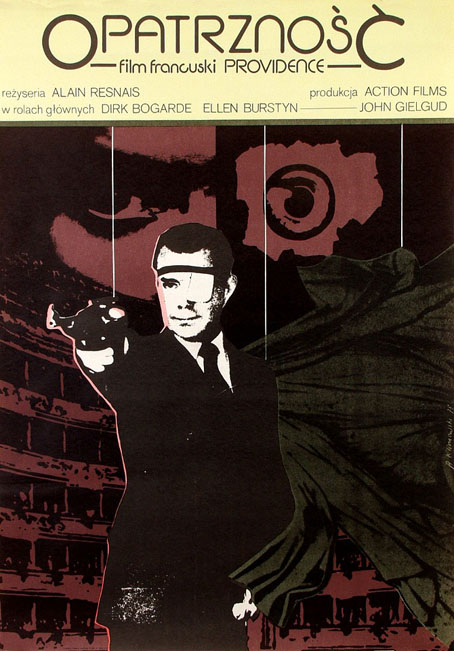
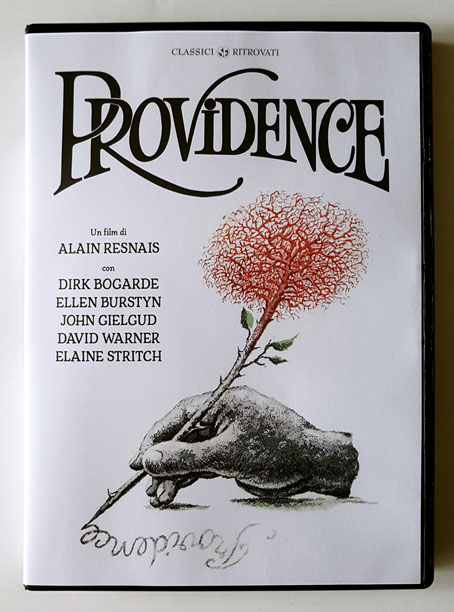
• At Dennis Cooper’s: Alain Resnais Day.

Strange Flowers visits the Villa Stuck.

Diet Of Worms (1979) by This Heat | Opera Of Worms (1981) by Van Kaye & Ignit| Wormhole (2002) by Cliff Martinez

Weekend links 699

gartside.jpg

November Evening (1955) by Brian Gartside.

• The next Jon Savage compilation for Caroline True Records will be Jon Savage’s Ambient 90s, a dive into the side of rave culture that I always preferred, even while disputing the use of the “A” word. Anything with beats isn’t ambient by my definition, but I’ve been complaining about the nomenclature since 1991 to no avail. It’s on pre-order anyway.

• “They produced in me an infinity of new images and feelings, that sometimes raised me to ecstasy, but more frequently sunk me into the lowest dejection.” Thus Frankenstein’s monster during his reading of three books that happen to be important texts for the Romantic imagination. Hunter Dukes looks at the syllabus of Frankenstein’s monster.

• “Figure on Led Zeppelin IV cover identified as Victorian Wiltshire thatcher”. Last year I discovered the source for the lyrics and credits lettering designs used on the same album’s inner sleeve. Not as newsworthy, obviously, but I thought it was a good piece of cultural detective work.

• At Aquarium Drunkard: An interview with Morton Subotnick, now 90 years old. “Pioneer” is an over-used label, especially in electronic music, but Subotnick really does warrant the description.

• At Wormwoodiana: Mark Valentine on Unburied Bane, an EP by The Heartwood Institute based on a story by “the enigmatic N. Dennett”.

• At Unquiet Things: Art and captions that didn’t make the print version of The Art of Fantasy by S. Elizabeth.

• “Hidden demon revealed in the shadows of a Joshua Reynolds painting.”

• New music: Polygon by Galya Bisengalieva, and Saor by Claire M. Singer.

• Steven Heller’s font of the month is Letraflex.

• At Dennis Cooper’s: Arthur Lipsett’s Day.

Martin Carthy’s favourite music.

Little Demon (1956) by Screamin’ Jay Hawkins | Ballad Of Maxwell Demon (1998) by Shudder To Think | On Demon Wings (2000) by Bohren And Der Club Of Gore

Imaginary Landscapes: A film on Brian Eno

eno1.jpg

The landscapes are those that may come to mind when listening to one of Brian Eno’s instrumentals, as Eno himself explains in this 40-minute portrait by Duncan Ward and Gabriella Cardazzo. I linked to a streaming copy of this several years ago but Flash streams are no use today so it’s good to find again on YouTube. Imaginary Landscapes was made in 1989, and the relatively short running time isn’t really enough to do justice to Eno as either composer or indefatigable theorist. The brevity is also a little surprising when the whole thing was shot on film in the UK, USA and Italy. Maybe expense was an issue? Whatever the answer, we get to see many actual landscapes—California, the rivers and shoreline of Suffolk, the urban landscape of New York City—while Eno explains some of the ideas behind his art and his music. He discusses his time in New York, which he’d recently left to return to his home town of Woodbridge, and his intention to develop his art installations to a greater degree than he’d done in the past. We know now that he did exactly this, I got to see one of his “Quiet Club” installations at the Hayward Gallery’s Sonic Boom group show in 2000. The quietness was rather compromised by sound leakage from other noisier exhibits but it was one of the show’s more memorable pieces.

eno2.jpg

I’ve a lot of time for Eno’s approach to art installation and the instrumental music he creates for these works, less so for his recent songs. Imaginary Landscapes was made shortly before the release of the song-based Nerve Net, an album I’ve never liked very much, plus another release, The Shutov Assembly, a collection of instrumentals that I’ve listened to more than most of his albums, with the possible exception of Thursday Afternoon. Many of the posts here were written to the accompaniment of The Shutov Assembly, I find it an ideal album of “thinking music”, more so than the later Neroli which is actually titled “thinking music” but which takes the Eno systems approach to a minimal extreme. The Shutov Assembly could be regarded as another collection of imaginary landscapes, with each piece having a nine-letter title that refers to a real location (all of which hosted one of Eno’s artworks) without being in any way illustrative. The Shutov pieces were recorded around the time Imaginary Landscapes was being made, and we see Eno demonstrating synthesizer sounds that are close to some of those you hear on the album. I’d have been happy with a lot more of this, 40 minutes more in fact, but the film-makers had other ideas.

Previously on { feuilleton }
Harold Budd, 1936–2020
Synapse: The Electronic Music Magazine, 1976–1979
Fourth Worlds: A Jon Hassell Mix
Mistaken Memories Of Medieval Manhattan
Thursday Afternoon by Brian Eno
Moonlight in Glory
Tiger Mountain Strategies
Generative culture
My Life in the Bush of Ghosts