Panic by Sándor Reisenbüchler

panic1.jpg

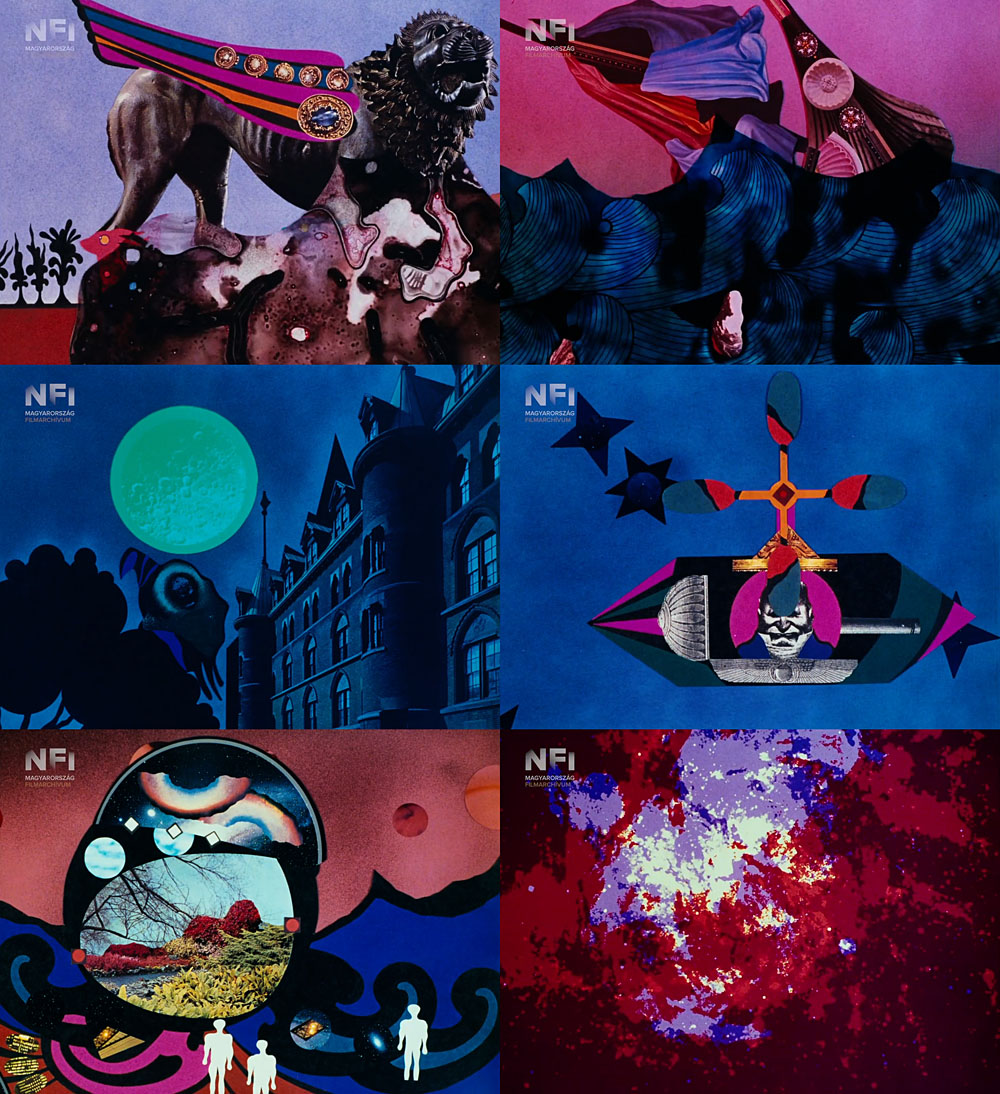
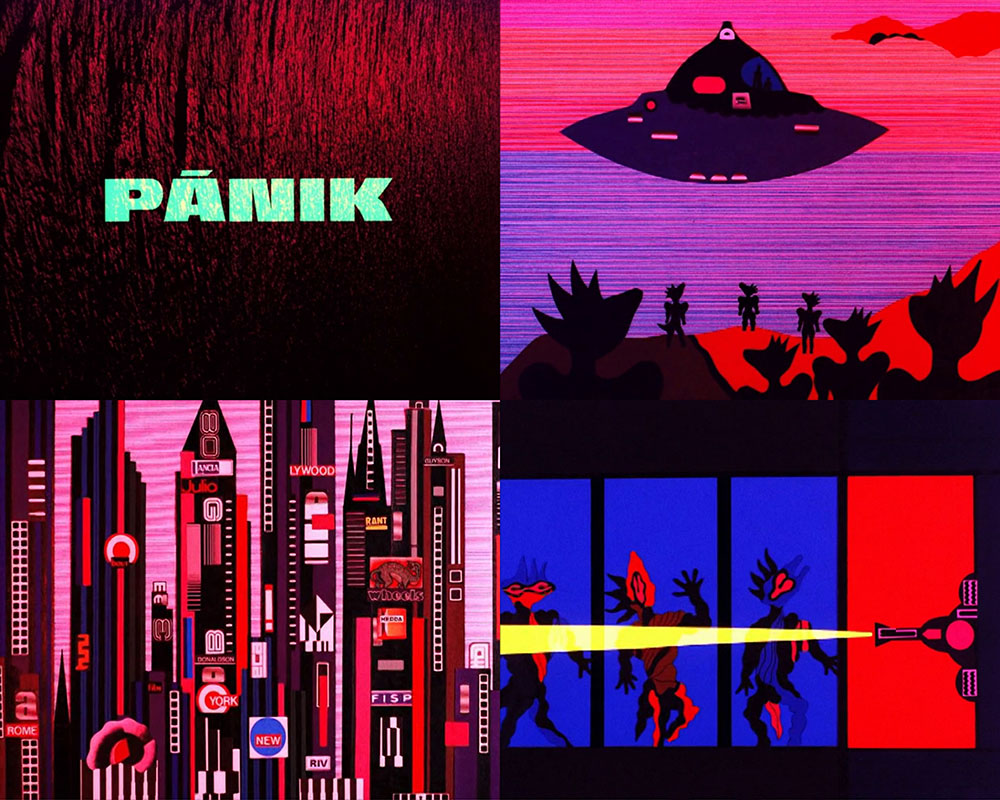
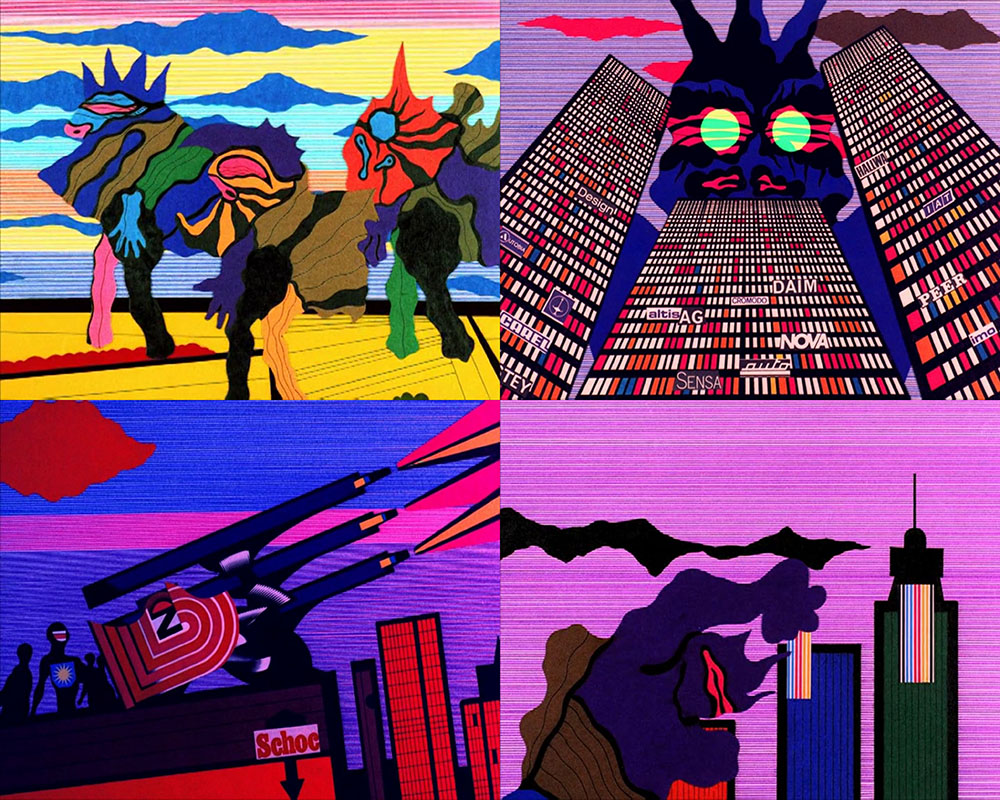
I suspect that if Sándor Reisenbüchler had been French, say, rather than Hungarian his animated films might be better known today. Panic (1979), like Moon Flight (1975), is another of his short exercises in Pop-art science fiction, a rush through a series of vivid and hyperactive scenes where everything is flattened and stylised, often to a point of abstraction. Panic, as its title suggests, is an especially frenzied piece in which three of the humanoid creatures living on a small island are sucked into a flying saucer occupied by human beings who take their captives to a city where they bombard them with unidentified rays. Whatever the creatures are, the experiments cause them to mutate and grow to a giant size after which they retaliate against their captors.
panic2.jpg

All of Reisenbüchler’s films were short ones, and all the ones I’ve seen to date follow a similar format: a simple narrative where the vivid graphics are as much of interest as the story. On the graphic level Panic is incredibly complex, composed throughout of very brief shots, nearly all of which show entirely new scenes and bits of collage or other visual invention. As for the story, this is probably the closest thing you’ll find to a Hungarian take on the kaiju film.

Previously on { feuilleton }
• Moon Flight by Sándor Reisenbüchler
Moon Flight by Sándor Reisenbüchler

reisenbuchler1.jpg

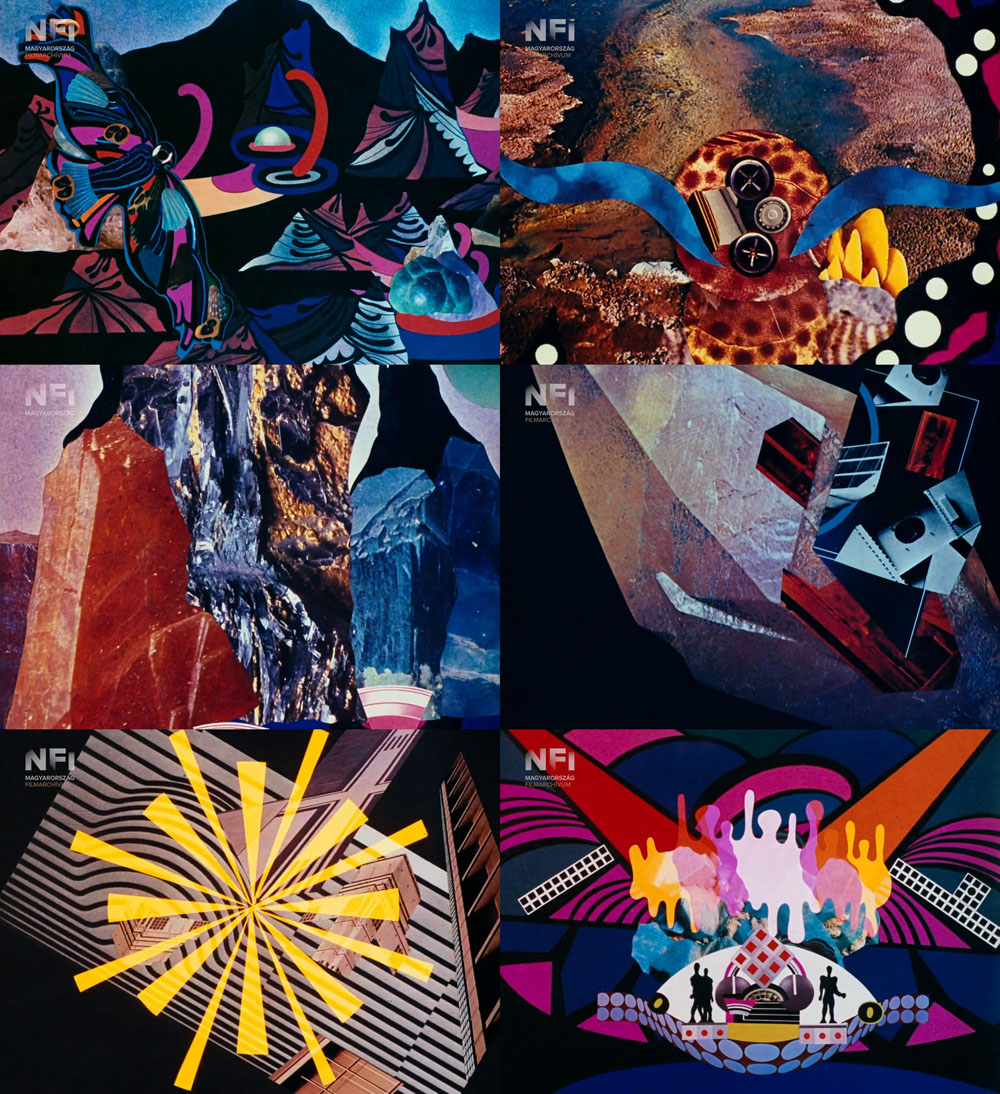
Moon Flight is the English title given to Holdmese, a Hungarian word that Google translates as “Moon tale”. Both translations suit this short film by Hungarian animator Sándor Reisenbüchler in which we discover that the Moon is a giant space vehicle contructed by an alien race. Moon Flight was Reisenbüchler’s third short, made in 1975 using the same collage technique as an earlier film, The Year of 1812 (1973). The animation is minimal but there’s an immense amount of variety in the tableaux that convey the story. The visual style is also strikingly vivid in a manner that might be labelled “psychedelic” if that term means anything when applied to cinematic fare from the Eastern Bloc. Reisenbüchler wasn’t the only Hungarian animator borrowing Pop and psychedelic influences at this time. The first two feature films by Marcell Jankovics, Johnny Corncob (1973) and The Son of the White Mare (1982), are equally vivid; Johnny Corncob even mimics some of the style of Yellow Submarine. I’ve not seen much other Hungarian animation from this period so this makes me wonder what else I may have been missing.

reisenbuchler2.jpg

Moon Flight is a recent upload at Rarefilmm where you can also see The Year of 1812, both as high-quality transfers. The Year of 1812, which concerns Napoleon’s failed invasion of Russia, won an award at Cannes but I prefer Moon Flight. It’s not only more visually interesting it’s also free of Tchaikovsky’s bombast. Reisenbüchler’s first short, Kidnapping of the Sun and the Moon (1968), is another work of fantasy which may be seen at the YouTube channel for NFI, the Hungarian film archive.

Previously on { feuilleton }
• Three short films by Marcell Jankovics
• Short films by Gérald Frydman
• Raoul Servais: Courts-Métrages
• Scarabus, a film by Gérald Frydman
• The Heat of a Thousand Suns by Pierre Kast
• L’Araignéléphant
• Le labyrinthe and Coeur de secours
• Chronopolis by Piotr Kamler