The psychedelic art of Nicole Claveloux

claveloux1.jpg

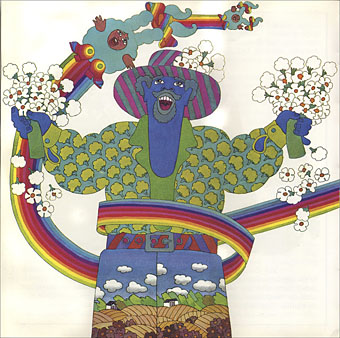
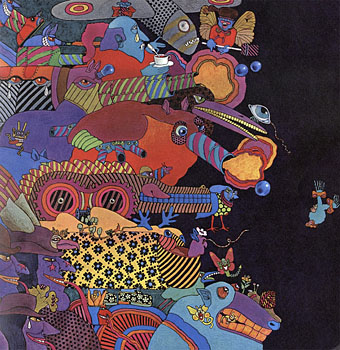
The psychedelic quotient is emphasised here since Nicole Claveloux has had a long career in France as an illustrator and comic artist only part of which embraces a psychedelic style. This work is very much in the post-Yellow Submarine Heinz Edelmann style, of course, but Claveloux wasn’t the only artist to pastiche Edelmann, and the massive impact of The Beatles ensured that watered-down traces of Edelmann graphics could still be found in the mid-70s. The images here are from this post which features more Claveloux art in this style, together with some drawings from her own take on Alice in Wonderland, the style there being closer to Peter Blake. The picture below is a page from a rather stunning children’s book, Alala, Les Télémorphoses (1970) by Guy Montréal, more of which may be seen at Animalarium.

claveloux2.jpg

Nicole Claveloux has an official website here (in French), and a related site here devoted to her wide-ranging and witty erotic art.

claveloux3.jpg

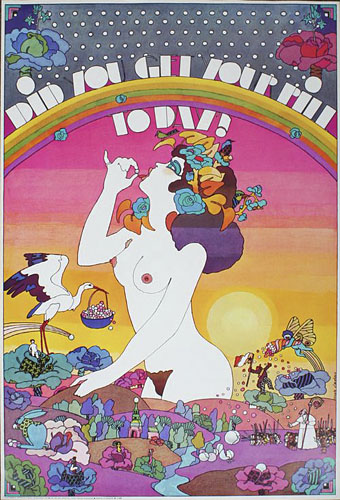
Did You Get Your Pill Today? (1970).

claveloux4.jpg

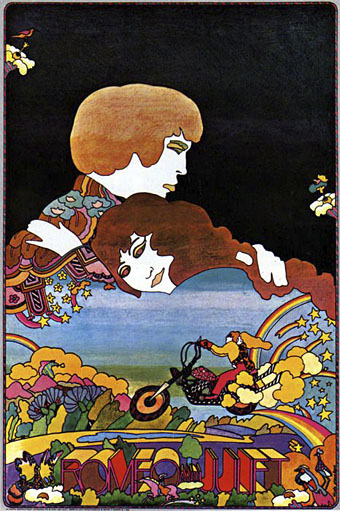
Romeo and Juliet (1971).

Update: Added two posters.

Elsewhere on { feuilleton }
The illustrators archive

Previously on { feuilleton }
Elaine Hanelock’s Hollywood stars
The art of Marijke Koger
David Chestnutt’s psychedelic fairy tales
Yellow Submarine comic books
Heinz Edelmann

Weekend links 311

vasconcelos.jpg

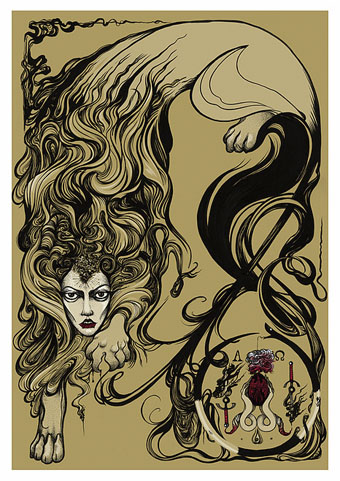
Sphinx (2015) by Lupe Vasconcelos.

• I’ve been reading my way through Patricia Highsmith’s Ripley novels for the past couple of weeks, and may well progress to some of her other books once I’m finished. Highsmith had a long career so there’s a lot to read on the web. Catching my eye this week were 10 Best Patricia Highsmith Books recommended by her biographer, Joan Schenkar; The Patricia Highsmith Recommendation Engine; Highsmith on Desert Island Discs in 1979 (the book she said she’d take, Moby-Dick, is the same one chosen by JG Ballard, albeit for different reasons); and a prickly interview late in her life with Naim Attalah.

Discovering 20th-century literature: books, manuscripts and other documents in the collection of the British Library.

• Signed copies of Paul Gorman’s Barney Bubbles monograph, Reasons To Be Cheerful, may be ordered from the author.

• How a mysterious ghost ship brought cosmic disco to Cape Verde. Related: Quirino Do Canto by Mino Di Mama.

• Zombi drummer AE Paterra and composer Paul Lawler make prog-synth epics as Contact.

• Mix of the week: Secret Thirteen Mix 185, a locked-groove mix by Massimo Carozzi.

• In London next weekend: Alchemy and Magic at Brompton Cemetery.

Die or DIY?: scarcities from the post-punk outer limits.

• More Penda’s Fen: a lengthy appraisal by Jerry Whyte.

Dennis Cooper salutes James Coburn

Bandcamp is good for musicians.

Vladimir Nabokov’s butterfly art.

• This Heat: Rimp Ramp Romp (1977) | 24 Track Loop (1979) | Health And Efficiency (1980) | Makeshift Swahili (1981)

Penda reborn

penda.jpg

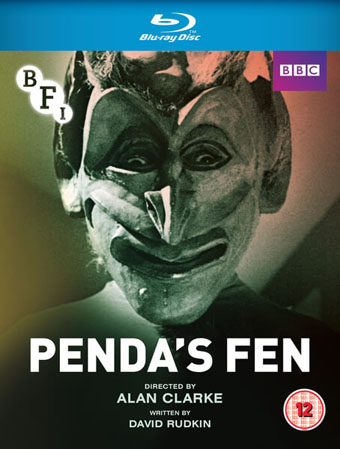
Penda’s Fen is one of the most important British television dramas of the 1970s, and would increasingly be recognised as such if the licensing problems which have dogged an official DVD release could be resolved.

That was how I ended the section about Penda’s Fen in the David Rudkin essay I wrote last year for Andy Paciorek’s Folk Horror Revival: Field Studies. The book had only been out for a couple of months when the BFI announced that Penda’s Fen would at long last be given a DVD and Blu-ray release, together with a collection of other TV dramas directed by Alan Clarke. A few months later and Penda’s Fen is now on sale, so those of us served by the European DVD region (or those with region-free players) no longer have to point people to a low-grade YouTube recording of the film.

penda2.jpg

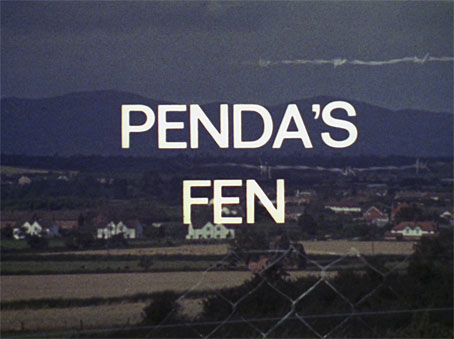
There’s no need for me to rhapsodise further about Rudkin’s work in general or Penda’s Fen in particular when I’ve already done so in the Folk Horror Revival piece, and in this lengthy post from 2010. The film itself looks the best I’ve ever seen it, slightly desaturated compared to the DVD I made of my own VHS recording (but then the BFI transfer is closer to the film elements) but with a fuller frame than in the TV screening. The one striking difference is in the title sequence which in the 1990 screening had a red cast throughout, something that’s missing from the BFI version. I don’t know why this is but the red cast always made the jump to the titles from a still shot of the Malvern hills more abrupt than it needed to be.

penda3.jpg

The extras on this release are minimal, with a short collection of interviewees apparently taken from a longer documentary about Alan Clarke’s work that will be in the Clarke collection out next month. The booklet features a new essay about the film by Sukhdev Sandhu, editor of the excellent Penda’s Fen tribute, The Edge Is Where The Centre Is. The Folk Horror Revival book is listed in the notes at the end of Sukhdev’s piece so I’m hoping this may prompt some of the people encountering Rudkin’s work for the first time to also look at his stage plays and that other sui generis television film, Artemis 81. David Rudkin, who will be 80 this year, was one of the many unique writers shunted out of the TV world by the very “entertainment barons” that Arne the playwright condemns in Penda’s Fen. I’m glad he’s lived to see this overdue reappraisal of his finest work for the medium.

Previously on { feuilleton }
Folk Horror Revival: Field Studies
The Living Grave by David Rudkin
The Edge Is Where The Centre Is
Afore Night Come by David Rudkin
White Lady by David Rudkin
Penda’s Fen by David Rudkin
David Rudkin on Carl Dreyer’s Vampyr

Weekend links 310

monogenis.jpg

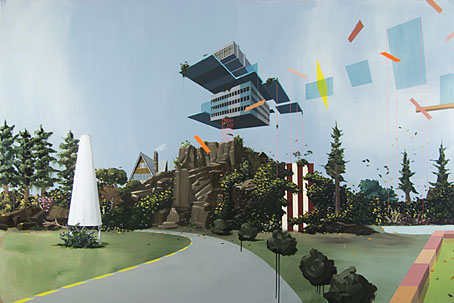
Parkland (2012) by Dean Monogenis.

• “The Story Behind the Planet’s Most Influential Road Map of ‘Weird Music’“. Gustavo Turner investigates the enduring influence of The Nurse With Wound List. Related: A Discogs list of links to all the NWWL discographies, and a recommended listening guide by Ultima Thule.

Tokyo Melody: Un film sur Ryuichi Sakamoto (1985) by Elizabeth Lennard features Sakamoto at work on Illustrated Musical Encyclopedia, together with Akiko Yano, Haruomi Hosono and Yukihiro Takahashi.

• “We wanted to fuse the aesthetics, histories and values of witchcraft, the traditional ideas with a contemporary edge,” says editor and creative director of Sabat magazine, Elisabeth Krohn.

There is a very seductive and very dangerous demon: the demon of generalities. He captivates man’s thought by marking every phenomenon with a little label, and punctiliously placing it together with another, similarly carefully wrapped and numbered phenomenon. Through him a field of human knowledge as changeable as history is turned into a neat little office, where this many wars and that many revolutions sleep in folders – and where we can pore over bygone ages in complete comfort. This demon is fond of words such as “idea”, “tendency”, “influence”, “period”, and “era”. In the historian’s study this demon reductively combines in hindsight the phenomena, influences and tendencies of past ages. With this demon comes appalling tedium – the knowledge (utterly mistaken, by the way) that, however humanity plays its hand or fights back, it follows an implacable course. This demon should be feared. He is a fraud. He is a salesman of centuries, pushing his historical price list.

Vladimir Nabokov in a previously unpublished lecture, On Generalities

• More Tom Phillips: 20 Sites n Years, a film by Jake Auerbach & David Thorp about the artist’s long-term urban photography project, is showing at Camberwell College of Arts next month.

• Mixes of the week: Sass In Pocket by Abigail Ward, Near Mint, 17th May 2016 by Robin the Fog & Hannah Brown, and Secret Thirteen Mix 184 by Andi Stecher.

• Grey Dog Tales talks to Brian J Showers of Swan River Press about horror and supernatural fiction.

• “Magic mushrooms lift severe depression in clinical trial.” But their use is still illegal in the UK.

• “Your brain does not process information, and it is not a computer,” says Robert Epstein.

Cliff Martinez’s theme for Nicolas Winding Refn’s forthcoming The Neon Demon.

Diamanda Galás, Still Wild and Primal, Returns to the New York Stage.

Janae Corrado on the photography of Joel-Peter Witkin.

Alastair Gee on gay home movies from the 1940s on.

People Laugh At Me (Coz I Like Weird Music) (1980) by The Instant Automatons | Weird Caravan (1980) by Klaus Schulze | Call It Weird (1983) by Xymox
More Things to Come

things01.jpg

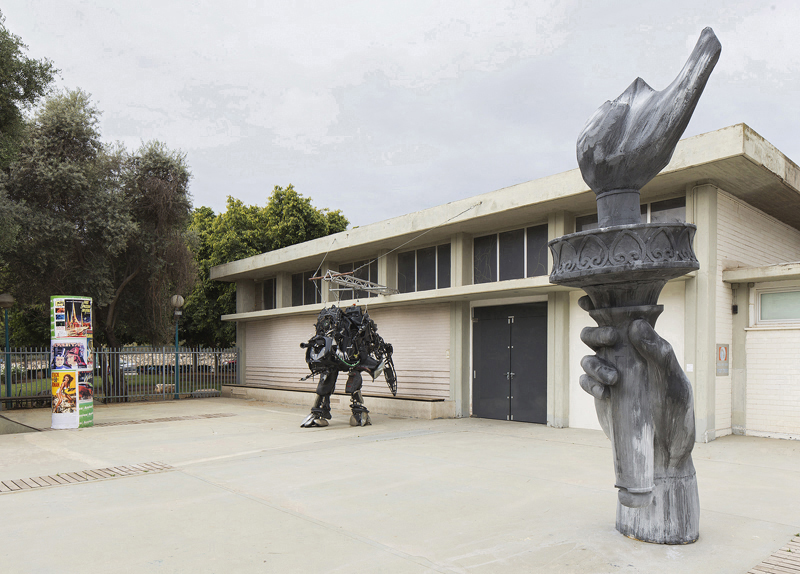
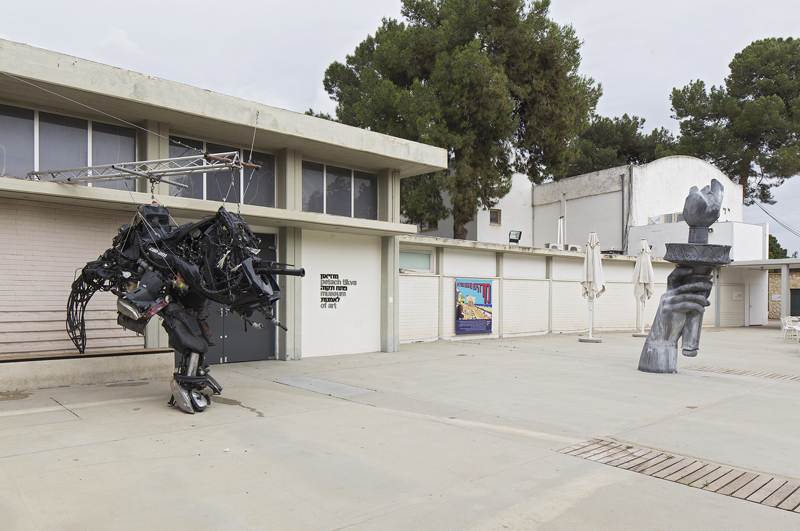
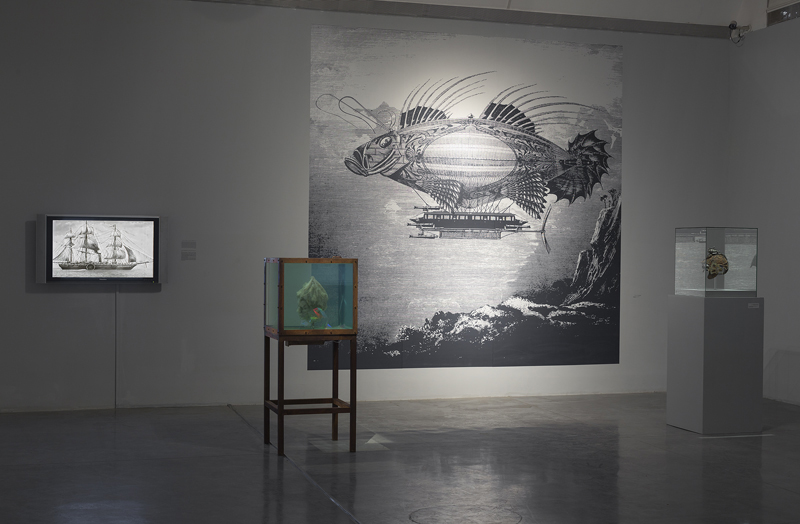
The organisers of the Things to Come exhibition at the Petach Tikva Museum of Art, Israel, sent me their photos of the show earlier this week. As with the other recent exhibitions that I haven’t managed to attend it’s good to see how everything looks in situ, and also see some of the other exhibits.

things02.jpg

The art pieces are all related to science fiction old and new, with my airship illustration (as seen in The Steampunk Bible) and a couple of other works representing the old (or new-as-old) side of things. I’m not used to seeing my work enlarged to such a huge size so this was a treat. The only larger reproductions have been a window display for one of the Cradle of Filth album covers which filled a whole window of Tower Records, London, in 2001, and stage backdrops for Cradle of Filth and Melechesh. I can’t identify any of the other exhibits until the catalogue arrives but I really like the iridescent metal construction that’s lying on the gallery floor. All the photos are by Elad Sarig, and are shown courtesy of the Petach Tikva Museum of Art. My thanks again to Doreet LeVitte Harten for selecting my work, and to Avshalom Suliman for dealing with the printing and other details.

things14.jpg

Continue reading “More Things to Come”