Schalcken’s paintings

schalcken3.jpg

Self Portrait by Candlelight (1695).

One additional pleasure of Le Fanu’s story and Leslie Megahey’s film is the way they draw attention to the work of an artist who might otherwise have remained overshadowed by his more famous contemporaries. Ever since seeing the meticulous chiaroscuro of Joseph Wright’s An Experiment on a Bird in an Air Pump (1768) I’ve been fascinated by paintings which feature a single artificial light source. Candlelit pictures are a particular fascination since these aren’t easy to paint even today when you can photograph the required scene beforehand. How much more difficult would it be painting a candlelit scene by candlelight alone? Works of this nature demonstrate an artist’s fascination with limited sources of light but also serve as displays of expertise, as did so much Dutch painting of Schalcken’s time with its emphasis on photo-realist representation.

schalcken5.jpg

Self Portrait (no date).

This small selection of paintings by Godfried Schalcken (1643–1706) shows some of the pictures that appear in Megahey’s film, or which we see being posed or replicated. At the end I’ve included Schalcken’s own take on the Salomé story which means his work can now be ushered into the Salomé archive. More of Schalcken’s work may be seen at Wikimedia Commons and the BBC’s Your Paintings site. One significant picture is unavailable: the painting which Le Fanu describes at the opening of his story. In his interview about the making of the film Megahey says that they searched the entire catalogue of Schalcken paintings but were unable to find a single picture that matches the one described in Le Fanu’s story. The painting seen in the film (which is perfectly rendered in Schalcken’s style) was created especially for the production.

schalcken6.jpg

A Candlelight Scene: A Man offering a Gold Chain and Coins to a Girl seated on a Bed (c. 1665–70).

Continue reading “Schalcken’s paintings”

Schalcken the Painter revisited

schalcken1.jpg

Illustration by Brinsley Sheridan Le Fanu from The Watcher and Other Weird Stories (1894) by J. Sheridan Le Fanu.

The stranger stopped at the door of the room, and displayed his form and face completely. He wore a dark-coloured cloth cloak, which was short and full, not falling quite to the knees; his legs were cased in dark purple silk stockings, and his shoes were adorned with roses of the same colour. The opening of the cloak in front showed the under-suit to consist of some very dark, perhaps sable material, and his hands were enclosed in a pair of heavy leather gloves which ran up considerably above the wrist, in the manner of a gauntlet. In one hand he carried his walking-stick and his hat, which he had removed, and the other hung heavily by his side. A quantity of grizzled hair descended in long tresses from his head, and its folds rested upon the plaits of a stiff ruff, which effectually concealed his neck.

So far all was well; but the face!

Strange Event in the Life of Schalken the Painter (1839) by J. Sheridan Le Fanu.

schalcken2.jpg

Compare this shot to the inferior YouTube version.

I enthused at some length about Leslie Megahey’s 1979 television film Schalcken the Painter last year so there’s no need to repeat myself. This post serves notice that the film is available at last in another marvellous dual-format release from the BFI, replete with extras, and the usual authoritative booklet notes. The Blu-ray transfer is a revelation after years spent watching an old VHS copy (the versions of YouTube are even worse). I noted before the astonishing lighting by cameraman John Hooper which successfully replicates not only the Dutch interiors so familiar from Vermeer, but also the candlelit chiaroscuro of Godfried Schalcken’s own paintings. (Le Fanu, incidentally, spelled the painter’s name “Schalken”.) Blu-ray quality might seem like overkill for a low-budget TV drama, however well-made, but this film in particular demands it, especially when the interiors begin to darken along with the story.

schalcken3.jpg

Cheryl Kennedy and Jeremy Clyde.

Among the extras there’s a 39-minute interview with Leslie Megahey and John Hooper about the making of the film. The combination of scenes based on period paintings plus candlelit interiors always makes me think of Barry Lyndon so it’s a surprise to discover that Megahey didn’t have this in mind at all. The film owes more, he says, to Blanche (1972) by Walerian Borowczyk, a period feature film which utilises a similarly flat shooting style with scenes based on medieval art. I’ve only seen Borowczyk’s earlier animated films, some of which have featured in previous posts, so this is one to look for in future.

schalcken4.jpg

In addition to the making-of piece there are two short films: The Pit (1962, 27 mins), directed by Edward Abraham, based on Poe’s Pit and the Pendulum, and The Pledge (1981, 21 mins) directed by Digby Rumsey, based on a short story by Lord Dunsany. I’ve not watched either of these yet, it seemed unfair to follow Megahey’s film with lesser fare.

After such unbridled enthusiasm it goes without saying that this is an essential purchase for anyone who enjoys the BBC’s ghost films of the 1970s. I’m biased towards Megahey’s productions but I find this a superior work to many of the MR James films. Megahey filmed another drama about a painter in 1987, Cariani and the Courtesans. It’s a non-supernatural piece but also has Charles Gray narrating and John Hooper behind the camera. I’ve not seen it for years so I’ll continue to hope it may also see a reissue soon.

Previously on { feuilleton }
Schalcken the Painter
Leslie Megahey’s Bluebeard
The Watcher and Other Weird Stories by J. Sheridan Le Fanu
Chiaroscuro

Weekend links 186

mutu.jpg

One Hundred Lavish Months of Bushwhack (2004) by Wangechi Mutu.

I wouldn’t be so bold as to call Benjamin Noys’ contribution to the recent The Weird conference at the University of London a highlight, but it was a surprise to find Lord Horror in general and the Reverbstorm book in particular being discussed alongside so many noteworthy offerings. Noys’ piece, Full Spectrum Offence: Savoy’s Neo-Weird, is now available to read online, a very perceptive examination of the tensions between the Old Weird and the New.

• Le Transperceneige is a multi-volume bande dessinée of post-apocalypse science fiction by Jacques Lob & Jean-Marc Rochette. Snowpiercer is a film adaptation by Korean director Bong Joon-ho featuring John Hurt, Jamie Bell, Chris Evans and Tilda Swinton. Anne Billson calls the director’s cut an “eccentric masterpiece” so it’s dismaying to learn that the film is in danger of being hacked about by the usual rabble of unsympathetic Hollywood distributors.

• This month marks the 100th anniversary of the publication of Proust’s À la recherche du temps perdu. Public Domain Review posted some of the paintings mentioned in Swann’s Way (or The Way by Swann’s as the latest translation so inelegantly has it).

How the Paris World’s Fair brought Art Nouveau to the Masses in 1900: a huge picture post about my favourite exposition.

• Mix of the week: “Sport of Kings” Mix by Ricardo Donoso. Related: Paul Purgas on five favourite records.

Ernst Reichl: the man who designed Ulysses. Related: Hear all of Finnegans Wake read aloud over 35 hours.

• “Why does Alain de Botton want us to kill our young?” A splendid rant by Sam Kriss.

• Love’s Secret Ascension: Peter Bebergal on Coil, Coltrane & the 70th birthday of LSD.

• Malicious Damage: Ilsa Colsell on the secret art of Joe Orton & Kenneth Halliwell.

• Just Say No to the Bad Sex Award, or the BS Award as Tom Pollock calls it.

• Lauren O’Neal’s ongoing PJ Harvey Tuesdays: One, Two, Three and Four.

Neville Brody on the changing face of graphic design.

A Brief History of the London Necropolis Railway.

Des Hommes et des Chatons: a Tumblr.

• At Pinterest: Androgyny

• Virgin Prunes: Pagan Lovesong (vibeakimbo) (1982) | Caucasian Walk (1982) | Walls Of Jericho (live at The Haçienda, Manchester, 1983; I’m in that audience somewhere)

Tornadoes

tornado1.jpg

A gust, a storme, a spoute, a loume gaile, an eddy wind, a flake of wind, a Turnado.

Captain John Smith from An Accidence, or the Pathway to Experience Necessary for all Young Seamen (1626).

In an age of storm chasers and increasingly spectacular photos, Lucille Handberg’s celebrated picture may seem undramatic, but for the moment this is still the most celebrated tornado photo to date. I knew the picture from an early age thanks to its appearance in a children’s encyclopedia. When Deep Purple’s Stormbringer album appeared in 1974 (below) that imperilled barn, and the shape of the twister, was immediately recognisable.

tornado4.jpg

Lucille Handberg took her famous photo on 8th July, 1927 as the tornado passed by Jasper, Minnesota. It’s a surprise to see from the account in The Milwaukee Sentinel that there’s at least one other picture. I tried searching for a larger image of the second photo but photo libraries still control its reproduction. The copy above is from an account of the tornado here.

Continue reading “Tornadoes”

Two films by Clive Barker: The Forbidden and Salome

forbidden1.jpg

The Forbidden.

Clive Barker announced late last month that arrangements were being made for a remake of Hellraiser. This isn’t the first time such an announcement has been made so we’ll have to wait and see what comes of that. I think I’m in a minority of people who’ve always been well-disposed to Barker and his works (the early stories in particular) but have never really enjoyed Hellraiser. I saw it when it was first released, and was disappointed that Barker and co. hadn’t manage to successfully negotiate the pitfalls of making a British film for demanding American producers. The soundtrack that Barker commissioned from Coil was dropped (a serious error); the film’s awkward mid-Atlantic tone makes suspension of disbelief difficult, and considering Barker’s success as a storyteller the narrative is often confused and disjointed. Without all the memorable imagery it’s doubtful it would have had much of a lasting reputation, or birthed so many sequels.

forbidden2.jpg

The Forbidden.

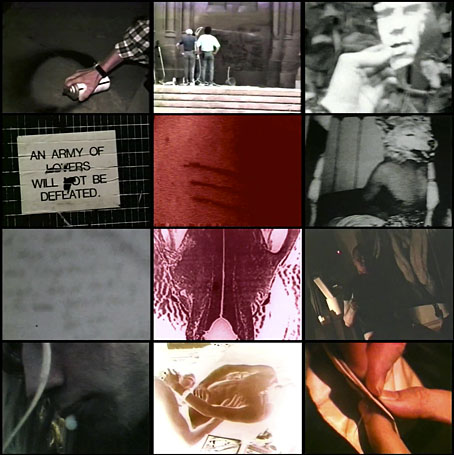
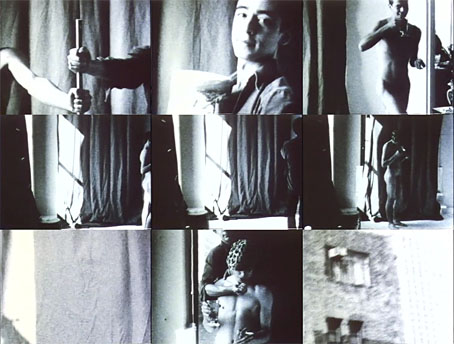
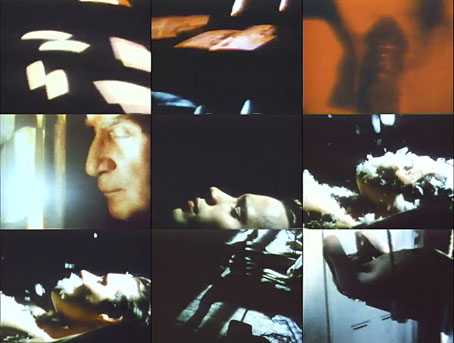
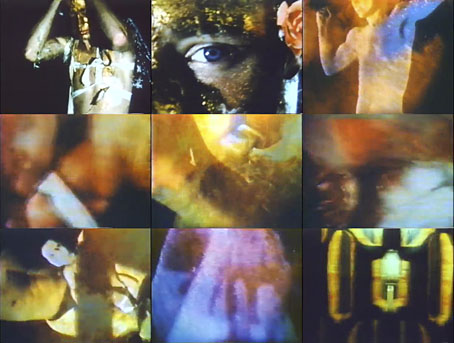
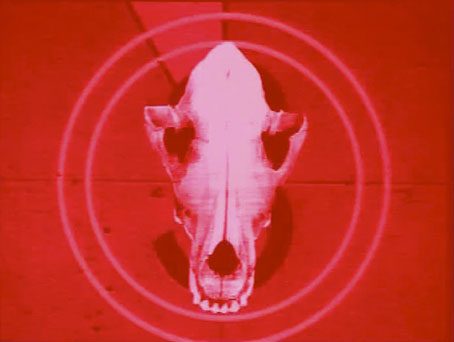
Barker and his theatre colleagues made The Forbidden in 1978, a 35-minute 16mm film of entirely negative images which shows how different Hellraiser might have been if fewer capitulations had been made to the marketplace, and to the clichés of horror cinema. Both films concern an occult ritual, an occult puzzle, and the subsequent consequences of the ritual. Where Hellraiser has to connect its most striking scenes with mundane business such as Julia’s murder spree and screaming teens, The Forbidden presents its imagery as raw data, leaving it to the viewer to piece together its fragments.

Barker’s work since Hellraiser has been almost completely generic so it’s surprising to see something of his that’s this open and abstract. In tone it’s closer to the films of Derek Jarman or Kenneth Anger than anything else, especially the sequence of Barker himself dancing with an erection, something which will ensure this doesn’t get many TV screenings. (Barker has referred to Kenneth Anger when discussing the film.) The final section, featuring a man being lovingly flayed by a number of scalpel-wielding hands, offers the same spectacle as Hellraiser‘s skinless Frank but without any of the accompanying frenzy. This won’t necessarily be on YouTube for very long so watch it while you can. The uploaded version is from the Redemption DVD, music included. Since the film is silent you can watch it with a score of your choice; I’d suggest Coil’s themes for Hellraiser.

salome.jpg

Salome.

Where The Forbidden is a successful piece of avant-garde cinema, Barker’s 17-minute dramatisation of Salome (1973) is closer to a well-made home movie. This is silent as well, and even has the quality and feel of a very old silent film. For an amateur work it still manages to convey a greater sense of dread than some of the other Salomé-related films which have been featured here, and I believe that’s the director himself playing the femme fatale.

Elsewhere on { feuilleton }
The Salomé archive

Previously on { feuilleton }
Clive Barker, Imaginer