Weekend links 515

huysmans.jpg

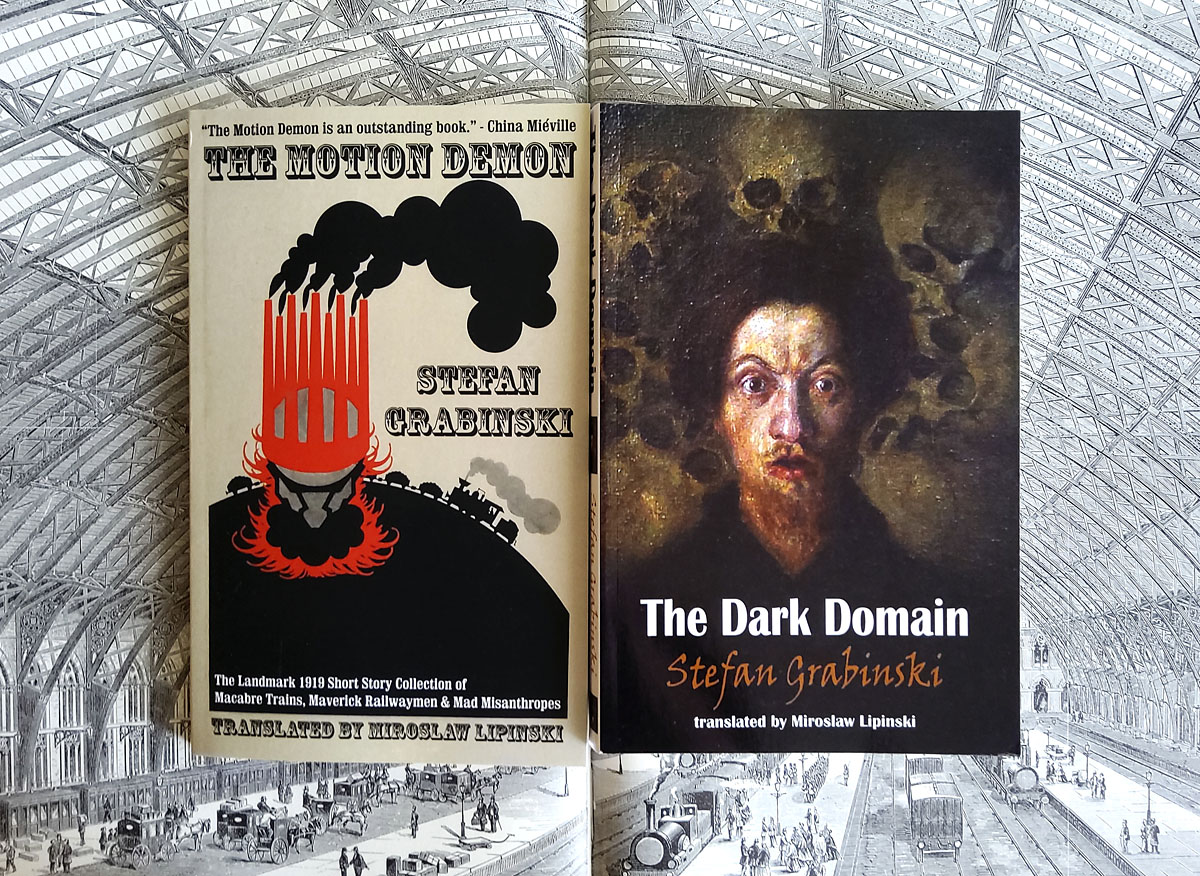
A pair of Huysmans covers from 1978 designed by Gérard Deshayes.

• Friends of the great composer/musician Jon Hassell set up a GoFundMe account a few days ago to help raise money for Jon’s medical costs. It’s always dispiriting having to link to these fund-generators when they shouldn’t be required at all but until America sorts out its health situation this is how things are. For those who’d prefer to help Jon by buying his music, there’s a Bandcamp page with a handful of releases, and more available at Bleep, the online distributor of Warp Records who helped produce his last release, Listening To Pictures (Pentimento Volume One). Related: Words With The Shaman: Jon Hassell interviewed by Chris May.

• Every time I think I must have heard all the best of the early Kraftwerk concerts another one turns up. This new posting at YouTube is taken from a recent file upload at the concert-swapping site Dimedozen, and is believed to be a radio recording of the group playing in Vancouver, Canada, in 1975. It’s very good quality (some slight bleed from other stations) and features excellent versions of their concert repertoire at that time. The version of Autobahn is especially good.

• in 2009 Dana Mattocks built a machine he called Steampunk Frankenstein, a construction which was attended by a frame containing my first piece of steampunk art. Dana’s latest creation is TILT, the Robot with Rocket Jet-Pack.

• RIP Tony Allen, the drummer about whom Fela Kuti said “without Tony Allen, there would be no Afrobeat”. Allen was interviewed by John Doran in 2012. Related: Tony Allen: the Afrobeat pioneer’s 10 finest recordings.

• “Robert Fripp’s ‘Music for Quiet Moments’ series. We will be releasing an ambient instrumental soundscape online every week for 50 weeks. Something to nourish us, and help us through these Uncertain Times.”

• How to avoid Amazon: the definitive guide to online shopping – without the retail titan; Hilary Osborne & Poppy Noor have some suggestions. I favour eBay for many of my purchases, large or small.

Adam Scovell on A Cinematic Lockdown: Confinement in the films of Alfred Hitchcock.

Liberty Realm, a book of art by Cathy Ward, is coming soon from Strange Attractor.

• One Great Reader: Luc Sante talks to Wes del Val about his favourite books.

• Oscar Wilde and the mystery of the scarab ring by Eleanor Fitzsimons.

Unica Zürn at Musée D’art Et D’histoire De L’hôpital Sainte-Anne.

• Mix of the week: Secret Thirteen Mix 302 by Avizohar.

• Another concert: Tuxedomoon live in Rome in 1988.

Rarefilmm | The Cave of Forgotten Films.

• At Dennis Cooper’s: Ghosts.

Ghost Song (1978) by Jim Morrison & The Doors | Ghost Song (2000) by Air | Ghost Song (2005) by Patrick Wolf

Cornell’s Constellations

cornell05.jpg

Untitled (Die Sternen-Welt), c.1950.

Among my current reading is Utopia Parkway (1997), Deborah Solomon’s biography of American artist Joseph Cornell (1903–1972). The book is very good for the factual data but I’ve been less enamoured by Solomon’s attempts to dredge biographical significance from Cornell’s hermetic and allusive work, or by her dismissive comments about other artists. Her account is most valuable when showing the evolution of Cornell’s art, the way he developed his often erratic and hesitant working methods. Most of Cornell’s works that I’ve seen in the past have been solitary examples, usually in books about Surrealism, so I wasn’t aware that so many of his celebrated and influential box assemblages were produced as themed series: Aviaries, Dovecotes, Hotels, and so on.

cornell01.jpg

Planet Set, Tête Etoilée, Giuditta Pasta (dédicace), 1950.

Astronomy was a Cornell passion which also provided the subject for another themed series, Observatories, a collection of boxes begun later in his career for which star maps and heavenly bodies were the dominant concern. By the 1950s his creations were much more refined than some of his earlier constructions, although the box contents include many familiar Cornell ingredients: antique maps and diagrams, glassware, spherical objects, etc. The examples here are a small selection of those to be found scattered around various websites. Another consequence of reading Solomon’s book is realising that I could do with a companion volume filled with Cornell’s artwork. There doesn’t seem to be a decent monograph as yet; if anyone has any suggestions (preferably with colour plates) then please leave a comment.

cornell02.jpg

Sun Box (1950). [Not a constellation, obviously, but from the same astronomical series.]

cornell07.jpg

Untitled (Celestial Navigation), 1956–58.

cornell03.jpg

Celestial Navigation (c.1958).

cornell06.jpg

Untitled (Canis Major Constellation), c.1960.

cornell04.jpg

Custodian—M.M. (1962).

Previously on { feuilleton }
Joseph Cornell: Worlds in a Box
Joseph Cornell, 1967
Rose Hobart by Joseph Cornell
View: The Modern Magazine

Weekend links 514

kircher.jpg

Athanasius Kircher welcoming two guests to the Collegio Romano, a detail from the frontispiece to his Romani Collegii Societatis Jesu Musaeum celeberrimum (1678).

Opium (1919) by Robert Reinert: “A Chinese opium dealer takes revenge on Westerners who have corrupted his wife.” With Werner Krauss and Conrad Veidt a year before their pairing in The Cabinet of Doctor Caligari.

Aubrey Beardsley at Tate Britain: in which the gallery thinks that 7 minutes is enough to give us a taste of a major exhibition that we can’t otherwise see.

Joe Pulver (RIP): His Highness in Yellow. A memorial piece that includes artist Michael Hutter talking about his paintings of Carcosa.

Court Mann on the strange history of Robert Smithson’s Spiral Jetty, 50 years old this month.

• “Invisible Little Worms”: Athanasius Kircher’s Study of the Plague by John Glassie.

Sophie Monks Kaufman on why literary lesbians are having a moment on screen.

• Photographer Ryan McGinley: “I was taught to believe in Satan. It scared me.”

• At Dennis Cooper’s: Ellen Burstyn Day, and the ghostly novels of WG Sebald.

Dorian Lynskey on where to start with Nina Simone’s back catalogue.

• Wie funktioniert ein Synthesizer? (1972). Bruno Spoerri explains.

• Banham avec Ballard: On style and violence by Mark Dorrian.

John Boardley on the most dangerous book in the world.

Improvisation for Sonic Cure by Ryuichi Sakamoto.

• The Strange World of…JG Thirlwell.

Diet Of Worms (1979) by This Heat | Stomach Worm (1992) by Stereolab | Heartworms (1998) by Coil

Oscar (1985)

oscar1.jpg

I’ve mentioned John Hawkesworth’s three-hour television biography of Oscar Wilde in previous Wilde-related posts, but was never able to point to a viewable copy until now. Oscar was broadcast by the BBC in three parts in 1985, and if it was ever shown again I don’t recall it; I certainly missed capturing it on tape. This was frustrating because I always remembered Michael Gambon’s portrayal of Wilde as being the best I’d seen, but the only reissues for home viewing were long-deleted tapes and discs produced for other countries. Having watched the drama again I’m pleased to find it as good as I remembered, possibly more so since I’ve read a several Wilde biographies in the interim so I’m better able to judge its accuracy.

oscar2.jpg

Oscar examining Aubrey Beardsley’s Salomé illustrations.

As a writer and TV producer John Hawkesworth specialised in period drama, creating and writing episodes for The Duchess of Duke Street, Danger UXB (about wartime bomb disposal), and the celebrated Granada TV Sherlock Holmes series featuring Jeremy Brett’s definitive portrayal of the detective. Oscar was based on biographical books by H. Montgomery Hyde, an MP who lost his seat for his campaigns in the late 1950s and 1960s against the British laws forbidding homosexual acts. Knowing this it’s significant that Hawkesworth’s opening scene in the first episode is a brief parliamentary discussion about the notorious Labouchere Amendment of 1885 (“The Blackmailer’s Charter”) which the narrator informs us would send Oscar Wilde to prison ten years later. Hawkesworth divides his drama into three distinct phases: Gilded Youth (concerning Wilde’s relationship with Alfred Douglas, his artistic success and the ire of the Marquess of Queensberry); Trials (the personal as well as legal variety); and De Profundis (imprisonment and its aftermath).

oscar3.jpg

In the dock at the Old Bailey.

The arc of tragedy is a familiar one, of course, but other dramatisations are seldom as well-balanced as here. Feature films about Oscar Wilde generally have shorter running times so devote their larger budgets to a recreation of the glamorous fin-de-siècle rise and the terrible downfall. Oscar is a typical BBC production of the period, mostly recorded on video in studio sets with occasional film work for exteriors. What we see of Victorian London appears sparse compared to the Sherlock Holmes episodes which were being filmed at this time. Hawkesworth may have been restricted by budget but three hours allows him to pay greater attention to the later episodes, especially the courtroom scenes. Oscar was the first screen biography to include the discussion of sexual details during the trial, as well as to show Wilde alone with a naked boy. This was a considerable advance at a time when gay sex of any kind was a rare sight on British television, and when even the straight variety could cause problems, as it did for Gambon and co. a year later when Dennis Potter’s The Singing Detective inspired the contemptible Mary Whitehouse to complain to the BBC. Hawkesworth also runs through the later years to the very end, a period of decline usually avoided or, as in Brian Gilbert’s Wilde (1997), disingenuously truncated so as to provide a “happy” resolution. Given this, I would have preferred some of the earlier scenes to be longer and to offer a sense of Wilde’s status as a serious thinker about art and aesthetics. Wilde’s flamboyant persona made him famous but he was influential not for his dandyish manner but for his ideas and their articulation in essays, lectures and the plays; his aesthetic theories were the foundation of all his writing. The most famous line from his final poem is a statement of philosophic principle: “Yet each man kills the thing he loves”.

oscar4.jpg

Oscar and Bosie.

Aesthetics aside, the public perception of Oscar Wilde presents a hurdle for dramatisations which risk resurrecting the caricatures that flourished while Wilde was alive. Michael Gambon’s performance shows Wilde as a human being, not merely a charming dispenser of witty aphorisms. This has always seemed to me crucial for any actor; it’s not enough to merely look like Wilde—as Robert Morley and Stephen Fry did—but you have to be able to convey the horrors, the indignity (and, with regard to his wife, the culpability) of his later years. Stephen Fry is a good comic actor but he never could have played the Singing Detective. Gambon’s seductively purring voice is another plus, and he even allows a hint Irish brogue to slip through now and then. Of the other actors, Robin Lermitte looks more like Alfred Douglas than does Jude Law in Brian Gilbert’s film, but Law is better at conveying Bosie’s mercurial and tempestuous character; likewise Tom Wilkinson made the Marquess of Queensbury seem a little more human in Gilbert’s version, at least in the beginning, whereas Norman Rodway presents the man from the outset as a perpetually furious goblin. Missing from Hawkesworth’s drama are Wilde’s good friend Ada Leverson, and his mother, Speranza, whose urging him to stand tall and remain in England when the police were coming for him was one of the factors that sealed his fate.

Oscar may be seen here: Part One | Part Two | Part Three

For now, and possibly the foreseeable future, this is the only way to see this drama so I’d suggest downloading it if you can. It’s a rare work that could easily vanish once again.

Elsewhere on { feuilleton }
The Oscar Wilde archive

Previously on { feuilleton }
The Importance of Being Oscar

Weekend links 513

tower.jpg

Water Tower (1914), Margaret Island, Budapest, Hungary.

George Bass on five ways The Year of the Sex Olympics (1968) predicted the way we live now. Nigel Kneale’s TV play will be reissued on DVD next week.

Ballardism (Corona Mix): three new drone pieces by Robert Hampson available as free downloads.

• Grace Jones: where to start in her back catalogue; John Doran has some suggestions.

Hal was the wry and soulful and mysterious historical rememberer. He specialized in staging strange musical bedfellows like Betty Carter and the Replacements or The Residents backing up Conway Twitty. Oh, the wild seeds of Impresario Hal. He was drawn equally to the danger of a fiasco and the magical power of illumination that his legendary productions held. Many years ago he bought Jimmy Durante’s piano along with Bela Lugosi’s wristwatch and a headscarf worn by Karen Carpenter. Some say he also owned Sarah Bernhardt’s wooden leg. He had a variety of hand and string puppets, dummies, busts of Laurel and Hardy, duck whistles and scary Jerry Mahoney dolls and a free ranging collection of vinyl and rare books. These were his talismans and his vestments because his heart was a reliquary.

Tom Waits pens a letter to remember Hal Willner

• The food expiration dates you should actually follow according to J. Kenji López-Alt.

• Blown-up buildings and suffocating fish: the Sony world photography awards, 2020.

• Rumbling under the mountains: a report on Czech Dungeon Synth by Milos Hroch.

Sophie Pinkham on The Collective Body: Russian experiments in life after death.

• Mix of the week: Spring 2020: A Mixtape by Christopher Budd.

Olivia Laing on why art matters in an emergency.

• At Dennis Cooper’s: Bloody.

Blood (1972) by Annette Peacock | Blood (1994) by Paul Schütze | Blood (1994) by Voodoo Warriors Of Love