The Cthulhu Mythos in the pulps

mythos01.jpg

The Nameless City: First published in The Wolverine, November 1921. Reprinted in Weird Tales, November 1928. Illustration by Joseph Doolin.

This would have been “The Cthulhu Mythos in Weird Tales” if some of HP Lovecraft’s more substantial stories hadn’t been published elsewhere. To prevent sprawl I’ve limited the list to Lovecraft’s own stories even though the Mythos takes in the work of contemporaries such as Clark Ashton Smith, Robert E. Howard, Frank Belknap Long, Zealia Bishop, August Derleth and others. I like seeing the first appearance in print of familiar tales, and I like seeing their accompanying illustrations even if the drawings are inferior pieces, which they often were for the first decade of Weird Tales. These are the short-story equivalent of first editions, and in the case of The Call of Cthulhu you get to see the first printing anywhere of that mysterious name.

mythos02.jpg

The Hound: Weird Tales, February 1924. Illustration by William Fred Heitman.

This issue is also notable for a story by Burton Peter Thom which shares a title with a Mythos-derived song by Metallica, The Thing That Should Not Be.

mythos03.jpg

The Festival: Weird Tales, January 1925. Illustration by Andrew Brosnatch.

mythos22.jpg

The Colour Out of Space: Amazing Stories, September 1927. Illustration by JM de Aragon.

Lovecraft didn’t think that Weird Tales would appreciate this one even though it’s more horror than science fiction so he sent it to Amazing Stories instead.

mythos04.jpg

mythos26.jpg

The Call of Cthulhu: Weird Tales, February 1928. Illustration by Hugh Rankin.

It’s doubtful that Rankin, Senf and co. would have been up to the task of depicting Great Cthulhu or the non-Euclidean nightmare of R’lyeh, but this hardly excuses editor Farnsworth Wright’s decision to give the cover to Elliott O’Donnell’s ridiculous ghost table.

Continue reading “The Cthulhu Mythos in the pulps”

Drone month

drones.jpg

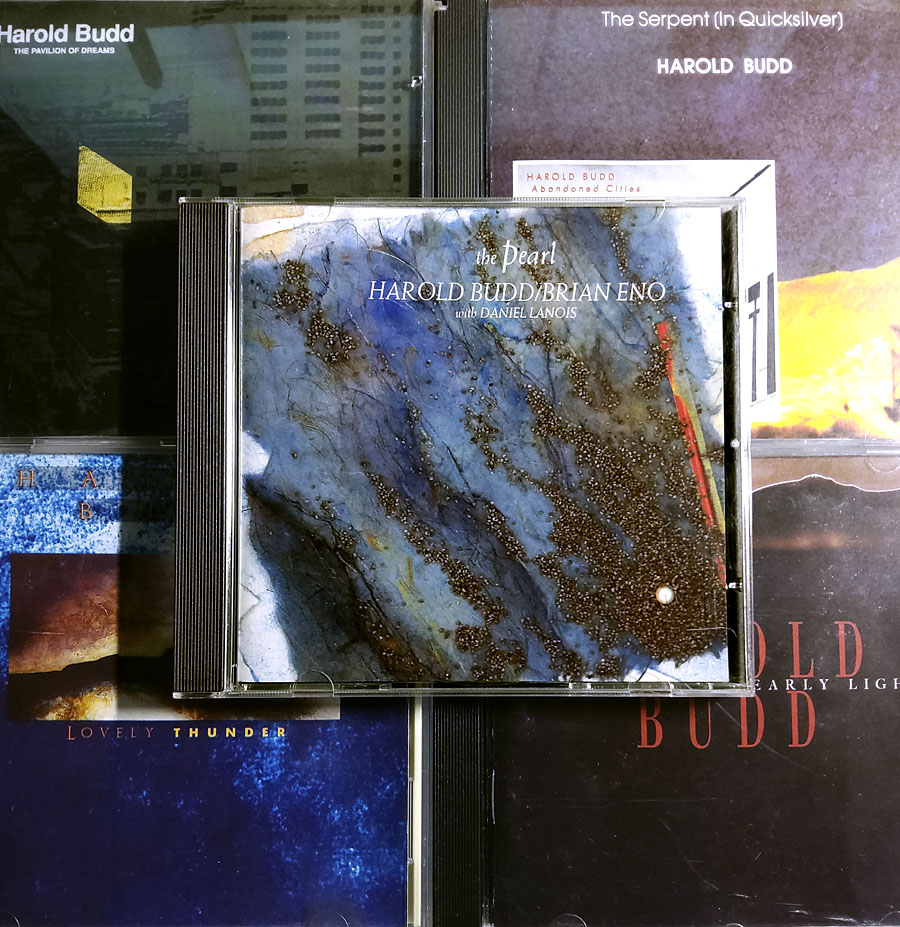
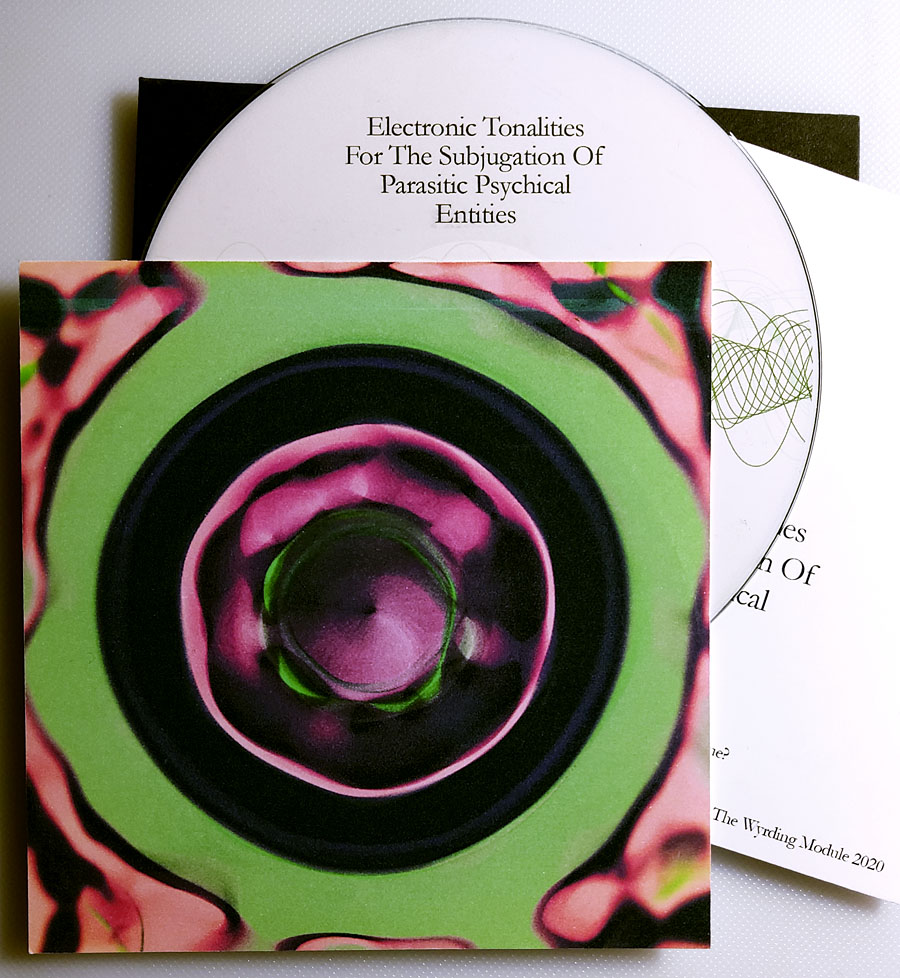
October is drone month. July is often drone month as well, if the heat rises to a degree that I can’t bear to listen to anything more taxing than Main, On Land, or the Paul Schütze recordings that feature thunderstorms. But October owns the drone because it also owns Halloween, as I noted in this Halloween playlist. The first entry there, Zeit by Tangerine Dream, is such a perennial favourite that it’s one of the few albums I can imagine writing about for the 33 1/3 books. But this year Zeit has been competing for haunted airtime with the Cthulhu album from Cryo Chamber, a label devoted to the darker end of the ambient spectrum, where choral throngs in colossal chambers are scoured by the katabatic winds that howl through vast subterranean chasms while Thrones of Darkness brood with Amorphous Abominations in the Illimitable Void etc etc.

The Cthulhu album is the first in a series of Lovecraft-themed collaborations by Cryo Chamber artists, with each release taking a Cthulhu Mythos god as its subject. I still find this one to be the best of the series so far, not least because the character of Lovecraft’s tentacled monstrosity is more clearly defined than the other gods which lends more definition to the musical illustration. There are no separate tracks on these albums, all the pieces are mixes that cover the sides of one or more compact discs, blending the contributions of the different artists into a single work. The Cthulhu drones are suitably sub-oceanic, like Eric Holm’s Barotrauma with added cosmic horror, a suite of restless stirrings from the Thing that lies dreaming at Point Nemo. Towards the end the Thing awakens to wreak havoc upon the upstart human world, but not before we’ve heard a mutant voice daring to speak aloud the invocation from The Call of Cthulhu.

Previously on { feuilleton }
Hodgsonian vibrations

Weekend links 540

wildboys.jpg

A century before William Burroughs: The Wild Boys of London (1866). No author credited.

• “Acid, nudity and sci-fi nightmares: why Hawkwind were the radicals of 1970s rock.” I like a headline guaranteed to upset old punks, even though many old punks had been Hawkwind fans. As noted last week, Joe Banks’ Hawkwind: Days of the Underground is now officially in print, hence this substantial Guardian feature in which the author reprises his core thesis. Mathew Lyons reviewed the book for The Quietus.

• “Roy Ayers and Fela Kuti each explored Pan-Africanism and diasporic solidarity their own way before their meeting in 1979.” John Morrison on the Roy Ayers and Fela Kuti collaboration, Music Of Many Colours.

• “In 1938, Joan Harrison read a galley of Daphne Du Maurier’s masterpiece. She wouldn’t rest until she had the rights to adapt it.” Christina Lane on Rebecca at 80, and the women behind the Hitchcock classic.

Each page features a distinct moment, seen from one perspective on the front, and from a diametrically opposed angle on the back, occasionally pivoting, for instance, between interior and exterior spaces. This organizing principle is complicated by the fact that a given image might be a depiction of the physical environment surrounding the camera or, at other times, a photograph of a photograph. Midway through, the scene is inverted such that the volume must be turned upside-down to be looked at right-side up. The result is an elegant, disorienting study in simultaneity that allows the viewer to enter the work from either end.

Cover to Cover (1975), a book by Michael Snow, has been republished by Light Industry and Primary Information

• At Public Domain Review: The Uncertain Heavens—Christiaan Huygens’ Ideas of Extraterrestrial Life by Hugh Aldersey-Williams.

• Penny Dreadfuls and Murder Broadsides: John Boardley explores the early days of pulp fiction and what he calls “murder fonts”.

• The lesbian partnership that changed literature: Emma Garman on Jane Heap, Margaret C. Anderson and The Little Review.

The 10th Tom of Finland Emerging Artist Competition is now open to entries. (Titter ye not.)

• Death Barge Life: Colin Fleming on Gericault’s grim masterpiece, The Raft of the Medusa.

• At Dennis Cooper’s: Spotlight on…The Grand Grimoire: The Red Dragon (1702).

Music To Be Murdered By (1958) Jeff Alexander With Alfred Hitchcock | Murder Boy (1991) by Rain Parade | Murder In The Red Barn (1992) by Tom Waits

The écorché saint

bartholomew1.jpg

An addendum to the previous post after Daniel in the comments reminded me of Saint Bartholomew who is often depicted in paintings and sculptures carrying his flayed skin. Having suffered considerable torture, Bartholomew spends eternity as the patron saint of tanners and leatherworkers. This sounds like a cruel joke on the part of medieval martyrologists but the history of the Christian church contains many such ironies, along with some equally surprising imagery. The luckier saints, like Lucy and Agatha of Sicily, are shown in paintings with their gouged eyes and lopped breasts restored in Heaven, the original (miraculously unbloody) articles being proffered to the viewer on plates; Peter of Verona, meanwhile, offers benedictions to the faithful with the hatchet that killed him still protruding from his head. The sculpture of Bartholomew by Marco d’Agrate in Milan Cathedral dates from 1562, and is more écorché than saint, a marvellous exercise in anatomical fidelity that just happens to double as a religious icon.

bartholomew2.jpg

Previously on { feuilleton }
Écorché
Cephalophores

Écorché

ecorche01.jpg

Engraving by Philip Galle.

Écorché, from the French verb to flay, was the traditional term applied to depictions of the skinless man found in anatomical studies, and the musculature models made for the use of artists and sculptors. This is almost always a male figure. Women tend to feature in the anatomical works of previous centuries in order to illustrate the conditions of pregnancy, the male body being considered the default for the usual sexist reasons.

I’ve been revisiting the history of these figures while working on a new book design so what follows are a few choice examples, some of which carry a pleasantly Surrealist charge. In the years that followed the pioneering studies by Vesalius and co. there was a period of playfulness in anatomical illustration during which time the figures are shown peeling away their flesh to reveal the muscles or even the organs beneath, a striptease where the substance of the body itself is removed. As William Burroughs was fond of quoting: “‘T ain’t no sin to take off your skin, and dance around in your bones.”

ecorche07.jpg

Valverde de Hamusco (1556).

ecorche06.jpg

Engraving by G. Bonasone (15–).

ecorche02.jpg

Engraving by Philip Galle.

Continue reading “Écorché”