Weekend links 544

wright.jpg

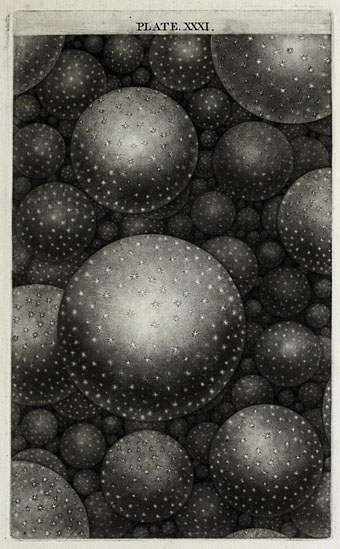
“You may if you please, call a partial View of Immensity, or without much Impropriety perhaps, a finite View of Infinity.” An illustration from Thomas Wright’s An Original Theory or New Hypothesis of the Universe (1750).

• If you read about electronic music for any length of time today you’ll eventually come across the term “pad”, referring to a feature of the music itself not the instrumentation. I’ve noticed increasing instances of this with no accompanying explanation of what the term actually refers to. Rob Wreglesworth has the answer.

• At Dangerous Minds: Richard H. Kirk talks to Oliver Hall about Cabaret Voltaire and Shadow Of Fear. No comment from Kirk as to why the new album warrants the CV name when the music is indistinguishable from his many solo works.

• Eyeball Fodder: The Art of the Occult Edition. S. Elizabeth presents artwork featured in her new book, together with links to artist interviews, including one to the interview we did for Coilhouse magazine a few years ago.

• More electronica: Music From Patch Cord Productions is a new compilation of music by Mort Garson that features some previously unreleased pieces. Great cover art by Robert Beatty as well.

• A trailer for Fireball: Visitors from Darker Worlds, a documentary film about meteorites by Werner Herzog and Clive Oppenheimer.

• From 2019: John Waters and Lynn Tillman in conversation. “The pair discussed Waters’s recent exhibitions and art career.”

Harlan Ellison’s The Last Dangerous Visions may finally be published, after a five-decade wait.

Turn your feline into a god with this cardboard Shinto shrine for cats.

• Mix of the week: XLR8R Podcast 670 by Dadub.

• At Dennis Cooper’s: Harry Dean Stanton Day.

John Cooper Clarke‘s favourite songs.

Meteor Storm (1994) by FFWD | The Third Chamber: Part 5 – 7pm Tokyo Shrine (1994) by Loop Guru | Fireball (1994) by Sun Dial
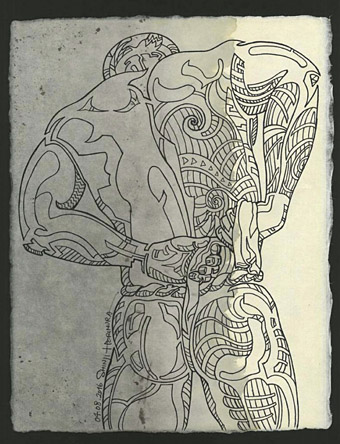
The art of Shinji Horimura

horimura1.jpg

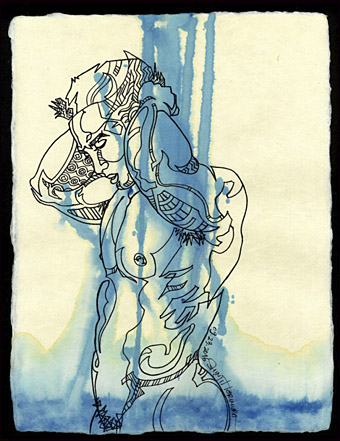
Lagrimas del Mar (2016).

The gay artists archive continues to be the most popular destination on these pages which makes me feel I ought to add to it more often than I do. Not all of Shinji Horimura’s art is homoerotic but these drawings from his WAH series certainly are. In these and other works Horimura renders the male body with broken outlines that fragment into abstract patterns. In the black-and-white drawings these might be read as tattoos but in his colour art they suggest the hallucinatory revelations of Alex Grey’s paintings. There’s more to see on the artist’s Coroflot pages.

horimura2.jpg

Loosen (2016).

Continue reading “The art of Shinji Horimura”

Cosmic music and cosmic horror

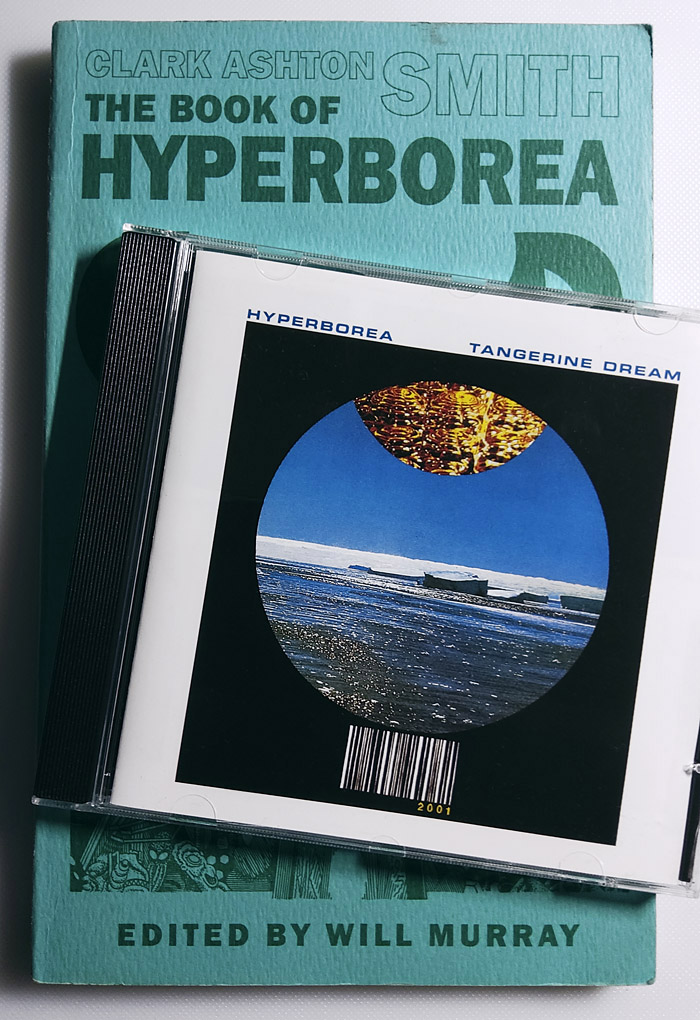
hyperborea.jpg

Track titles by Tangerine Dream (again) if they were stories or chapters in a book of weird fiction:

– Alpha Centauri
– Ultima Thule
– Origin Of Supernatural Probabilities
– Mysterious Semblance At The Strand Of Nightmares
– Sorcerer
– Abyss
– Stratosfear
– Choronzon
– Remote Viewing
– Hyperborea

Clark Ashton Smith’s tales of the northern continent of Hyperborea were Cthulhu Mythos fantasies with a sardonic CAS twist. The connection with Tangerine Dream is most likely coincidental, the name being one that Smith borrowed rather than invented, but I enjoy the intersection all the same. The title of TD’s first single, Ultima Thule, refers to another remote northern realm. If you’re reaching for associations, as I invariably am, then it’s also worth mentioning Haunted Island by an affiliated group, Agitation Free. The last track on their 2nd album features a partial recitation of Dream-Land by Edgar Allan Poe that includes the words “from some ultimate dim Thule”; the keyboard player in Agitation Free was Michael Hoenig who was briefly a member of Tangerine Dream in 1975. As for Choronzon, this was a demon that Aleister Crowley claimed to have tangled with in the Algerian desert in 1909. The malevolent and chaotic nature of the entity, together with its unavoidably Lovecraftian epithet of “the Dweller in the Abyss”, places it close to the Mythos god of “nuclear chaos”, Azathoth, although the music that bears the Dweller’s name doesn’t convey any of these qualities. Tangerine Dream’s Choronzon is an uptempo piece of electro-pop that Virgin optimistically released as a single in 1981. For a group with a long history of eccentric title choices this maybe isn’t so surprising.

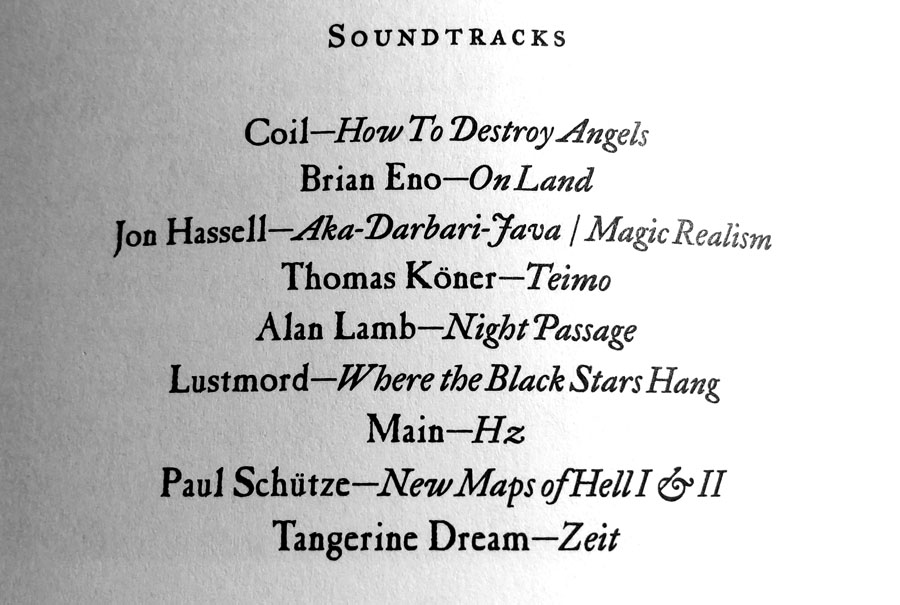
soundtracks.jpg

Tangerine Dream feature on another cosmic-horror music list that I suggested as soundtracks for The Haunter of the Dark in 1999. (The Lustmord somehow lost a couple of words from its title.) Most of these are drone works, and several were released after I’d drawn most of the pages, but I was listening to Zeit and Rubycon during many late-night work sessions, the latter especially while drawing The Call of Cthulhu. Discovering weird fiction and spacey electronica simultaneously caused the two things to become inextricably connected, and besides which there wasn’t much else to be found in the music world of the late 1970s that complemented such stories to the same degree. Rubycon offered satisfying associations, from the liquid green of the cover art (Cthulhu always suggests the colour green), to the predominantly sinister, minor-key music within. When the sequencers in Rubycon: Part 2 give way to the sounds of waves breaking on a shoreline this only reinforces the suitability of the album as a Cthulhoid soundtrack.

space.jpg

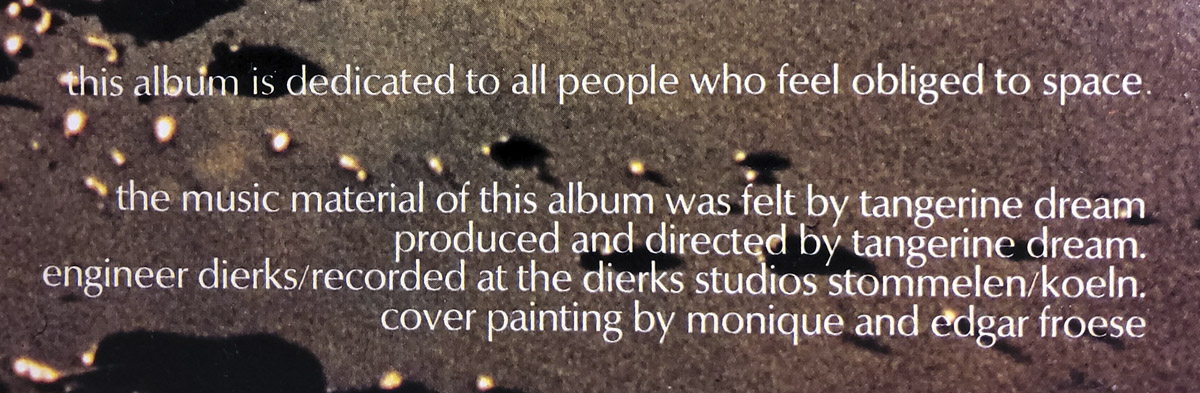
The dedication from Alpha Centauri as printed in the Virgin double-disc reissue with the Atem album. It’s never been clear whether the “space” referred to is a noun or a verb.

If you’re looking for cosmic-horror soundtracks today then you’re spoiled for choice, there are numerous examples, from the general—the occulted universe of Dark Ambience—to the very specific. I enjoy the drones, obviously, but the Berlin School still has something to offer so long as the key remains a minor one and the titles avoid New Age vapidity. See this mix for further examples.

Previously on { feuilleton }
Tangerine Dream in concert
Drone month
Pilots Of Purple Twilight
Synapse: The Electronic Music Magazine, 1976–1979
A mix for Halloween: Analogue Spectres
Edgar Froese, 1944–2015
Synthesizing
Tangerine Dream in Poland
Hodgsonian vibrations
White Noise: Electric Storms, Radiophonics and the Delian Mode

Weekend links 543

cliffhouse.jpg

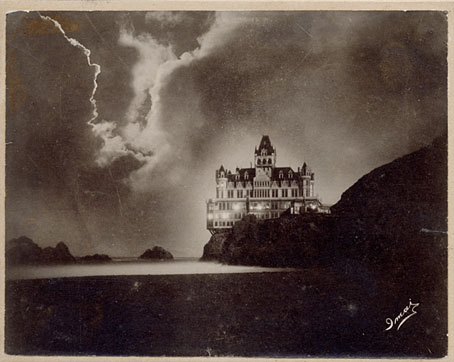
Adolph Sutro’s Cliff House in a Storm (c. 1900) by Tsunekichi Imai.

• Good to see a profile of Wendy Carlos, and to hear that she’s still working even though all her albums (to which she owns the rights) have been unavailable for the past two decades. I’d be wary of praising Switched-On Bach too much to avoid giving new listeners a wrong impression. The album was a breakthrough in 1968 but was quickly improved upon by The Well-Tempered Synthesizer (1969) and Switched-On Bach II (1973). And my two favourites, A Clockwork Orange – The Complete Original Score (1972) and the double-disc ambient album, Sonic Seasonings (1972), are superior to both.

• “[Sandy Pearlman] told me that one of the main inspirations was HP Lovecraft. I said, ‘Oh, which of his books?’ He said, ‘You know, the Cthulhu Mythos stories or At The Mountains Of Madness, any of those.'” Albert Bouchard, formerly of Blue Öyster Cult, talks to Edwin Pouncey about BÖC’s occult-themed concept album, Imaginos (1988), and his affiliated opus, Re Imaginos.

• More electronica: Jo Hutton talks to Caroline Catz, director of the “experimental documentary” Delia Derbyshire: The Myths and Legendary Tapes.

• At the V&A blog Clive Hicks-Jenkins talks to Rebecca Law about his award-winning illustrations for Hansel and Gretel: A Nightmare in Eight Scenes.

• New music: Archaeopteryx is a new album by Monolake; What’s Goin’ On is a further preview of the forthcoming Cabaret Voltaire album, Shadow Of Fear.

Celebrating A Voyage to Arcturus: details of two online events to mark the centenary year of David Lindsay’s novel.

• “Streaming platforms aren’t helping musicians – and things are only getting worse,” says Evet Jean.

• At Spoon & Tamago: the cyberpunk, Showa retro aesthetic of anime Akudama Drive.

• At A Year In The Country: a deep dive into the world of Bagpuss.

Sinister Sounds of the Solar System by NASA on SoundCloud.

• At Dennis Cooper’s: Shirley Clarke Day.

Mary Lattimore‘s favourite albums.

• Solaris, Part I: Bach (1972) by Edward Artemiev | Bach Is Dead (1978) by The Residents | Switch On Bach (1981) by Moderne