John Yunge-Bateman’s King Lear

yunge01.jpg

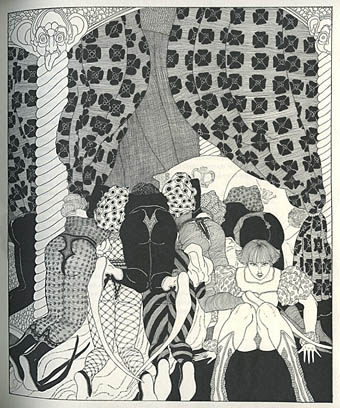
When Majesty turns to folly!

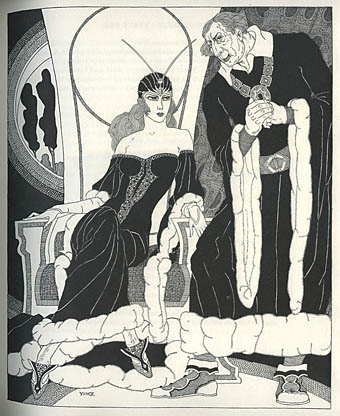
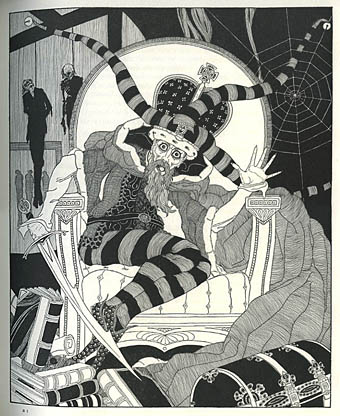
John Yunge-Bateman (1897–1971), aka “Yunge”, is another British illustrator whose work I’d not noticed until now, possibly because this 1930 edition of King Lear is an early creation in a derivative style the artist abandoned. The ten black-and-white drawings are closer to Harry Clarke than Aubrey Beardsley, and a couple of them even try to match Clarke’s more grotesque inventions albeit with variable results. Some of the faces are rather dopey for my taste but I like the use of solid blacks. These samples are taken from a scarce copy currently up for auction at silver-gryph’s eBay pages should anyone be interested. (Thanks again to Nick for the tip!)

yunge02.jpg

Than doth, within a dull, stale, tired bed, go to the creating a whole tribe of fops.

yunge03.jpg

If you come slack of former services you shall do well.

Continue reading “John Yunge-Bateman’s King Lear”

Les Theatres d’Ombres Chinoises

ombres01.jpg

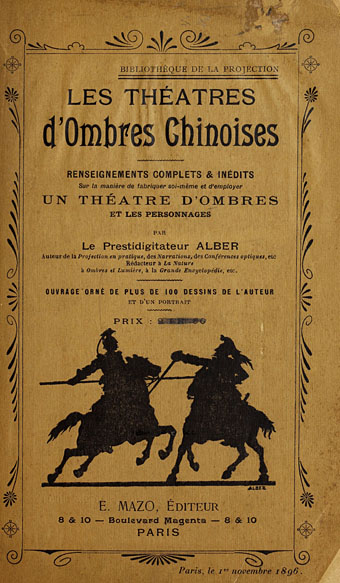
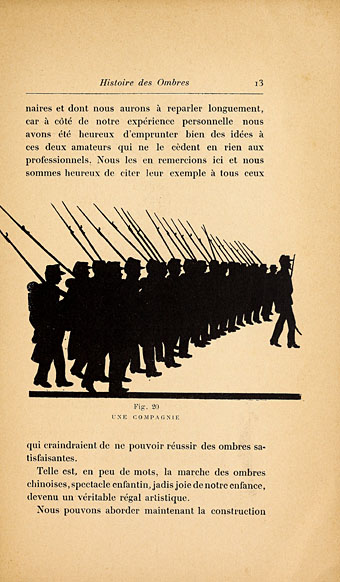
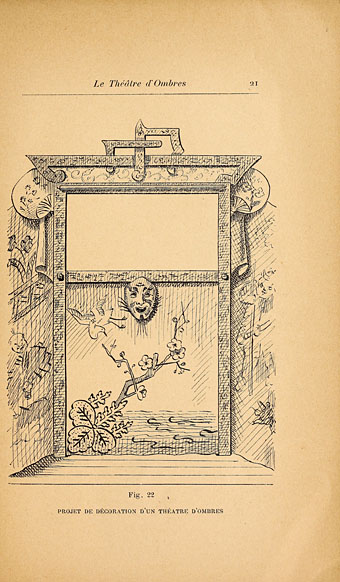
Ombres Chinoises—”Chinese shadows”—were the specialty of Alber, prestidigitateur, according to this French volume from 1896. The diagrams show examples of Alber’s tableaux, and also the technical aspects of his articulated figures, some of which seem caught midway between Javanese shadow puppets and Lotte Reiniger’s animated silhouettes. One of the commissions I’ve been working recently features silhouette figures; more about that later.

ombres02.jpg

ombres03.jpg

Continue reading “Les Theatres d’Ombres Chinoises”

Weekend links 246

ngai.jpg

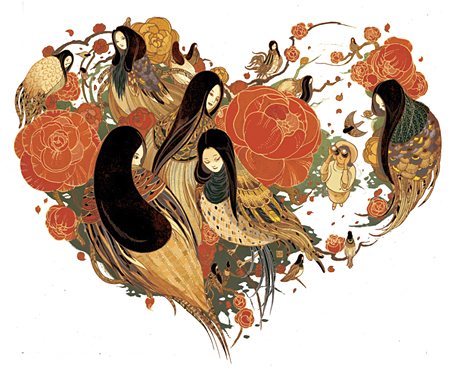
Love Hunter by Victo Ngai.

• “The strangeness of the lyric style, the misuse of words and awkward phraseology that have been criticized even by Poe’s fervent admirers, are here taken as virtues, heightening as they do, a given poem’s conscious and calculated formalism.” Marjorie Perloff reviews The Poet Edgar Allan Poe: Alien Angel by Jerome McGann.

• Mix of the week: Secret Thirteen Mix by Jeremy Kolosine. Starting with Michael Rother is apt when I’ve spent the past week in a Cluster/Harmonia/Kraftwerk/La Düsseldorf/Neu!/Rother loop.

• Court records “suggest that the supposedly prudish Victorians had a far more relaxed attitude to sex between men than their 1960s counterparts”. Historian Jeff Evans has the data.

• “Part of HP Lovecraft’s acknowledged debt to Machen also lies in hearing without seeing.” London Sound Survey on Arthur Machen’s “sounds from beyond the veil”.

• “…pity the designer who has to enact the stage direction that instructs rats to carry away a character’s feet.” Andrew Dickson on the extreme theatre of Sarah Kane.

• Psychedelic collage artist Wilfried Sätty receives a mention in Carey Dunne‘s piece about how LSD helped shape California’s ecstatic design legacy.

• More psychedelia: The Psychedelic Sex Book by Eric Gotland & Paul Krassner, edited by Dian Hanson.

• At Dangerous Minds: Robert Fripp demonstrates Frippertronics on The Midnight Special, 1979.

• Dreams from a Glass House: artist Josiah McElheny on the glass architecture of Paul Scheerbart.

• Director Peter Strickland on six films that fed into The Duke of Burgundy.

• Vintage trade card designs

• The Zero Of The Signified (1980) by Robert Fripp | Heptaparaparshinokh (1981) by Robert Fripp & The League of Gentlemen | 1984 (1981) by Robert Fripp
Wildeana 14

bench.jpg

BookBench by Trevor Skempton.

Continuing an occasional series. Recent (and not-so-recent) Wildean links.

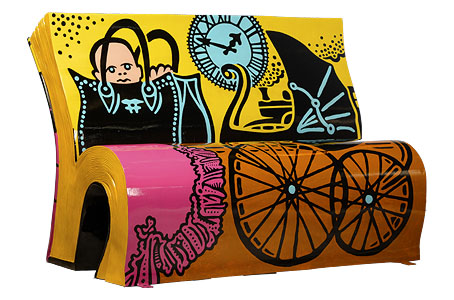
• The BookBench above is one of several pieces of street furniture placed around London last autumn all of which were based on literary works past and present. Trevor Skempton’s design for Oscar Wilde was based on The Importance of Being Earnest which wouldn’t have been my choice (Dorian Gray, please). See the rest of the designs here.

• “Rare Play About Oscar Wilde Will Return to NYC“: John Gay’s solo play Diversions & Delights will get its first professional New York staging since Vincent Price performed it on Broadway in 1978.

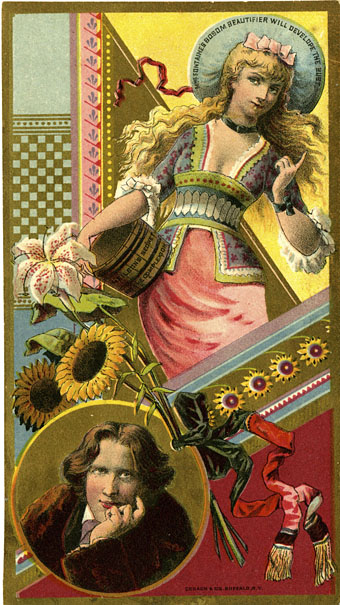
Chapter Three, “Strike a Pose,” concerns Wilde’s visit to the New York studio of the celebrated portrait photographer Napoleon Sarony, where he posed for twenty-seven portraits. The now-familiar images from this session would be used not only for publicity, but also on trade cards advertising “products ranging from cigars to kitchen stoves.” An image of Wilde even wound up promoting “Mme Marie Fontaine’s Bosom Beautifier for Beautifying & Enlarging The Bust.’”

Jennie Rathbun reviews Wilde in America: Oscar Wilde and the Invention of Modern Celebrity by David M. Friedman

• “Letters unravel mystery of the death of Oscar Wilde’s wife: Grandson of Irish dramatist has unearthed medical evidence in private family letters which points to likely cause of death”.

fontaine.jpg

Mme Marie Fontaine’s Bosom Beautifier for Beautifying & Enlarging The Bust. Trade card, 1882.

• Books from Oscar Wilde’s library discovered in the National Library of the Netherlands.

• Wilde-inspired: a list of recommended film viewing.

Elsewhere on { feuilleton }
• The Oscar Wilde archive

The Importance of Being Oscar

macliammoir1.jpg

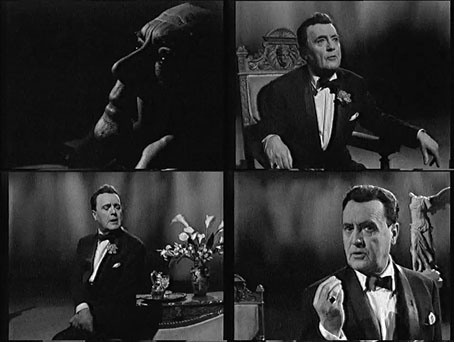
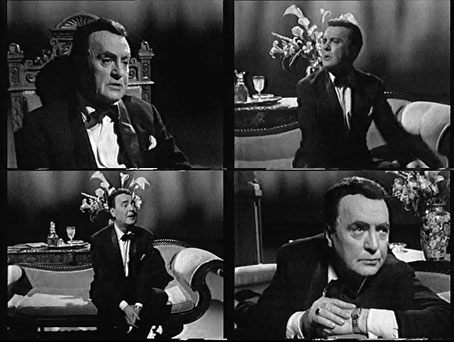
Picking up where we left off, I was thrilled to find that Micheál MacLiammóir’s one-man dramatised biography of Oscar Wilde had finally made it to YouTube. The Importance of Being Oscar was MacLiammóir’s 100-minute magnum opus, an acclaimed condensation of Wilde’s life and work first performed at the Gate Theatre, Dublin, in 1960. Hilton Edwards produced for partner MacLiammóir who subsequently took his show around the world, including performances on Broadway.

MacLiammóir’s monologue interleaves sketches of Wilde’s life with substantial extracts from the major works—An Ideal Husband, The Picture of Dorian Gray, The Importance of Being Earnest, De Profundis, and The Ballad of Reading Gaol—with the actor/writer often taking two roles in the same scene. The readings are deeply felt; this would have been a very personal project, not only for its subject being a fellow Irishman and playwright but also for MacLiammóir and Edwards’ status as gay men in Ireland at a time when they could never be open about their private lives. (Or openly secretive: Barbara Leaming’s biography of Orson Welles makes it clear that iniquitous laws did nothing to stifle the pair in their pursuit of other men.) Accounts of Wilde’s post-trial life are inevitably sombre but MacLiammóir notes that even prison couldn’t suppress Wilde’s sense of humour. A literary conversation with one of the warders is recounted, along with the famous barb thrown at Marie Corelli: “Now don’t think I’ve anything against her moral character, but from the way she writes she ought to be in here.” If MacLiammóir’s performance seems a little overwrought in the television studio it would have appeared less so on the stage.

macliammoir2.jpg

The BBC filmed The Importance of Being Oscar in the mid-60s, and I think that recording may be the one linked here, a version I recall being shown during an evening of Wilde-related TV in the late 1980s. Prior to this MacLiammóir had played Wilde himself for a televised dramatisation of the courtroom appearances broadcast by the BBC in 1960. This was a key year for reappraisals of Wilde’s reputation which also saw the cinema release of Oscar Wilde (with Robert Morley) and The Trials of Oscar Wilde (with Peter Finch). The latter is the superior film and performance even if Finch looks nothing like Wilde. Public attitudes were changing but all the films and TV plays at this time remained evasive about the precise nature of Wilde’s infractions. The Importance of Being Oscar follows this pattern with a fade to black after Wilde’s arrest; the second act opens with MacLiammóir as the judge passing sentence on Wilde and procurer Alfred Taylor. Circumspection doesn’t detract from the power of the monologue which has been revived in recent years, most notably by Simon Callow, another great Wilde enthusiast and also the biographer of MacLiammóir’s young protégé, Orson Welles.

Now that MacLiammóir’s monologue has resurfaced I’ll be hoping someone uploads John Hawkesworth’s Oscar (1985), a three-part television biography with Michael Gambon playing Wilde.

Elsewhere on { feuilleton }
• The Oscar Wilde archive