Weekend links 541

finlay.jpg

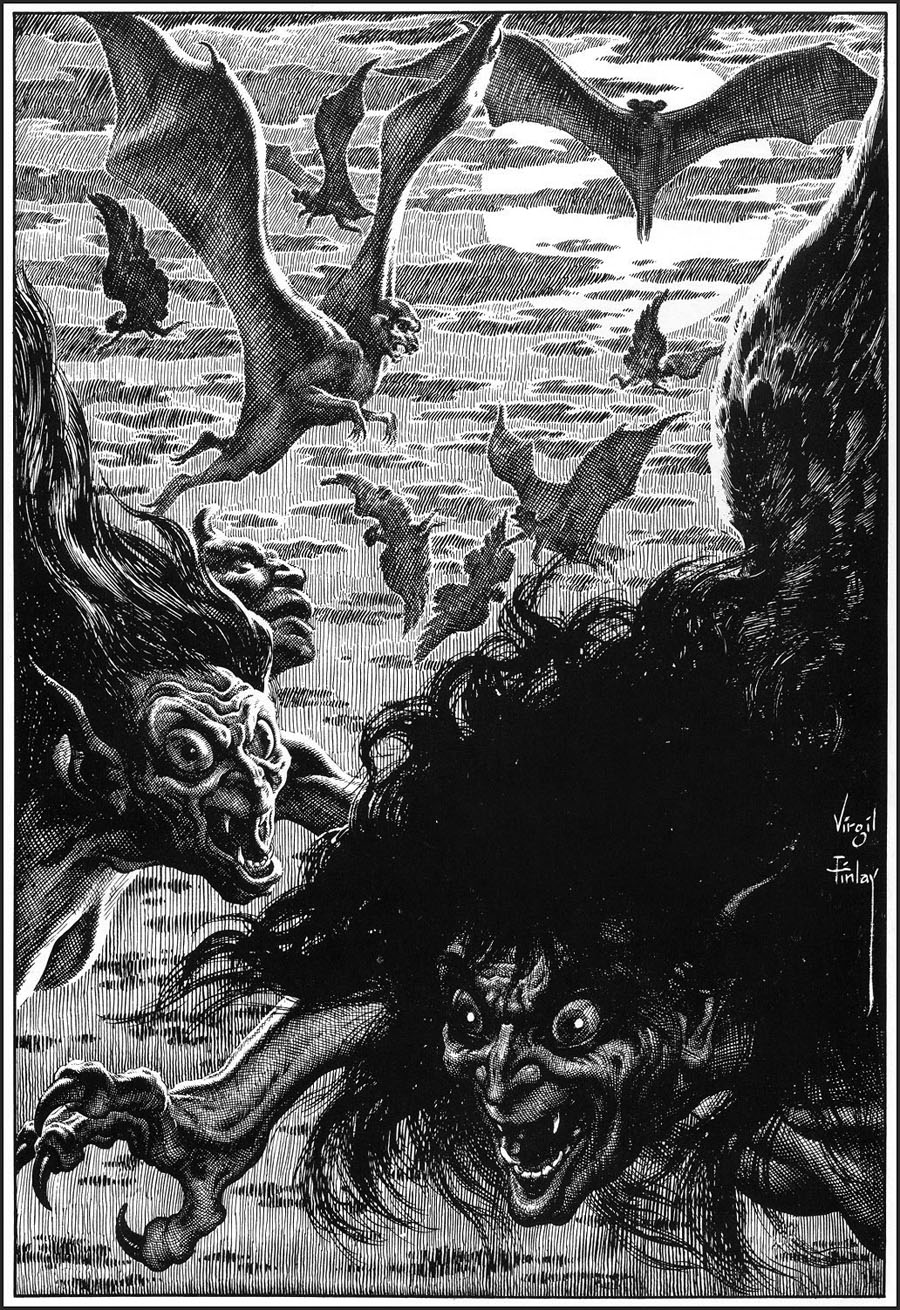
Virgil Finlay illustrates Hallowe’en in a Suburb by HP Lovecraft for Weird Tales, September 1952.

• Literary Hub does Halloween with an abundance with Draculas, a lazy option but the pieces are good ones nonetheless: Olivia Rutigliano attempts to rank the 50 best (screen) Draculas, and also recalls the Broadway production designed by Edward Gorey. At the same site, Katie Yee discovers that The Addams Family (1991) is really about the importance of books.

• The inevitable film lists: the always reliable Anne Billson selects the scariest ghosts in cinema; at Dennis Cooper’s, TheNeanderthalSkull curates…DC’s Weirdo Halloween Horror Movie Marathon, a list featuring a couple of oddities which have appeared in previous weekend links.

• More books bound with human skin: Megan Rosenbloom, author of Dark Archives: A Librarian’s Investigation into the Science and History of Books Bound in Human Skin discusses the subject with S. Elizabeth.

Beyond all this, however, readers are most likely to read De Quincey for his compellingly strange writing on opium and its effect on the mind. For it is opium, rather than the opium-eater, he writes in Confessions, who “is the true hero of the tale”. He explains the drug cannot of itself create imaginative visions—the man “whose talk is of oxen” will probably dream about oxen. But for De Quincey, with his love for reverie, it gives “an inner eye and power of intuition for the vision and the mysteries of our human nature”. Wine “robs a man of his self-possession: opium greatly invigorates it”. It “gives an expansion to the heart and the benevolent affections”. “This”, he claims, “is the doctrine of the true church on the subject of opium: of which church I acknowledge myself to be the only member.”

“Thomas De Quincey’s revelatory writing deserves greater attention,” says Jane Darcy

• New music: Weeping Ghost by John Carpenter is a preview of the forthcoming Lost Themes III; Moments Of Clarity is a new album of psychedelic(ish) songs from Professor Yaffle.

• “How now, you secret, black, and midnight hags!” Sean Connery (RIP) was often playing kings in later life but he started early with this performance as Macbeth in 1961. (Ta to TjZ for the link!)

• Mixes of the week: a (non-Halloween) guest mix by Paul Schütze for Toneshift, and the by-now traditional Samhain Séance Mix from The Ephemeral Man.

Clive Hicks-Jenkins’ big new adventure: an illustrated “reinvention” of Jean Cocteau’s La Belle et la Bête.

Drew McDowall (of Coil, et al) talks Musick, magick and sacred materiality.

• “No one loves the smell of a Kindle,” says Thomas O’Dwyer.

Brüder des Schattens (1979) by Popol Vuh | Nosferatu (1988) by Art Zoyd | Vampires At Large (2012) by John Zorn
Weekend links 536

peake.jpg

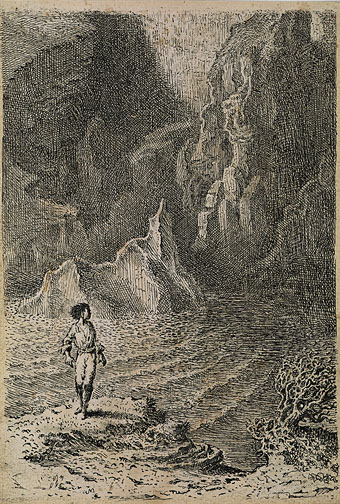
Jim Hawkins in Treasure Island. An illustration by Mervyn Peake, 1949.

• “Since it was 1967 when I became a teenager, I suspected that the Now would stir together rock ’n’ roll bands and mod girls and cigarettes and bearded poets and sunglasses and Italian movie stars and pointy shoes and spies.” Luc Sante on hs youthful search for The Now.

• “…in response to listener requests to play ‘more music like This Heat’, [John] Peel responded that he couldn’t because ‘nobody else sounds like them’.” Alexis Petridis on the mighty This Heat, the band who tried to change everything.

• “While I hesitate to deploy the overused and near-devalued word shamanic here, it does smell right. Or rite.” Ian Penman on the polychromatic delirium of Parliament and Funkadelic in 1970.

Anyway, we knew this new culture was there, we knew this phenomenon was occurring, centered in the Haight-Ashbury, so after this event, we dramaturges sat together and tried to think it out. What is this, in terms of breaking down the fourth wall? How is this a historical follow-through for Antonin Artaud on one hand and Bertrolt Brecht on the other? How did these two come together in this? What do you call this, when you provoke riots and use the audience as members of the cast? When you can stage events that brings the audience on the stage—but there is no formal stage? But it’s a theatricalized event…? It’s all new. So I called it ‘guerrilla theater.’ And Ronnie heard that phrase, and wrote an essay about doing Left provocative theater. That wasn’t what I saw. I saw it as being deeper than that. And I began writing plays that now were for sure plays except that a lot of the dialogue was spontaneously derived from the performers—we had some really great performers at the Mime Troupe at the time, I’d say there were at least a dozen good performers, and a couple who were really brilliant. Anyways, put these people together, I gave them a context, and we began improvising dialogue.

Peter Berg of the San Francisco Diggers talking to Jay Babcock for the sixth installment of Jay’s verbal history of the hippie anarchists

• “I love improvisation. I still do. For me it’s the way I like to be acting, you see.” RIP Michael Lonsdale, talking in 2015 about Jacques Rivette’s Out 1.

• “Would you find this bookstore beautiful or terrifying? Or both,” asks Jonny Diamond.

Yukino Ohmura uses stationery store stickers to create dazzling nightscapes.

• At Spine: Penguin Books celebrates 85 years with original artworks.

Strange Selectors by Various Artists on Werra Foxma Records.

Daisy Dunn on the gentle genius of Mervyn Peake.

• This Heat: Rimp Ramp Romp (1977) | Repeat (1979) | Makeshift Swahili (1981)

The Blake Video

blake.jpg

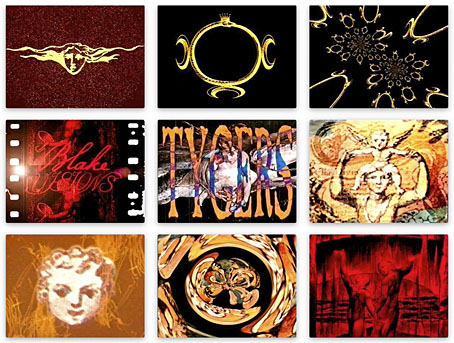
More from the website update. One of the pages buried in the site is an appendix to my design for Angel Passage, a William Blake-themed CD by Alan Moore and Tim Perkins that was released on Steven Severin’s Re: label in 2001. In addition to designing the CD I also created a video accompaniment for the sole performance of the piece at the Purcell Room in London in February of that year. The old web page showed screen shots of the video, and very small ones at that, so as well as updating the page itself I’ve replaced the thumbnails with the original shots.

The video was created in a rush five days before the performance, and only finished the night before I departed for London, so was rather lazily done in places. I’d just taken delivery of a new G4 Power Mac without which I wouldn’t have been able to do any video editing at all. Raw material was artwork scanned from books plus a stack of VHS tapes, including a TV documentary about Blake that provided a few relevant shots of contemporary London. Another essential component was a borrowed video player that could play both VHS and MiniDV cassettes, as well as connect to the computer. The assembled footage was recorded to a MiniDV master cassette which I still have somewhere although I’ve no idea whether it’s still viewable, and have no way to watch it in any case. Those MiniDV players had a tendency to mysteriously render their tapes unplayable which I think may have happened to my tape when I came to try and archive it after the performance. This is fitting in a way, Alan was always adamant that the music-based readings he was doing at this time were one-off events, and the video was only intended to augment the reading, not be watched away from the performance. Copies of the CD still circulate so the work hasn’t vanished altogether. Alan and Tim collaborated on three readings in this series, together with two earlier outings, The Birth Caul and (with David J) The Moon And Serpent Grand Egyptian Theatre Of Marvels. We’re overdue a reissue of the entire Moon and Serpent discography.

Previously on { feuilleton }
William Blake in Manchester

Peake’s Insects

peake1.jpg

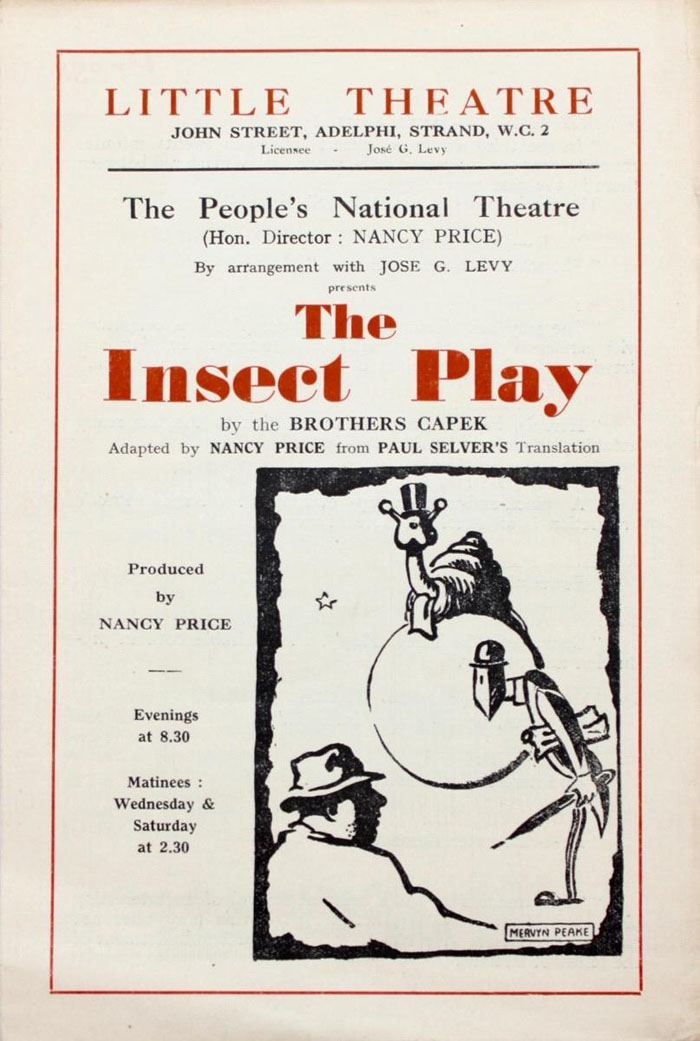
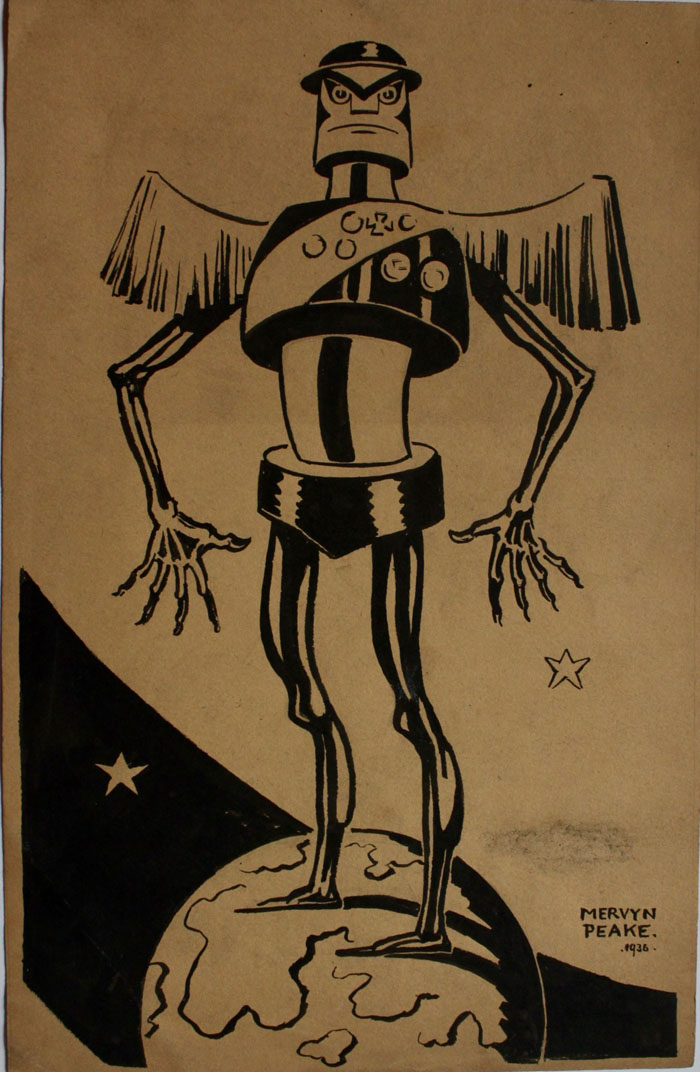
Having recently watched Jan Švankmajer’s self-reflexive film of the Capek Brothers’ Insect Play I was intrigued by a mention in one of the Mervyn Peake biographies that Peake had created costumes for two stagings of the play in London in 1932 and 1936. “Mr Mervyn Peake’s costumes could not be bettered,” said James Agate in the Sunday Times, but my sole book of Peake artwork doesn’t mention the play at all, and these drawings are the only examples to found after a web search, not the photos I was hoping for. The one below is a more original conception than those used by the amateur actors in the Švankmajer film.

peake2.jpg

My own workload is gaining momentum just now so posting here may be sporadic for a while. I’m also recoding my website from scratch which doesn’t help when you already have more than enough plates spinning. Having refreshed the blog with a flexible template that resizes itself for different devices I decided it to do the same for the rest of the site. I last attempted anything on this scale in 2005 so I’m having to educate myself all over again in the mysteries of cascading style sheets. And I have hundreds of pages that need working on… This will take some time.

Previously on { feuilleton }
Bookmark: Mervyn Peake
The Web by Joan Ashworth
Peake’s glassblowers
Mervyn Peake in Coronation Street
The Worlds of Mervyn Peake
A profusion of Peake
Mervyn Peake at Maison d’Ailleurs
Peake’s Pan
Buccaneers #1
Mervyn Peake in Lilliput
The Illustrators of Alice

Weekend links 517

magritte.jpg

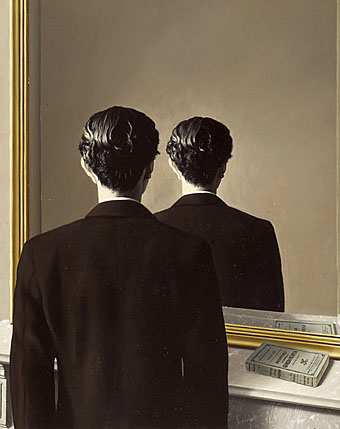
Edward James by René Magritte; La Reproduction Interdite (1937).

• “James was filmed in the late 1970s, striding round Las Pozas in a sweater and a tattered dressing-gown, surmounted by parrots (The Secret Life of Edward James can be seen on YouTube). When asked what motivated him, he replied: ‘Pure megalomania!’ He was having his second childhood, he said, though he wasn’t sure the first had ever ended.” Mike Jay on lifelong Surrealist, Edward James (1907–1984), and the concrete fantasia he built in the Mexican jungle.

• “I found the roots of electronic music in a cupboard!” Musician Paul Purgas (one half of Emptyset) on the discovery of early electronic music from India’s National Institute Of Design. Related: Purgas talks about his discovery with Patrick Clarke.

• RIP Phil May. Here’s The Pretty Things in their guise as psych band “Electric Banana” for an appearance in What’s Good for the Goose (1969). A decent moment in an otherwise terrible film.

• Music is a memory machine: David Toop explores how the transmission of music between disparate cultures can be a tool against populism and prejudice.

• Kraftwerk’s remarkable journey, and where it took us: Bob Boilen and Geeta Dayal discuss the tanzmusik of Düsseldorf.

• At Dangerous Minds: Acid Drag & Sexual Anarchy: Fifty years ago The Cockettes turned drag upside down.

Hua Hsu on the secret lives of fungi: “They shape the world—and offer lessons for how to live in it”.

• The great writer who never wrote: Emma Garman on the flamboyant Stephen Tennant.

• Cult 1998 PlayStation game LSD: Dream Emulator is finally playable in English.

Jim Jupp of Ghost Box records talks about the Intermission compilation album.

Jonathan Moodie on psychoactive cinema and sacred animation.

Alex Barrett on where to begin with Akira Kurosawa.

• At Dennis Cooper’s: Skeletons.

Skeleton Makes Good (1982) by Captain Beefheart & The Magic Band | Red Skeletons (1996) by Coil | Kids Will Be Skeletons (2003) by Mogwai