Weekend links 501

ashman.jpg

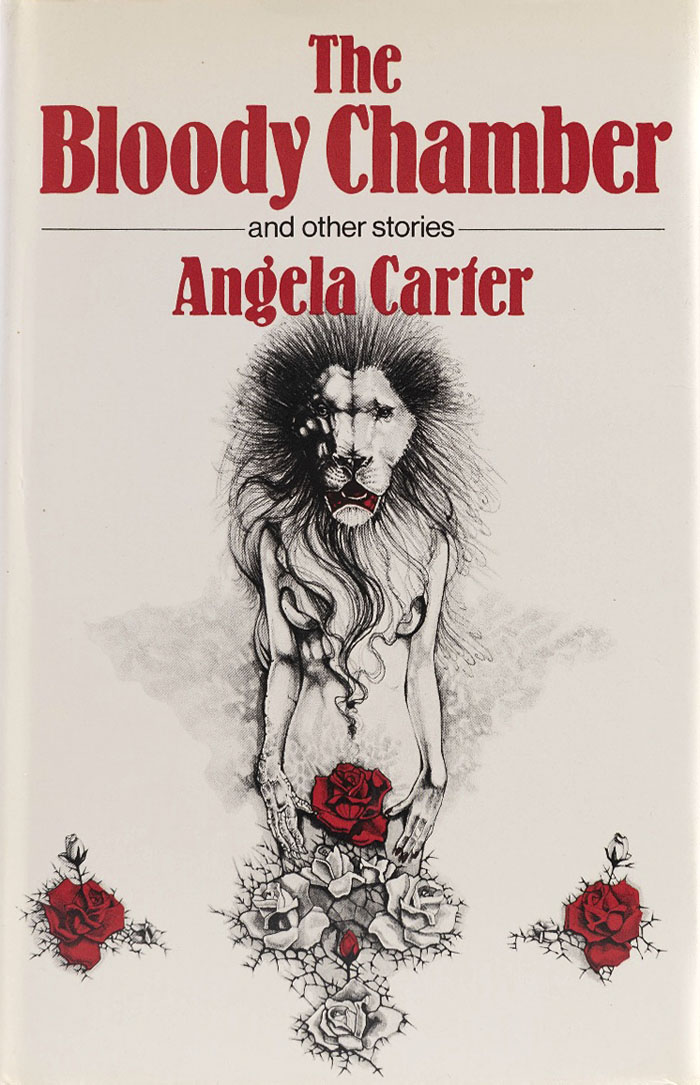
Cover art by Michael Ashman, 1979.

• RIP Terry Jones, not only a writer, actor and director but also a presenter of the BBC’s short-lived Paperbacks series in 1981, a programme that included Angela Carter among its guests. Related: The Box (1981), a short film directed by Micky Dolenz, based on a play by Terry Jones and Michael Palin.

• “[David] Lynch in a suit and tie that echoes the formal dress of Twin Peaks’ FBI Agent Cooper, presses a small capuchin monkey, called Jack Cruz, to confess to the murder of Max.” What Did Jack Do?

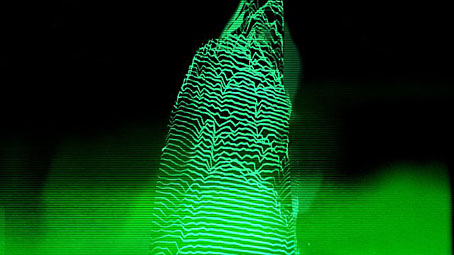
• The week in Ghost Box: Flying Lotus and Julian House collaborate on a promo for the Moog Subsequent 25 synthesizer, while at Grave Goods Jim Jupp answers questions from beyond.

Bruce Sterling: “This is an essay about lists of moral principles for the creators of Artificial Intelligence. I collect these lists, and I have to confess that I find them funny.”

• A campaign to protect and maintain Derek Jarman’s Prospect Cottage.

• Winners of the Wiki Loves Monuments 2019 photo competition.

• Mix of the week: Sehnsucht by The Ephemeral Man.

• Susan Schulten on Emma Willard’s Maps of Time.

• At Dennis Cooper’s: Roland Topor’s Brains.

• At Strange Flowers: 20 books for 2020.

Beat Box (1984) by Art Of Noise | Glory Box (1994) by Portishead | Black Box (1995) by Scorn

Shades of Darkness

sod1.jpg

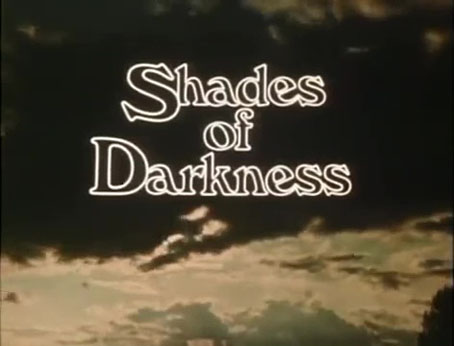
The end of the year in Britain is as much a time for ghost stories as the end of October, and this is one Christmas tradition (one of the few…) that I’ve always been happy to support. In recent years all of the best of the British TV ghost stories have appeared on DVD, along with some of the minor ones, but exceptions remain. Shades of Darkness was a series of hour-long supernatural dramas made by Granada TV in the 1980s, and so far seems to have only appeared on disc as a now-deleted Region 1 set.
sod2.jpg

The series comprised two short seasons in 1983 and 1986, and dates from the period when Granada was in serious competition with the BBC for well-crafted period drama. Granada’s flagship production was the long-running Sherlock Holmes series, an attempt to film all the Holmes stories with Jeremy Brett in the lead, a mostly successful endeavour that was only compromised at the end by Brett’s failing health. Shades of Darkness shares with the Holmes adaptations some of the same production team (producer June Wyndham Davies and director Peter Hammond) together with well-chosen rural locations in damp and autumnal Lancashire and Cheshire.
sod3.jpg

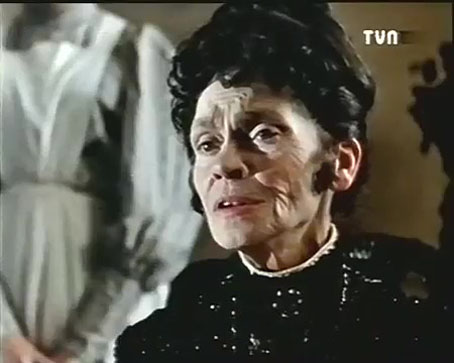
I’d only seen one of these films before, the adaptation by Ken Taylor of Walter de la Mare’s most anthologised story, Seaton’s Aunt. The story is a good choice for a series where the human drama is given as much space as the supernatural although the film doesn’t capture the subtleties or the insidious horror of de la Mare’s best writing. (The copy at YouTube is also blighted with Norwegian subtitles throughout.) I doubt that any adaptation of Seaton’s Aunt could satisfy me but it’s good to see Mary Morris in one of her last roles as poor Seaton’s malign and domineering guardian.
sod4.jpg

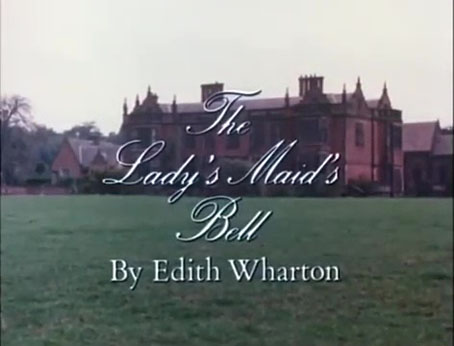
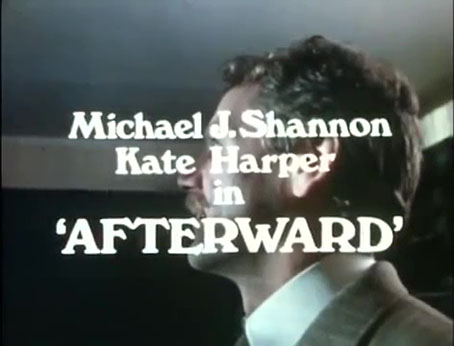
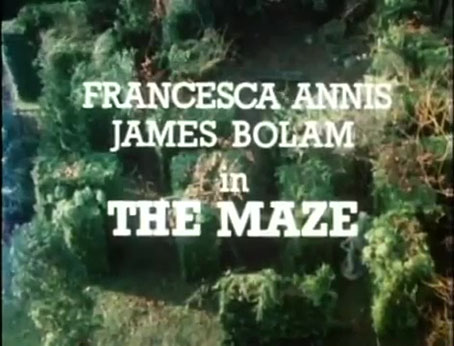
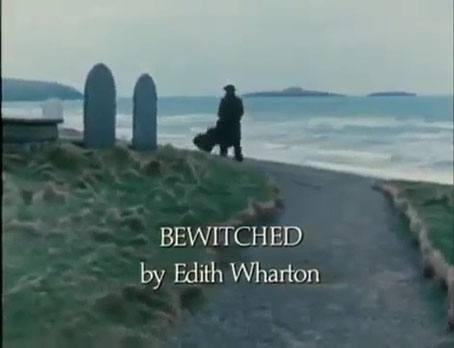
More successful are Afterward by Edith Wharton, another popular entry in ghost-story collections, and The Maze by CHB Kitchin in which Francesca Annis’s post-war housewife is tormented by memories of a dead lover. Kitchin’s story is an odd inclusion among the familiar tales, and I wonder how it came to be chosen when it doesn’t seem to be subject to the same republication as the others. Kitchin was a writer best known for his detective novels but he’s received more attention in recent years for a number of novels with gay themes. The Maze includes a character coded as gay who isn’t treated as an outright villain, an unusual detail in a story first published in 1954.
sod5.jpg

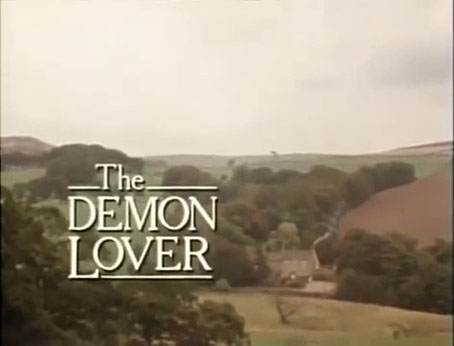
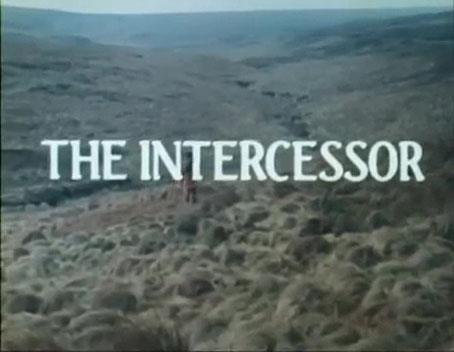
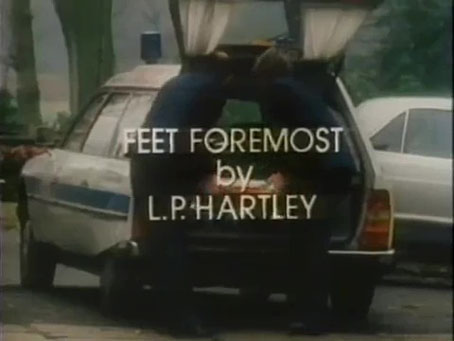
Elsewhere, Hugh Grant has an early role in Elizabeth Bowen’s The Demon Lover, and there are three adaptations by Alan Plater, one of which, LP Hartley’s Feet Foremost, is another frequently collected story which Plater surprisingly mishandles. Plater’s adaptation of The Intercessor by May Sinclair is better, with John Duttine in the role of a writer trying to work in a haunted farmhouse. I saw Duttine on stage a few years after this when he played a similar role as The Actor in the first theatrical run of Susan Hill’s The Woman in Black. It’s possible that The Intercessor secured him the part.
sod6.jpg

All these films are currently on YouTube with the exception of the final episode in season two, The Last Seance by Agatha Christie. Watch them here.
sod7.jpg

sod8.jpg

sod9.jpg

Previously on { feuilleton }
The Return: a ghost story
Nigel Kneale’s Woman in Black
“Who is this who is coming?”

Peter Strickland’s Stone Tape

stonetape.jpg

My annual Halloween post breaks with its usual music mix/playlist format this year for a recording of The Stone Tape, Peter Strickland’s hour-long radio drama made for Halloween in 2015. This was an adaptation, co-written with Matthew Graham, of Nigel Kneale’s celebrated TV play of the same name, first broadcast in 1972 for the BBC’s Christmas ghost-story slot then unavailable for many years. The combination of Kneale’s name and the impossibility of easily seeing the play gave The Stone Tape a reputation somewhat greater than it might otherwise have warranted. The drama has a number of shortcomings by contemporary standards: the whole thing is shot on video, so it compares unfavourably to the ghost films the BBC were making throughout the 1970s, and the acting is also quite histrionic in places. On the plus side there’s a woman scientist as the central character (an excellent performance by Jane Asher), and another of Kneale’s examinations of a horror staple—the haunted house, in this case—which adeptly twists your expectations while combining science and the supernatural in equal measure.

Strickland’s adaptation uses the same scenario—struggling electronics company moves into a house with a haunted reputation—but with the events moved slightly forward to 1979. The director’s fondness for electronic music shifts the emphasis of the story to the capabilities of electronic sound, both its destructive potential and its use as a diagnostic tool. James Cargill, formerly of Broadcast, now in Children Of Alice, was the soundtrack composer on Strickland’s second feature film, Berberian Sound Studio, and here creates the music and electronic sounds. The radio play is closer to Berberian Sound Studio than anything else Strickland has done to date, and could even be regarded as a companion piece with its recording equipment and repeated screams. (Eugenia Caruso provides screams for both.) As with the film, two thirds into the drama the narrative becomes much more diffuse and fragmented; the recording medium itself is foregrounded for a lengthy sequence that works like an audio equivalent of found-footage horror films. The hazard of this is that the layered nature of Kneale’s horrors may not be so apparent if you’ve not seen the TV version (I can’t say) but the sound design is excellent throughout, and benefits from the use of headphones to appreciate its subtleties. There’s also some sly reference to Alvin Lucier if you’re familiar with his compositions. Jane Asher makes a cameo appearance as the mother of the character she portrayed in the TV version.

The Stone Tape may be listened to or downloaded here.

Previously on { feuilleton }
Nigel Kneale’s Woman in Black
Stone Tapes and Quatermasses
Nigel Kneale’s Nineteen Eighty-Four
The Stone Tape

Weekend links 485

jansson.jpg

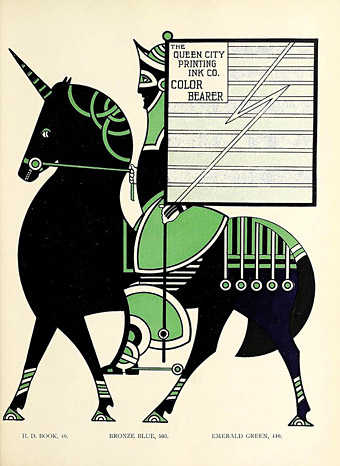
Art by Augustus Jansson for the Queen City Printing Ink Company (c.1906).

• Much of my music listening for the past couple of weeks has been the compositions and soundtracks of the late Jóhann Jóhannsson, so these links are pertinent: Jóhannsson and ensemble live at KEXP in 2010, and a memorial performance of Virdulegu Forsetar from last year.

• “[Her] approach to making electronic music was hard work, too, but it was less about controlling sounds and more about surrendering to them.” Geeta Dayal on Éliane Radigue whose Chry-Ptus has been reisssued by Important Records.

• Safe From Harm: Tim Murray on how Coil helped AIDS awareness on VHS. The video in question, The Gay Man’s Guide to Safer Sex, may be viewed at the Internet Archive.

• In the LRB podcast Ian Penman and Jennifer Hodgson discuss Penman’s new collection of essays, It Gets Me Home, This Curving Track.

• “A land of fog and emotional nightmares.” Oliver Wainwright on why Britain booted out the Bauhaus.

• Mapping Scotland’s Grim History of Witch-Hunting by Feargus O’Sullivan.

• Long-Haired Stars & the End of the World: John Boardley on comets.

My Will by Minimal Compact, a new version of an old song.

• La Danse Des Comètes (1970) by Nino Nardini | Kohoutek-Kometenmelodie 1 & 2 (1973) by Kraftwerk | Cometary Wailing (Valley Plateau) (1981) by Bernard Xolotl

The Gourmet by Kazuo Ishiguro

gourmet1.jpg

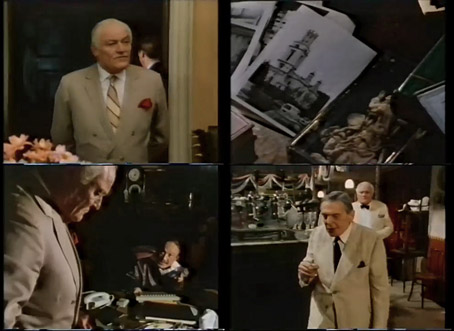
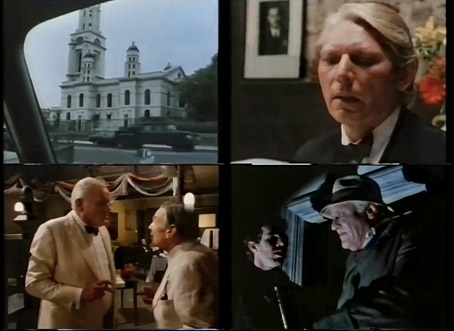
The Gourmet (1986), an original television drama written by Kazuo Ishiguro and directed by Michael Whyte, has long been in the top ten of TV films I was hoping would turn up on YouTube, and here it is at last. With a running time of under 50 minutes this is shorter than one-off dramas tend to be but its plus points are considerable, the first of which is its being an early yet neglected work by the Nobel Prize-winning author. The gourmet of the title is Manley Kingston, played by the inimitable Charles Gray in one of his few leading roles. Gray inhabits the part of the preoccupied and obsessed Kingston so well the character might have been created with him in mind; he’s even more imperious and commanding here than he was as Mycroft Holmes in the Granada TV Sherlock Holmes adaptations being made around the same time.

gourmet2.jpg

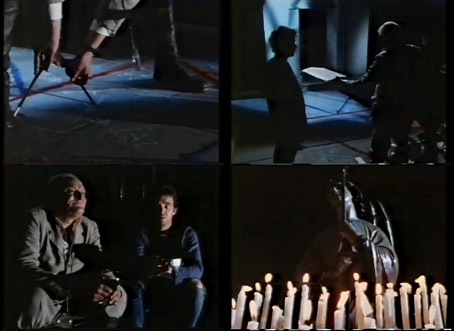
Ishiguro’s script presents us with a world of competitive international gourmets whose palettes are so jaded that their search for new tastes propels them to increasingly outré extremes, up to and including the consumption of human flesh. In a lesser drama this might be the shocking end revelation but the long-pig scene is a brief and wordless reminiscence on the way to Kingston’s ultimate gustatory experience, the devouring of a ghost. The film is almost worth watching solely for the moment when Gray enunciates the words “Not of this Earth?!” after being informed of the spectral meal by one of his gourmet associates. Another associate, played by David Rappaport (in an upper-class role for once, albeit with a dubbed voice), provides Kingston with the directions to a church where a suitable phantom may be found. The building isn’t identified but Hawksmoor aficionados will recognise it as St. George in the East, an apt location not only for the sinister quality the Hawksmoor churches acquired in the wake of Peter Ackroyd’s celebrated novel, but also for the building’s smaller towers which are always described as resembling pepper pots. I used to think the Hawksmoor church was a coincidental choice of location but Ackroyd’s novel had been discussed and partly dramatised on The South Bank Show the year before The Gourmet was made; the actor who played the architect’s hapless assistant in the dramatisation was Mick Ford, the same actor who appears in The Gourmet as a homeless man enjoined by Kingston to assist him in his ghost-catching ritual.

gourmet3.jpg

Despite its grotesque elements, The Gourmet isn’t an overt work of horror, which no doubt explains why the film is never mentioned in lists of neglected TV dramas. Watching it again I was less interested in the genre elements than the interplay between Kingston’s abstracted fervour and the human beings he ignores while pursuing his quarry. The latter encompasses the fellow gourmets who regard him as a world authority, his wife (who he doesn’t kiss when he leaves the house), his chauffeur (whose name he never remembers), and the derelicts who are also led to the church by hunger, queuing for a bowl of soup and a bunk in the crypt. Seen today, the gulf of inequality, and the self-indulgence of Kingston’s pursuit for the rarest of foods while people around him are starving, may be taken as a critique of Thatcherism as well as a foretaste of the future. The scenes outside the church show the East End of London as it was before its ongoing and unending redevelopment, when a new breed of rapacious appetites would arrive to sweep the homeless from those desirable riverside properties. The real ghost-eaters, the devourers of London’s history, have been consuming the capital ever since. (Thanks to Amelia for alerting me to this!)

Previously on { feuilleton }
Terror and Magnificence