Portraits of futures past

ttc1.jpg

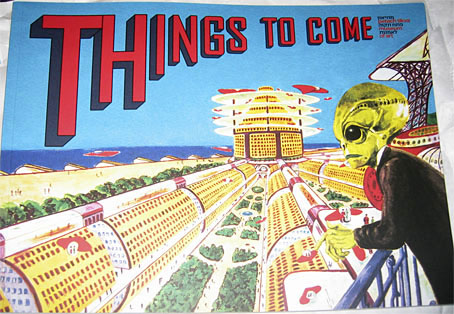
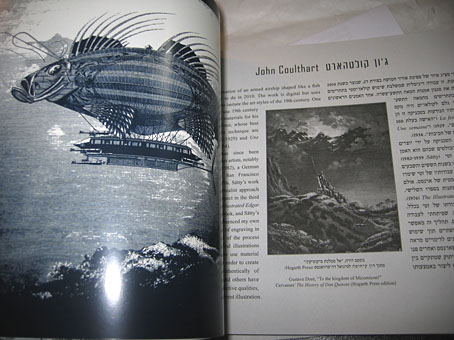
Since blogging here has become sporadic I find myself continually playing catch-up. Recent arrivals in the book department have included two art-related items that feature work of mine. The first is the catalogue for the Things To Come exhibition which ended last month at the Petach Tikva Museum of Art, Israel. When I posted photos of the exhibition back in May I was wondering about the identity of the curious iridescent structure occupying the gallery floor. This turns out to be a piece from 2015 by Netaly Aylon entitled Armour (Disappearing Methods). The same artist is also responsible for the cover of the catalogue, an homage to SF illustrator Frank R. Paul. I’ve always admired the wild inventiveness of Paul’s work so approve of the choice. There’s more Paul (and many other artists, past and present) inside the catalogue.
ttc2.jpg

The booklet design by Yon Shavit cleverly solves the need to present bi-lingual information by having the English text run from the front while the Hebrew equivalent runs from the back. The artist pages feature both languages.
dg0.jpg

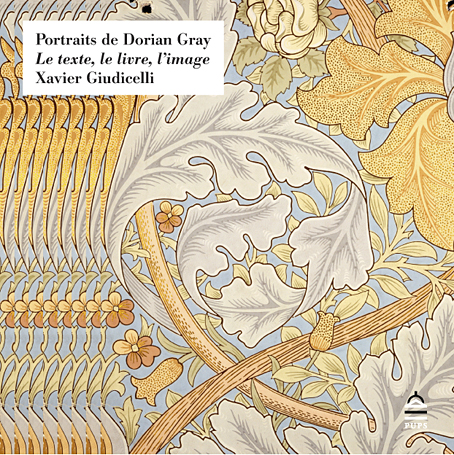
Book design by Emmanuel Dubois.

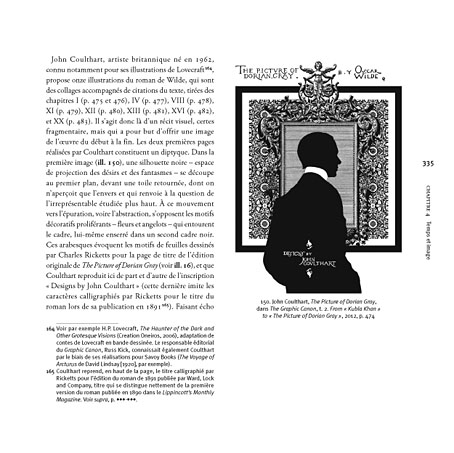
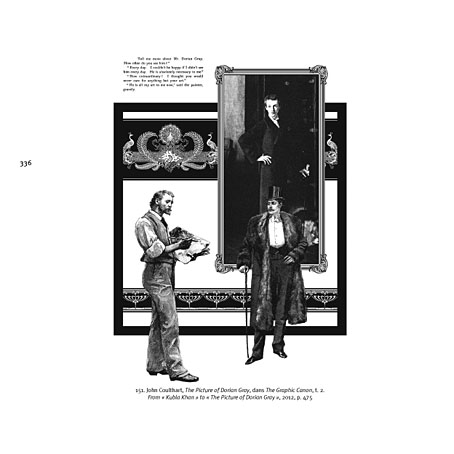
The other arrival was Portraits de Dorian Gray: Le texte, le livre, l’image by Xavier Giudicelli, a lavish, 404-page study from the Presses de l’université Paris-Sorbonne examining representations of Dorian Gray across various media. Xavier had already written about my illustrations based of Oscar Wilde’s novel for a French academic journal, Imaginaires. The book reprises that piece in the wider context of the many other adaptations of the novel. The text is French so much of the discussion is beyond me but the pictorial content is profuse, and includes many illustrations I’ve never seen before. Xavier says he’s already had an enquiry about a possible English edition so I’m hoping this goes ahead.
dg1.jpg

dg2.jpg

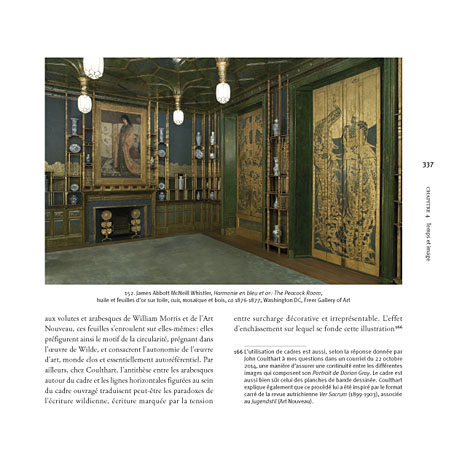
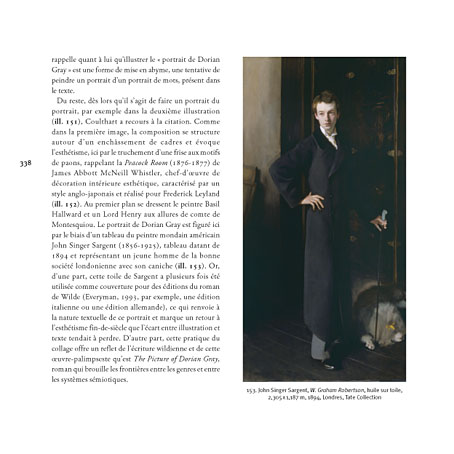
In addition to reproducing two of my pages from the Graphic Canon adaptation, Xavier illustrates my comments with photos of Whistler’s Peacock Room and Sargent’s portrait of W. Graham Robertson, a painting I used as the model for Basil Hallward’s portrait.
dg3.jpg

dg4.jpg

Previously on { feuilleton }
More Things to Come
Things to Come
Foreign appearances
Picturing Dorian Gray

Weekend links 327

hickjenkins.jpg

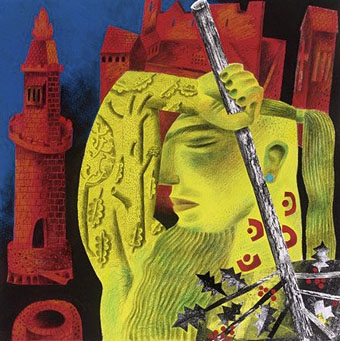
The Green Knight Arrives by Clive Hicks-Jenkins. Part of a series based on the theme of Gawain and the Green Knight.

• RIP Don Buchla, inventor of the Buchla Electronic Musical Instrument (or simply Buchla to aficionados). The early Buchlas were produced contemporaneously with the Moogs but never achieved an equivalent popularity. Morton Subotnick was an early serious player, using one of the first Buchlas to record Silver Apples Of The Moon in 1967. By coincidence, this month has seen the release of Sunergy, an album created by two Buchla enthusiasts, Kaitlyn Aurelia Smith & Suzanne Ciani, the latter having been a Buchla player for many years. Sean Hellfritsch made a 25-minute film of the pair playing their machines, while they talked about their collaboration to Danny Riley.

• Erik Davis talks to occult book-dealer Todd Pratum about rejected knowledge, growing up Californian, book synchronicities, and the loss of knowledge in the age of the Internet.

• Mix of the week (month, year, etc) is undoubtedly this 12-hour history of Spiritual Jazz. Less intimidating (and more eclectic) is an exclusive mix by Fenriz for The Wire.

• More electronica: (The Microcosm): Visionary Music of Continental Europe, 1970–1986, another quality music collection from Light In The Attic.

Flying Saucers Are Real! is a history of 20th-century UFOdom by Jack Womack. Related: A map of the last remaining Flying Saucer Homes.

• Coming soon from the Ghost Box label, Peel Away The Ivy by The Pattern Forms. Jon Brooks gives an account of the album’s creation.

• Uri Bram meets computer scientist David Chapman to discuss the limits of formal learning, or why robots can’t dance.

Andrew Male on Julius Eastman: the groundbreaking composer America almost forgot.

Ship found in Arctic 168 years after doomed Northwest Passage attempt.

Anna Cafolia on the resurgence of witchcraft in 1970s Britain.

• Welcome to the Austronesian Embassy of Anaphoria Island.

Billy Gibbons of ZZ Top chooses some favourite records.

A profusion of Marty Feldman links.

• The Flying Saucer Pts 1 & 2 (1956) by Buchanan And Goodman | Flyin’ Saucers Rock’nRoll (1957) by Billy Lee Riley and The Little Green Men | Flying Saucers Have Landed (1972) by Paul St. John

Weekend links 326

schaechter.jpg

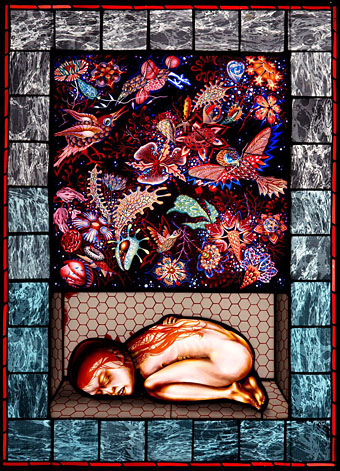
Anchoress by Judith Schaechter.

• The publication of Alan Moore’s Jerusalem is imminent so the NYT asked him about his favourite books and writers of the moment. For the next post I’ll be writing about my own involvement with Moore’s novel.

Chris Campion on David Bowie and the missing soundtrack: the amazing story behind The Man Who Fell to Earth. Related: cinematographer Anthony Richmond on his memories of shooting the film.

Mr Beatnick on how the B-side of Change The Beat by Beside became the most sampled song of all time.

Lisa Hix on An Un-Conventional Thirst: Collecting 7Up’s most beautiful, hallucinatory billboards.

Rub Out The Word: Steve Buscemi & Elliott Sharp present texts by William Burroughs.

• Opening next month at the Corridor Gallery, Brighton (UK): An exhibition of art by Ian Miller.

• Folk singer Shirley Collins will be releasing a new album, Lodestar, her first for over 35 years.

A trip to the mythical Isle of Tiki, Polynesian Pop and A/C Eden.

• Mix of the week: Harvest Hymns by Melmoth The Wanderer.

• Wandering In Space: composer Jherek Bischoff interviewed.

Heavy Water is a new short film by Adam Scovell.

• “When will New York sink?” asks Andrew Rice.

The World’s Largest Synthesizer

The Thai Occult by Jenx

• RIP Richard Neville

The Other Without

We Are Cult

Heavy Rock (1976) by Sound Dimension | Heavy Charm (1995) by The Ear | Heavy Water (2008) by Crackle

Weekend links 325

beeple.jpg

08-30-16 from the Everydays series by Beeple.

• “Monsieur de Bougrelon is a unique character: loquacious, proud, a leftover from an earlier age, wearing garish outfits and makeup that drips. To his speechless audience, he waxes nostalgic about his life as an exile in Holland, as well as what he calls “imaginary pleasures” – obsessions with incongruous people, animals, and objects. These obsessions are often sexual or border on the sexual, leading to shocking, surreal scenes. Monsieur de Bougrelon also enthuses over his beautiful friend Monsieur de Mortimer, making this novella one of the rare works of the nineteenth century to broach homosexuality in a meaningful way, years before Jean Cocteau and Jean Genet.” Monsieur de Bougrelon (1897) by Jean Lorrain will receive its first English publication by Spurl Editions in November.

• “…The Future seems in retrospect to have been no more than a spectacle, created by the optimistic few for the optimistic many, the readily gulled multitudes who had faith in technological seers just as an earlier generation had had faith in Great Men.” Jonathan Meades reviews Last Futures: Nature, Technology and the End of Architecture by Douglas Murphy.

In the Woods & On the Heath is a collection of 48 pieces of erotic prose and poetry by 24 writers, all of them illustrated by Van Rijn.

Borneman was widely read in European literature and, once settled in London, wasted no time bringing himself up to speed with developments in English-language writing, discovering a particular affinity with Hemingway and Joyce, not to mention American crime writers such as Carroll John Daly and Dashiell Hammett. This presumably explains the distinctive, sometimes highly eccentric style of The Face on the Cutting-Room Floor, which despite being set in an English film studio of the 1930s (which evokes images, perhaps, of genteel musical comedies performed in perfect RP accents), combines laconic, hardboiled dialogue with extended stream-of-consciousness passages, all filtered through the skewed phraseology of someone whose acquisition of English was still, to some extent, a work in progress.

Jonathan Coe on the mysteries of The Face on the Cutting-Room Floor, a novel by “Cameron McCabe” (Ernest Borneman)

• How Oscar Wilde paved the way for gay rights in the arts. Wilde will be honoured with a major exhibition in Paris later this month.

Noisy Rain is a free online publication dedicated to “artists working with the male figure and homo-eroticism”.

Dennis Cooper’s blog returns. The truth about Google’s deletion of the Blogspot account has finally emerged.

Peel Away The Ivy by The Pattern Forms will be release number 26 on the Ghost Box label in October.

• Glam Rock & Yorkshire Occult: Ben Myers on his novel Turning Blue.

• Mix of the week: Secret Thirteen Mix 195 by Jake Meginsky.

• At Phantasmaphile: Unarius: We Are Not Alone.

Blokdust is a browser-based musical instrument.

• Official trailer for David Lynch: The Art Life.

Future Dub (1994) by Mouse On Mars | Future Proof (2003) by Massive Attack | Future Past Perfect pt 01 by Carsten Nicolai

Roger Dean postage stamps

dean11.jpg

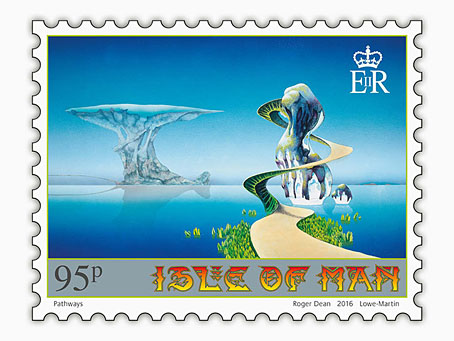
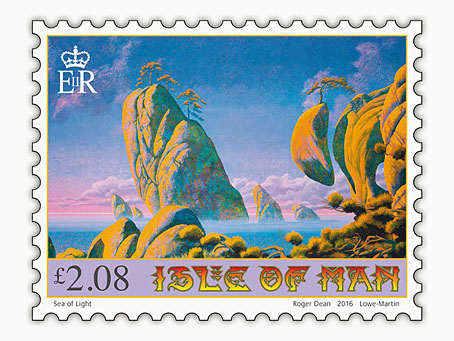
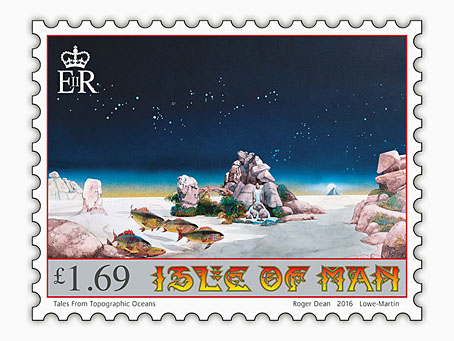
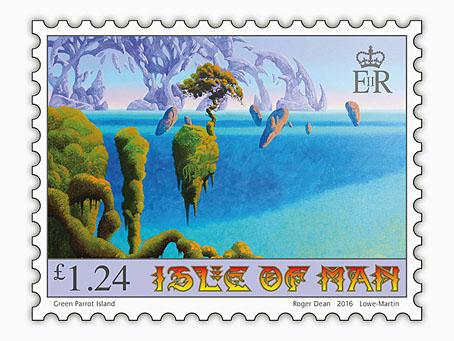
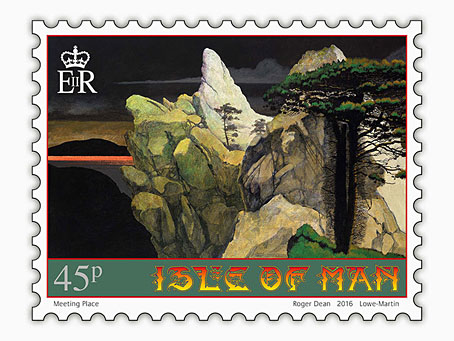
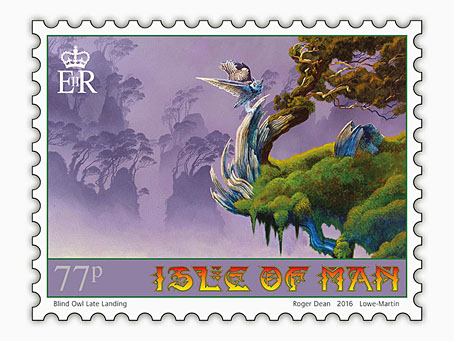
Roger Dean book covers last week; this week it’s postage stamps. These are exclusive to the Isle of Man Post Office, unfortunately, so there’s little chance of buying them over the counter in mainland Britain. First day covers, presentation packs and individual sheets may be ordered from the post office website, however. For those who can visit the Isle of Man there’s also an exhibition of Dean’s art running at the Manx Museum in Douglas until November.

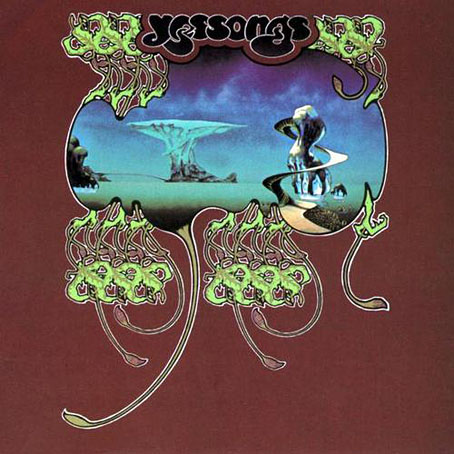
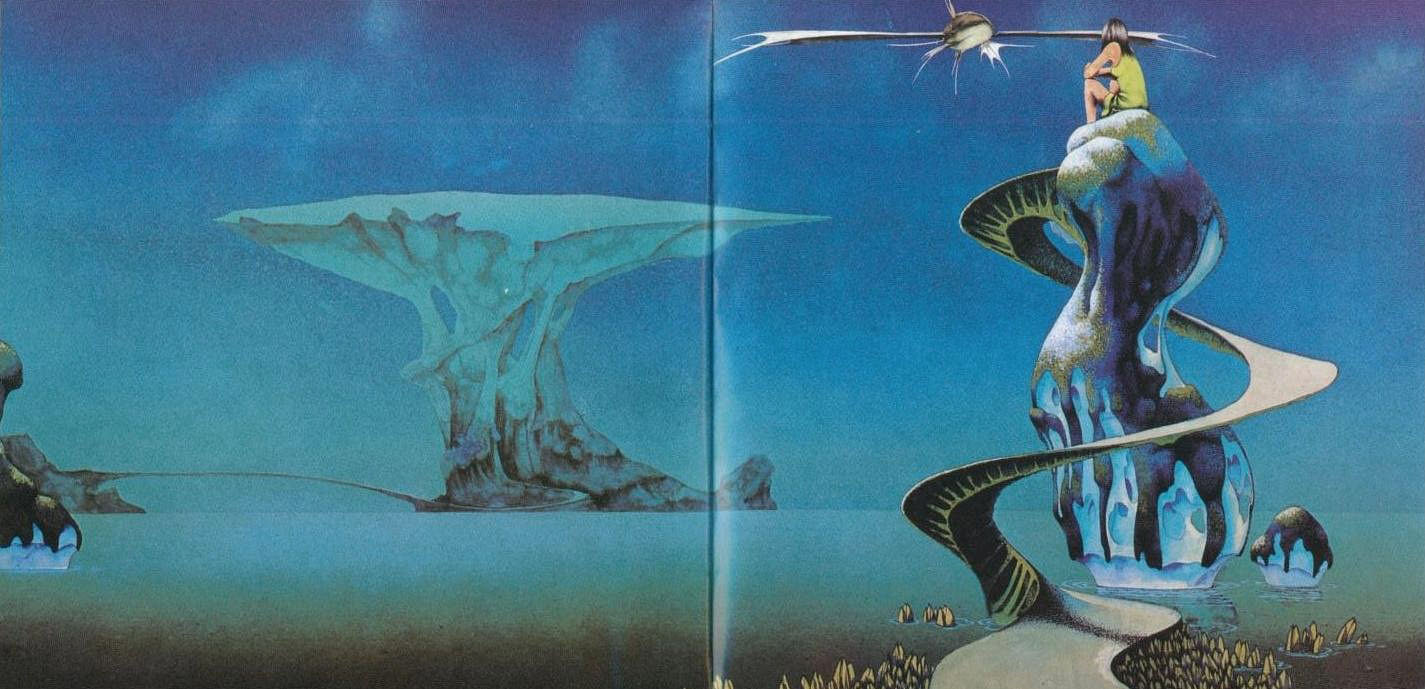
Several of the paintings on the stamps are from the covers for albums by Yes and Asia, including the one above which was used twice on the live Yessongs album in 1973. (The large version inside the gatefold had a figure of a girl and a fish spacecraft added.) The version appearing on the stamp is Dean’s recent reworking of the piece. This removed the airbrushed clouds—added to disguise the footprints of his cats which had walked over the painting when it was drying—and also smoothed the gradients and added a reflection. I’ve been familiar with the album version of this picture for decades so I prefer the rougher original as it is on the cover (and in Dean’s Views book) without the girl and spacecraft.

yessongs.jpg

yessongs2.jpg

One other thing of note is Dean’s lettering design for the stamps. When I wrote about Dean’s art a few years ago I drew attention to the way his design work has been either marginalised or ignored altogether by people who dismiss him as a mere fantasy artist. All of Dean’s album covers have included unique letterforms that are immediately recognisable as his own (so too the logos and lettering he was designing for computer games in the 1980s) but I’ve yet to see this side of his work given any serious attention. (Postage stamp tip via It’s Nice That.)

dean8.jpg

dean9.jpg

dean10.jpg

dean7.jpg

dean12.jpg

Previously on { feuilleton }
Roger Dean book covers
Design as virus 17: Boris and Roger Dean
Roger Dean: artist and designer