Weekend links 392

images.jpg

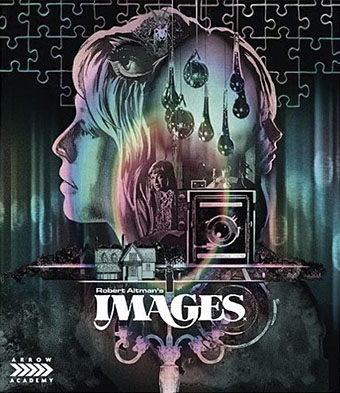
Art by Twins of Evil for the forthcoming blu-ray from Arrow Academy.

Images (1972), the film that Robert Altman made between McCabe and Mrs Miller and The Long Goodbye, is the closest the director came to outright horror. A disturbing portrait of mental breakdown, with Susannah York in the lead role, and photography by Vilmos Zsigmond, the film has for years been so difficult to see as to be almost invisible. Arrow Academy will remedy this situation in March next year with a new blu-ray restoration. Related: Geoff Andrew on where to begin with Robert Altman.

• “[Johnson] is a paltry, utterly conventional, upwardly mobile, morally squalid parvenu who yearns to be taken for what he isn’t.” Jonathan Meades‘ vitriol is in a class of its own, here being deployed in a review of Nincompoopolis: The Follies of Boris Johnson by Douglas Murphy.

• “These films, all preserved in the BFI National Archive, are known as Orphan Works. When the rights-holder for a film cannot be found, that film is classified as an Orphan Work.” 170 orphaned films have been added to the BFI’s YouTube channel.

Don’t romanticize science fiction. One of the questions I have been asked so many times I’ve forgotten what my stock answer to it is, ‘Since science fiction is a marginal form of writing, do you think it makes it easier to deal with marginal people?’ Which—no! Why should it be any easier? Dealing with the marginal is always a matter of dealing with the marginal. If anything, science fiction as a marginal genre is more rigid, far more rigid than literature. There are more examples of gay writing in literature than there are in science fiction.

Samuel Delany in a lengthy two-part interview with Adam Fitzgerald

• One of the books I was illustrating this year was The Demons of King Solomon, a horror anthology edited by Aaron French. The collection is out now; I’ll post the illustrations here in the next month or so.

• Mixes of the week: Routledge Dexter Satellite Systems by Moon Wiring Club, No Way Through The Woods: A Conjurer’s Hexmas by SeraphicManta, and FACT mix 632 by Priests.

• Also at the BFI: Adam Scovell on a film adaptation of MR James that predates Jonathan Miller’s Whistle and I’ll Come To You (1968) by 12 years.

• At Weird Fiction Review: Jon Padgett on absurd degenerations and totalitarian decrepitude in The Town Manager by Thomas Ligotti.

• At Larkfall: Electricity & Imagination: Karl von Eckartshausen and Romantic Synaesthesia.

• It’s the end of December so the London Review of Books has Alan Bennett’s diary for the past year.

Aquarium Drunkard‘s review of the year’s best music.

• At Dennis Cooper’s: Lotte Reiniger Day.

Robin Rimbaud is In Wild Air.

• Dream Sequence (Images II) (1976) by George Crumb | Images (1977) by Sun Ra | Mirror Images (1978) by Van Der Graaf

Weekend links 388

nakayama.jpg

Still of an Alive Painting by Akiko Nakayama.

• “In what is a cross between performance art and installation, Nakayama uses a multitude of kitchen basters loaded with paint and water to add, mix, tilt, blow and add all sorts of extraneous effects to her paints, recording and projecting it all onto a large screen.” Continuously Changing “Alive Paintings” by Akiko Nakayama. There’s more performance video at the artist’s website.

• In January 2018 Song Cycle Records (UK) release Solaris, a “Collector’s Edition” of the Tarkovsky film and its soundtrack comprising vinyl/CD, blu-ray (no region details) and a book of photos, artwork and essays.

• Steve Davis may no longer be a snooker player but he’s still a Magma obsessive. This week he reviewed the new Retrospektiw collection for The Quietus.

What I was most thankful to TG for was leading me to Christopherson’s later band Coil with his partner, antagonist and lover John Balance (after they’d met in Genesis’ Psychic TV) whose music I fell for even harder. The arcane and homoerotic tragicomedy that underpinned their discography (and relationship) propelled me into new states, years before any first hand knowledge of the drug experiences they managed to intertwine so artfully with their music. Records like Scatology and Horse Rotorvator sexualised the male body for me for the first time—an awakening that’s hard not to find some amusement in when soundtracked by a romp called The Anal Staircase. From afar it seemed like their intense, exploration of electronic music as ritual was only possible as a result of the depth of the duo’s personal relationship and how it manifested spiritually, chemically and physically. The posture and machismo of the modern guitar music I listened to (and performed) with my friends could be tiring. The sound of Coil became a safe space in which to fantasise about manhood and Englishness and what it really meant, helping dismantle clichés I’d come to accept as reality. From medieval hymns to acid-house their music was unafraid and total. Though hard to define with any particular release I often play people their funereal takes on Tainted Love (of which all profits went to the Terrence Higgins Trust—a musical first in 1985 while AIDS was still very much taboo) and the Are You Being Served? theme tune, the basis of their transformative final track Going Up, completed by Christopherson after Balance’s death.

Fred Macpherson writing about Throbbing Gristle and Coil at new site The Queer Bible. This is the first appraisal of Coil I’ve seen on any site devoted to gay/queer issues, over ten years after the band expired following the death of John Balance. Better late than never, I suppose.

• Tom Phillips is helping support the National Campaign for the Arts by reworking a page of A Humument as a series of designs at CafePress.

• At Strange Flowers: The Secret Satan book list, a welcome alternative to the lists that fill the broadsheets at this time of year.

• Mixes of the week: Stephen O’Malley presents Acid Quarry Paris—A Hypnosis, and XLR8R podcast 517 by Davy.

• At the Internet Archive: 183 copies of Video Watchdog magazine (1990–2017).

• The TLS interview: Twenty Questions with M. John Harrison.

• At Unquiet Things: The solving of a family art mystery.

txt.fyi

The Hills Are Alive (1995) by Coil | Everyone Alive Wants Answers (2003) by Colleen | Only Lovers Left Alive (2014) by Jozef Van Wissem

Weekend links 387

liquidsky.jpg

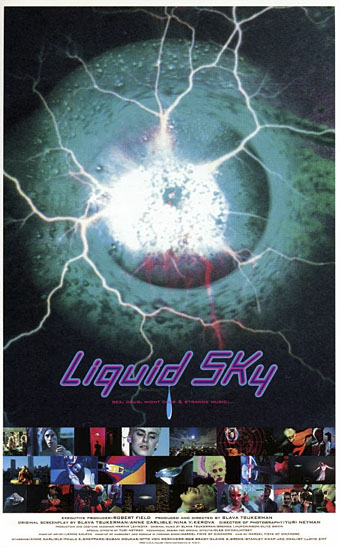
Japanese (?) poster for Liquid Sky (1982).

• The announcement this week of the death of Carl T. Ford, former editor of Dagon magazine, prompted a handful of memorial pieces. Dagon was notable for being a small British magazine devoted to Lovecraftian and other weird fiction (and the Call of Cthulhu games) at a time when the majority of such publications were American; it was also very well-produced, its later issues being typeset and filled with quality black-and-white illustration. Dagon interviewed many notable writers, including people such as Thomas Ligotti whose work at the time was still only known to a small group of enthusiasts. Mark Valentine posted a reminiscence at Wormwoodiana; Yog-Sothoth.com has an interview with Carl from 2010.

Michael “Dik Mik” Davies, manipulator of an audio generator and tape echo for Hawkwind, also died this week. Dik Mik’s primitive background electronics, augmented by Del Dettmar’s synthesizers, were an essential component of the early Hawkwind sound.

• Erik Davis talks to writer, photographer, and curator Joanna Ebenstein about Goth obsessions, memento mori, Santa Muerta, and her extraordinary new illustrated collection Death: A Graveside Companion.

• Slava Tsukerman’s cult film Liquid Sky (1982) finally gets a blu-ray release. From 2014: Punks, UFOs, and Heroin: Daniel Genis on how Liquid Sky became a cult movie.

Geeta Dayal explores the MOMA exhibition Thinking Machines: Art and Design in the Computer Age: 1959–1989.

You Should Come With Me Now is a collection of new fiction by M. John Harrison published this week.

VinylHub: “Our mission is to document every physical record shop and record event on the planet.”

Vladimir Nabokov‘s dream diary reveals experiments with “backwards timeflow”.

• Flawed Greatness: DB Jones on beauty and balance in John Ford’s The Searchers.

Irakli Kiziria on 9 synth artists who defined Eastern Europe’s post-Soviet sound.

• Edgar Allan Poe’s Hatchet Jobs: Mark Athitakis on Poe’s book reviews.

• Mix of the week: FACT mix 627 by Oneohtrix Point Never.

• At Creative Review: The design of Mute Records.

How generative music works.

Laraaji‘s favourite albums.

We Do It (1970) by Hawkwind | Adjust Me (1971) by Hawkwind | Electronic No. 1 (1973) by Hawkwind

Weekend links 386

ward.jpg

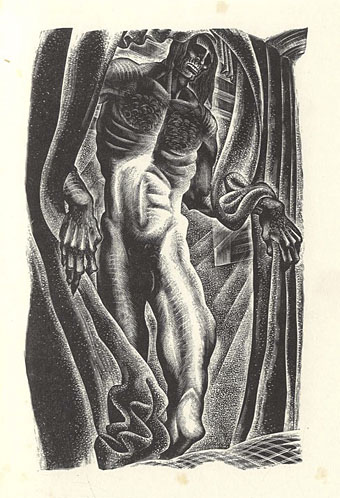
Lynd Ward again, and one of his illustrations for Frankenstein (1934).

• “Julio Mario Santo Domingo was a collector and visionary who filled his homes and warehouses with the world’s greatest private collection related to the subjects of drugs, sex, magic, and rock and roll: a library of more than 50,000 items…” Altered States: The Library of Julio Santo Domingo by Peter Watts catalogues some of the artefacts.

• “His vision of Gay Liberation was deeply, and uniquely, inflected by his study of, and belief, in anarchism.” More on the late Charles Shively: Michael Bronski remembers a pivotal figure in the gay liberation movement.

• William Friedkin’s Sorcerer was released on region-free blu-ray a couple of years ago but it’s being reissued again in the UK for its fortieth anniversary. Julian House has created a series of designs for the insert.

• Electronic musician and podcaster Marc Kate talks to Erik Davis about nihilism, horror movies, New Age music, and transmuting Nazi black metal into the ambient soundscapes of his latest album, Deface.

• “Beware the polished little man“: an extract from The Guesthouse at the Sign of the Teetering Globe by Franziska zu Reventlow which is available now from Rixdorf Editions.

• Another welcome blu-ray release, Sergei Parajanov’s The Colour of Pomegranates appears later this month in a special edition from Second Sight.

• Mixes of the week: FACT mix 626 by Sharp Veins, XLR8R Podcast 515 by Sammy Dee, and Secret Thirteen Mix 236 by Beta Evers.

The Witch Wave with Pam Grossman is a podcast for bewitching conversation about magic, creativity, and culture.

• Call me by the wrong name: Benjamin Lee on Hollywood’s perennial attempts to straight-wash gay films.

• At Dennis Cooper’s: Spotlight on…Ronald Firbank Concerning the Eccentricities of Cardinal Pirelli (1926).

• Zoë Lescaze reviews Frankenstein: The First Two Hundred Years by Christopher Frayling.

• Angry Optimism in a Drowned World: A Conversation with Kim Stanley Robinson.

• Stewart Smith on The Strange World of…Linda Sharrock.

Colors (1969) by Pharoah Sanders | Frankenstein (1972) by The Edgar Winter Group | Pomegranate (2001) by Transglobal Underground

Weekend links 384

muljat.jpg

Sultans of Swing by Samantha Muljat.

• Pain & Pleasure, Indivisible: Mat Colegate talks to Stephen Thrower (Coil, Cyclobe) about the meeting between Coil and Clive Barker that would have led to Coil scoring Barker’s Hellraiser if the studio hadn’t rejected the music.

• “From Arsedestroyer to Zoogz Rift: 50 underground albums you’ve never heard of” The usual presumption—I’ve been listening to The Groundhogs since the mid-1980s—but it’s a good list.

• More magazines at the Internet Archive: an incomplete run of British science-fiction monthly Interzone; and a complete (?) run of the film magazine for horror (and gore) obsessives, Fangoria.

• “…it’s background music, is what it is. But there’s nothing wrong with that. I’m very proud of it.” John Carpenter discussing his soundtrack music and his new album, Anthology.

• Mixes of the week: Aral Mix 05 by Ellen Arkbro, Secret Thirteen Mix 234 by FOQL, and Samhain Séance Six: Triffid Witch by The Ephemeral Man.

• Dallas Killers Club: Nicholson Baker reads a stack of books about the Kennedy assassinations then draws his own conclusions.

Michael Flanagan on searching for LGB histories of Neopaganism, the paranormal and the occult in San Francisco.

• At Lounge Books: author Amelia Mangan on horror, old and new, and her favourite things.

• At Monoskop: the (almost) complete works of James Joyce in one convenient epub.

Jillian Steinhauer on Duchamp’s last riddle.

Hell Raiser (1973) by Sweet | Hell’s Bells (1989) by Rhythm Devils | Hell’s Winter (2011) by Earth