Weekend links 558

morghen.jpg

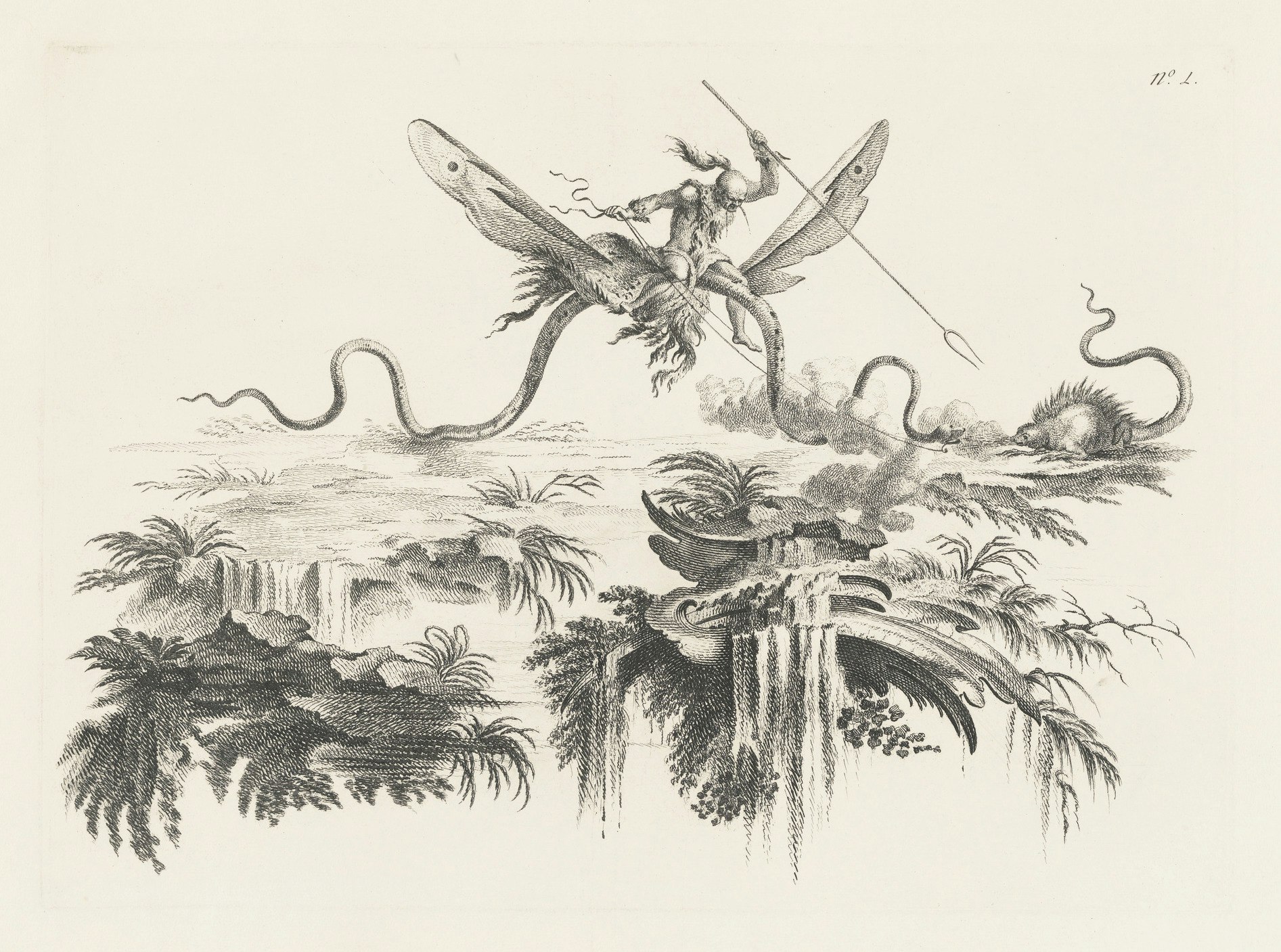
• One of the earliest posts here concerned The Suite of the Most Notable Things Seen by Cavaliere Wild Scull, and by Signore de la Hire on Their Famous Voyage from the Earth to the Moon (1776) by Filippo Morghen, a series of prints which depict the fantastic inhabitants, fauna and flora of the Moon. Morghen shows the Earth’s satellite to be a tropical place very similar to 18th-century conceptions of the New World or the Far East. Back in 2006 you couldn’t see copies of the prints as large or as detailed as this set at The Public Domain Review.

• “Last Call preserves the poignant irony that the trust and vulnerability that once made gay bars synonymous with gay community were also vectors of death, both in the form of murder and, later, HIV/AIDS.” Jeremy Lybarger on Elon Green’s study of the murders of four gay men in New York City in the 1990s.

• “No one in American letters ever pushed back against power over such a long time as [Lawrence] Ferlinghetti,” says John Freeman. Related: Ferlinghetti’s travel journals.

• New music with literary associations: Invisible Cities by A Winged Victory For The Sullen, and Star Maker Fragments by TAK Ensemble & Taylor Brook.

• Old music with no literary associations: The first of the forthcoming releases of live recordings by Can will be a 1975 Stuttgart concert.

The 120 Days of Sodom: France seeks help to buy ‘most impure tale ever written'”.

• The Joy of Circles: Vyki Hendy looks at some recent concentric cover designs.

• At Spoon & Tamago: Sculpted sushi made entirely from natural polished stones.

• My Hungry Interzone: Brian Alessandro on coming out and reading Naked Lunch.

• Andy Thomas maps Jah Wobble’s interdimensional dub.

• Mix of the week: XLR8R Podcast 684 by Ben Bondy.

• At Dennis Cooper’s: Jim Jarmusch Day.

Circles (1966) by Les Fleur De Lys | Circles (1970) by Blonde On Blonde | Carry On Circles (2006) by Tuxedomoon
Weekend links 555

demuth.jpg

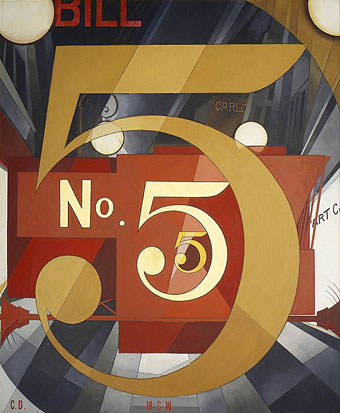
I Saw the Figure 5 in Gold (1928) by Charles Demuth.

• “Reading the new edition in 2021, I’m struck by his dismissal of CD-ROMs, of VR, of interactivity; how he anticipates contemporary debates about algorithmic bias…his prescient exhaustion.” Sukhdev Sandhu reviews Brian Eno’s diary for 1995, A Year with Swollen Appendices. Meanwhile, Eno himself says “Artists like me are being censored in Germany—because we support Palestinian rights.”

• “Kink is often pathologized in popular culture: it’s shamed, used as a punchline, and, on the whole, relegated to the margins of desire.” Greg Mania interviews R.O. Kwon and Garth Greenwell about Kink a collection of new stories about unorthodox desires.

• “This album is the king of hauntology. From where I’m sitting, I’m going back to the past, listening to an album imagining the future, imagining the past.” Tom Herdman on the fabulous Time (1981), a science-fiction concept album by the Electric Light Orchestra.

Cavafy, the ultimate Alexandrian, gave us an Alexandria that was already not quite there in his own lifetime. It kept threatening to disappear before his eyes. The apartment where he had made love as a young man had become a business office when he went to revisit it years later; and the days of 1896, of 1901, 1903, 1908, 1909, once filled with so much eros and forbidden love, were already gone and had become distant, elegiac moments that he remembered in poetry alone. The barbarians, like time itself, were at the gates, and everything would be swept in their wake. The barbarians always win, and time is hardly less ruthless. The barbarians may come now or in a century or two, or in a thousand years, as indeed they had come more than once centuries earlier, but come they will, and many more times after that as well, while here was Cavafy, landlocked in this city that is both the transitional home he wishes to flee and the permanent demon that can’t be driven out. He and the city are one and the same, and soon neither will exist. Cavafy’s Alexandria appears in antiquity, in late antiquity, and in modern times. Then it disappears. Cavafy’s city is permanently locked away in a past that refuses to go away.

André Aciman on the poetry of Cavafy and the Alexandrias of memory

DJ Food on the package design for The Superceded Sounds of…The New Obsolescents, which uses a similar foil card to the “Héliophore” stock used by Philips in their cult series of electroacoustic compositions, Prospective 21e Siècle.

Onlyou by Can, is “A relaxed studio session, recorded on a mono taperecorder in 1976 at the Innerspace”. Released in 1982 on a 34-minute cassette sealed inside a can (geddit?), and limited to 100 copies.

Olivia Rutigliano ranks 45 films containing prison escapes. I’d put the Bresson at number one but otherwise, yes.

• “…some kind of future unrealised time…” Mix of the week is a mix for The Wire by Muqata’a.

• RIP Christopher Plummer. Never mind the musical, watch him in The Silent Partner (1978).

• At Ubuweb: short films by Erkki Kurenniemi soundtracked by his own electronic music.

• New music: Neurogenesis by Robert Rich.

Kinky Boots (1964) by Patrick McNee & Honor Blackman | David Watts (1967) by The Kinks | The Dominatrix Sleeps Tonight (Dominant Mix) (1984) by Dominatrix

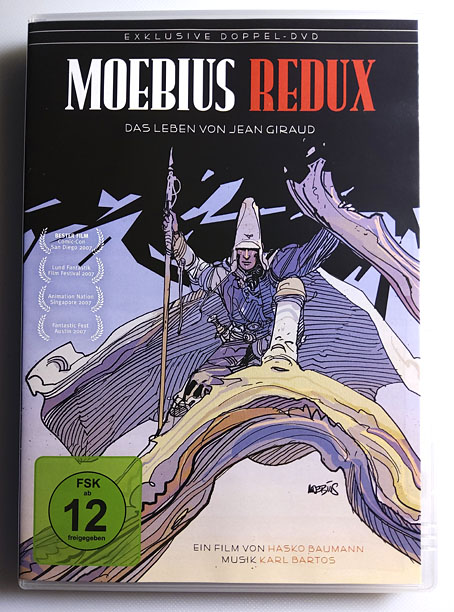
Moebius Redux

moebius1.jpg

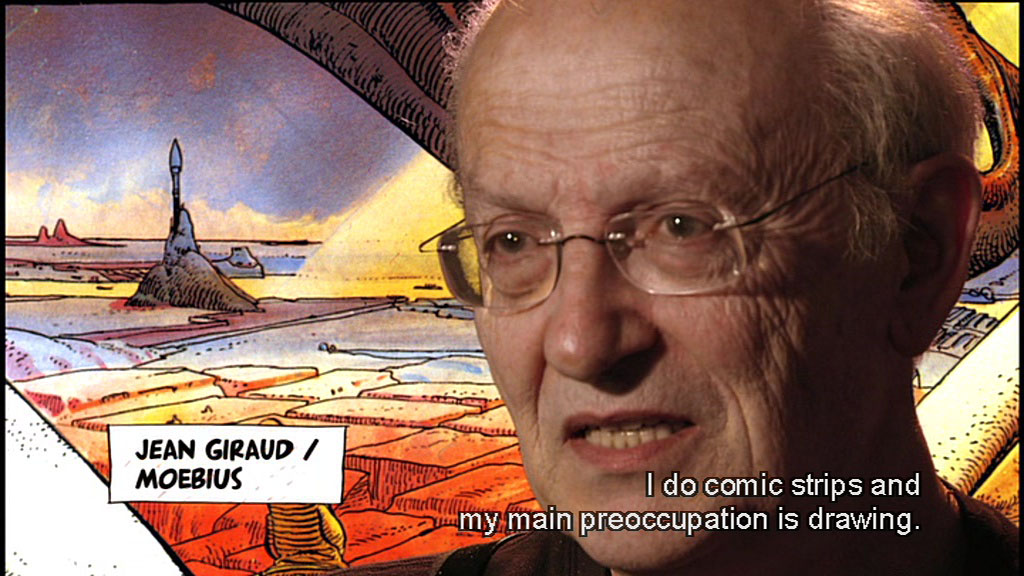
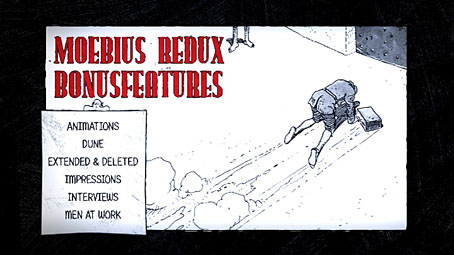
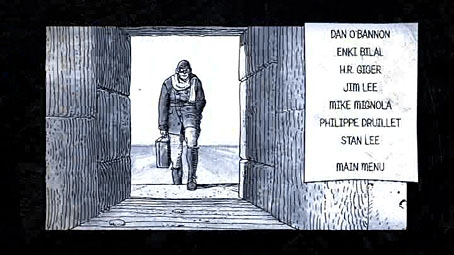
It’s Arzak (or Arzach, or Harzak, or Harzakc, etc) again, arriving in today’s post. Hasko Baumann’s Moebius Redux is one of my favourite arts documentaries of recent years but I only discovered recently that the version broadcast by the BBC in 2007 was shorter by 20 minutes than the original 70-minute running time, hence this purchase. It’s a German DVD but has subtitles in French and English plus an extra disc containing 125 minutes of extras, including extended interviews with Philippe Druillet, Enki Bilal and many others. That’s my weekend viewing sorted.

moebius2.jpg

moebius3.jpg

moebius4.jpg

Previously on { feuilleton }
Jean Giraud record covers
Arzak Rhapsody
The Captive, a film by René Laloux
The horror
Chute Libre science fiction
Heavy Metal, October 1979: The Lovecraft Special

Giger’s first alien: Swissmade: 2069

swissmade1.jpg

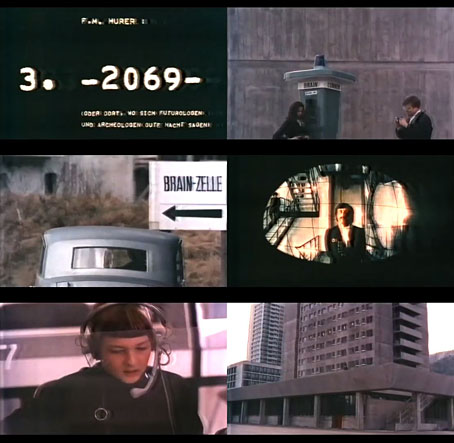
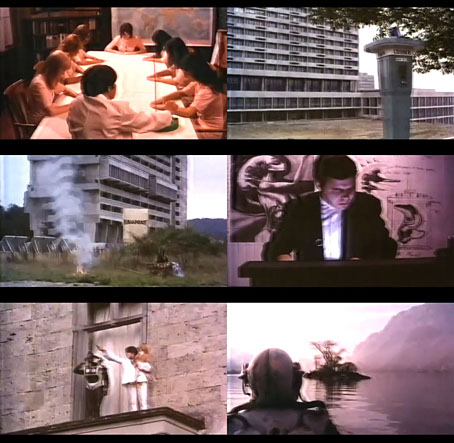
You wait decades for an obscure HR Giger-related film then two copies turn up at once. Swissmade: 2069 (1968) was the last of the short films from Giger’s pre-Alien career that I’d been waiting to see, and is of note for being a 40-minute work of science fiction rather than a documentary about the artist and his art. All the other Giger films have come and gone on YouTube over the past few years although none seem to have had any recent official release apart from Passagen, Fredi M. Murer’s Giger documentary from 1972 which is now available for rent with English subtitles. Swissmade: 2069 was directed by Murer prior to Passagen and is also available for rent at the same site. Alternatively, there’s a fuzzy VHS copy at YouTube with no subtitles. Murer’s film is more properly titled 2069, Swissmade being the umbrella title for a compilation feature that comprised three films by Swiss directors. 1980 (Der Neinsager) by Yves Yersin and Alarm by Fritz E. Maeder were the first two films; 2069 provided the conclusion:

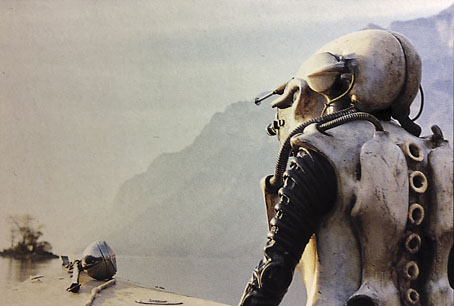
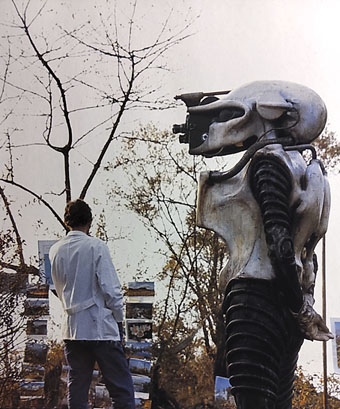
The theme of Fredi M. Murer’s contribution to the episode film Swissmade is “Switzerland after us”. Murer’s episode takes place in the year 2069. An “integrated citizen with a latent tendency to become an unintegrated citizen” is commissioned by the “Brain Center” to produce a film report about the unknown mission of a foreign being. The alien being is an extraterrestrial designed by HR Giger long before Alien with a built-in camera and tape, which travels across the earth in the year 2069 to explore current conditions. The film reporter is Murer himself. Without exception, the performers in real life were authentic 1968 activists, some of whom later made political or artistic careers.

swissmade2.jpg

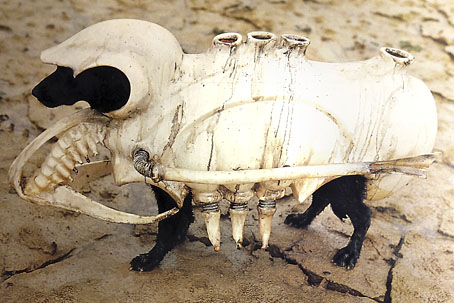
As science fiction this is typical of the period, with the world of the future represented by the most “futuristic” features of 1968 which means Brutalist architecture, Space Age fashion and institutes filled with advanced technology. The most surprising thing about the direction is how casually Murer treats Giger’s alien visitor. The being (played by Tina Gwerder) has a camera in its head and a working tape recorder in its chest but we only see the tape reels turning when the film is halfway through. Another director would have made much more of this, and of the carapace that Giger made for a dog to wear which is only seen in a single shot at the very end. Giger himself has a wordless role, appearing with some of his drawings, as does his partner, Li Tobler. It’s unlikely that many people would be interested in 2069 today without the Giger connection but it’s a well-made curio that points the way to another extraterrestrial with an elongated cranium. (Thanks to Jason for the tip!)

swissmade3.jpg

Stills from HR Giger’s Film Design (1996).

swissmade4.jpg

swissmade5.jpg

Previously on { feuilleton }
HR Giger’s Passagen
Heimkiller and High
The Man Who Paints Monsters In The Night
Hans by Sibylle
Giger’s Tarot
HR Giger album covers
Giger’s Necronomicon
Dan O’Bannon, 1946–2009
Alejandro Jodorowsky’s Dune
The monstrous tome

Weekend links 550

moebius

Illustration by Moebius for Les Robinsons du Cosmos (1970) by Francis Carsac.

Notre Dame des Fleurs is a collection of art based on or inspired by the Jean Genet novel. The book, which includes some new work of mine, will be published in February. Editor Jan van Rijn has a trailer for it here. It’s limited to 150 copies so anyone interested is advised to pre-order.

• Books that made me: William Gibson‘s influential reading. Good to see him mention Suttree by Cormac McCarthy, an outstanding novel that might be better known if it wasn’t for the gravitational pull of McCarthy’s other works.

• Zagava have announced a paperback reprint of The Art of Ilna Ewers-Wunderwald, a collection of neglected Art Nouveau drawings and designs compiled by Sven Brömsel.

• At Dennis Cooper’s: Black_Acrylic presents…He Stood In The Bath And He Stamped On The Floor: A Joe Meek Day.

• More yearly roundups: Our Haunted Year 2020 by Swan River Press, and The Year That Never Was by blissblog.

• New music: Spaceman Mystery Of The Terror Triangle by The Night Monitor.

Ralph Steadman’s guided tour through six decades of irrepressible art.

• At Greydogtales: Valentine Dyall: Mystery and Mesmerism.

• At Wormwoodiana: The Esoteric in Britain, 1921.

• At Strange Flowers: Marie Menken’s Lights.

I Want To See The Bright Lights Tonight (1974) by Richard and Linda Thompson | Neon Lights (1978) by Kraftwerk | Lights (1980) by Metabolist